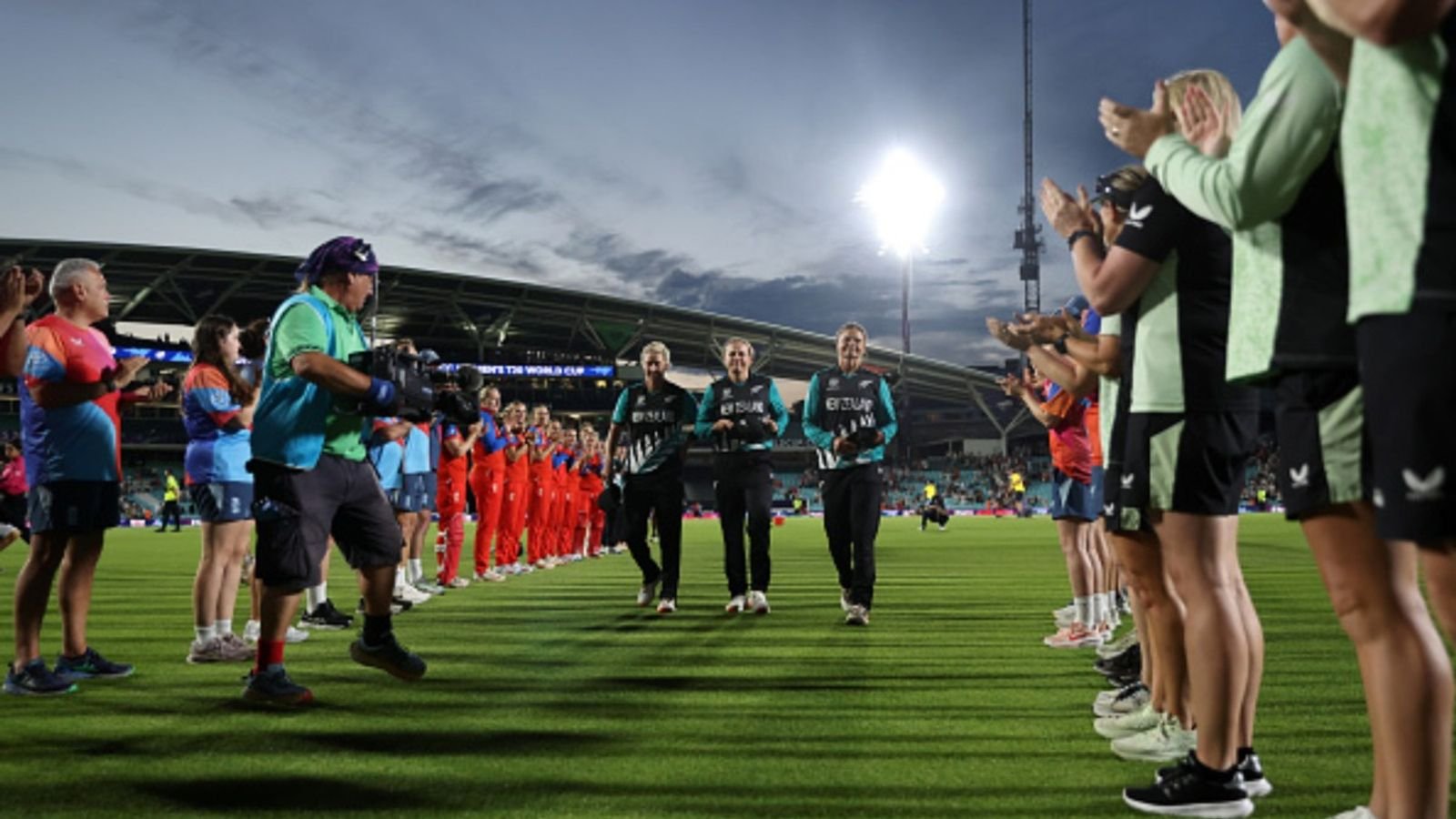
New Zealand Women’s T20 World Cup 2026 campaign ended in heartbreak after the defending champions were eliminated by England in the group stage. The defeat was not only a tournament exit for the White Ferns but also the end of an era, as three of New Zealand’s greatest players — Sophie Devine, Suzie Bates and Lea Tahuhu — retired from T20 international cricket.
England’s victory completed a memorable night in women’s cricket. After chasing down New Zealand’s target of 164 with confidence, England’s players formed a guard of honour to celebrate the contribution of the retiring New Zealand stars, creating one of the most emotional moments of the tournament.
The result also highlighted the changing landscape of women’s T20 cricket, where experienced teams must constantly rebuild while younger players and aggressive batting styles continue to reshape the game.
New Zealand’s difficult road in the Women’s T20 World Cup 2026
New Zealand entered the tournament with the pressure of being defending champions. However, their campaign never reached the level expected from a side that had previously lifted the trophy.
The White Ferns suffered defeats against West Indies, Sri Lanka and England, leaving them unable to progress to the semifinals.
| Team | Tournament Result | Key Outcome |
|---|---|---|
| New Zealand | Eliminated in group stage | Lost crucial matches against West Indies, Sri Lanka and England |
| England | Qualified for semifinals | Successful chase against New Zealand |
| West Indies | Qualified for semifinals | Strong group-stage performance |
England’s dominant chase ends New Zealand’s title defence
New Zealand needed a win against England to keep their semifinal hopes alive. Batting first, the White Ferns managed to post a competitive total of 163/6, giving themselves a chance in the must-win encounter.
Captain Sophie Devine provided early momentum with a powerful innings of 30 runs from just 14 balls. Her aggressive approach included three sixes and one boundary, showing the attacking style that defined much of her international career.
Melie Kerr then played a stabilising role, scoring a valuable 42 runs from 34 deliveries. Her innings helped New Zealand recover from pressure and build a fighting total.
However, England’s batting depth proved too strong. Their response was aggressive from the beginning, turning what looked like a competitive target into a comfortable victory.
Danni Wyatt-Hodge delivers a match-winning performance
The difference between the two teams was England opener Danni Wyatt-Hodge. She produced one of the finest innings of the tournament, scoring 89 runs from only 53 balls.
Her innings included 15 boundaries and one six, allowing England to maintain a high scoring rate throughout the chase.
Sophie Dunkley also contributed significantly, adding 49 runs from 38 deliveries and providing crucial support during the successful pursuit.
England reached the target in only 17.2 overs, showing the confidence and attacking mindset that has become a major feature of modern women’s T20 cricket.
A tribute to three New Zealand cricket legends
The biggest story from the match was not only England’s victory but the farewell of three iconic New Zealand players.
Sophie Devine: The leader of a generation
Sophie Devine has been one of the most influential figures in New Zealand women’s cricket. Known for explosive batting, powerful hitting and leadership, she played a major role in transforming the White Ferns into a competitive global team.
Her ability to change matches with both bat and ball made her one of the most respected all-rounders in international cricket.
Suzie Bates: A record-setting pioneer
Suzie Bates leaves behind a remarkable legacy as one of the most consistent batters in women’s cricket history.
For years, Bates represented reliability at the top of the order, combining technical skill with the ability to accelerate when required.
Her contribution helped establish New Zealand as one of the strongest teams in women’s cricket.
Lea Tahuhu: Pace and experience
Lea Tahuhu was one of New Zealand’s most important fast bowlers for many years. Her pace, accuracy and competitive attitude made her a key part of the White Ferns attack.
Together, Devine, Bates and Tahuhu represented an era of New Zealand cricket that inspired future generations.
The end of their T20I careers marks the closing chapter of one of New Zealand cricket’s most successful generations.
England’s performance shows the future direction of T20 cricket
England’s victory was not just about reaching the semifinal stage. It demonstrated the importance of aggressive batting and maintaining pressure throughout a chase.
Modern T20 cricket increasingly rewards teams that attack from the first over. England’s approach reflected this evolution, with batters willing to take risks and maintain scoring momentum.
The match also showed why squad depth is becoming more important in major tournaments. England were able to rely on multiple players contributing rather than depending on one individual.
Why New Zealand’s exit matters for women’s cricket
New Zealand’s elimination represents more than a single tournament result. It highlights a broader challenge facing established cricket nations: rebuilding after the retirement of key players.
Many successful teams eventually face transition periods when legendary players leave. The challenge is replacing not only their performances but also their leadership and experience.
| New Zealand Challenge | Future Focus |
|---|---|
| Replacing senior leaders | Developing younger talent |
| Maintaining consistency | Building a new team identity |
| Competing with aggressive teams | Adapting modern T20 strategies |
Semifinal picture after New Zealand’s elimination
England and West Indies secured qualification from the group stage, while New Zealand’s title defence came to an unexpected end.
England enter the semifinals with confidence after producing one of their strongest performances of the tournament. Their batting unit appears capable of handling pressure situations, which could become crucial in knockout cricket.
For New Zealand, the focus now shifts toward rebuilding after losing three legendary figures from their T20 setup.
Conclusion: A heartbreaking exit but a lasting legacy
New Zealand Women’s T20 World Cup 2026 exit will be remembered for two reasons: England’s outstanding chase and the emotional retirement of Sophie Devine, Suzie Bates and Lea Tahuhu.
The White Ferns could not defend their championship title, but their senior stars leave behind a powerful legacy that shaped women’s cricket in New Zealand.
England’s victory represents the present, while New Zealand’s farewell represents the history and growth of the women’s game. The next chapter will belong to the players who follow these legends.
For breaking news and live news updates, like us on Facebook or follow us on Twitter and Instagram. Read more on Latest Sports on thefoxdaily.com.






COMMENTS 0