NFL Week 12 arrives with several important matchups that could shape the race for playoff positioning in both conferences. After a previous week in which only one game finished with a betting spread of fewer than three points, the upcoming schedule promises a much tighter collection of contests. Seven games will feature national broadcast windows from Wednesday through Monday, with two matchups carrying spreads within a field goal and only the Eagles-Cowboys game exceeding a 4.5-point spread.
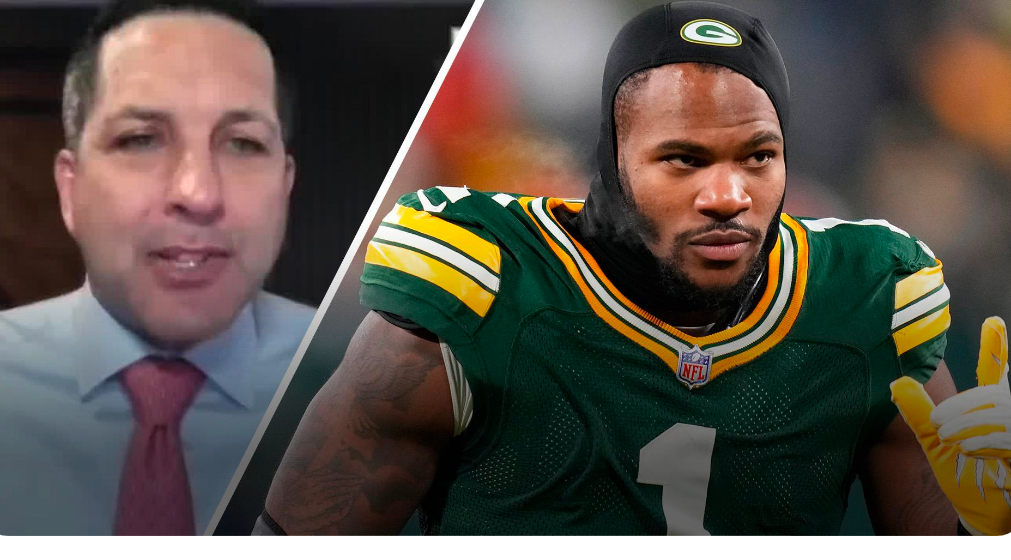
Among the biggest storylines are Thursday night’s meeting between the Kansas City Chiefs and Buffalo Bills, the San Francisco 49ers’ impressive performance against Minnesota, the uncertain future of the Indianapolis Colts, and the New York Giants’ growing potential as a postseason threat. The Detroit Lions also enter the discussion as a possible candidate for the NFL’s most complete offense, while Micah Parsons’ return could give Green Bay another dimension on defense.
These observations are not firm predictions or definitive conclusions about the season. Instead, they highlight questions that could become clearer over the next several weeks. Here are seven major things to watch as NFL Week 12 approaches, along with several additional storylines worth revisiting.
1. Chiefs-Bills will provide a much-needed test for both teams
The Kansas City Chiefs and Buffalo Bills enter their Week 12 meeting with two of the strongest records in the NFL. Kansas City is 8-2, while Buffalo stands at 9-1. Both teams have powerful offenses, and Thursday night’s matchup could have significant implications for the race to secure the AFC’s No. 1 seed.
The rivalry has regularly produced important regular-season meetings. When the teams last played on November 2, 2025, Kansas City was 5-3 and Buffalo was 5-2. Both offenses ranked among the league’s top five by several advanced metrics. Their November 17, 2024, meeting came when the Chiefs were 9-0 and the Bills were 8-2, with both offenses again ranking among the league’s best. Even their December 10, 2023, matchup featured two teams with top-10 offenses, despite Buffalo having a less impressive record at the time.
These games matter because they can influence playoff positioning, potentially providing a first-round bye or home-field advantage. However, neither team is likely to have its season defined by one regular-season defeat. The 2023 season provides a useful example: Buffalo won the regular-season meeting and earned a home playoff game against Kansas City, but the Chiefs won that divisional-round contest before going on to capture the Super Bowl.
Buffalo’s defensive improvement remains difficult to measure
The Bills have been one of the AFC’s strongest teams, but their defense entered the season’s second half with serious questions. Their offensive line has remained effective despite the departure of David Edwards in free agency and several injuries. The addition of wide receiver DJ Moore has also provided the offense with another important weapon when he has been available.
Defensively, coordinator Jim Leonhard has adjusted the team’s approach. Edge rusher Greg Rousseau and defensive tackle Deone Walker have benefited from the changes, but Buffalo’s early-season defensive numbers were concerning. During the first six weeks, the Bills faced quarterbacks including C.J. Stroud, Jared Goff, Justin Herbert, Drake Maye, Matthew Stafford and Kirk Cousins. Before their Week 7 bye, Buffalo ranked 31st in defensive EPA per drive and 30th in defensive success rate.
Leonhard began changing the team’s coverage tendencies around that period. Against the Raiders in Week 6, Buffalo used single-high coverage on 61% of its defensive snaps, compared with 45% across the previous five weeks. The Bills also reduced their use of quarters coverage, which had appeared on at least 23% of opposing dropbacks in each of their first five games but never exceeded 17% in the following five.
The results have been encouraging. Buffalo has not allowed a touchdown drive in three consecutive games, a stretch covering 43 consecutive opponent possessions dating back to Week 8 against Baltimore. It is the first time in franchise history that the Bills have recorded such a run.
However, the quality of the opposing quarterbacks makes it difficult to determine exactly how much the defense has improved. During the four-game stretch after the bye, Buffalo faced several backups and third-string quarterbacks, including Kyle McCord, Cade Klubnik, Carson Wentz, Joe Fagnano, Max Brosmer and Tyler Huntley. Geno Smith and Lamar Jackson also appeared, but Jackson took only one snap.
Two conclusions can therefore be true at the same time: Buffalo’s defense has improved, but it has not yet faced enough high-level quarterback competition to establish how strong it really is. The Chiefs and Patrick Mahomes will provide a much more meaningful examination.
Josh Allen gives Buffalo the offensive ability to compete for a Super Bowl, as he has in previous seasons. The remaining question is whether the defense can perform consistently against elite opponents when the stakes become higher in January.
Kansas City’s passing game is changing again
The Chiefs have also been adjusting their offensive identity. Earlier in the season, their improved running game provided a new source of balance. The signing of Kenneth Walker III and a greater commitment to under-center rushing helped Kansas City become more explosive on the ground.
Recently, however, the Chiefs have moved toward a more pass-heavy approach. According to NFL Next Gen Stats, Kansas City ranked fifth in pass rate over expectation at plus-1.5% during Weeks 1-7. Since Week 8, that figure has increased to plus-6.2%, second only to the Cincinnati Bengals.
Mahomes has also been throwing the ball farther downfield. He has averaged more than eight air yards per pass attempt in consecutive games for the first time since Weeks 2-3 of the previous season. Against Atlanta in Week 10, he completed two passes that travelled at least 40 air yards, something he had not achieved in a game since 2022.
The addition of Josh Downs and the development of the Chiefs’ under-center passing game have contributed to the change. On structured throws involving dropbacks of four seconds or less, Mahomes averaged 8.1 air yards per attempt over the past two weeks. During the previous nine weeks, he averaged just 5.1, the lowest figure among starting quarterbacks.
There are still questions about whether this approach will last. The sample size is small, and neither Atlanta nor Arizona has an elite defense. Downs has played only 28 snaps over two games, although he has received nine targets at an average depth of 9.3 air yards. His influence could become clearer if he receives a larger role.
Kenneth Walker III’s availability is another important factor. If he returns from his groin injury, Kansas City could move back toward a ball-control approach built around its rushing attack and short throws. The most dangerous version of the Chiefs’ offense would combine an effective running game with frequent downfield passing.
The Bills will provide the first major test of whether that combination is sustainable. Kansas City’s subsequent road games against the Rams in Week 13 and Bengals in Week 14 will offer further evidence.
2. The 49ers may have provided a blueprint against the Vikings’ defense
San Francisco delivered the most productive offensive performance against a Brian Flores-coached Minnesota Vikings defense since Flores became the team’s defensive coordinator in 2023. The 49ers averaged 0.28 expected points added per play, the highest figure Minnesota had allowed during his tenure.
San Francisco scored 28 offensive points against a defense that had been allowing an average of 14.0 points per game. The performance was particularly impressive because the 49ers appeared to operate comfortably for much of the fourth quarter.
Quarterback Brock Purdy played a central role. His anticipation, timing and willingness to throw into openings between defensive zones made life difficult for Minnesota. San Francisco’s receivers also consistently won contested catches and delivered when Purdy trusted them to reach the ball.
The 49ers did not need to abandon their usual offensive identity to produce the result. Instead, they used their familiar concepts in a way that challenged the Vikings’ defensive structure.
How San Francisco attacked Minnesota’s coverage
The first important element was route distribution. San Francisco entered the game leading the league in the percentage of dropbacks on which all five eligible receivers entered pass routes, at 72.5%. It was the only team above 70%.
Flores’ defensive pressure makes that approach difficult. Minnesota sends enough blitzes to force offenses to keep additional players in protection. Against the Vikings, the 49ers sent five eligible receivers into routes on only 43% of their dropbacks, their lowest rate in a game since Week 1 of the 2021 season.
However, San Francisco still sent at least four receivers into routes on 86% of its dropbacks. Rather than using those routes primarily to attack deep areas, the 49ers frequently targeted quick and underneath openings. Their running backs helped pull underneath defenders away from the middle, creating space for Purdy to complete passes behind them.
One example involved linebacker Blake Cashman and tight end George Kittle. Running back Christian McCaffrey moved quickly into the flat, forcing Cashman to widen his coverage. At the same time, a receiver’s vertical route occupied the cornerback. That left Kittle with room against Harrison Smith, allowing Purdy to deliver a well-timed throw.
San Francisco used a similar idea when Minnesota blitzed its linebackers. Fullback Kyle Juszczyk and running back Kaelon Black moved toward the flat, drawing edge defender Kyle Van Noy away from the middle. Instead of keeping those players in to block, the 49ers used their movement to create an opening for an in-breaking route.
Formation was another important part of the strategy. San Francisco has used condensed formations more frequently than any other team in the Next Gen Stats database this season. These formations place receivers closer to the middle of the field and create opportunities to attack the flat and the spaces behind underneath defenders.
Could Atlanta and Carolina use the same approach?
The larger lesson for Minnesota’s upcoming opponents may be to remain committed to their offensive concepts rather than allowing Flores’ pressure packages to dictate every decision.
The Atlanta Falcons could attempt something similar with running back Bijan Robinson, whose receiving ability can force underneath defenders to cover more ground. Quarterback Michael Penix Jr. has the arm and release speed to attack openings over the middle, although he can be more vulnerable to defensive disguises than Purdy.
The Carolina Panthers could also explore this approach when they face Minnesota in two weeks. Running back Chuba Hubbard is a reliable receiving option, while the influence of assistant head coach Darrell Bevell has helped Carolina develop some concepts associated with the wider Shanahan coaching tree.
Bryce Young has also shown the ability to deliver quick throws between the numbers. Purdy ranks second in the league in passer rating on quick in-breaking throws, while Young ranks seventh.
Still, copying the formation and route concepts does not guarantee the same results. Purdy and head coach Kyle Shanahan have developed their timing and execution over several seasons, and San Francisco also benefited from defensive coverage mistakes. Other teams may find openings against Flores, but consistently turning those opportunities into touchdowns will be much more difficult.
3. The Colts’ rise and fall offers three lessons for NFL teams
The Indianapolis Colts’ recent collapse has raised serious questions about the franchise’s decision-making. After losing 26-3 to the Houston Texans on Thursday night, Indianapolis released quarterback Daniel Jones the following morning, just two weeks after deciding not to trade him before the deadline.
ESPN’s Adam Schefter reported that the Baltimore Ravens had offered a fourth-round pick for Jones and a fifth-round selection, with the condition that the fifth-rounder would return to Indianapolis if Baltimore qualified for the playoffs. The Colts rejected the proposal.
The value of that offer can be debated. A fourth-round pick in exchange for a fifth-round pick is not an especially large return, although Baltimore’s record at the time meant the fourth-round selection had a reasonable chance of becoming a straightforward fourth-rounder. There may also have been other potential offers that were not publicly known.
The bigger issue is the decision to keep Jones at all. His existing contract made a return in 2027 extremely unlikely. He was scheduled to receive $33.5 million in non-guaranteed salary that season, a figure that did not match his performance.
At the trade deadline, Jones had an EPA per dropback of minus-0.14, ranking 33rd among 35 qualifying quarterbacks. He was also averaging 3.8 adjusted net yards per attempt, the 34th-best figure. Following his games against Miami and Houston in Weeks 10 and 11, those numbers had declined to minus-0.17 EPA per dropback and 3.6 adjusted net yards per attempt.
Trading Jones would also have guaranteed Indianapolis the $2 million in remaining 2026 base-salary cap space, whereas releasing him provided only potential offsets if another team signed him. The financial difference was not the central issue. The decision to move on from a quarterback who was unlikely to remain with the franchise was the obvious point of concern.
The Colts’ other major decisions were more complicated. Trading running back Jonathan Taylor, for example, could have brought valuable draft capital, but Taylor is signed through 2028 and could still help a future quarterback if Indianapolis finds a suitable replacement.
The trade for cornerback Sauce Gardner also looks increasingly expensive. Indianapolis surrendered two first-round picks and a young player, including a 2027 first-round selection to the New York Jets. However, the Colts were 8-2 at the time and believed Gardner could help them make a deep postseason run. Injuries to Jones and Gardner later changed the outlook.
Lesson one: General managers need room to make long-term decisions
General managers are responsible for maintaining the long-term health of a roster. When their jobs are under immediate threat, they can become more focused on short-term results than future team-building.
Former Colts general manager Chris Ballard, who was fired after Week 6 this season, made several decisions that reflected the pressure to win immediately. The Gardner trade used future draft resources to strengthen a team that appeared capable of competing for a Super Bowl. The inclusion of receiver Adonai Mitchell, who has developed into a solid WR2 with the Jets, adds another layer to the decision.
Indianapolis also handed contract extensions to Alec Pierce while he was recovering from a calf injury and to Jones following an Achilles injury. Both decisions now appear questionable from a long-term perspective.
Owner Carlie Irsay-Gordon had publicly made clear that Ballard and head coach Shane Steichen were expected to win immediately. That pressure may have encouraged decisions that prioritised short-term competitiveness over the franchise’s longer-term needs. Ballard’s decade in Indianapolis produced one playoff victory, three playoff appearances and no division titles, but the timing of his departure also left the team facing a difficult rebuilding situation.
Lesson two: Allow quarterbacks more recovery time after Achilles injuries
The careers of Kirk Cousins, Deshaun Watson and Daniel Jones offer examples of how difficult it can be for quarterbacks to return from Achilles injuries.
Cousins struggled during his first season after the injury in 2024, appearing less mobile and less explosive. His movement improved in 2025 when he stepped in for Michael Penix Jr., and his 2026 performances have looked more like those of an experienced quarterback playing at his age rather than one still recovering from a major injury.
Watson suffered an Achilles tear in 2024 and another in January 2025. He did not return to action until this season, more than 18 months after the original injury. Although his performances have not been especially impressive, his movement has been sufficient to provide a dual-threat element to Cleveland’s offense.
Jones, meanwhile, is less than a year removed from his injury. His reduced mobility and declining throwing velocity have affected important parts of his game. If he joins a team needing immediate quarterback help, such as the Patriots, and is forced into action during 2026, his performances could remain inconsistent.
However, another year of recovery and a second full offseason could make a meaningful difference in 2027. His long-term outlook may therefore be different from what his recent performances suggest.
Lesson three: Shane Steichen remains a talented offensive designer
Jones’ physical limitations have made the Colts’ offensive decline more understandable. His throwing velocity and ability to escape pressure have both deteriorated as the season has progressed.
That makes Indianapolis’ 2025 offensive production under Jones look even more impressive in hindsight. Steichen managed to build a highly productive offense around a quarterback whose physical condition was not ideal.
Steichen could be dismissed by the end of the current season, but he may still attract head-coaching interviews during the 2027 hiring cycle. A year away from the pressure of a head-coaching position or a return to an offensive coordinator role could allow him to focus on his greatest strength: designing and calling an offense.
4. The Giants have the talent to win a playoff game
The New York Giants remain one of the NFL’s most unpredictable teams. Just 13 days before their victory over Jacksonville, they lost at home to a struggling Washington Commanders team. They had held a fourth-quarter lead but failed to close out the game, allowing Washington to take advantage.
Against the Jaguars, the Giants found themselves in a similar position. This time, Jacksonville could not complete the comeback, and New York secured a 23-18 victory over an opponent considered a strong AFC contender.
The performance was far from perfect. Quarterback J.J. McCarthy completed fewer than 50% of his passes, and the Giants averaged only 3.7 yards per offensive play. Nevertheless, the victory highlighted the amount of talent available on the roster.
At 6-3-1, the Giants have players capable of changing games on both sides of the ball. Their postseason potential is not based solely on head coach John Harbaugh or the possibility that McCarthy can deliver in important moments. It comes from the quality of their individual players.
Abdul Carter is becoming a defensive difference-maker
Second-year edge rusher Abdul Carter was one of the standout performers against Jacksonville. According to Next Gen Stats, he generated 12 pressures, including six quick pressures that arrived in less than 2.5 seconds.
Carter is the only player this season with multiple games featuring at least six quick pressures. He has recorded 23 quick pressures overall, tied for the third-most in the league. Among edge rushers with at least 100 pass-rush snaps, his average time to pressure of 2.60 seconds ranks fourth-fastest.
His impact resembles that of Denver’s Nik Bonitto, who has recorded 24 quick pressures and an identical 2.60-second time to pressure. Carter has also stepped into a larger role following Brian Burns’ season-ending ACL injury in Week 3.
The Giants selected Carter third overall in the 2025 NFL draft with the expectation that he could become a major defensive force. His recent performances suggest he is moving toward that level.
Deonte Banks has changed the direction of his career
Cornerback Deonte Banks has also emerged as an important defensive player. The 2023 first-round selection had struggled to establish himself during his first three seasons, but his 2026 performances have significantly improved his reputation.
Against Jacksonville, Banks was targeted 12 times and allowed only four completions for 39 yards. He also recorded an interception and three passes defended. For the season, he is tied for the league lead with 14 passes defended and ranks fifth in yards allowed per target in man coverage, despite facing more targets than any other cornerback.
Having an effective edge rusher and a productive cornerback gives the Giants the ability to disrupt opposing offenses in two premium positions. Carter can create immediate pressure, while Banks can make it difficult for quarterbacks to find reliable outside options.
Those strengths could become especially important in the playoffs. Carter’s pressure would challenge quarterbacks such as Minnesota’s Kirk Cousins, while Banks could be assigned to difficult receivers such as Mike Evans if the Giants meet San Francisco.
New York also has important weapons on offense
The Giants have several players who can change the direction of a game offensively. A fully healthy Malik Nabers offers a difficult matchup for opposing defensive backs and has the ability to create separation against man coverage.
The offensive line is another important strength. Andrew Thomas remains a standout presence, and his performance against Jacksonville was among his best of the season. The line’s ability to create running lanes could allow New York to control games against defensive fronts that struggle against heavier formations.
However, the Giants’ weaknesses remain significant. McCarthy and running back Cam Skattebo are capable of producing impressive moments, but both can be inconsistent. New York could still suffer an unexpected defeat against a team such as Indianapolis in Week 12.
That unpredictability makes the Giants difficult to evaluate. Their lowest performances can be disappointing, but their highest level includes victories against legitimate postseason contenders. If their key players remain healthy and perform consistently, a run to the divisional round would not be a surprise.
5. The Lions have a strong case for the NFL’s best offense
The Detroit Lions are firmly among the NFL’s elite offensive teams through Week 11. The San Francisco 49ers lead several major efficiency categories, but Detroit’s combination of passing weapons, rushing production and tactical flexibility makes it difficult to identify a clear weakness.
The numbers show how closely the leading offenses are competing.
NFL offensive rankings through Week 11
- Expected points added per play: 49ers 0.18 (first), Chiefs 0.13 (fourth), Lions 0.13 (fifth), Bills 0.12 (sixth).
- Success rate: 49ers 50.0% (second), Chiefs 48.6% (fifth), Lions 48.5% (sixth), Bills 44.9% (eighth).
- Points per drive: 49ers 3.01 (first), Bills 2.82 (fourth), Lions 2.77 (fifth), Chiefs 2.49 (seventh).
- Explosive play rate: 49ers 13.5% (first), Bills 13.4% (second), Chiefs 13.1% (third), Lions 12.5% (fifth).
San Francisco holds an advantage in several categories, but Detroit is close enough to make the debate interesting. Since Week 5, the Lions have led the league in explosive play rate. They have also ranked first in both success rate and EPA per play during the second half of games.
The challenge is that a 10-game sample can be interpreted in several ways. The 49ers, Chiefs and Bills all have strong arguments for being considered the league’s most effective offense. The difference is that Detroit appears capable of attacking opponents in several distinct ways without relying on one particular approach.
Jared Goff has become more comfortable under pressure
Detroit’s Week 11 performance against Tampa Bay demonstrated its ability to adapt. Buccaneers head coach Todd Bowles has historically been effective against quarterback Jared Goff. Before the game, Goff had averaged 0.08 EPA per dropback across four meetings with Bowles-coached defenses.
That figure rose to 0.40 in Week 11 as Detroit attacked downfield. Wide receiver Jameson Williams caught four passes for 93 yards, while tight end Sam LaPorta added three receptions for 62 yards.
Bowles blitzed Goff on 37% of his dropbacks, but the Lions quarterback handled the pressure with improved pocket management. Goff also showed greater mobility, recording a 10-yard run that was his second-longest rushing play in the previous three seasons.
Against the New England Patriots in Week 10, Detroit found another route to success. Running back Jahmyr Gibbs led the team in targets, receptions and receiving yards, finishing with eight targets, seven catches and 99 receiving yards. He also carried the ball 22 times for 153 yards.
Gibbs had delivered another major performance in the important Week 8 game against Minnesota, rushing for 153 yards on 23 carries. Under head coach Dan Campbell, Detroit has become more effective running the football than at any previous point in his tenure, including the seasons when Ben Johnson was part of the coaching staff.
The Lions have improved across several rushing measurements, including success rate, yards per carry, EPA per rush and explosive rush rate. Gibbs’ prominent role has helped create an attack that can control possession while still threatening defenses with big plays.
Detroit’s remaining weakness could be situational offense
The Miami Dolphins produced the most effective defensive performance against Detroit this season, limiting the Lions to nine points in Week 9. Miami generated quick pressure on Goff, limited the deep passing game and used lighter defensive boxes to create problems for the running attack.
Detroit also struggled in important situations, converting only one of four red-zone opportunities and three of 12 third downs. The team has sometimes lacked a big-bodied receiver who can consistently win in tight areas near the goal line.
However, that limitation has not prevented the Lions from succeeding in previous seasons. Their ability to convert fourth downs and use creative plays has helped reduce the impact of their red-zone weaknesses.
Detroit’s biggest advantage is its flexibility. Gibbs and the running game can control possession and wear down a pass rush. Meanwhile, the team’s leading receivers and tight ends can attack different areas of the field. The Lions can dictate the pace of a game or adjust their approach according to an opponent’s weaknesses.
The next major examination comes against Chicago on Thursday. The Bears have developed a dangerous four-man pass rush with the addition of All-Pro defensive tackle Jeffery Simmons, while their blitzing ability was already a major strength.
Detroit could attempt to run the ball to force Chicago out of its blitz packages or isolate the Bears’ cornerbacks and attack them through the air. The matchup will provide a useful measure of whether the Lions can maintain their offensive production against another strong defense.
Even if Detroit has the league’s best offense, its defensive injuries remain a concern. Winning three consecutive playoff games against high-quality opponents could be difficult if the defense lacks enough star players. Still, the Lions’ offensive versatility gives them a path to compete with almost any team.
6. Micah Parsons’ return could give Green Bay another blitzing option
The Green Bay Packers are already one of the NFL’s strongest defensive teams, and the return of Micah Parsons could make their defensive front even more dangerous. Parsons has been cleared to return for Wednesday’s important NFC matchup against the Los Angeles Rams after recovering from an ACL and meniscus tear.
Green Bay ranks eighth in defensive EPA per play allowed and fourth in yards per play surrendered. Defensive coordinator Jonathan Gannon has done an impressive job building pressure packages despite Parsons’ absence during September and October.
The Packers have blitzed on 36% of their defensive plays, the eighth-highest rate in the league. They have generated pressure on more than 40% of opposing dropbacks, ranking second behind Minnesota. Green Bay has also recorded 47 unblocked pressures, one more than the Vikings’ 46.
Parsons’ return could allow Gannon to become even more creative. The edge rusher is not only dangerous when attacking from the outside but is also highly effective when positioned inside as a pass rusher.
During his first season in Green Bay in 2025, Parsons recorded 10 pressures on 78 snaps lined up as a defensive tackle. His 19.6% pressure rate ranked third among edge rushers with at least 60 interior snaps. In his final season with Dallas in 2024, he recorded nine pressures on the same number of interior snaps, producing a 17% pressure rate.
Parsons could become a key part of Green Bay’s interior pressure packages
These interior alignments can create difficult protection decisions for opposing offensive lines. Parsons’ speed and strength allow him to attack guards from different angles, creating opportunities for quick pressure through the middle.
Gannon could move Parsons around the defensive front, forcing opposing offenses to adjust their protection schemes. The coordinator could then use those adjustments to create opportunities for additional blitzers or attack weaker areas of the offensive line.
However, Parsons is returning from a serious injury, and Green Bay has little reason to rush him into a full workload. A limited appearance of around 15-20 snaps, primarily on passing downs, would allow the team to evaluate his conditioning and ability to handle contact.
The Packers have managed without him, so his immediate workload is less important than ensuring he is healthy for the postseason. Once fully fit, Parsons could provide a significant advantage on third downs, two-minute situations and other obvious passing plays.
Green Bay also has strong depth among its edge rushers. Brenton Cox Jr., rookie Dani Dennis-Sutton and Lukas Van Ness have all ranked among the top 15 edge rushers in early-down pass-rush win rate. Parsons’ return is therefore an additional weapon rather than the only solution to the team’s defensive needs.
7. Dan Quinn is giving himself a chance to keep the Commanders job
Washington Commanders head coach Dan Quinn appeared to be under serious pressure earlier in the season. Following a 27-27 tie against the New York Giants in Week 5, concerns were growing about the team’s direction and his future.
That game ended with Washington running out the clock unintentionally while in position to attempt a game-winning field goal. The Commanders had led by 14 points, faced a backup quarterback and still failed to finish the job.
At the time, the team’s earlier playoff success under quarterback Jayden Daniels seemed to be fading. Washington had also made two coordinator changes during the previous offseason, leaving fewer obvious adjustments available to Quinn.
The Commanders subsequently went 2-2 against a respectable schedule, with close defeats against San Francisco and the Rams. Although those results were competitive, they did not improve the team’s win-loss record.
Entering Monday night’s home game against the red-hot Cincinnati Bengals, Washington stood at 3-5-1 and needed a significant performance. The Commanders eventually secured a dramatic victory, although the game featured several decisions that could have cost them the result.
Washington’s defense and offense delivered important performances
The Commanders’ defense made an impressive start in difficult rainy conditions. Even after the weather improved, Washington continued to pressure quarterback Joe Burrow and limit explosive passing plays. Cincinnati entered the game after scoring at least 30 points in five consecutive contests but finished with only 20.
Washington’s offense also helped by controlling possession. The Commanders held the ball for more than 20 minutes in the second half, keeping the Bengals’ offense away from the field for extended periods.
Daniels made several effective intermediate throws both inside and outside the structure of the offense. He also produced one of his trademark scrambles. Rookie receiver Antonio Williams and free-agent tight end Chig Okonkwo delivered important plays, while Washington’s offensive line provided Daniels with relatively clean pockets.
Quinn’s conservative fourth-down decisions nearly cost Washington
Despite the positive performance, Quinn repeatedly chose field goals instead of attempting to convert on fourth down. In the third quarter, he kicked a field goal on fourth-and-4 from the Cincinnati 22-yard line. Both the Next Gen Stats model and ESPN’s model viewed that decision as relatively close, making either option defensible.
He made another conservative decision early in the fourth quarter, kicking on fourth-and-goal from the Bengals’ 7-yard line. Both models indicated that going for the touchdown would have offered a win-probability advantage of approximately 2.5 percentage points.
The biggest decision came with Washington trailing 17-16 and 2:30 remaining. Facing fourth-and-1 at the Cincinnati 24-yard line, the Commanders could have attempted to secure a first down and put themselves in a position to control the clock.
Quinn chose to kick again. ESPN’s model showed a small advantage of 0.9 percentage points in win probability for going for it, while Next Gen Stats indicated a much larger advantage of 8.9 percentage points.
The Bengals quickly moved downfield. A deep completion to Mike Gesicki took them to Washington’s 33-yard line inside the two-minute warning, putting the Commanders in danger of losing after leaving potential points on the field.
Washington’s defense eventually gave the team another opportunity. The Commanders dropped a potential second-down interception but recorded a third-down sack that pushed Cincinnati into a longer field-goal attempt. Evan McPherson still converted, but Washington received the ball back with 39 seconds remaining.
Daniels responded with two impressive throws to Williams. The rookie receiver became the primary target on both plays, showing physicality and acceleration as Washington moved into scoring range. The Commanders then managed the final seconds effectively, got the ball to the referee and completed the clock-stopping sequence before kicking the winning field goal.
The victory does not make Washington a perfect team, but the advanced numbers on both sides of the ball have improved over the past month. If the Commanders continue to perform well and finish the season with important wins, Quinn could remain in charge through 2027.
Additional NFL storylines worth revisiting
Several earlier observations from the season have also become more interesting as Week 12 approaches. Some have been supported by recent performances, while others have not developed as expected.
The Jaguars’ offensive line remains a concern
An earlier assessment questioned whether Jacksonville’s offensive and defensive trenches would become a problem during the postseason. The injury to offensive tackle Anton Harrison was not part of that original evaluation, but the Giants’ victory provided another reminder that the Jaguars’ offensive line may be a solid unit rather than a game-changing strength.
Against stronger pass rushes, Jacksonville needs a more varied protection and passing plan. Relying heavily on throws toward Parker Washington is unlikely to be enough. Getting the running backs involved as receiving options could provide quarterback Trevor Lawrence with easier completions and help the offense avoid unnecessary pressure.
Lawrence’s preference for deep throws is valuable, but the Jaguars may need to take more short completions when the defense gives them those opportunities.
Jeffery Simmons has strengthened his Defensive Player of the Year case
Jeffery Simmons’ move to the Chicago Bears has increased attention on his individual performance. The defensive tackle has recorded five sacks in three games with Chicago and has nine sacks for the season, placing him fourth among all defenders.
Maintaining his current rate of 1.66 sacks per game would put him on pace for more than 20 sacks, although sustaining that pace is unlikely. A finish around 14 sacks is a more realistic possibility.
Aaron Donald was the last defensive tackle to win Defensive Player of the Year, collecting 13.5 sacks in 2020. If Simmons approaches that number and Chicago wins its division, he could become a serious candidate for the award.
Kyler Murray and the Vikings’ offense have not continued their progress
An earlier assessment suggested that Kyler Murray and the Minnesota Vikings’ offense were beginning to find their rhythm after Week 5. Recent performances have not supported that expectation, and the offense has failed to develop as hoped.
Jonah Coleman has become an important part of Denver’s offense
Jonah Coleman has emerged as an exciting running back for the Denver Broncos. The undersized back delivered three touchdowns on 24 carries during Denver’s 38-24 victory over the Las Vegas Raiders. He also contributed 18 receiving yards on four catches.
Coleman has impressed with his decision-making, vision, footwork and ability to move defenders. He has also shown a willingness to contribute in pass protection, making him a useful option in several offensive situations.
His development has given Denver’s offense another dimension, and the Broncos currently look more comfortable offensively than they have at any point during the previous two seasons.
Kevin Stefanski’s Coach of the Year case has changed
Earlier in the season, Kevin Stefanski was considered a strong Coach of the Year candidate because of his ability to win games with Michael Penix Jr. at quarterback. Since then, Atlanta’s results have declined, weakening that argument.
The conversation has increasingly shifted toward Kyle Shanahan, whose work with the San Francisco 49ers has attracted considerable attention. The 49ers’ offensive production and impressive performance against Minnesota have strengthened his position in the broader coaching discussion.
What NFL Week 12 could reveal
Week 12 offers several opportunities to learn more about the league’s leading contenders. The Chiefs-Bills matchup will help determine whether Buffalo’s defensive improvement can hold up against an elite quarterback and whether Kansas City’s changing passing attack can remain productive against stronger opposition.
San Francisco’s performance against Minnesota may influence how other teams approach the Vikings’ defense, while the Colts’ recent decisions have provided a reminder of the importance of balancing immediate results with long-term roster planning. The Giants have shown that their defensive talent can make them dangerous, and Detroit’s offensive versatility gives the Lions a credible path toward a deep postseason run.
Green Bay’s defensive possibilities will become clearer as Micah Parsons returns, while Washington’s victory over Cincinnati has given Dan Quinn renewed hope of keeping his position. None of these developments guarantees what will happen in the playoffs, but the upcoming games should provide valuable evidence about which teams are genuinely prepared for the season’s decisive stretch.
For breaking news and live news updates, like us on Facebook or follow us on Twitter and Instagram. Read more on Latest NFL on thefoxdaily.com.


COMMENTS 0