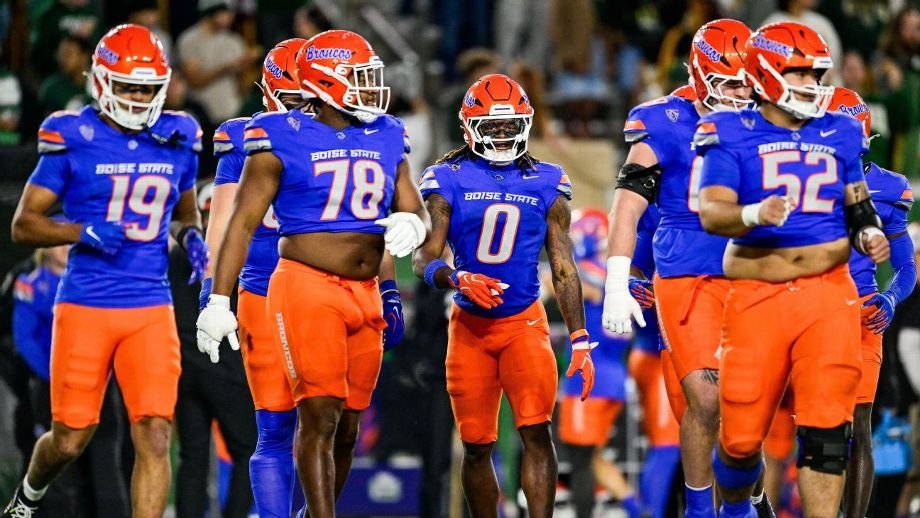
The Pac-12’s first flex scheduling decision was shaped by one major objective: improving the conference’s chances of placing a team in the College Football Playoff. After hours of discussions and multiple scheduling possibilities, commissioner Teresa Gould and conference officials settled on a format that gave Boise State the most favourable opportunity to strengthen its postseason position.
The decision was made during a late-night Zoom meeting on Saturday involving Gould and several members of the Pac-12 staff. The group had started the day with a spreadsheet containing 16 possible combinations of matchups. After working through the available permutations, the conference arrived at a schedule designed to balance competitive interests, postseason opportunities and television requirements.
Boise State’s position became the central consideration because the Broncos were the conference’s leading playoff hopeful from outside the Power 4. Rather than assigning them a tougher opponent, the Pac-12 decided to send Boise State to Colorado State for another meeting, even though Fresno State was higher in the conference standings.
Gould described the process as demanding but enjoyable, explaining that the conference had spent much of Saturday night and Sunday working through the scheduling options.
“It was a very hectic day and late night and early morning, Saturday night and Sunday, but it was actually kind of fun,” Gould told ESPN.
Why the Pac-12 Introduced a Flex Schedule
The Pac-12 faced a scheduling challenge while preparing for its first season with its new membership structure. With only eight football-playing members, the conference had to find a way to organise its schedule without relying on the traditional formats used by larger conferences.
Officials initially considered three realistic options. One possibility was a seven-game conference schedule, which would have required each school to arrange five nonconference games. However, finding quality opponents outside the league was becoming increasingly difficult as the Power conferences expanded their own conference schedules.
The second option involved creating a scheduling partnership with another conference. Such an arrangement could have simplified some logistical challenges, but it would not necessarily have guaranteed stronger or more attractive matchups.
The third possibility was for Pac-12 teams to play one another again in an additional game. After evaluating the alternatives, conference officials concluded that a flex schedule featuring another meeting between league members offered better competitive value.
Gould explained that the conference believed games involving its own members would be stronger than the matchups it could realistically arrange through the other options.
“When we actually evaluated both of those options against this idea of a flex schedule and us playing each other another time as a nonconference game, the strength of the games that we would have playing each other would be far stronger than what we could get in either one of those options,” Gould said.
The idea received support from the athletic directors early in the process. Coaches, however, had more questions about how the format would work and how they should explain the additional matchup to their players.
Gould acknowledged that the coaches had different competitive priorities depending on where their teams stood in the standings. The conference needed to consider the overall interests of the league, while individual coaches naturally focused on the needs of their own programmes.
“Everybody’s sitting at a different place competitively,” Gould said. “So they had a lot more questions around how do we talk about this with our team to make sure that we’re positioning it the right way.”
How the Pac-12 Managed the Flex Week Logistics
One of the conference’s early decisions was to make the practical arrangements easier for all eight participating schools. The four teams that had only three conference home games were designated as hosts for flex week before the season began.
That approach allowed those programmes to prepare for the additional game as they would for any other home fixture. They could organise their facilities, ticketing and other matchday arrangements without waiting until the final week to discover whether they would be hosting.
The remaining four schools knew in advance that they would be travelling during flex week. Their opponents, however, would not be confirmed until the conference completed its scheduling process.
Beyond logistics, the Pac-12 had several competitive objectives. The conference wanted to improve its chances of securing a College Football Playoff place, help teams that were already bowl eligible strengthen their postseason résumés and give as many programmes as possible an opportunity to reach bowl eligibility.
Television scheduling was another important factor. The conference needed to consider the broadcast windows for the flex week games and make sure neither participant in the conference championship game received an advantage through additional rest.
Despite these different considerations, Gould made it clear that the playoff objective remained the most important priority.
“Of course, the priority was CFP, CFP, CFP,” Gould said.
Boise State Became the Main Focus of the Scheduling Decision
The scheduling process was made somewhat easier because five of the eight Pac-12 teams were already bowl eligible, while the other three could no longer reach the required mark. That meant the conference did not have to resolve several competing bowl-eligibility situations involving teams sitting close to the threshold.
Instead, the most important question was how to give Boise State the best opportunity to reach the College Football Playoff. The Broncos entered the flex week with a 9-2 record and remained the conference’s leading playoff hopeful despite a recent defeat.
The Pac-12 ultimately assigned Boise State an away game against Colorado State, scheduled for Saturday at 6 p.m. ET on USA Network. It will be the second meeting between the teams during the season.
Boise State had already defeated Colorado State 64-38 in their earlier matchup. Despite that result, the Broncos were scheduled to return to Colorado State rather than face Fresno State, which was positioned higher in the conference standings.
The choice was deliberate. Conference officials did not believe Boise State needed a more difficult opponent to improve its playoff résumé. Even after the loss to San Diego State, the Pac-12 remained comfortable with the gap it believed existed between Boise State and the other playoff contenders outside the Power 4.
From the conference’s perspective, a tougher matchup could have created an unnecessary risk. Losing to Fresno State could have damaged Boise State’s postseason position, while another game against Colorado State offered the Broncos an opportunity to secure a win without taking on a team near the top of the standings.
CFP Selection Committee Comments Supported Boise State’s Position
The Pac-12’s confidence in Boise State received some support from comments made by Hunter Yurachek, chair of the College Football Playoff selection committee. Speaking on Tuesday night, Yurachek described Boise State as the leading team among the group of playoff hopefuls outside the Power 4 conferences.
“Boise continues to be the leader of that pack with the margin getting closer between Boise and the other teams behind them,” Yurachek said.
However, Boise State had dropped out of the CFP rankings following its Saturday loss to San Diego State. The Broncos had been ranked No. 17 in the previous week’s rankings, but their defeat removed them from the latest top 25.
No other Group of 6 team was included in the CFP top 25 at that stage. That context helped explain why the Pac-12 placed such importance on protecting Boise State’s opportunity to recover and strengthen its résumé.
The conference also knew that Boise State would have another opportunity to improve its postseason case against San Diego State in the Pac-12 championship game. The title matchup was scheduled for December 4 on CBS.
With that championship opportunity already approaching, the conference believed that defeating Fresno State during flex week was not worth the potential risk of losing to a stronger opponent.
Gould explained the reasoning behind the decision, making clear that the conference did not intend to match Boise State against one of the strongest teams in its standings.
“We weren’t going to match them up against a team at the top of our league,” Gould said. “We were going to match them up with somebody that was more in the bottom of our standings.”
Why Fresno State Was Not Selected as Boise State’s Opponent
Fresno State’s position in the standings made it a possible opponent for Boise State, but the Pac-12 decided against that matchup. The conference’s priority was not simply to create the most difficult game or reward teams based on their positions in the table.
Instead, officials evaluated how each possible matchup could affect the conference’s postseason chances. Boise State was considered the leading playoff contender among teams outside the Power 4, and the conference wanted to avoid creating an unnecessary obstacle before the championship game.
The decision was based on the belief that Boise State did not need an additional strength-of-schedule boost to separate itself from other playoff hopefuls. If the Broncos had been in a different position, the conference could have taken another approach.
Gould indicated that the decision could have changed in another season. If Boise State had needed a stronger opponent to improve its résumé and distinguish itself from a competing playoff contender, the Pac-12 could have considered assigning it a more difficult matchup.
That distinction highlights how the flex schedule was intended to respond to the competitive circumstances of the season rather than follow a fixed rule that would apply to every team in every situation.
Television Scheduling and Rest Before the Championship Game
The Pac-12’s scheduling decision was not based entirely on the playoff picture. Television arrangements and the timing of the conference championship game also played a role in determining the final matchups.
The championship game was scheduled for Friday, December 4, meaning the conference wanted Boise State and San Diego State to play in early television windows on Saturday during flex week. That would help ensure that neither team gained a rest advantage before the title contest.
By considering the television windows in advance, the conference could create a schedule that supported its broadcast arrangements while also treating the championship participants fairly.
The Pac-12 also wanted to strengthen the postseason résumés of teams that were already bowl eligible. A more attractive record could make those programmes more appealing to potential bowl partners, giving the flex week a purpose beyond the playoff race.
These additional considerations demonstrate that the conference had to balance several interests while building the schedule. Boise State’s playoff position was the leading priority, but bowl opportunities, television requirements and competitive fairness also influenced the final arrangement.
Pac-12 Considered Allowing Teams to Choose Their Opponents
Before settling on the current format, the conference discussed another possibility that could have made flex week even more unusual: allowing teams to select their own opponents.
Under that proposed system, Boise State could have chosen its preferred destination, with other programmes making their selections afterward. For example, the Broncos’ athletic director, Jeramiah Dickey, could have announced during a televised selection show that Boise State wanted to play Colorado State.
Such a format could have created an entertaining television event. Fans would have been able to watch teams make their selections, while the choices could have generated reactions from the programmes left waiting to discover their opponents.
However, the idea also carried potential complications. The conference was concerned about introducing that level of competition between programmes during the first year of its reconfigured membership.
Gould said there were reservations about allowing coaches and teams to make their own selections in the inaugural season. She explained that the conference wanted everyone to feel comfortable with the new process before considering a more complicated format.
“In Year 1, we were just trying to get everybody to a place of comfort and support and alignment for the process,” Gould said. “I think there was a little bit of angst around coaches or programs ‘making their pick’ and what that does.”
Gould did not rule out revisiting the idea in the future. A team-selection format could potentially add an entertainment element to the flex schedule, but the conference would need to consider how it might affect the competitive balance between its members.
Why the Conference Wanted to Retain Control of Matchups
There was also a practical reason for the Pac-12 to assign the opponents rather than allow teams to choose them. The best decision for an individual programme is not always the best decision for the conference as a whole.
If teams were allowed to select their own opponents, the league could lose some control over its ability to maximise bowl eligibility and improve the postseason résumés of its leading programmes.
For example, an individual team might prefer a particular opponent because it believes the matchup offers a better chance of winning. However, the conference could have a different view based on the wider playoff race, bowl opportunities or the needs of another programme.
By retaining control over the matchups, the Pac-12 could consider all eight teams and make decisions intended to benefit the conference’s overall position. The Boise State assignment was one example of that approach, with officials choosing Colorado State rather than Fresno State because they believed it offered a better balance of opportunity and risk.
The conference will have the option to reconsider its approach in future seasons, particularly if the first flex week provides useful lessons about the scheduling format.
Why the Pac-12 Missed Its Planned Television Announcement
The conference had initially hoped to reveal the flex week matchups during a television window on Saturday night. However, the Oregon State-Utah State game remained close until late in the contest, and the timing did not work out as planned.
As a result, the Pac-12 was unable to make its announcement during the intended broadcast window. Gould said she hoped the conference would be able to use a television opportunity for the announcement in the future.
A televised reveal could give the flex schedule additional attention and help fans understand the thinking behind the matchups. It could also provide an opportunity to explain how the conference balances playoff ambitions, bowl positioning and the interests of its member programmes.
Final Takeaway: Pac-12 Prioritises Boise State’s Playoff Opportunity
The Pac-12’s first flex schedule was the result of an extensive process involving 16 possible matchup combinations, discussions among conference officials and competing priorities from schools in different positions.
Ultimately, the conference placed its College Football Playoff ambitions above the other considerations. With five teams already bowl eligible and the remaining three unable to reach that mark, the main challenge was finding a schedule that would give Boise State the strongest possible opportunity to remain in the playoff conversation.
Sending the 9-2 Broncos to Colorado State instead of Fresno State reflected the conference’s belief that Boise State did not need a tougher opponent and that the risk of a damaging defeat outweighed the potential benefit of beating a stronger team.
The upcoming championship game against San Diego State on December 4 offered another opportunity for Boise State to strengthen its résumé. Meanwhile, the flex week also gave the Pac-12 a chance to improve other teams’ postseason profiles and manage television and rest requirements.
For Gould and the conference staff, the first flex schedule represents a new approach to managing an eight-team football league. The format could evolve in future seasons, particularly if the Pac-12 decides to revisit the idea of allowing teams to select their own opponents.
For breaking news and live news updates, like us on Facebook or follow us on Twitter and Instagram. Read more on Latest Sports on thefoxdaily.com.






COMMENTS 0