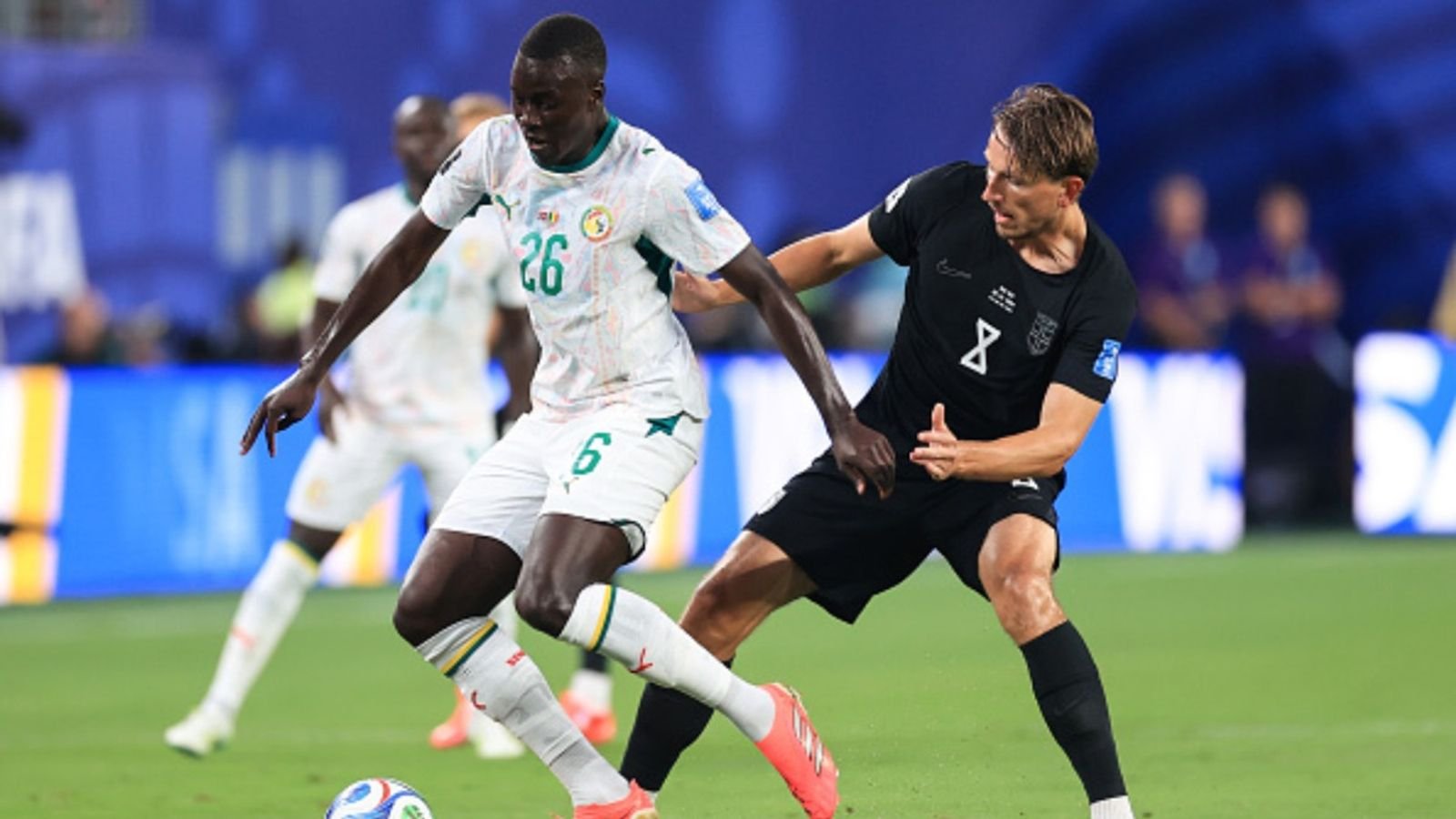
Pape Gueye retirement from Senegal has quickly become one of the biggest stories emerging from the FIFA World Cup 2026. Just hours after Senegal suffered a dramatic knockout-stage defeat to Belgium, the Villarreal midfielder made a stunning declaration that he would no longer represent his country while the current technical staff remains in charge.
The announcement has shifted attention away from the match itself and toward deeper issues surrounding Senegal’s national team setup. While fans were still processing a painful World Cup exit, Gueye’s public statement opened a new chapter of uncertainty for one of Africa’s most successful football nations.
His comments have raised critical questions: Why would a key player step away from international football at just 26 years old? What does this reveal about the atmosphere within the squad? And could this decision trigger wider changes within Senegalese football?
As the dust settles on Senegal’s World Cup campaign, Gueye’s decision may prove to be one of the tournament’s most significant off-field developments.
Pape Gueye Announces International Retirement Amid World Cup Disappointment
The timing of Gueye’s announcement made headlines across the football world.
Senegal entered their Round of 32 clash against Belgium with confidence and appeared firmly in control after establishing a two-goal advantage. Goals from Habib Diarra and Ismaila Sarr put the African side in a commanding position and seemingly on course for a place in the Round of 16.
However, football often delivers unexpected twists.
Belgium mounted a remarkable comeback, with Romelu Lukaku igniting hopes before Youri Tielemans equalized late in the contest. The Belgian midfielder then completed the turnaround with a decisive extra-time penalty, ending Senegal’s World Cup dream in dramatic fashion.
Shortly after the defeat, Gueye used social media to reveal that he would no longer represent Senegal under the current coaching staff.
While he stopped short of providing a detailed explanation, he indicated that further information regarding both the elimination and his decision would be shared at a later date.
The statement immediately sparked speculation about possible tensions behind the scenes and whether deeper issues contributed to Senegal’s disappointing tournament exit.
Who Is Pape Gueye? Understanding His Importance to Senegal
To understand why this announcement has generated such attention, it is important to recognize Gueye’s significance within Senegalese football.
Born in France, Gueye chose to represent Senegal at international level and quickly became an important figure in the national team setup.
Since making his debut in 2021, he has earned 45 international caps and established himself as a reliable presence in midfield.
His combination of defensive discipline, ball progression, tactical awareness, and physicality helped make him one of Senegal’s most trusted performers.
More importantly, Gueye was part of the squad that achieved one of the greatest milestones in the nation’s football history.
When Senegal captured its first-ever Africa Cup of Nations title in 2021, Gueye played a significant role in the historic triumph. That victory elevated an already talented generation into legendary status within the country.
The achievement was so significant that members of the squad received national honors in recognition of their contribution to Senegalese sport.
The Dramatic World Cup Exit That Changed Everything
Football history is filled with matches that alter the trajectory of teams, players, and even entire programs.
Senegal’s defeat against Belgium could become one of those moments.
For much of the match, Senegal appeared tactically organized, energetic, and capable of managing the contest. Their two-goal lead reflected a strong performance and showcased the attacking quality that had carried them through previous stages.
Yet football’s fine margins can be cruel.
Belgium’s comeback exposed vulnerabilities that had remained hidden during much of Senegal’s campaign. Defensive concentration slipped, momentum shifted, and a seemingly secure victory transformed into a devastating elimination.
Such defeats often leave emotional scars that extend beyond the final whistle.
Whether Gueye’s decision was influenced solely by long-standing frustrations or intensified by the disappointment of the defeat remains unclear. However, the timing suggests the World Cup exit may have been a significant catalyst.
What Gueye’s Statement Suggests About Internal Concerns
One aspect that makes this story particularly noteworthy is the specificity of Gueye’s announcement.
He did not retire from football entirely.
He did not close the door permanently on representing Senegal.
Instead, he specifically stated that he would not play under the current technical staff.
This distinction is crucial.
It suggests that his concerns may be directed toward coaching, management, communication, or decision-making processes rather than the national team itself.
In football, public disagreements between players and coaching staffs are relatively rare because most disputes remain private. When a player openly links his international future to the status of the coaching team, it often indicates deeper dissatisfaction.
Without further details, it would be inappropriate to speculate on specific grievances. Nevertheless, the statement alone is enough to place increased scrutiny on Senegal’s leadership structure.
How Coaching Stability Influences International Success
The situation highlights a broader issue that affects national teams worldwide: the importance of trust between players and coaching staffs.
Successful international teams generally share several characteristics:
- Clear tactical identity
- Strong player-manager relationships
- Effective communication
- Consistent leadership
- Shared long-term vision
- Positive dressing-room culture
When any of these elements weaken, tensions can emerge.
History shows that disagreements between influential players and coaching staffs have often preceded major organizational changes. In some cases, federations back managers. In others, player concerns lead to leadership restructuring.
The coming months may reveal which path Senegal chooses.
Senegal’s Golden Generation Faces a Critical Crossroads
For more than a decade, Senegal has been regarded as one of Africa’s football powerhouses.
The country has consistently produced elite talent capable of competing in Europe’s top leagues. Players such as Sadio Mane, Kalidou Koulibaly, Edouard Mendy, Idrissa Gueye, and others helped establish Senegal as a global football force.
The Africa Cup of Nations victory represented the peak of this generation’s success.
However, football cycles inevitably evolve.
Several senior players are approaching the latter stages of their international careers, while younger talents are preparing to assume greater responsibility.
Gueye’s announcement arrives during this transitional period, making it even more significant.
If unresolved issues exist within the setup, addressing them quickly could be essential for maintaining Senegal’s competitive position ahead of future tournaments.
Comparing Senegal’s Situation With Other International Teams
Football history offers numerous examples of players publicly challenging coaching structures after major tournaments.
| Situation | Common Cause | Potential Outcome |
|---|---|---|
| Post-tournament retirement | Disappointment or transition | Squad rebuild |
| Player-coach disagreement | Tactical or management concerns | Leadership review |
| Public criticism | Communication breakdown | Federation intervention |
| Conditional retirement | Loss of confidence in staff | Organizational changes |
What makes Gueye’s case unusual is that he remains in his athletic prime. Players often retire internationally in their thirties after long careers. Gueye’s decision at 26 suggests the issue may be more complex than age, fitness, or future planning.
The Potential Impact on Senegal’s Squad Dynamics
One player alone does not determine a team’s future, but influential figures can shape dressing-room culture and public perception.
Gueye’s departure could create several challenges:
- Loss of midfield experience
- Reduced tactical flexibility
- Questions about squad unity
- Increased media scrutiny
- Pressure on federation leadership
At the same time, it could also create opportunities for emerging talents seeking larger roles within the national team.
How Senegal responds will be critical in determining whether this becomes a temporary setback or a prolonged issue.
Why This Matters Beyond One Player
Although headlines focus on Pape Gueye, the broader significance lies in what the situation reveals about modern international football.
National teams today operate under intense public scrutiny. Every tactical decision, squad selection, substitution, and tournament result is analyzed in real time by fans and media worldwide.
In this environment, maintaining unity becomes increasingly difficult.
When respected players publicly express dissatisfaction, supporters naturally begin asking questions about leadership, communication, and organizational direction.
For Senegal, the challenge is not merely replacing a midfielder. It is ensuring confidence remains strong throughout the entire football structure.
What Happens Next?
The next few months could prove pivotal for Senegalese football.
Several scenarios remain possible:
- Gueye provides further clarification and reconciliation becomes possible.
- The coaching staff remains unchanged, making his retirement decision permanent.
- The federation launches an internal review following the World Cup campaign.
- Broader structural changes emerge as part of preparations for future competitions.
Much will depend on the explanations Gueye promised to provide in the future and how Senegal’s football authorities respond to the growing attention surrounding the issue.
Until then, uncertainty will continue to dominate discussions about the national team.
Conclusion
The Pape Gueye retirement announcement following Senegal’s FIFA World Cup 2026 exit represents far more than the departure of a talented midfielder. It has exposed potential concerns within the national team setup and raised important questions about leadership, communication, and the future direction of Senegalese football.
Coming immediately after a heartbreaking defeat to Belgium, the timing of the announcement has amplified its impact and ensured it will remain a major talking point in the weeks ahead.
As one of the key figures in Senegal’s historic Africa Cup of Nations-winning generation, Gueye’s decision carries significant weight. Whether it ultimately leads to reconciliation, coaching changes, or a broader restructuring effort remains to be seen.
What is certain is that Senegal now faces one of its most important post-tournament periods in recent years. The decisions made in response to this controversy could shape the future of the Lions of Teranga for years to come.
For breaking news and live news updates, like us on Facebook or follow us on Twitter and Instagram. Read more on Latest Sports on thefoxdaily.com.

COMMENTS 0