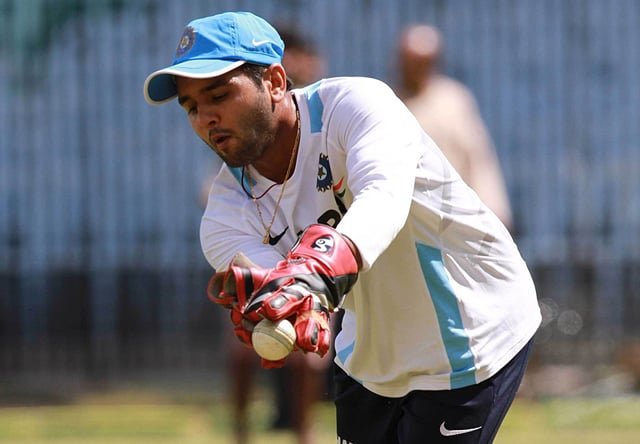
Rishabh Pant remains one of the most naturally gifted wicketkeeper-batters in Indian Cricket, but his recent white-ball form has created questions about his place in India’s limited-overs plans.
Former India cricketer Parthiv Patel has now offered a blunt assessment of Pant’s performances in ODIs, T20Is and the Indian Premier League. Speaking during a conversation with former India batter Aakash Chopra, Patel said he was surprised that Pant had not consistently produced performances matching his ability in white-ball cricket.
At the same time, Patel made a clear distinction between Pant’s limited-overs record and his impact in Test cricket. According to the former wicketkeeper, Pant’s value in the longest format remains comparable to that of India’s biggest match-winners.
“He Has Not Been Able to Perform as Per His Ability”
Patel’s biggest criticism was not directed at Pant’s talent but at the gap between his potential and his recent white-ball output.
The former cricketer described Pant’s limited-overs numbers as something of a puzzle. In his assessment, the wicketkeeper-batter has struggled to consistently reproduce the level of performances that his ability suggests he is capable of delivering.
That criticism covers three important areas: ODI cricket, T20Is and franchise cricket.
Pant has produced several memorable innings across his career, but Patel believes that his overall white-ball consistency has not matched the expectations surrounding a player of his quality.
Rishabh Pant’s ODI and T20I Numbers
Pant’s career statistics provide some context to Patel’s argument. According to the figures cited in the source material, the left-hander has played 31 ODIs for India and scored 871 runs.
His ODI batting average is 33.50, while his strike rate is an impressive 106.21. He has also registered one century and five half-centuries in the format.
In T20Is, Pant has represented India in 76 matches and accumulated 1,209 runs. His average stands at 23.25, with a strike rate of 127.26 and three half-centuries.
| Format | Matches | Runs | Average | Strike Rate |
|---|---|---|---|---|
| ODIs | 31 | 871 | 33.50 | 106.21 |
| T20Is | 76 | 1,209 | 23.25 | 127.26 |
| Tests | 52 | 3,725 | 43.82 | — |
The statistics demonstrate an interesting contrast. Pant’s aggressive style has produced a strong scoring rate in white-ball cricket, but his batting average in T20Is in particular remains lower than what might be expected from a player of his reputation.
Why Pant Remains Extremely Valuable in Test Cricket
While Patel questioned Pant’s white-ball consistency, he was equally emphatic about the wicketkeeper-batter’s importance in Test cricket.
Pant has developed into one of India’s most influential Test match players. His ability to change the momentum of a game from the middle order has repeatedly made him an important part of India’s Test strategy.
Patel went as far as comparing Pant’s importance in Tests with India’s premier fast bowler Jasprit Bumrah and the leadership impact of Virat Kohli.
The point is not that the three players perform identical roles. Rather, Patel’s assessment highlights the match-winning influence Pant can have when playing Test cricket at his best.
Pant’s Test Record Tells a Different Story
Pant’s Test statistics are significantly stronger than his white-ball batting numbers.
In 52 Tests, he has scored 3,725 runs at an average of 43.82. His record includes eight centuries and 21 half-centuries.
His contribution behind the stumps has also been substantial. The source material credits him with 166 catches and 18 stumpings in Test cricket.
These numbers underline why Patel considers Pant such an important Test wicketkeeper-batter for India.
Parthiv Patel Defends Pant’s Wicketkeeping
Patel’s comments were not limited to Pant’s batting. He also defended the wicketkeeper’s work behind the stumps.
According to Patel, Pant’s wicketkeeping ability is sometimes overlooked because his technique does not necessarily resemble that of a traditionally styled wicketkeeper.
Patel specifically compared Pant with Wriddhiman Saha, widely regarded for his technically polished wicketkeeping. While acknowledging the difference in style, Patel argued that Pant’s consistency behind the stumps should receive greater recognition.
The former India wicketkeeper also pointed out that Pant has operated successfully on difficult pitches and has generally maintained a reliable standard behind the wickets.
Why Pant’s Aggressive Batting Creates a Double Standard
One of the more interesting aspects of Patel’s comments was his discussion of Pant’s attacking approach.
Pant’s aggressive batting has become one of his defining characteristics. He is willing to take risks, attack unconventional deliveries and attempt shots that many conventional batters would avoid.
That style can produce spectacular match-winning innings, but it can also lead to criticism when an aggressive shot results in dismissal.
Patel’s argument is that it is inconsistent to criticize Pant whenever an attacking approach fails and then celebrate the same approach when it produces a match-winning innings.
For Patel, Pant’s aggressive style is part of what makes him an X-factor player.
“You Cannot Tell Him to Be More Responsible”
Patel believes asking Pant to completely change his attacking instincts would risk removing the quality that makes him such a dangerous batter.
Instead of simply demanding greater caution, the challenge is to help Pant understand when and how to use his attacking abilities according to the format and match situation.
This distinction becomes especially important in ODI cricket, where the tempo of an innings can change several times during the course of 50 overs.
Where Pant Can Improve in ODI Cricket
Patel identified one particular area where Pant could make a significant improvement in one-day cricket: controlling the tempo of his innings.
According to the former cricketer, ODI batting is not simply about hitting boundaries. A successful batter also needs to rotate the strike, take singles and understand when to accelerate.
Patel pointed to Virat Kohli and Shubman Gill as examples of batters who are capable of managing this tempo effectively.
The idea is particularly relevant to Pant because his natural instinct is often to attack. If he can combine that aggression with better control over singles and strike rotation, he could potentially become a more consistent ODI batter.
Why Singles and Strike Rotation Matter
One-day cricket requires batters to constantly assess the situation. There are periods when boundaries are available, but there are also long stretches when rotating the strike becomes the most efficient way to maintain momentum.
A batter who relies exclusively on boundaries can become vulnerable when bowlers change their plans or when field placements make attacking shots more difficult.
Patel’s suggestion is therefore not necessarily that Pant should become defensive. Instead, he believes Pant needs to develop another layer to his batting.
If Pant can rotate the strike effectively before choosing the right moments to attack, his natural power could become even more dangerous.
The Challenge of Being India’s Second Wicketkeeper
Another point raised by Patel was the intense competition for wicketkeeper-batter positions in Indian cricket.
When a player is not the first-choice wicketkeeper, remaining visible to selectors becomes more difficult. A strong domestic season from another wicketkeeper can quickly change the selection picture.
Patel referred to Ishan Kishan’s domestic performances as an example of how competition can influence the pecking order.
For Pant, this means that returning to India’s white-ball setup is not simply about reputation. Strong performances will remain important as India continues to develop its wicketkeeper-batter options.
Pant’s Current Position in India’s White-Ball Setup
Pant is currently not part of India’s white-ball setup during the home series against West Indies, according to the source material. He was seen playing in the Irani Cup instead.
His last ODI appearance for India came in 2024 against Sri Lanka. Since then, the competition for limited-overs places has continued to evolve.
The absence of a player of Pant’s profile naturally creates debate, particularly because of his proven match-winning ability in international cricket.
However, Patel’s comments suggest that the pathway back into the ODI side may require Pant to demonstrate greater consistency rather than simply relying on his established reputation.
Why Pant’s Comeback Could Still Be Important for India
Despite the criticism, there is little doubt that Pant remains a player with extraordinary potential.
His Test record demonstrates his ability to turn games around, while his ODI strike rate shows that he possesses the scoring ability required in modern limited-overs cricket.
The challenge is finding the right balance between aggression and consistency.
If Pant can improve his ability to manage an ODI innings without sacrificing the attacking instincts that make him unique, he could once again become an important option for India’s white-ball teams.
Parthiv Patel’s Assessment Is More Nuanced Than Simple Criticism
At first glance, Patel’s comments may appear harsh because he directly questioned Pant’s white-ball performances. However, his overall assessment was far more balanced.
He acknowledged Pant’s shortcomings in limited-overs cricket while simultaneously describing him as one of India’s most important Test wicketkeeper-batters.
That distinction is significant. Patel is not questioning Pant’s ability as a cricketer. Instead, he is highlighting the difference between potential and consistent output in white-ball formats.
What Rishabh Pant Needs to Do Next
- Improve ODI consistency: Pant needs to convert his talent into more regular substantial contributions.
- Manage innings tempo: He can combine boundary-hitting with better strike rotation.
- Choose attacking moments: Aggression can remain a strength while being applied more selectively.
- Maintain wicketkeeping standards: His value is greatest when his batting and wicketkeeping contributions come together.
- Perform consistently in domestic opportunities: Strong performances can strengthen his case for another white-ball recall.
Conclusion
Parthiv Patel’s comments have put the spotlight back on Rishabh Pant’s contrasting records across formats. While Pant remains an enormously influential Test wicketkeeper-batter, his white-ball numbers have not consistently matched the expectations surrounding his talent.
The statistics explain why Patel raised the issue, particularly Pant’s T20I average and his overall ODI output. At the same time, his Test record demonstrates why India would be reluctant to overlook his match-winning abilities completely.
The biggest challenge for Pant in ODI cricket may be finding the right tempo. He does not necessarily need to abandon his aggressive style. Instead, learning when to rotate the strike, when to absorb pressure and when to attack could make his batting more complete.
For a player with Pant’s proven ability to change matches, a successful return to India’s white-ball plans could still be significant. The next stage of his career will depend on whether he can turn that extraordinary potential into consistent performances across formats.
For breaking news and live news updates, like us on Facebook or follow us on Twitter and Instagram. Read more on Latest Cricket on thefoxdaily.com.






COMMENTS 0