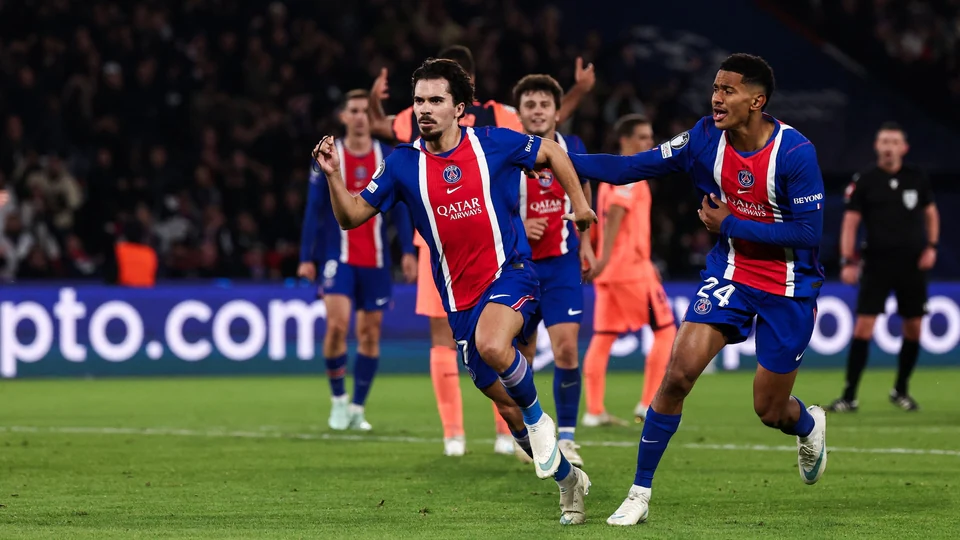
Paris Saint-Germain delivered another statement performance in the UEFA Champions League, defeating Barcelona 4-2 in a thrilling encounter that showcased the French side’s attacking depth, tactical discipline and ability to respond under pressure. Although the scoreline suggests a comfortable victory, the contest was far more competitive, with Barcelona threatening to turn the match in their favour before PSG produced a decisive late surge.
The victory further strengthened PSG’s ambitions of winning a third consecutive Champions League title. After overcoming Manchester City in another high-profile European encounter, Luis Enrique’s side demonstrated that its success is built on more than individual brilliance. PSG have developed a cohesive system that allows different players to take responsibility, maintain attacking intensity and deliver when the pressure is at its highest.
Desire Doue emerged as one of the standout performers against Barcelona, scoring the opening goal and providing an assist. Vitinha and Fabian Ruiz also made crucial contributions during a decisive spell late in the match, while Lucas Hernandez found the net to help PSG regain control after Barcelona had threatened a comeback.
Barcelona showed resilience, particularly in the second half, but injuries, defensive adjustments and PSG’s relentless pressing exposed the difference between the two teams on the night. The result reinforced PSG’s credentials as serious contenders for another European crown while highlighting the tactical challenges Barcelona must overcome against elite opposition.
PSG Start at Full Throttle as Barcelona Struggle to Settle
PSG established their intentions immediately, pressing Barcelona aggressively and playing at a high tempo. Their approach reflected the intensity they had displayed against Manchester City, when they established a commanding lead early in the match and maintained pressure on their opponents.
Barcelona were prepared for the challenge, but their defensive setup carried an additional risk. With Jules Kounde and Eric Garcia unavailable because of injuries, manager Hansi Flick was forced to make changes, including handing 19-year-old Xavi Espart a starting role at right-back. Joao Cancelo operated on the left, while Pau Cubarsi and Martin occupied the central defensive positions.
The reshuffled defence faced an immediate examination. In the second minute, Khvicha Kvaratskhelia struck the post, signalling PSG’s attacking intent. Ousmane Dembele then tested goalkeeper Joan Garcia with a shot on target in the fifth minute, before Doue followed with another attempt that required the Barcelona goalkeeper to intervene.
Garcia’s early saves prevented Barcelona from falling behind quickly and gave the visitors time to settle into the contest. Pedri also demonstrated Barcelona’s ability to respond, carrying the ball forward from midfield, gliding past PSG players and attempting a shot that was eventually blocked by Willian Pacho.
That exchange established the pattern of the game. Both sides created opportunities, but PSG looked more comfortable imposing their preferred tempo. Their aggressive pressing forced Barcelona to make decisions quickly, disrupting the patient build-up that has become an important part of Flick’s football.
Rather than allowing Barcelona to construct attacks through short passes from the back, PSG attempted to close passing lanes and win possession in dangerous areas. The pressure became increasingly difficult for the visitors to manage, particularly when their defensive line was forced to deal with PSG’s pace and movement.
Dembele’s Injury Fails to Disrupt Luis Enrique’s Plan
PSG suffered an early setback when Dembele was forced off with an injury in the 18th minute. The forward had been an important part of their attacking structure, and his departure could have disrupted the rhythm of a team already committed to playing at a high intensity.
However, PSG continued to attack without losing their composure. The response highlighted one of the defining characteristics of Enrique’s side: the system is designed to function through collective movement rather than depending entirely on one individual.
Enrique has managed his squad with an emphasis on maintaining intensity for major European fixtures, rotating players during domestic league matches when possible. Dembele’s limited league involvement during the season had illustrated the importance attached to managing his workload, although his early withdrawal against Barcelona showed that injuries can still complicate those plans.
PSG’s ability to absorb the setback without abandoning their tactical approach proved important. Vitinha continued to dictate the rhythm in midfield, while Fabian Ruiz and Joao Neves pressed aggressively to limit Barcelona’s time on the ball.
Barcelona, meanwhile, increasingly relied on longer passes from goalkeeper Joan Garcia rather than consistently building through the defensive line. Those clearances reflected the difficulty of playing through PSG’s pressure and the risk of losing possession close to their own penalty area.
The absence of Rodri from Barcelona’s starting lineup was also felt during the first half. His ability to provide composure in possession could have helped the visitors resist PSG’s pressure and maintain control of the midfield. Although he entered the match later in the second half, Barcelona initially struggled to establish the same level of assurance in their build-up.
Desire Doue Punishes Barcelona’s Mistake Before Half-Time
Barcelona’s goalkeeper kept the scoreline level for much of the opening period, but PSG eventually found the breakthrough through Doue in the 38th minute.
Lamine Yamal had been relatively quiet by his usual standards, but a mistake from the Barcelona youngster gave PSG the opportunity they had been searching for. Neves intercepted the ball and quickly passed it to Doue, who demonstrated the composure and technical quality that have made him one of the team’s most exciting attacking players.
Doue found space between two defenders and finished from outside the box, sending the ball beyond Garcia to give PSG a deserved lead.
The goal reflected the consequences of Barcelona’s difficulty in maintaining possession under pressure. Against a team as aggressive as PSG, even a brief lapse can create an immediate scoring opportunity. Neves reacted quickly to the turnover, while Doue made the most of the space available to him.
PSG’s first-half performance was particularly striking because of the number of chances they created. According to Opta Analyst, the French side recorded 10 shots on target in the first half alone. That was the highest number of first-half shots on target conceded by Barcelona in a Champions League match since at least the 2003-04 season.
The statistic underlined the scale of PSG’s attacking pressure. Barcelona were not simply defending against isolated attacks; they were repeatedly required to deal with dangerous attempts on goal.
Garcia’s performance prevented the situation from becoming even worse. His saves kept Barcelona within reach, allowing Flick’s side to enter the second half with an opportunity to reorganise and find a way back into the match.
Xavi Espart Gives Barcelona Hope With an Unexpected Goal
Barcelona emerged for the second half with a more patient approach. Rather than rushing their build-up, they attempted to retain possession for longer periods and find openings through controlled passing movements.
The adjustment helped the visitors gain greater control of the game and eventually produced an equaliser through an unlikely source. In the 55th minute, 19-year-old right-back Espart scored after receiving a well-timed pass from Fermin Lopez.
Despite facing pressure from Pacho and Lucas Hernandez, Espart maintained his composure and finished the opportunity to bring Barcelona level. It was a significant moment for the young defender, who had been handed a difficult assignment because of injuries to more experienced players.
The goal also demonstrated Barcelona’s ability to respond tactically. After spending much of the first half under pressure, they began to move the ball more effectively and create situations in which their players could attack PSG’s defensive structure.
For a period, Barcelona looked capable of taking control. Their improved possession forced PSG to defend more deeply, while the visitors gained confidence from the equaliser.
PSG also made changes during this spell, with Marquinhos and Kvaratskhelia leaving the pitch in the 59th minute for fitness-related reasons, according to the supplied match account. Their departures added another challenge for Enrique, whose side had already lost Dembele early in the game.
However, PSG did not abandon their attacking intentions. Even when Barcelona controlled possession, the French side continued to look for opportunities to exploit spaces and regain the lead.
Lucas Hernandez Restores PSG’s Advantage From a Set Piece
Barcelona’s period of control did not translate into a sustained lead. PSG found a way to regain the advantage in the 72nd minute through a set-piece situation.
Doue delivered the corner, and Lucas Hernandez produced a superb header to put PSG back in front. The goal highlighted another important dimension of the French side’s attack: they could threaten opponents through structured possession, quick transitions and dead-ball situations.
The timing was crucial. Barcelona had worked hard to recover from their first-half deficit and had begun to influence the match more consistently. Conceding from a corner forced them to chase the game again and created the possibility of further spaces opening up in their defence.
For PSG, the goal was also evidence of their ability to remain dangerous during difficult periods. They had struggled to control parts of the second half, but they continued to look for opportunities rather than allowing Barcelona’s possession to dictate the final outcome.
Hernandez’s header restored the advantage, but Barcelona were not finished. Their response once again demonstrated the attacking quality available to Flick, particularly through Yamal, whose individual ability can change the course of a match in a single moment.
Lamine Yamal Produces a Moment of Brilliance
Barcelona needed a moment of individual quality to get back into the contest, and Yamal delivered in the 79th minute.
The young winger outsmarted Warren Zaire-Emery before finishing from a tight angle with impressive precision. His goal brought Barcelona level again and briefly threatened to undo PSG’s hard work in regaining the lead.
Yamal’s finish demonstrated why he remains such an important figure in Barcelona’s attacking plans. Even when his influence has been limited for long periods, his close control, decision-making and ability to create shooting opportunities can make him dangerous.
The goal also gave Barcelona renewed belief at a crucial stage of the match. Having recovered from one deficit, they had now responded again after Hernandez’s header. With the score level at 2-2, the contest appeared set for a dramatic finish.
However, PSG responded with the composure and attacking urgency that have become central to their European performances. Instead of allowing Yamal’s equaliser to shift the momentum permanently, they immediately looked for another goal.
PSG Deliver a Ruthless Late Response
The closing stages provided the clearest evidence of PSG’s mentality. Vitinha restored the lead in the 81st minute, producing a superb finish that gave Barcelona little time to celebrate their equaliser.
The goal was important not only because it put PSG ahead again, but also because of how quickly the team responded to adversity. Barcelona had twice fought their way back into the contest, yet PSG remained focused on attacking rather than becoming cautious.
With the lead restored, the French side sensed an opportunity to finish the match. They continued to exploit spaces in Barcelona’s defensive structure and looked for openings on the counterattack.
Achraf Hakimi helped create the decisive opportunity, delivering a cross that Fabian Ruiz converted with a close-range finish. The goal made it 4-2 and effectively settled the contest.
PSG’s final two goals illustrated the importance of maintaining attacking intent late in a high-stakes match. Barcelona had shown resilience and technical quality, but the visitors struggled to contain PSG’s speed and movement during the closing minutes.
The result also followed a pattern seen in PSG’s encounter with Manchester City. In that match, PSG were able to respond during key periods and secure a 4-2 victory despite facing spells of opposition pressure.
These performances suggest that PSG are becoming increasingly comfortable navigating matches in which control shifts between teams. They do not necessarily need to dominate every minute to win. Instead, they can absorb pressure, identify weaknesses and deliver decisive attacks when opportunities emerge.
Desire Doue Emerges as PSG’s New Attacking Talisman
While the collective performance was central to PSG’s victory, Doue’s contribution stood out. The young French forward scored the opening goal and provided the assist for Hernandez’s header, making him directly responsible for two of the team’s four goals.
His performance against Barcelona represented another important step in his development. Doue has already shown considerable promise over the previous two seasons, but his impact in this high-profile European match reinforced his growing importance to Enrique’s attacking plans.
The supplied match statistics underline his involvement. Doue recorded 53 touches, attempted four shots, placed two on target and registered an expected goals figure of 0.24. His expected goals on target stood at 0.22, while his expected assists figure was 0.36.
Although expected goals and expected assists are estimates rather than definitive measures of performance, the numbers provide context for his contribution. Doue was involved in dangerous attacking situations, found opportunities to shoot and created a chance that led to a goal.
His opening strike was particularly impressive because it came after PSG capitalised on a turnover. He showed awareness to find space between defenders and the technical quality to finish from outside the box.
The assist for Hernandez demonstrated another side of his game. Rather than focusing exclusively on scoring, Doue contributed to a set-piece opportunity that helped PSG regain control during a difficult phase of the match.
His performance is also significant when viewed in the context of PSG’s changing attacking hierarchy. Dembele was a central figure during the 2024-25 campaign, while Kvaratskhelia has also played an important role in the team’s attacking structure. Doue is now establishing himself as another player capable of deciding major matches.
That distribution of responsibility is a strength for PSG. Opponents cannot focus exclusively on neutralising one forward when multiple players have the ability to score, create chances and influence the outcome.
Luis Enrique’s System Is PSG’s Biggest Strength
PSG’s victory over Barcelona was not simply a result of individual brilliance. It reflected a tactical structure that allows the team to remain dangerous even when important players are unavailable or the match does not unfold as expected.
Enrique has developed a side that combines aggressive pressing with technical quality in possession. Vitinha provides control in midfield, while Ruiz and Neves contribute energy and pressure. The attacking players are encouraged to move into spaces, create overloads and react quickly when the opposition loses possession.
The system also depends on squad depth. Dembele’s early injury and the later substitutions of Marquinhos and Kvaratskhelia could have forced PSG to abandon their preferred approach. Instead, the team continued to create chances and maintained its intensity until the final whistle.
Smart squad management is another part of the strategy. Rotating players during domestic fixtures can help key performers maintain their fitness for major European matches. While rotation cannot eliminate the risk of injuries, it can help preserve energy across a demanding schedule.
PSG’s ability to keep attacking when the match becomes uncomfortable also recalls the mentality associated with successful Real Madrid teams under Zinedine Zidane and Carlo Ancelotti. Those sides frequently demonstrated that controlling every phase of a game is not always necessary when a team has the confidence and quality to produce decisive moments.
PSG are developing a similar capacity to respond under pressure. Their performance against Barcelona showed that they can concede momentum, face an opponent’s comeback and still find a way to win convincingly.
Barcelona’s Injuries and Defensive Problems Expose Their Limitations
Barcelona deserve credit for their second-half response, but the defeat exposed several weaknesses that Flick must address when facing elite European opponents.
The absence of Kounde and Eric Garcia forced Barcelona to reorganise their defence, leaving Espart to make his starting contribution at right-back under intense pressure. Although the young defender scored an impressive goal, PSG repeatedly tested the reshuffled defensive line during the opening period.
The first-half shot statistics were particularly concerning. Conceding 10 shots on target before the break indicated that Barcelona struggled to contain PSG’s attacks and protect their goalkeeper.
Garcia’s saves helped keep the match competitive, but relying on a goalkeeper to repeatedly prevent goals is difficult to sustain against a side with PSG’s attacking depth.
Barcelona’s difficulties in playing out from the back were another concern. PSG’s pressing forced the visitors to use longer passes, reducing their ability to build attacks through controlled possession.
The second-half improvement demonstrated that Barcelona can respond to tactical problems. By becoming more patient with the ball, they found ways to create chances and scored twice through Espart and Yamal.
Nevertheless, their defensive vulnerabilities returned during the closing stages. Hernandez’s header from a corner and Ruiz’s close-range finish after Hakimi’s cross showed how PSG could exploit different types of attacking situations.
For Barcelona, the lesson is that technical quality and attacking talent must be supported by defensive organisation and composure under pressure. Their comeback demonstrated potential, but PSG’s response exposed the difficulty of sustaining that level against a team capable of punishing mistakes.
Can PSG Win a Third Consecutive Champions League Title?
PSG’s victories over Manchester City and Barcelona have strengthened the argument that they can remain among the leading contenders for the Champions League. Beating two high-profile opponents by a 4-2 scoreline sends a clear message about their attacking quality and ability to handle demanding European fixtures.
However, winning the competition three times in succession requires more than a handful of impressive performances. The Champions League presents different tactical challenges at every stage, and teams must maintain consistency across a long campaign while managing injuries, suspensions and the physical demands of domestic football.
PSG’s current strengths nevertheless provide a solid foundation. Their attack has multiple sources of goals, their midfield can combine control with aggressive pressing, and their tactical system allows them to remain dangerous even when opponents enjoy periods of possession.
Doue’s emergence is particularly encouraging because it gives Enrique another player capable of deciding major matches. If he continues to develop alongside established contributors such as Vitinha, Ruiz, Hakimi and Dembele, PSG will have several ways to break down opposing defences.
The team’s mentality is equally important. Against Barcelona, PSG were twice challenged after taking the lead, yet they responded with goals rather than allowing frustration to affect their approach. That resilience could prove valuable in knockout matches, where a single moment can determine whether a campaign continues.
Still, the Barcelona match also revealed areas for improvement. Dembele’s injury and the fitness-related substitutions of other key players highlighted the need for squad depth and careful workload management. PSG will need to maintain that depth throughout the competition if they are to sustain their ambitions.
Conclusion: PSG Send a Warning to Europe’s Elite
PSG’s 4-2 victory over Barcelona was a demonstration of attacking quality, tactical flexibility and resilience under pressure. Barcelona fought back twice and showed why their young attacking players remain dangerous, but PSG’s ability to respond in the decisive moments proved the difference.
Doue delivered a performance that could mark an important stage in his rise, while Vitinha and Ruiz helped turn a tense contest into a convincing win. Hernandez’s header also underlined PSG’s threat from set pieces, giving Enrique’s side another route to goal.
Above all, the result reinforced the idea that PSG’s strength lies in their collective system rather than dependence on one superstar. Their ability to rotate intelligently, press aggressively and maintain attacking intensity gives them a strong platform for another European campaign.
With commanding performances against Manchester City and Barcelona, PSG have sent a clear message to their Champions League rivals. A third consecutive title remains a demanding objective, but Enrique’s side have demonstrated the depth, confidence and ruthlessness required to pursue it seriously.
For breaking news and live news updates, like us on Facebook or follow us on Twitter and Instagram. Read more on Latest Football on thefoxdaily.com.






COMMENTS 0