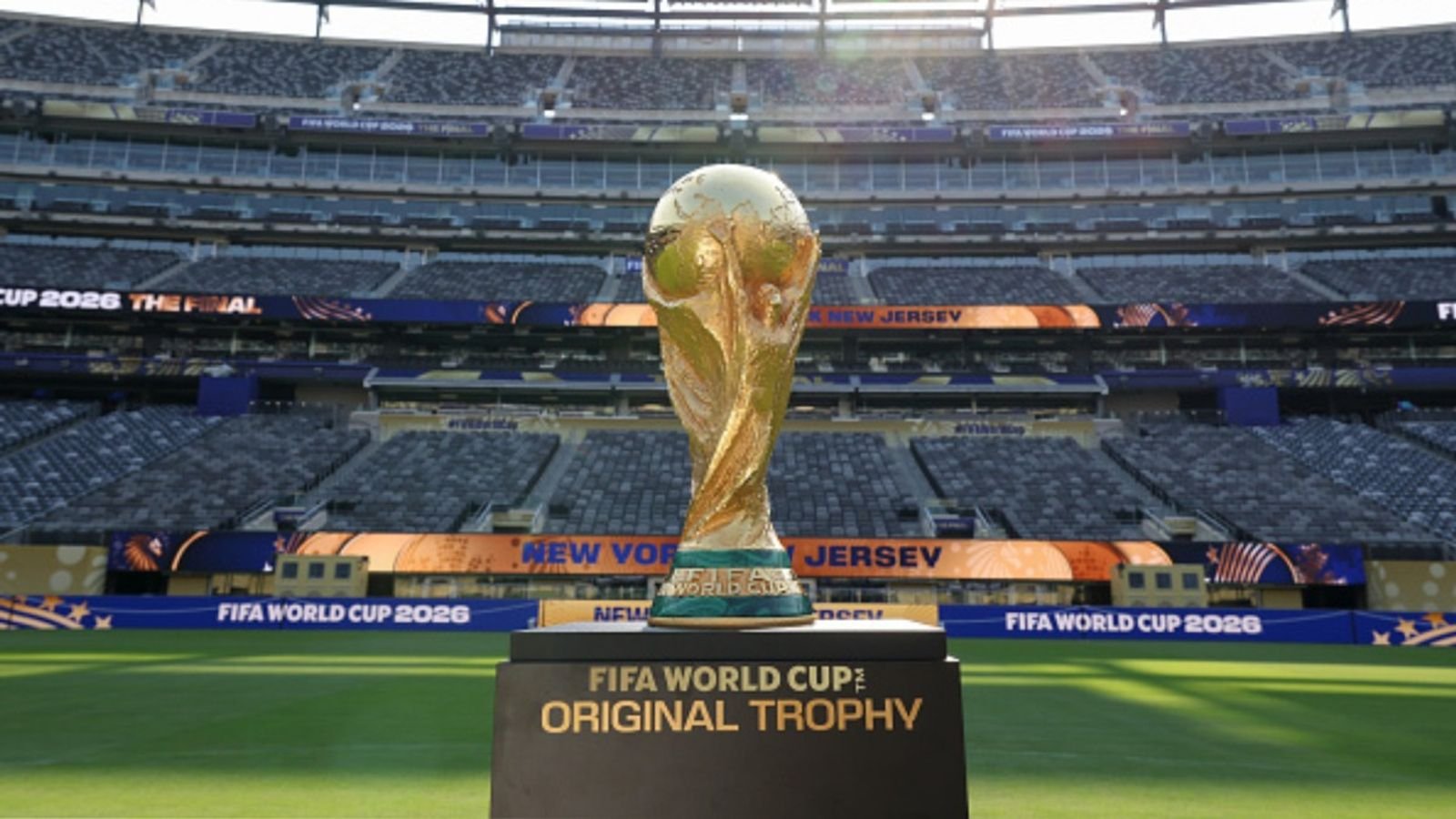
The FIFA World Cup has always been about glory, legacy, and national pride. Yet in modern football, financial rewards have become increasingly significant, helping federations invest in infrastructure, youth development, coaching systems, and long-term growth.
With the introduction of a 48-team format and 104 matches across the United States, Canada, and Mexico, FIFA has dramatically increased the tournament’s financial scale. The governing body has allocated a historic $871 million prize fund for the 2026 edition, making it the most lucrative World Cup ever staged.
While the spotlight will remain on football giants such as Argentina, Spain, Brazil, France, England, and Germany, one of the tournament’s most important stories lies behind the scenes: how this unprecedented prize money could transform football development worldwide.
Why FIFA Increased the World Cup 2026 Prize Money
The expansion from 32 teams to 48 teams significantly changed the economics of the competition. More nations mean more matches, greater broadcasting revenues, increased sponsorship opportunities, larger ticket sales, and wider global engagement.
FIFA’s decision to raise prize money reflects the commercial success of modern football and acknowledges the growing costs associated with international competition.
National teams now travel with larger support staffs, advanced sports science departments, medical teams, performance analysts, and extensive logistical operations. The increased financial support helps participating federations manage these expenses while benefiting from the tournament’s global platform.
FIFA World Cup 2026 Prize Money Breakdown by Finishing Position
The performance-based prize structure rewards teams according to how far they advance in the tournament.
| Finishing Position | Prize Money |
|---|---|
| Champions | $51 Million |
| Runners-up | $34 Million |
| Third Place | $30 Million |
| Fourth Place | $28 Million |
| Quarter-finalists (5th-8th) | $20 Million Each |
| Round of 16 (9th-16th) | $16 Million Each |
| Round of 32 (17th-32nd) | $12 Million Each |
| Group Stage Exit (33rd-48th) | $10 Million Each |
These performance-related payouts account for approximately $703 million of the overall prize fund.
How Much Will the FIFA World Cup 2026 Winners Earn?
The 2026 FIFA World Cup champions will receive a record $51 million, the highest payout ever awarded to a World Cup-winning nation.
This figure represents more than just a financial reward. For many football federations, such earnings can fund academy systems, women’s football programs, coaching development, grassroots initiatives, and infrastructure projects for years.
Winning the World Cup remains priceless from a sporting perspective, but the financial benefits now provide an additional incentive for national associations seeking sustainable growth.
Financial Rewards for the Runners-Up and Top Four Teams
Even teams that fall short of lifting the trophy will receive substantial compensation.
- Runners-up: $34 million
- Third-place team: $30 million
- Fourth-place team: $28 million
The relatively small gap between third and fourth place highlights FIFA’s intention to reward deep tournament runs rather than focusing solely on the champions.
For emerging football nations, reaching the latter stages of the competition can provide financial resources that dramatically accelerate long-term development.
Every Qualified Team Receives Financial Support
One of the most significant changes in FIFA’s approach is the emphasis on supporting every participating nation.
Beyond performance-related earnings, FIFA has allocated an additional $168 million specifically to help teams prepare for and participate in the tournament.
This support includes:
- Preparation funding of $2.5 million per qualified nation.
- Additional financial contributions shared among participating teams.
- Support for training camps and logistical planning.
- Assistance with travel and accommodation expenses.
- Operational funding for larger tournament delegations.
This means every nation reaching the FIFA World Cup 2026 receives a meaningful financial return regardless of results on the pitch.
Minimum Guaranteed Earnings for Every Team
One of the most notable aspects of the new financial structure is that every participating nation is guaranteed at least $12.5 million.
For smaller football federations, this amount can be transformational.
Many developing football nations operate with annual budgets significantly smaller than the financial rewards now available through World Cup qualification alone.
This ensures that simply reaching the tournament becomes a major financial achievement, not just a sporting one.
How FIFA World Cup Prize Money Has Evolved Over Time
The growth of World Cup prize money reflects football’s expanding commercial power.
| Tournament | Total Prize Pool |
|---|---|
| 2010 South Africa | $420 Million |
| 2014 Brazil | $576 Million |
| 2018 Russia | $791 Million |
| 2022 Qatar | $440 Million (performance-based prize pool) |
| 2026 USA-Canada-Mexico | $871 Million |
The increase demonstrates FIFA’s confidence in the commercial potential of the expanded tournament format.
With more matches, more markets, and greater global engagement, World Cup revenues continue to reach unprecedented levels.
Why the Expanded 48-Team Format Changes Everything
The 2026 tournament marks the first time 48 nations have competed in a men’s FIFA World Cup.
This expansion creates opportunities for countries that historically struggled to qualify under the previous 32-team system.
The financial implications are enormous.
More nations gain exposure on the world stage, secure valuable funding, and experience elite-level competition. This could help narrow the development gap between traditional football powers and emerging nations.
In many ways, the prize money structure serves as a development tool as much as a reward system.
The Real-World Impact on Smaller Football Nations
For global giants like Argentina, Spain, Brazil, Germany, or England, World Cup prize money represents an important bonus but not a transformative financial event.
For smaller federations, however, the impact can be dramatic.
A single World Cup qualification campaign can generate enough revenue to:
- Build training facilities.
- Improve youth academies.
- Fund national league development.
- Expand women’s football programs.
- Invest in coaching education.
- Strengthen scouting networks.
This is one of the lesser-discussed but most important aspects of FIFA’s expanded financial model.
What the Prize Money Means for Argentina and Spain
As Argentina and Spain prepare for the FIFA World Cup 2026 final, the financial stakes add another layer to an already historic occasion.
The winning federation will secure $51 million alongside football’s most prestigious trophy.
For Argentina, victory would place them alongside Italy and Brazil as the only nations to win consecutive World Cups.
For Spain, triumph would confirm a new era of dominance led by one of the youngest and most talented squads in international football.
Regardless of the result, both finalists have already secured substantial financial rewards through their deep tournament runs.
A Unique Insight: Prize Money Is Becoming Football’s Development Engine
Most discussions about World Cup prize money focus on who earns the most.
However, the more important story may be how the money is distributed.
By guaranteeing significant funding even to teams eliminated early, FIFA is effectively using the World Cup as a global development mechanism.
The model rewards excellence while simultaneously strengthening football ecosystems worldwide.
This strategy could prove particularly valuable in emerging markets across Africa, Asia, North America, and Oceania, where additional funding can accelerate long-term growth.
What Could Happen in Future World Cups?
Given the commercial success of the 2026 tournament, further increases in prize money appear likely.
Broadcast rights, sponsorship agreements, digital content revenue, and global audience figures continue to grow with every edition.
If the 48-team format delivers the expected financial returns, future World Cups could potentially cross the billion-dollar prize-money threshold.
Such growth would further enhance the tournament’s role as both a sporting spectacle and a powerful financial catalyst for global football.
Conclusion
The FIFA World Cup 2026 has set a new benchmark for football economics with a record-breaking $871 million prize fund. While the champions will receive $51 million and the runners-up $34 million, perhaps the most significant development is FIFA’s commitment to supporting every participating nation through guaranteed financial assistance.
The expanded 48-team format ensures that more countries than ever before benefit from football’s biggest stage. Beyond trophies and medals, the tournament is increasingly becoming a vehicle for global football development, helping federations invest in infrastructure, talent pathways, coaching, and long-term growth.
As the final approaches and the world awaits its next champion, the financial legacy of FIFA World Cup 2026 may ultimately prove just as influential as the football itself.
For breaking news and live news updates, like us on Facebook or follow us on Twitter and Instagram. Read more on Latest Sports on thefoxdaily.com.






COMMENTS 0