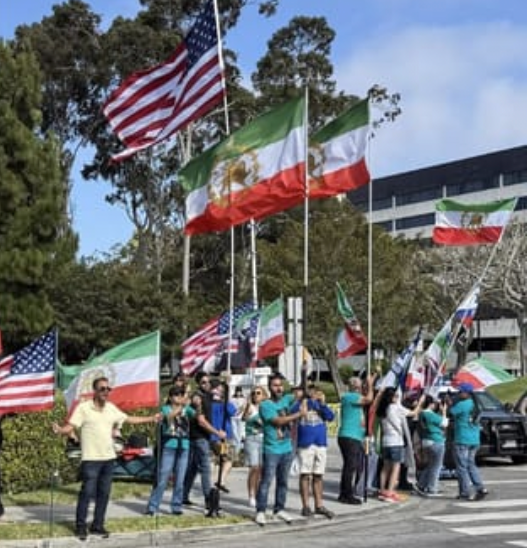
The 2026 FIFA World Cup has already delivered dramatic matches, emotional moments, and unforgettable fan experiences. However, Iran’s Group G clash against New Zealand in Los Angeles brought an issue into focus that extended far beyond football.
Hundreds of Iranian supporters attending the match were seen carrying the historic Sun and Lion flag, despite reports that FIFA had prohibited the symbol inside World Cup venues. Security personnel subsequently confiscated multiple flags, prompting fresh debate over the intersection of sport, politics, and national identity.
For many fans, the flag represents cultural heritage and historical pride. For others, it carries significant political implications linked to Iran’s modern history. FIFA’s decision to restrict the symbol underscores the governing body’s ongoing challenge of maintaining political neutrality at the world’s biggest sporting event.
What Is Iran’s Sun and Lion Flag?
The Sun and Lion flag served as one of Iran’s most recognizable national symbols for centuries and was the country’s official flag until 1980.
The emblem traditionally featured a lion holding a sword positioned in front of a rising sun. Over time, the symbol became associated with Persian identity, monarchy, and Iran’s historical heritage.
Following the 1979 Islamic Revolution, Iran underwent sweeping political and institutional changes. In 1980, the new government replaced the Sun and Lion emblem with the current national flag, which features a stylized red emblem representing the word “Allah” and elements of Islamic symbolism.
Since then, the Sun and Lion flag has increasingly become associated with opposition groups, members of the Iranian diaspora, monarchists, and individuals critical of the current political system.
Why Did FIFA Restrict the Sun and Lion Flag?
FIFA maintains strict rules regarding political messaging at its tournaments.
The organization’s regulations prohibit displays, banners, slogans, and symbols that could be interpreted as political, discriminatory, or provocative.
Because the Sun and Lion flag has evolved beyond a historical emblem and now carries strong political associations for many people, FIFA reportedly determined that allowing it inside stadiums could violate its neutrality guidelines.
The governing body has consistently argued that the World Cup should remain focused on football rather than political disputes.
By restricting politically sensitive symbols, FIFA aims to minimize tensions among supporters and prevent stadiums from becoming platforms for political demonstrations.
Why the Issue Is Particularly Sensitive in Los Angeles
Los Angeles is home to one of the largest Iranian communities outside Iran, making it a natural gathering point for supporters during the 2026 FIFA World Cup.
The city’s Iranian diaspora includes people with diverse political views, cultural backgrounds, and personal connections to Iran.
For some fans, carrying the Sun and Lion flag is an expression of cultural identity rather than a political statement.
Others view the symbol as representing opposition to Iran’s current government.
This diversity of perspectives makes enforcement particularly challenging, as identical symbols can hold very different meanings for different individuals.
The large turnout of Iranian supporters in Los Angeles amplified the visibility of the issue during the match against New Zealand.
The Challenge of Separating Sport and Politics
Football has long served as a powerful platform for national expression.
Supporters often use flags, chants, and cultural symbols to celebrate their heritage and identity.
However, global tournaments frequently expose the difficulty of drawing a clear line between cultural representation and political messaging.
FIFA’s neutrality policy has faced scrutiny in recent years because interpretations of what constitutes a political symbol can vary significantly across regions and communities.
Critics argue that enforcing such policies consistently across different countries and historical contexts remains extremely difficult.
Supporters of FIFA’s approach believe restrictions are necessary to ensure stadiums remain safe, inclusive spaces focused on the game itself.
How FIFA Regulates Political Expression at the World Cup
FIFA’s tournament regulations prohibit actions or materials that could be perceived as:
- Political.
- Religious.
- Discriminatory.
- Offensive or provocative.
- Likely to incite conflict among supporters.
These rules apply to players, officials, and fans alike.
Stadium security teams receive guidance on identifying prohibited items and may confiscate flags, banners, or clothing deemed inconsistent with tournament regulations.
In some cases, supporters who refuse to comply risk being denied entry or removed from venues.
| Symbol | Status at FIFA Events | Reason for Restriction |
|---|---|---|
| Official Iranian National Flag | Permitted | Recognized state symbol |
| Sun and Lion Flag | Restricted | Perceived political association |
| Political Slogans | Prohibited | Violates neutrality rules |
| Discriminatory Messages | Prohibited | Contrary to FIFA conduct policies |
Fans Continue to Challenge the Restrictions
Despite FIFA’s position, many supporters chose to bring the Sun and Lion flag to the match against New Zealand.
Videos shared on social media showed fans surrendering flags to security personnel to avoid being removed from the stadium.
The incident illustrates the difficulties tournament organizers face when enforcing regulations involving symbols with complex historical meanings.
For some Iranian fans, complying with the restrictions felt like suppressing an important part of their identity.
For FIFA, allowing exceptions could create inconsistencies and open the door to broader political demonstrations.
Iran Coach Calls for Unity Despite Political Differences
Following Iran’s 2-2 draw with New Zealand, head coach Amir Ghalenoei praised the support shown by Iranian fans in Los Angeles.
He emphasized that supporters from different political backgrounds came together to encourage the national team.
“There were many Iranians here. They believe in different political affiliations and different beliefs, but they all wholeheartedly encouraged us.”
His comments reflected the unique role football can play in bridging divisions, even during periods of political disagreement.
While debates over symbols and identity continue, the players on the pitch remain focused on representing their country and progressing through the tournament.
What This Means for the Rest of the 2026 FIFA World Cup
The controversy surrounding the Sun and Lion flag highlights a broader challenge facing international sporting events.
As tournaments become increasingly global and social media amplifies every incident, organizers must navigate complex cultural and political issues in real time.
The expanded 48-team World Cup has brought together supporters from a wider range of backgrounds than ever before, increasing the likelihood of similar situations arising throughout the competition.
FIFA’s ability to apply its regulations consistently will remain under close scrutiny.
At the same time, fans will continue to test the boundaries between cultural expression and political messaging.
Conclusion: A Symbol That Means Different Things to Different People
The debate over Iran’s Sun and Lion flag demonstrates how deeply history, identity, and politics can intersect with sport.
For some supporters, the flag represents centuries of Persian heritage. For others, it carries unmistakable political significance linked to Iran’s post-revolution history.
FIFA’s decision to restrict the symbol reflects its longstanding commitment to political neutrality, but the controversy shows that achieving true neutrality is often more complicated than enforcing a rulebook.
As the 2026 FIFA World Cup continues, organizers will hope the focus remains on the football itself. Yet incidents like this serve as a reminder that the world’s biggest sporting event is also a reflection of the diverse histories, identities, and perspectives that fans bring with them.
For breaking news and live news updates, like us on Facebook or follow us on Twitter and Instagram. Read more on Latest Sports on thefoxdaily.com.






COMMENTS 0