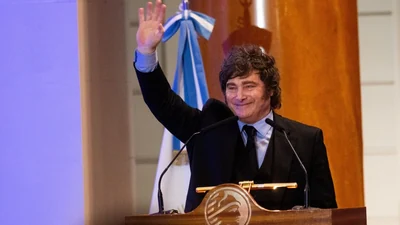
The FIFA World Cup final is usually a gathering place for presidents, world leaders, celebrities, and football legends. Yet as Argentina prepares to face Spain in one of the biggest matches in modern football history, Argentine President Javier Milei has made a surprising decision: he will not attend the match in person.
Instead, Milei plans to watch the final from his presidential residence, following the exact same routine he has maintained throughout Argentina’s World Cup campaign. To outsiders, the decision may appear unusual. To many Argentines, however, it makes perfect sense.
The reason lies in one of football’s most fascinating cultural traditions: superstition. In Argentina, football is more than a sport. It is a national passion intertwined with identity, emotion, history, and rituals that supporters believe can influence destiny itself.
As the defending champions chase a second consecutive World Cup title, Milei’s decision highlights a uniquely Argentine phenomenon that extends far beyond politics and into the very heart of football culture.
Why Javier Milei Is Not Attending the FIFA World Cup Final
Milei’s explanation is straightforward. Argentina has won every match he has watched from home during the 2026 World Cup. Because the routine appears to be working, he refuses to change it before the most important game of the tournament.
Throughout football history, players, coaches, and fans have relied on rituals they believe bring good fortune. Some wear the same clothing, sit in the same seat, or follow identical pre-match routines.
Milei has embraced the same mindset.
His routine extends beyond simply watching from home. He has also revealed that he intends to wear the same jacket he has worn during Argentina’s World Cup journey. According to his account, he once removed the jacket during a match and shortly afterward Argentina conceded a goal. Since then, the garment has become part of what he views as a winning formula.
Whether coincidence or not, the president sees no reason to risk changing a routine that has accompanied Argentina’s unbeaten run to the final.
Understanding Argentina’s Famous “Cábalas”
To understand Milei’s decision, it is important to understand the Argentine concept of cábalas.
A cábala is a ritual or superstition believed to influence future events, particularly sporting outcomes. While superstitions exist worldwide, few countries embrace them as passionately as Argentina does during major football tournaments.
For millions of supporters, changing a successful routine during a World Cup is considered risky.
Common football cábalas include:
- Wearing the same jersey for every match.
- Sitting in the exact same location while watching games.
- Watching matches with the same group of friends.
- Avoiding certain foods before kick-off.
- Using the same lucky objects throughout the tournament.
- Refusing to wash jerseys during a winning streak.
- Following identical pre-match routines.
While there is no scientific basis for these rituals, they provide supporters with a sense of participation in events they cannot directly control.
In a tournament where emotions run high, cábalas offer psychological comfort and a feeling of connection to the team’s success.
The Deep Connection Between Football and Superstition
Football may be a game of tactics, skill, preparation, and athletic performance, but uncertainty remains one of its defining characteristics.
No matter how talented a team is, a single moment can change everything.
That unpredictability explains why superstitions thrive in football.
When outcomes cannot be guaranteed, fans naturally search for patterns that make sense of success and failure.
Psychologists often describe this as a human tendency to seek control during uncertain situations.
Supporters understand logically that wearing a lucky shirt does not score goals. Yet emotionally, maintaining a ritual can feel reassuring.
This emotional attachment becomes even stronger during World Cups, where national pride and expectations reach extraordinary levels.
Argentina’s Long History of Football Rituals
Argentina has perhaps one of the richest traditions of football superstition anywhere in the world.
From neighborhood supporters to national icons, rituals have become woven into the country’s football identity.
Throughout previous World Cups, stories have emerged of fans refusing to change clothes, rearrange furniture, or alter viewing habits during successful runs.
Even professional players have often embraced personal rituals.
These traditions are passed between generations and become part of the collective experience surrounding the national team.
The 2026 tournament has been no different.
As Argentina progressed through the competition, countless supporters adopted routines they believed contributed to victories. Milei’s behavior mirrors what millions of ordinary fans have been doing throughout the tournament.
The Presidential Curse: Why Argentine Leaders Stay Away
One of the most intriguing aspects of Milei’s decision is that it follows a long-standing political superstition.
For decades, Argentine presidents have largely avoided attending World Cup matches involving the national team.
The origins of this tradition can be traced to the 1990 FIFA World Cup.
Before Argentina’s opening match, then-President Carlos Menem visited the squad. Shortly afterward, Argentina suffered a shock defeat to Cameroon, one of the biggest upsets in World Cup history.
Many supporters blamed Menem’s presence and labeled him a “mufa,” an Argentine term often associated with bringing bad luck.
Since then, the idea that presidential attendance could negatively affect results has persisted in popular football culture.
Whether taken seriously or not, the belief has become a fascinating part of Argentina’s sporting folklore.
How Superstition Shapes Fan Behavior During Major Tournaments
The World Cup creates an environment unlike any other sporting event.
Supporters invest weeks of emotional energy into every result, often becoming deeply attached to routines that emerge during the tournament.
Examples seen throughout recent World Cups include:
- Fans gathering at the same location for every match.
- Families eating identical meals before kick-off.
- Supporters wearing lucky scarves or jerseys.
- Groups repeating rituals after victories.
- Avoiding changes to established matchday routines.
These behaviors demonstrate how football extends beyond the action on the pitch and becomes part of people’s personal lives.
For many supporters, maintaining rituals is not about believing in magic. It is about preserving hope and continuity during moments of intense emotion.
Argentina vs Spain: A Final Loaded With History
Milei’s superstition gains additional significance because of the stakes involved.
Argentina enters the final seeking back-to-back World Cup titles, an achievement that would further strengthen its position among football’s greatest nations.
Spain, meanwhile, arrives with ambitions of reclaiming football’s biggest prize and adding another chapter to its own rich football history.
The match represents more than a battle between two elite teams.
It is also a clash between contrasting football philosophies, generations of talent, and two nations carrying enormous expectations.
Under such pressure, it is hardly surprising that supporters and even political leaders cling to routines they believe have contributed to success.
| Aspect | Argentina | Spain |
|---|---|---|
| World Cup Objective | Defend Title | Regain Championship |
| Fan Expectations | Extremely High | Extremely High |
| Football Culture | Emotion-Driven | Technical Tradition |
| Superstition Influence | Very Strong | Moderate |
Do Superstitions Actually Improve Performance?
From a scientific perspective, there is no evidence that rituals directly affect sporting outcomes.
Goals are scored through skill, tactics, preparation, and execution rather than lucky jackets or specific seats.
However, sports psychologists note that rituals can have indirect benefits.
They can:
- Reduce anxiety.
- Increase confidence.
- Create emotional stability.
- Provide a sense of control.
- Improve focus.
For supporters, rituals often help manage the stress associated with high-stakes matches.
In this sense, the psychological impact may be real even if the superstition itself has no direct influence on the game.
Why Milei’s Decision Resonates With Millions of Argentines
One reason Milei’s comments have attracted attention is that they reflect the behavior of ordinary Argentine supporters.
Rather than presenting himself as detached from the football experience, he has embraced the same emotions, hopes, and anxieties felt across the country.
Many fans see their own habits reflected in his decision.
Whether it is wearing a lucky shirt, refusing to move seats, or watching matches from a specific room, countless Argentines have adopted rituals during the World Cup.
Milei’s choice therefore feels relatable rather than unusual.
It reinforces the idea that football remains one of the few experiences capable of uniting people across political, social, and economic divides.
A Unique Insight Often Missed in Coverage
Most reports focus on the humor and novelty of Milei’s superstition. The deeper story, however, is about the role rituals play in collective national experiences.
During events such as the World Cup, millions of people share the same emotional journey. Superstitions become a way of participating in that journey together.
The significance is not whether the ritual works.
The significance is what the ritual represents: hope, belief, identity, and connection.
In Argentina, where football occupies a special place in national culture, cábalas have evolved into a social phenomenon that helps supporters feel involved in the team’s pursuit of glory.
Conclusion
Javier Milei’s decision to skip the FIFA World Cup 2026 Final is not rooted in politics, scheduling conflicts, or security concerns. Instead, it reflects one of football’s oldest traditions: the belief that successful routines should never be interrupted.
By choosing to watch Argentina’s clash with Spain from home and continuing the rituals that accompanied the team’s journey to the final, Milei has joined millions of Argentine supporters who place faith in their own cábalas.
Whether those rituals have any influence on the outcome remains debatable. What is undeniable is their cultural significance. They reveal how deeply football is woven into Argentina’s national identity and why every World Cup becomes about far more than what happens on the pitch.
As Argentina chases another historic triumph, one thing is certain: from living rooms across the country to the presidential residence itself, countless lucky routines will be tested on football’s grandest stage.
For breaking news and live news updates, like us on Facebook or follow us on Twitter and Instagram. Read more on Latest Sports on thefoxdaily.com.






COMMENTS 0