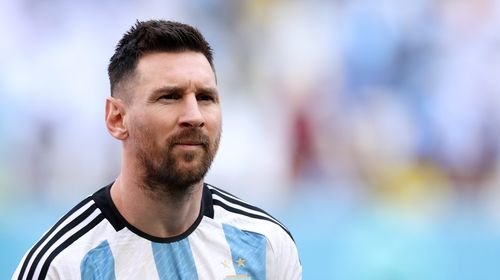
Lionel Messi‘s record-breaking performances at the FIFA World Cup 2026 have once again placed him at the center of football history. The Argentine captain recently became the tournament’s all-time leading goalscorer after taking his World Cup tally to 18 goals, surpassing every player who has competed on football’s biggest stage.
However, one fascinating debate has emerged among football fans and analysts: where would Messi rank if penalty goals were excluded from the World Cup scoring charts?
While penalties are an official and important part of football, comparing players based solely on open-play and non-penalty goals offers a different perspective on some of the greatest goalscorers in World Cup history. The exercise does not diminish any player’s achievements but instead provides another way to evaluate attacking impact across different eras.
Lionel Messi’s Historic FIFA World Cup Goals Record
At FIFA World Cup 2026, Messi strengthened his legendary status by becoming the competition’s all-time leading goalscorer. The Argentine superstar reached 18 World Cup goals after a sensational start to the tournament, including a hat-trick against Algeria and a brace against Austria.
His achievement is even more remarkable considering that he made his World Cup debut two decades earlier in 2006 and continues to perform at the highest level at the age of 39.
| Statistic | Lionel Messi |
|---|---|
| World Cup Appearances | 28 |
| Total Goals | 18 |
| Penalty Goals | 4 |
| Non-Penalty Goals | 14 |
| World Cup Debut | 2006 |
Where Does Messi Rank Without Penalties?
If Messi’s four penalty goals are removed from his overall tally, his World Cup goal count drops from 18 to 14.
That adjustment would move him from first place to a share of second place on the all-time non-penalty goalscoring list.
Only Germany legend Miroslav Klose would remain ahead, having scored all 16 of his World Cup goals from open play and set pieces without relying on penalties.
| Player | Total Goals | Penalty Goals | Non-Penalty Goals |
|---|---|---|---|
| Miroslav Klose | 16 | 0 | 16 |
| Lionel Messi | 18 | 4 | 14 |
| Ronaldo Nazario | 15 | 1 | 14 |
| Kylian Mbappe | 16 | 2 | 14 |
Under this alternative ranking system, Messi would be level with Brazilian icon Ronaldo Nazario and French superstar Kylian Mbappe, both of whom have also accumulated 14 non-penalty World Cup goals.
Why This Statistic Is More Impressive Than It Looks
One overlooked aspect of Messi’s World Cup career is how dramatically his open-play scoring has improved in recent tournaments.
Before FIFA World Cup 2026, Messi had scored only nine non-penalty goals across five different World Cup campaigns. While that number was already impressive, critics occasionally argued that penalties inflated his overall statistics.
The 2026 tournament has effectively silenced those debates.
Messi exploded with five open-play goals in his first two matches, rapidly climbing the historical rankings and proving that his influence extends far beyond penalty opportunities.
His recent scoring surge demonstrates not only exceptional finishing ability but also extraordinary longevity at an age when most players have long retired from international football.
Messi’s Penalty Record: A Double-Edged Statistic
Interestingly, Messi’s relationship with penalties at the World Cup has been both productive and controversial.
He holds the record for the most penalty attempts in World Cup history. At the same time, he also owns the record for the most penalty misses in the tournament.
This creates a unique paradox.
While some critics focus on the goals scored from the spot, others point out that Messi has also missed more penalties than any player in World Cup history, meaning his overall goal tally could have been even higher.
Therefore, removing penalties entirely may not necessarily provide a complete picture of his effectiveness.
Comparing Messi with Other World Cup Greats
Football fans often compare players from different generations, but direct comparisons can be difficult because of changing tactics, fitness standards, tournament formats, and levels of competition.
Nevertheless, examining non-penalty goals offers an interesting lens through which to evaluate some of the greatest forwards in football history.
Key Differences Between the Legends
- Miroslav Klose built his record through consistency across four World Cups.
- Ronaldo Nazario dominated during football’s most competitive defensive era.
- Kylian Mbappe achieved elite numbers at a remarkably young age.
- Lionel Messi combined playmaking and goalscoring responsibilities throughout his career.
What makes Messi unique is that he was never purely a striker. Unlike many players on the all-time scoring charts, he spent much of his career creating chances, controlling possession, and orchestrating attacks rather than simply finishing them.
Messi’s Six-Game World Cup Scoring Streak Adds Another Record
Goalscoring records are not the only milestones Messi has achieved during FIFA World Cup 2026.
His goal against Austria extended an extraordinary scoring streak that places him among the most exclusive groups in football history.
Messi has now scored in six consecutive World Cup matches, becoming only the third player ever to accomplish the feat.
Before him, only Brazil’s Jairzinho and France’s Just Fontaine had managed to score in six straight World Cup appearances.
The achievement highlights not just his finishing ability but also his remarkable consistency under the pressure of international competition.
Can Messi Become the First Player to Score in Seven Consecutive World Cup Matches?
Another piece of history could soon be within reach.
Argentina’s upcoming match against Jordan gives Messi an opportunity to become the first footballer ever to score in seven consecutive FIFA World Cup games.
Considering his current form, many analysts believe the record is a realistic possibility.
Such an achievement would further strengthen his case as one of the greatest tournament performers the sport has ever seen.
The Bigger Debate: Should Penalty Goals Count Differently?
The discussion surrounding non-penalty goals inevitably raises a broader football question.
Should penalty goals be viewed differently when evaluating historical goalscoring records?
Supporters of non-penalty statistics argue that scoring from open play requires greater creativity, positioning, and technical execution. They believe separate rankings provide additional context.
Others counter that penalties are earned through attacking play and still require composure under immense pressure, especially in World Cup matches watched by millions around the globe.
The reality is that both viewpoints offer value.
Rather than replacing traditional records, non-penalty statistics simply provide another layer of analysis for understanding football greatness.
What Makes Messi’s Record Truly Unique
Whether penalties are included or removed, Messi’s achievements remain extraordinary.
Few players have combined elite goalscoring, playmaking, leadership, longevity, and consistency across multiple generations of football.
His ability to remain decisive at the age of 39 while competing against players nearly half his age speaks volumes about his talent and professionalism.
Even under the strictest non-penalty analysis, Messi still ranks among the greatest World Cup goalscorers in history.
Final Verdict
If penalty goals were removed from FIFA World Cup history, Lionel Messi would no longer sit alone at the top of the scoring charts. Instead, his tally would drop to 14 non-penalty goals, placing him behind Miroslav Klose and level with Ronaldo Nazario and Kylian Mbappe.
However, the statistic ultimately reinforces rather than diminishes Messi’s greatness. His recent explosion of open-play goals at FIFA World Cup 2026 has proven that his record is built on much more than penalties. Combined with his six-match scoring streak, playmaking brilliance, and unmatched longevity, Messi continues to redefine what is possible on football’s biggest stage.
Whether measured by total goals, non-penalty goals, assists, appearances, or historic milestones, Lionel Messi remains firmly among the most influential players the FIFA World Cup has ever seen.
For breaking news and live news updates, like us on Facebook or follow us on Twitter and Instagram. Read more on Latest Sports on thefoxdaily.com.






COMMENTS 0