The FIFA World Cup 2026 eliminated teams list has become one of the biggest talking points as the tournament enters its knockout phase. The expanded 48-team World Cup format created more opportunities for nations around the world to compete on football’s biggest stage, but it also brought new challenges as several teams saw their dreams end during the group stage.
After the conclusion of group-stage matches, 12 teams were officially knocked out of the FIFA World Cup 2026. The eliminated nations include former World Cup participants, tournament debutants, and teams that created history simply by qualifying. Countries such as Qatar, Uruguay, Turkey, Tunisia, and New Zealand faced disappointing exits, while smaller football nations experienced moments that will remain important for their future development.
The early exits highlight a major theme of the 2026 tournament: expanding the competition has increased global representation, but reaching the knockout rounds remains extremely difficult. With 48 teams competing and only 32 advancing, every result carried greater importance.
| Group | Eliminated Team | Key Reason for Exit |
|---|---|---|
| A | Czechia | Finished bottom after losing final group match against Mexico |
| B | Qatar | Struggled throughout the group stage and ended with one point |
| C | Haiti | Historic return ended after defeats against stronger opponents |
| D | Turkey | Failed to recover after important group-stage losses |
| E | Curaçao | Historic qualification ended after group-stage elimination |
| F | Tunisia | Heavy defeats ended knockout hopes |
| G | New Zealand | One point from three matches was not enough |
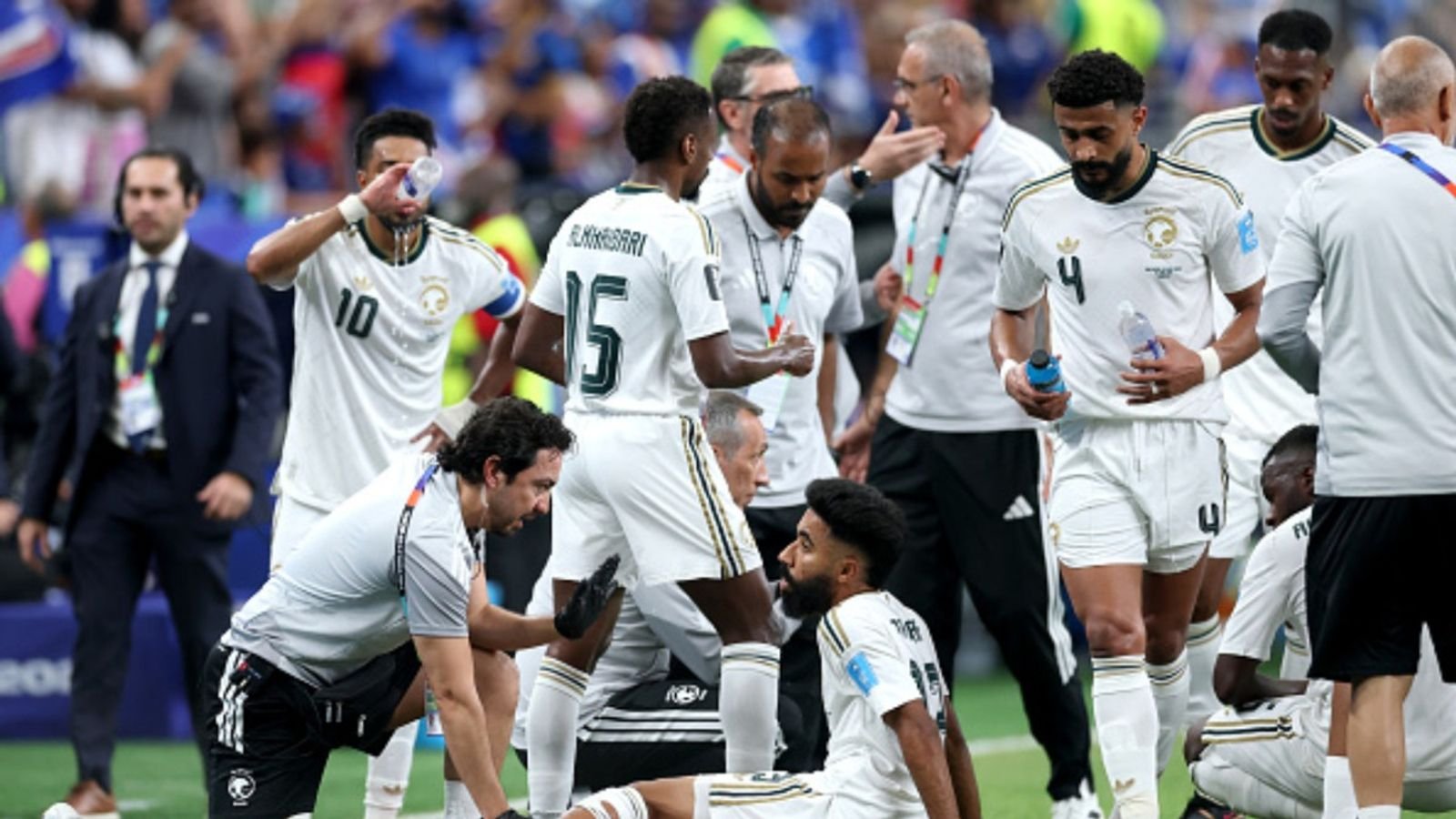
| H | Uruguay, Saudi Arabia | Both teams failed to secure qualification spots |
| I | Iraq | Lost all three group matches |
| J | Jordan | Debut World Cup campaign ended early |
| L | Panama | Two defeats ended their qualification chances |
Why the FIFA World Cup 2026 group stage created more surprises
The 2026 FIFA World Cup is different from previous editions because FIFA expanded the tournament from 32 teams to 48 teams. The new structure was designed to give more countries a chance to compete, especially from regions where World Cup qualification has historically been difficult.
However, the expanded format has also created a new level of unpredictability. Smaller nations now have more opportunities to face elite football countries, but they must maintain consistency across multiple matches to survive the group stage.
Unlike previous tournaments where finishing third often meant elimination with limited opportunities, the 2026 format allowed more teams to dream about reaching the knockout rounds. This increased pressure because even one poor performance could completely change a team’s tournament future.
Complete analysis of FIFA World Cup 2026 eliminated teams
Czechia: European side unable to overcome tough competition
Czechia’s World Cup campaign ended after a difficult group-stage run. Their final defeat against co-hosts Mexico confirmed their elimination, leaving them at the bottom of Group A with only one point.
Their exit reflects the growing competitiveness of international football. European teams that once had an advantage because of strong domestic leagues now face increased challenges from improving football nations across different continents.
Qatar: Another difficult World Cup experience after hosting 2022 edition
Qatar entered the tournament with global attention because of their role as hosts of the 2022 FIFA World Cup. However, their 2026 campaign did not produce the turnaround many expected.
The team finished bottom of Group B with one point. Their elimination shows that hosting a World Cup does not automatically translate into long-term international success. Building a competitive national team requires consistent investment, player development, and regular high-level competition.
Haiti: A historic qualification ends with valuable lessons
Haiti’s participation itself was a major achievement. Returning to the World Cup after more than five decades gave the nation an important moment on the global stage.
Although defeats against Scotland and Brazil ended their journey early, the experience could help strengthen football development in the country. For smaller football nations, World Cup appearances often create long-term benefits beyond results, including increased youth interest and infrastructure growth.
Turkey: Expectations not matched by results
Turkey arrived at the tournament with hopes of making a deep run, especially after their long absence from the World Cup stage. However, defeats against Australia and Paraguay left them unable to progress from Group D.
Their elimination highlights how difficult international tournaments can be. A talented squad still requires tactical balance, consistency, and the ability to handle pressure moments.
Curaçao: One of the biggest stories despite elimination
Curaçao created history by qualifying for the World Cup and becoming one of the smallest nations to reach football’s biggest tournament.
Although their journey ended after a defeat against Ivory Coast, their participation represents the changing landscape of global football. More nations are now capable of reaching the World Cup, making the competition more diverse than ever.
Tunisia: Another missed opportunity for knockout qualification
Tunisia’s World Cup campaign ended after disappointing results against Sweden and Japan. Despite regularly appearing in World Cup tournaments, Tunisia once again failed to reach the knockout rounds.
Their exit raises questions about how experienced teams can convert tournament appearances into deeper runs.
New Zealand: Another narrow World Cup disappointment
New Zealand collected only one point in Group G, and their final defeat against Belgium confirmed elimination.
The team has historically been competitive despite coming from a smaller football environment. Their challenge remains developing more players capable of competing regularly against elite international opposition.
Uruguay and Saudi Arabia: Two teams falling short in Group H
Uruguay’s elimination was among the most surprising moments of the group stage. A nation with a rich World Cup history finished third with two points and could not secure progression.
Saudi Arabia also ended with two points, but their results were not enough to move forward. Both teams showed how reputation alone cannot guarantee success in modern international football.
Iraq: Tough campaign ends without points
Iraq faced a challenging group stage and lost all three matches. While their tournament ended early, participation at the highest level provides valuable experience for future generations.
Jordan: Debut experience becomes a foundation for growth
Jordan’s first FIFA World Cup appearance created excitement among supporters. However, consecutive defeats ended their hopes of reaching the knockout stage.
For debut nations, the World Cup often serves as the beginning of a longer football journey rather than just a single tournament result.
Panama: Final Group L elimination confirmed
Panama became one of the final teams eliminated after back-to-back defeats removed their chances of qualification.
Their participation continues a trend of Central American nations becoming increasingly competitive on the global stage.
The bigger picture: What these eliminations reveal about modern football
The biggest lesson from the FIFA World Cup 2026 group stage is that football’s global balance is changing. Traditional football powers still dominate, but emerging nations are becoming more competitive.
The gap between established teams and smaller nations is shrinking because of better coaching systems, improved youth academies, and players gaining experience in international leagues.
The modern World Cup is no longer only about famous football nations. It is increasingly becoming a global competition where preparation, strategy, and consistency decide success.
Comparison: 2026 World Cup format vs previous tournaments
| Feature | Previous World Cups | FIFA World Cup 2026 |
|---|---|---|
| Total Teams | 32 | 48 |
| Knockout Qualification | 16 teams | 32 teams |
| Global Representation | Limited opportunities | More nations included |
| Competition Level | Highly concentrated | More diverse and unpredictable |
What happens next for eliminated teams?
For the 12 eliminated nations, the focus now shifts beyond the World Cup. International football development is measured over years, not a single tournament.
Many teams will use their World Cup experience to improve scouting, player development, tactical systems, and preparation for future competitions such as continental championships and World Cup qualifiers.
For smaller nations especially, simply competing at the World Cup can accelerate football growth by inspiring younger generations and increasing investment in the sport.
Future outlook: The next World Cup cycle begins now
The FIFA World Cup 2026 eliminated teams list shows that qualification itself has become a major achievement. As more countries enter the global football conversation, future tournaments are likely to bring even more unexpected results.
The next challenge for these nations is converting World Cup exposure into sustainable progress. The teams that invest in youth development, coaching quality, and competitive domestic structures will have the best chance of returning stronger.
Conclusion
The FIFA World Cup 2026 group stage produced emotional exits, historic appearances, and surprising results. Twelve teams have officially left the tournament, but their journeys represent much more than wins and losses.
From debut nations creating history to established teams facing disappointment, the tournament has shown that international football is becoming more competitive every year. The eliminated teams may be out of the race for the trophy, but their stories remain an important part of the World Cup’s evolving global legacy.
For breaking news and live news updates, like us on Facebook or follow us on Twitter and Instagram. Read more on Latest Sports on thefoxdaily.com.






COMMENTS 0