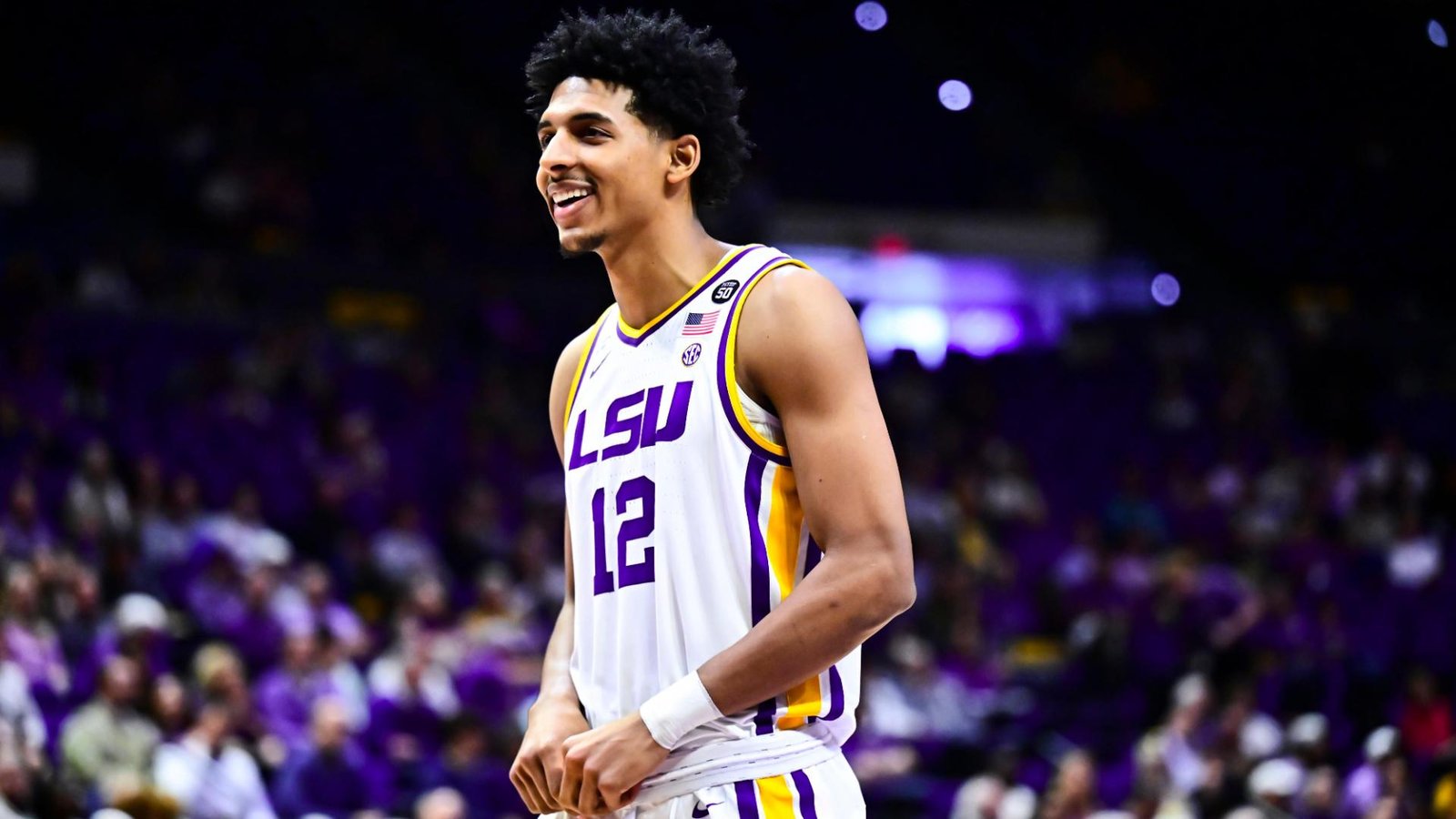
RJ Luis Jr. has decided to end his fight to pursue another season of College Basketball eligibility at LSU, bringing a dramatic week of legal battles, conference tensions and public statements to a close. His attorney, Tony Clayton, confirmed Thursday night that Luis had chosen to “stand down” rather than continue a dispute that threatened to place the Tigers in conflict with the Southeastern Conference.
According to Clayton, Luis personally contacted him and explained that he did not want his eligibility dispute to create further problems for his teammates, head coach Will Wade or Louisiana State University. The decision came less than 24 hours after Luis made his debut for the Tigers in a victory over Louisiana-Monroe.
“The first honorable person in this is RJ Luis,” Clayton told ESPN. He said Luis told him, “Tony, I don’t want to do anything that will hurt my teammates, my coach or LSU.” Clayton described his client’s thinking as a recognition that “the juice is not worth the squeeze.”
The announcement effectively ends Luis’ immediate pursuit of playing for LSU, although his attorney indicated that basketball could still be part of the former All-American’s future. The situation also leaves open the possibility of a separate legal claim seeking financial damages.
RJ Luis Jr. Chooses to Step Away From LSU Eligibility Fight
Luis’ decision followed an increasingly difficult situation involving LSU administrators, SEC leadership and the legal protections he had received from a state court. Although a judge had issued a preliminary injunction allowing LSU to roster and play him without facing conference penalties, the dispute escalated after the Tigers put him on the court.
Clayton said Luis did not want to become the reason LSU faced further institutional consequences. The attorney emphasized that his client was thinking about the people around him rather than simply pursuing his own opportunity to play another college season.
The decision also came after LSU president Wade Rousse instructed coach Will Wade to stop playing Luis. Rousse announced Thursday that, following further review, he had directed the basketball program not to use the former St. John’s standout in future games.
For Luis, the development was particularly significant because he had already appeared in an LSU game after a lengthy legal process. His debut had generated considerable attention, but the university’s subsequent decision made it clear that the eligibility dispute was creating risks beyond the basketball court.
LSU President Orders Will Wade to Stop Playing Luis
LSU’s decision to bench Luis came after the university faced growing pressure from the SEC. Rousse issued a statement Thursday afternoon confirming that he had instructed Wade not to play the former All-American again after reviewing the situation.
The announcement reversed the direction LSU had taken earlier in the week. After receiving assurances through the court process, the university had added Luis to its roster and allowed him to make his debut against Louisiana-Monroe.
Wade had supported the decision to play Luis and defended the Tigers’ position after Wednesday night’s game. Following LSU’s 79-67 victory, the coach said, “Everyone we played tonight was eligible.”
Clayton praised Wade for keeping his promise to Luis and described Rousse as honorable in handling the situation. However, the university’s decision to stop playing Luis ultimately reflected the growing institutional pressure surrounding the case.
The attorney also indicated that Luis could still pursue basketball opportunities elsewhere. Clayton said basketball remained in his client’s future but did not identify a possible destination or explain when he might attempt to return to the court.
Luis Made His LSU Debut Despite SEC Warning
Before the university changed its position, Luis had made his first appearance for LSU on Wednesday night against Louisiana-Monroe. He came off the bench and played 15 minutes in the Tigers’ 79-67 victory.
His entrance during the first half received an enthusiastic ovation from the crowd in Baton Rouge. The appearance marked the culmination of a legal effort that had placed Luis’ eligibility and LSU’s relationship with the SEC under intense scrutiny.
LSU proceeded with the decision despite warnings from the conference. The SEC had expressed strong opposition to the Tigers’ move, and the possibility of a leaguewide boycott and potential expulsion of LSU had emerged as major concerns.
Although Luis was able to play in that game, the situation changed quickly. By Thursday afternoon, Rousse had instructed Wade not to use him again, and Clayton confirmed that his client would no longer pursue the immediate opportunity to play for LSU.
The brief appearance therefore became the only game in which Luis suited up for the Tigers during the eligibility dispute.
How the Legal Dispute Between LSU and the SEC Escalated
The controversy developed through a series of court decisions, university announcements and conference responses. Luis had been seeking another season of college eligibility after leaving St. John’s to enter the NBA draft. His legal challenge eventually placed LSU at the center of a wider disagreement over whether former college athletes who had entered professional sports could return to NCAA competition.
The following events shaped the dispute:
- Friday: Luis received a preliminary injunction from a state court judge. The order prevented the SEC from penalizing LSU if the university added him to its roster or allowed him to play.
- Monday: The SEC said it would comply with the terms of the injunction and would not punish LSU for adding Luis to the basketball program.
- Tuesday: LSU president Wade Rousse issued a statement confirming the university’s commitment to following the court order. The Tigers added Luis to their roster later that afternoon.
- Later Tuesday: The SEC described LSU’s decision as a “deeply concerning and disappointing development.” Clayton responded by filing a motion asking a judge to hold the conference and commissioner Greg Sankey in contempt of court.
- Wednesday: Luis made his LSU debut, playing 15 minutes in the Tigers’ 79-67 win over Louisiana-Monroe.
- Thursday: Rousse instructed Wade not to play Luis again. Clayton subsequently announced that Luis had decided to stand down from his eligibility fight.
The sequence showed how a dispute initially centered on one athlete’s eligibility developed into a larger institutional conflict. The legal injunction provided LSU with a basis to roster Luis, but the conference’s reaction raised questions about the broader consequences for the university.
SEC Expulsion Threat Raised the Stakes for LSU
One of the most serious developments involved discussions about whether LSU could face expulsion from the SEC. According to ESPN’s reporting, multiple athletic directors within the conference said there had been significant internal discussion about boycotting games against the Tigers after Luis appeared against Louisiana-Monroe.
Conference officials reportedly considered the potential consequences of such a boycott. Lawyers were consulted to examine whether refusing to play LSU could be treated as a no-contest or a loss when the NCAA tournament selection committee evaluated teams.
Such a move could have created major competitive and administrative complications for the conference. It also raised questions about whether disagreements over one player’s eligibility could affect an entire season of SEC competition.
The possibility of expulsion became another concern for LSU’s leadership. Sources told ESPN that the university’s decision to stop playing Luis was influenced in part by the possibility that enough conference leaders might support removing LSU from the league.
Section 3.1.5 of the SEC Constitution and Bylaws outlines the procedure for involuntarily terminating a member institution’s membership. Under that provision, removal can take place at a meeting of the conference’s chief executive officers, provided at least two-thirds of all chief executive officers vote in favor.
The provision made the threat more than a general expression of displeasure. It established a formal mechanism through which conference leaders could consider expelling a member institution.
SEC Presidents Discussed LSU’s Status
SEC presidents and chancellors also met Thursday to discuss several issues involving the conference. Rousse did not participate in the meeting. Among the subjects discussed was the SEC’s pending federal lawsuit against LSU, which originated from a separate dispute involving the Tigers’ football program.
The lawsuit stemmed from LSU’s efforts to roster two football players who had spent time in NFL training camps before the season. The conference had challenged the university’s attempts to bring former professional football players back into college competition.
In an amended complaint filed September 8 in the U.S. District Court for the Northern District of Alabama, the SEC said its member school presidents were scheduled to meet to decide whether to terminate LSU’s membership under Section 3.1.5 of the conference constitution and bylaws.
That vote did not take place at the time. However, LSU’s decision to add and play Luis reportedly prompted leaders of rival SEC institutions to reconsider the issue.
The basketball eligibility dispute therefore became connected to an existing disagreement involving LSU football. Both situations raised questions about the conference’s rules governing athletes who had previously entered professional sports.
SEC Policy on Former Professional Athletes Added to Controversy
The dispute surrounding Luis also followed a broader policy announcement from the SEC. In August, one day after Luis received a preliminary injunction allowing him to play for LSU, the conference announced that it was prohibiting athletes who had previously left college to pursue professional football or basketball careers from returning to college competition.
The timing was significant because LSU was pursuing roster opportunities involving professional athletes in both basketball and football. Luis had entered the NBA draft after leaving St. John’s, while the football dispute involved two players who had participated in NFL preseason training camps.
LSU’s efforts to roster those athletes prompted the SEC to file its federal lawsuit against the university in early September. The conference’s position reflected its opposition to allowing players with previous professional experience to return to college competition.
However, Luis’ state court injunction created a separate legal issue. The order prevented the SEC from penalizing LSU for roster decisions involving him, at least under the terms of that preliminary ruling.
The conference’s response to LSU’s decision to play Luis demonstrated that the disagreement remained unresolved despite the injunction. The possibility of boycotts and expulsion discussions further complicated the situation.
Attorneys Criticize SEC Commissioner Greg Sankey
Attorneys representing Luis sharply criticized the SEC’s handling of the situation. Elliot Abrams, another lawyer for the player, said the conference’s threat to expel a member institution for playing an eligible student-athlete was unacceptable.
“The SEC’s decision to threaten a member with expulsion if it plays an eligible student-athlete is reprehensible and seriously harms a young person who was caught in the middle of a power struggle having nothing to do with him,” Abrams said in a statement to ESPN.
Clayton also criticized SEC commissioner Greg Sankey, arguing that the conference’s actions had placed Luis in an unfair position. The attorney said he intended to dismiss the contempt of court filing submitted Wednesday against Sankey and the SEC, but he remained strongly critical of the commissioner.
“He’s not an honorable man,” Clayton told ESPN. He argued that the laws of Louisiana and the United States supported Luis’ right to play and said the player ultimately chose not to place his teammates, coach or university in a difficult position.
Clayton’s comments highlighted the central disagreement between the player’s legal team and conference leadership. Luis’ attorneys maintained that the court order gave him the right to compete, while the SEC’s opposition focused on its rules and the consequences of allowing former professional athletes to return to college sports.
Georgia Attorney General Also Weighed In
The controversy attracted attention beyond LSU and the SEC’s athletic departments. On Wednesday, Georgia Attorney General Christopher Carr sent a letter to Sankey encouraging conference presidents and chancellors to sanction LSU, potentially including expulsion from the league.
Carr’s letter added another public voice to the growing pressure on the conference to respond to LSU’s roster decisions. The possibility of sanctions was particularly significant because the university was already involved in a federal lawsuit over its attempts to add former professional football players.
The involvement of state officials demonstrated how the dispute had moved beyond a typical college eligibility disagreement. Questions about conference membership, legal authority and institutional rules had become part of the wider discussion.
For Luis, however, the consequences were personal. The former All-American had been seeking another opportunity to play college basketball, but his eligibility case became tied to a larger struggle involving university leaders, conference officials and competing legal positions.
Who Is RJ Luis Jr.? His Basketball Career Before LSU
RJ Luis Jr. entered the LSU situation with an established college basketball record. He previously played for St. John’s and earned second-team All-American recognition. He was also named the 2025 Big East Player of the Year, making him one of the prominent players involved in the eligibility debate.
After leaving St. John’s, Luis entered the NBA draft in 2025. He went undrafted but continued pursuing a professional basketball opportunity, signing a two-way contract with the Utah Jazz before being traded to the Boston Celtics.
The Celtics later waived him, after which he signed an Exhibit 10 contract with the Maine Celtics, Boston’s G League affiliate. Maine subsequently waived Luis while he was injured, before he had an opportunity to appear in a game.
His professional journey left open the question of whether he could return to college basketball. Luis committed to LSU in May, more than a year after leaving St. John’s to pursue the NBA opportunity.
His legal challenge eventually resulted in a preliminary injunction in August, creating the possibility of another college season. But the controversy surrounding his return grew rapidly once LSU attempted to put that opportunity into practice.
What Happens Next for RJ Luis and LSU?
Although Luis has decided not to continue his immediate eligibility fight at LSU, his attorney has indicated that the player has not necessarily abandoned his basketball ambitions. Clayton said basketball remains in Luis’ future but did not specify whether he might pursue another professional opportunity or explore another route to competition.
The attorney also said a lawsuit seeking damages remained a possibility. He did not identify the potential defendants or provide further details about the legal basis for such a claim.
Clayton’s decision to dismiss the contempt filing against Sankey would remove one immediate part of the legal dispute, but it does not automatically resolve the broader disagreements between LSU and the SEC. The conference’s federal lawsuit involving the Tigers’ football roster decisions also remains a separate issue.
For LSU, the immediate focus returns to its basketball schedule. The No. 25 Tigers are 5-0 and are scheduled to face Queens on Saturday. The team will move forward without Luis after his brief appearance against Louisiana-Monroe.
The episode leaves several questions about how college conferences handle athletes who have previously pursued professional careers, particularly when court rulings conflict with conference policies. It also illustrates the difficult position athletes can face when their individual eligibility disputes become part of larger institutional battles.
A Short LSU Appearance Ends a Major Eligibility Dispute
RJ Luis Jr.’s decision to stand down brings an abrupt end to his attempt to play another season at LSU. After receiving a preliminary injunction, joining the roster and appearing in a victory over Louisiana-Monroe, he chose not to continue a fight that could have created further consequences for the university and his teammates.
His attorney maintains that Luis had the legal right to play and praised the player for putting LSU’s interests ahead of his personal opportunity. Meanwhile, the dispute has exposed deep disagreements over eligibility rules, conference authority and the relationship between college athletics and professional sports.
Whether Luis returns to basketball through another opportunity remains uncertain. What is clear is that his short-lived LSU appearance became part of a much larger confrontation involving the university, the SEC and the rules governing college athletics.
For breaking news and live news updates, like us on Facebook or follow us on Twitter and Instagram. Read more on Latest Basketball on thefoxdaily.com.






COMMENTS 0