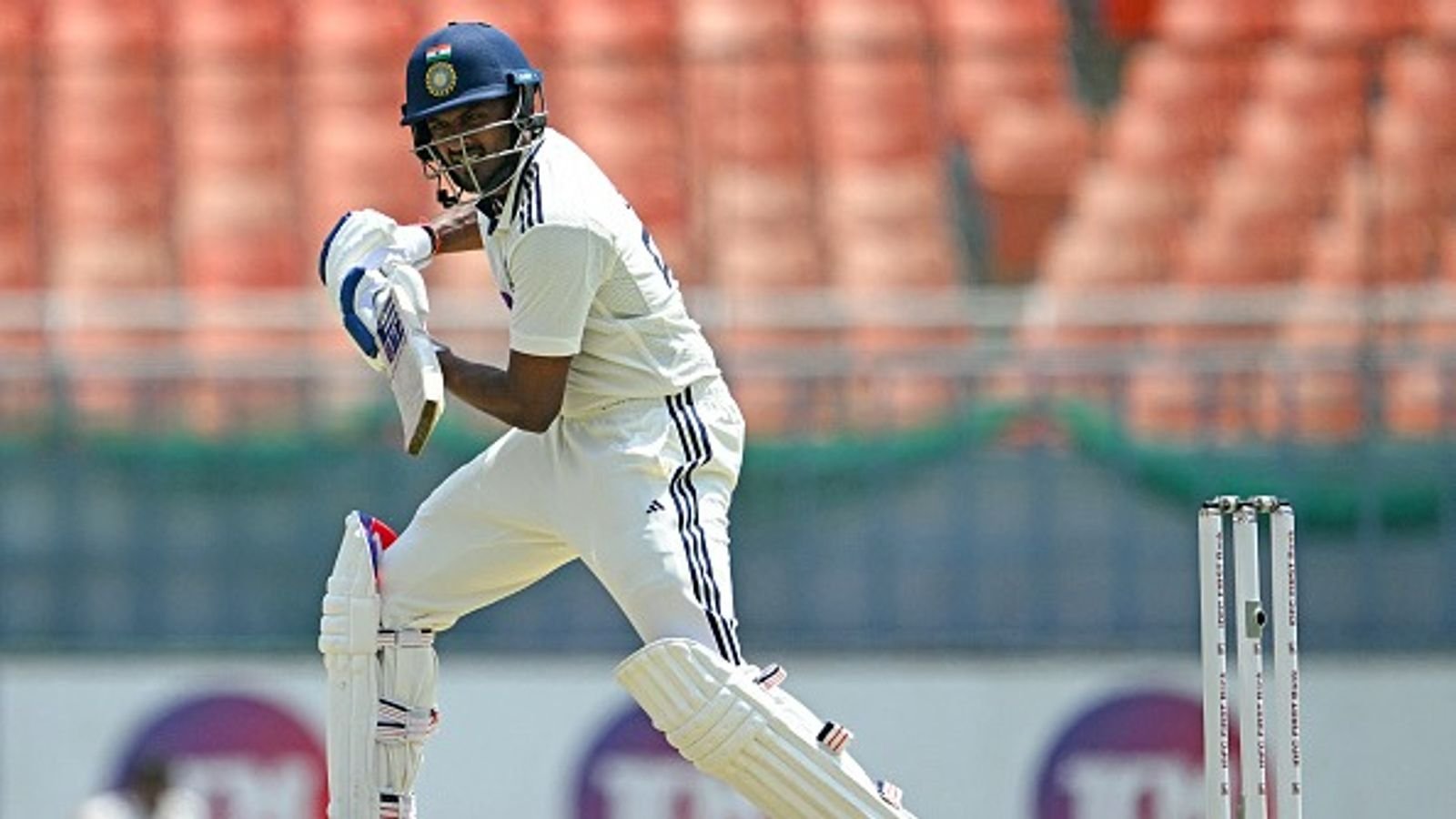
Sarfaraz Khan has been named Sai Sudharsan’s replacement in India’s Test squad for the upcoming two-match series against Sri Lanka, bringing the Mumbai batter back into the national setup after a lengthy absence. The BCCI confirmed the change after Sudharsan was ruled out of the series because of a toe injury.
The decision gives India an experienced domestic run-scorer at a time when the squad is already dealing with several injury concerns. Sarfaraz’s recall is also significant on an individual level because his return comes after months away from international cricket and follows a major focus on improving his fitness.
For India, the move is about more than simply replacing one batter with another. Sudharsan had established himself as an option in the Test middle order, while Sarfaraz brings a different profile built around extensive first-class experience, strong domestic numbers and previous exposure to Test cricket.
Sarfaraz Khan named Sai Sudharsan’s replacement
The BCCI has added Sarfaraz to India’s squad for the Sri Lanka Tests after confirming that Sudharsan will miss the entire series.
Sarfaraz’s return ends a prolonged wait for another opportunity at international level. The 28-year-old last played a Test for India against New Zealand in November 2024, a series remembered by Indian fans for the hosts’ 3-0 defeat but also for Sarfaraz’s century in Bengaluru.
His recall is therefore a significant opportunity. Rather than entering the squad as an untested newcomer, Sarfaraz returns with knowledge of international cricket and an established record in India’s domestic system.
That experience could be particularly useful on an away tour where India will need players capable of adapting quickly to unfamiliar conditions.
Why Sarfaraz’s recall is important for India
India’s batting depth has come under pressure because of injuries and availability issues surrounding several players. Sudharsan’s absence further reduces the options available to the team management.
Sarfaraz provides a natural batting replacement, but his selection also gives the team a player with a clear history of converting domestic opportunities into substantial scores.
His first-class record is particularly notable. Sarfaraz has averaged 64.73 across 62 first-class matches, a figure that demonstrates his long-term consistency away from international cricket.
Domestic dominance does not automatically translate into Test success, but such a record cannot be ignored. It explains why Sarfaraz has remained part of the conversation around India’s Test middle order even during periods when he was outside the squad.
Sarfaraz’s fitness transformation adds another layer to the comeback
One of the most interesting aspects of Sarfaraz’s return is the work he has reportedly done on his fitness.
The Mumbai batter had previously faced criticism surrounding his conditioning. Rather than allowing that criticism to remain a recurring question, Sarfaraz undertook a significant physical transformation and focused on improving his overall fitness and agility.
That change matters because modern Test cricket demands much more than batting ability.
A batter can spend several hours at the crease, but they may also have to field for an entire day, react quickly in close positions and maintain concentration over long periods. Improved fitness can therefore influence not only a player’s athleticism but also their ability to sustain performance during demanding matches.
Sarfaraz’s transformation sends a useful message about his comeback: the selection is not based solely on what he accomplished several years ago. His current preparation has also become part of the case for his return.
Sai Sudharsan’s injury leaves India without an emerging No. 3
Sai Sudharsan’s absence is a considerable setback for India’s plans.
The left-handed batter had recently strengthened his case for the No. 3 position after producing back-to-back centuries during India A’s tour of Sri Lanka. Those performances suggested that he was developing into an important option for the senior Test side.
However, an injury sustained during the second unofficial Test interrupted that progress.
Although Sudharsan has reportedly made progress during his rehabilitation at the BCCI Centre of Excellence in Bengaluru, he has not been considered ready for the physical demands of a Test series.
That decision reflects an important principle in player management: being close to fitness is not necessarily the same as being ready for Test cricket.
Why India could not afford another rushed comeback
Test cricket places unusual demands on players returning from injury. A batter may need to remain at the crease for several hours, repeatedly sprint between the wickets and spend extended periods fielding.
With that in mind, India’s decision to leave Sudharsan out rather than rush him back provides clarity around the squad’s immediate priorities.
The objective is not simply to get the strongest possible XI onto the field for the first match. It is to ensure that players are physically prepared to handle the entire series.
Sarfaraz consequently becomes a practical solution because his selection allows the team to maintain batting depth without gambling on Sudharsan’s recovery.
Sarfaraz Khan vs Sai Sudharsan: what changes for India?
| Factor | Sai Sudharsan | Sarfaraz Khan |
|---|---|---|
| Batting style | Left-handed top-order batter | Right-handed batter |
| Recent pathway | Strong India A performances | Extensive domestic first-class experience |
| Test experience | Limited senior Test exposure | Previous Test appearances for India |
| Major strength | Composure and top-order technique | Heavy domestic run-scoring |
| Current status | Ruled out with toe injury | Recalled as replacement |
The change does not mean Sarfaraz is a like-for-like replacement in terms of style. Sudharsan is a left-handed batter who offers a different combination at the top of the order, while Sarfaraz is a right-hander whose career has been built around prolific domestic scoring.
That difference could influence India’s batting combination and the way the team approaches selection for the opening Test.
Sarfaraz’s previous India opportunity provides valuable experience
Sarfaraz has already experienced the pressure of playing Test cricket for India.
His most memorable moment came during the Bengaluru Test against New Zealand in 2024, when he scored a century. That innings demonstrated that he could handle the intensity of international cricket when given a substantial opportunity.
However, his overall Test career remains relatively small, with only six appearances to date.
That creates an interesting situation for the batter. He has enough international experience to understand the environment but still has plenty to prove if he wants to establish himself as a permanent member of India’s Test middle order.
The Sri Lanka series could be a career-defining opportunity
Sarfaraz’s immediate objective will be straightforward: convert his recall into runs.
Being named in a squad is only the first step. He must still compete for a place in the playing XI, particularly because India have several established batters available.
If he gets the opportunity, however, the Sri Lanka series could become an important turning point in his career.
A strong performance would strengthen his case for future Test selections and demonstrate that his domestic record can be translated into sustained international production.
On the other hand, limited opportunities would mean that the competition for India’s middle-order positions remains intense.
India’s injury list makes Sarfaraz’s return even more important
Sarfaraz’s selection comes against the backdrop of a broader injury problem affecting India’s squad.
Jasprit Bumrah remains unavailable, while Harshit Rana and Nitish Kumar Reddy are also dealing with injuries. Washington Sundar is expected to miss the series opener because of a hamstring issue, while Akash Deep continues his recovery from back stress reactions.
When several players are unavailable simultaneously, squad depth becomes crucial.
India’s strength has traditionally come partly from having multiple players capable of stepping into important roles. The current situation tests that depth because injuries are affecting different areas of the team at the same time.
Sarfaraz’s return therefore provides India with another established batting option precisely when flexibility is needed.
India’s updated squad for the Sri Lanka Tests
Following the replacement, India’s squad for the Sri Lanka Test series is:
- Shubman Gill – Captain
- KL Rahul – Vice-Captain
- Yashasvi Jaiswal
- Rishabh Pant – Wicketkeeper
- Dhruv Jurel – Wicketkeeper
- Ravindra Jadeja
- Kuldeep Yadav
- Manav Suthar
- Mohammed Siraj
- Prasidh Krishna
- Gurnoor Brar
- Devdutt Padikkal
- Saransh Jain
- Auqib Nabi
- Sarfaraz Khan
The squad illustrates the changing balance of India’s Test team. There is experience through players such as Rahul, Jadeja and Siraj, while several younger names are competing for larger roles.
Could Sarfaraz walk straight into the playing XI?
That remains one of the biggest selection questions ahead of the first Test.
Sarfaraz has been added to the squad, but replacement status does not guarantee selection. The team management must decide how best to balance experience, form, left-right combinations and conditions in Sri Lanka.
Devdutt Padikkal is another batting option, while the presence of established players means India have multiple combinations available.
Sarfaraz’s strongest argument is his ability to produce substantial scores. If the selectors believe the conditions favor a batter who can occupy the crease and build a long innings, his profile becomes especially attractive.
The bigger selection battle in India’s Test middle order
Sarfaraz’s recall also highlights a fascinating competition for places in India’s next generation of Test batters.
Sudharsan had been making a strong case. Sarfaraz has already demonstrated his domestic credentials. Padikkal remains another left-handed option, while other emerging players are also pushing for recognition.
This competition is healthy for Indian cricket because it prevents any one position from becoming automatic.
It also means players must continually demonstrate that they belong at international level rather than relying solely on reputation or past performances.
Why Sarfaraz’s domestic record still matters
First-class cricket remains one of the most important proving grounds for Test selection.
Sarfaraz’s average of 64.73 across 62 first-class matches stands out because it represents sustained production over a substantial sample of games. It is not the product of one exceptional tournament or a brief run of form.
Of course, domestic cricket and international Test cricket present different challenges. International bowlers are more experienced, conditions can be less predictable and pressure is significantly higher.
But a sustained domestic record gives selectors evidence that a batter has repeatedly shown the ability to build long innings and score heavily over time.
What Sarfaraz must do now
The most important task for Sarfaraz is not to prove that he deserved his recall. It is to make the opportunity difficult to take away.
If selected, he will need to focus on three areas:
- Convert starts into big scores: India need batters capable of turning good positions into match-defining innings.
- Show defensive discipline: Test cricket rewards patience, especially when conditions favor bowlers.
- Maintain fitness throughout the series: His recent physical transformation must translate into sustained match readiness.
A successful series could change the conversation around Sarfaraz from “out-of-favour batter” to “serious long-term Test option.”
What this recall means for India’s future
There is a broader lesson in Sarfaraz’s return. India’s Test setup is entering a period in which competition for batting positions is likely to become increasingly intense.
Experienced players remain important, but younger batters are pushing through domestic cricket and India A opportunities. Injuries can accelerate those transitions, forcing selectors to test the depth they have built.
Sarfaraz represents one of the players who has already travelled that pathway. His return gives India another chance to determine whether his exceptional domestic record can become sustained international success.
Final verdict: Sarfaraz gets another chance to change the narrative
Sarfaraz Khan’s recall as Sai Sudharsan’s replacement is both an injury-driven necessity for India and a major personal opportunity for the Mumbai batter.
Sudharsan’s toe injury is undoubtedly a setback for India’s plans, particularly after his impressive performances for India A. But Sarfaraz’s inclusion ensures that the team still has access to a batter with extensive first-class experience and previous Test exposure.
His fitness transformation adds another dimension to the comeback. Having addressed one of the major concerns previously associated with his selection, Sarfaraz now has an opportunity to let his batting do the talking.
The Sri Lanka Tests could therefore become much more than a temporary recall. If Sarfaraz can turn an opportunity into significant runs, he could force his way back into India’s long-term Test plans.
For now, the message is clear: Sarfaraz Khan is back in the India Test setup, and the next chapter of his international career is once again in his own hands.
For breaking news and live news updates, like us on Facebook or follow us on Twitter and Instagram. Read more on Latest Cricket on thefoxdaily.com.






COMMENTS 0