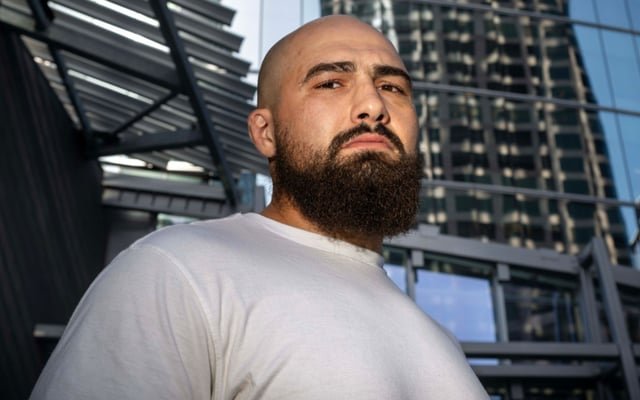
Sean Sharaf has detailed the financial decisions that left him with around $600,000 in debt, shortly after his stunning 12-second knockout victory over Gable Steveson.
Sean Sharaf produced one of the biggest surprises of his young UFC career when he stopped Gable Steveson just 12 seconds into their heavyweight contest at UFC 331. The victory changed the conversation around his fighting career, but the aftermath also brought attention to a very different challenge facing the American heavyweight: his finances.
Sharaf has revealed that he accumulated approximately $600,000 in debt after making a series of financial decisions that he now recognizes were difficult to sustain. Speaking in an interview with ESPN MMA, the fighter discussed expensive purchases, borrowing money, gambling and taking an advance against his fight purse.
His comments provide a glimpse into the financial pressures that can surround professional fighters, particularly when training camps, travel and other expenses are combined with inconsistent income. Sharaf also said he was considering getting professional financial advice.
Sean Sharaf Explains How He Built Up $600,000 in Debt
Sharaf’s financial problems did not come from one single expense, according to his own account. Instead, he described several decisions that gradually contributed to his debt.
One of the most significant was the purchase of a Toyota TRX that he said he could not afford. Sharaf stated that he spent around $120,000 on the vehicle, making it one of the clearest examples of the spending decisions he now views differently.
The heavyweight also discussed trying to support his mother financially. At the same time, he acknowledged that he had sometimes borrowed money from her himself, highlighting how complicated his financial situation had become.
Sharaf’s situation illustrates the difference between earning money from a major sporting event and maintaining financial stability over the longer term. A fighter may receive a substantial purse for a particular bout, but training expenses and other commitments can reduce the amount available for everyday living and future planning.
The UFC 331 Victory Came During a Difficult Financial Period
Sharaf entered UFC 331 with a 4-0 professional record, according to the supplied report, but faced a major test against Steveson.
Steveson entered the bout with an impressive athletic background and significant wrestling credentials. That made the matchup particularly difficult to predict based solely on experience and reputation.
Sharaf, however, needed only 12 seconds to change the narrative.
The heavyweight landed the decisive sequence early in the opening round and secured a knockout victory. The result represented a major moment in his UFC career and gave him a high-profile win against an opponent who had attracted substantial attention before entering mixed martial arts.
Behind that victory, however, Sharaf was dealing with the financial issues he later described publicly.
Sharaf Says He Took an Advance to Fund His Las Vegas Camp
Another part of Sharaf’s financial explanation involved the cost of preparing for fights.
The fighter said he received an advance on his purse from his management team to help finance his training camp in Las Vegas. Professional MMA camps can involve accommodation, coaching, training partners, travel and other expenses, meaning preparation itself can require significant resources.
Sharaf also admitted that he gambled a considerable amount of money after moving to Las Vegas.
He connected some of those decisions with his desire to establish himself in the UFC environment. Sharaf said he was trying to meet UFC president Dana White, adding another layer to the story of how his spending and financial decisions developed during that period.
Rather than presenting the debt as something caused by one isolated event, Sharaf described a combination of choices that eventually left him in a difficult position.
Sharaf Says Banks Were Contacting Him Regularly
The financial pressure became serious enough that Sharaf said banks were contacting him frequently.
That detail underlines the scale of the situation. A debt of approximately $600,000 can affect many aspects of a person’s financial life, especially when income is dependent on professional competition.
MMA fighters do not necessarily have the same predictable income structure as athletes in sports with guaranteed annual salaries. Their earnings can depend on fight contracts, bonuses, sponsorships and how frequently they compete.
For a young fighter trying to establish himself, that uncertainty can make long-term financial planning particularly important.
Sharaf indicated that he now understands the need for greater financial structure and said he believed he was going to seek help from a financial advisor.
Why Financial Planning Matters in Professional MMA
Sharaf’s story also raises a broader issue about the financial realities of combat sports.
Fighters can experience large changes in income depending on their position on a card, contract status, performance bonuses and the frequency of their bouts. A major victory can increase visibility and future opportunities, but it does not automatically solve pre-existing financial obligations.
There are also significant costs associated with being an active professional fighter. Training camps, coaching, nutrition, travel and accommodation can all require money before a fighter even enters the cage.
That makes budgeting especially important during periods when competition schedules are uncertain.
Sharaf’s decision to discuss his situation publicly could also serve as an example of why athletes may benefit from professional financial guidance before making major purchases or taking on significant debt.
The $120,000 Vehicle Became a Major Part of Sharaf’s Story
Among the expenses Sharaf discussed, his TRX purchase stands out because of its size.
He acknowledged that the vehicle was beyond what he could comfortably afford and estimated that he had effectively spent around $120,000 on it.
For someone whose income depends on professional fights, taking on a large financial commitment can become particularly challenging when the next payday is uncertain.
Sharaf’s comments suggest that the purchase was part of a broader period in which he was making decisions without having the financial foundation to support them.
His willingness to identify the purchase as a mistake is significant because it shows that the fighter now recognizes the relationship between short-term spending and long-term financial obligations.
Sharaf Also Addressed Gable Steveson’s Immediate Exit
Following the UFC 331 fight, Steveson reportedly left the Octagon with his team soon after the loss rather than remaining for the usual post-fight winner announcement.
Sharaf was asked about the moment during a media scrum and said he had noticed Steveson leaving.
Rather than criticizing his opponent extensively, Sharaf framed the situation through his own experience of suffering a first professional defeat. He pointed out that losing can become a learning experience and suggested that fighters can use setbacks to reassess their approach.
For Sharaf, the UFC 331 result was particularly significant because he remained unbeaten through his first four professional fights before entering the UFC. Steveson, meanwhile, suffered his first professional defeat in the matchup.
The contrast gave Sharaf an opportunity to discuss how fighters respond when expectations change suddenly.
Sharaf’s Upset Win Changed His Career Conversation
Before UFC 331, much of the attention surrounding the heavyweight matchup focused on Steveson’s wrestling background and transition into MMA.
Sharaf’s victory changed that immediately.
A 12-second knockout leaves very little room for a long tactical battle, and the result gave Sharaf a memorable highlight at an important stage of his career.
The win also means that his next professional opportunities will likely be viewed through a different lens. Instead of simply being an undefeated prospect trying to build momentum, Sharaf now has a high-profile UFC victory attached to his record.
At the same time, the financial situation he described shows that career progress inside the cage does not necessarily eliminate problems outside it.
Sharaf’s Financial Situation Remains a Work in Progress
Sharaf’s comments suggest that resolving the debt will require more than the income from one successful fight.
His mention of a potential financial advisor indicates that he is considering professional assistance to organize his finances. Such advice can potentially help an athlete understand debt obligations, manage spending and plan around irregular income.
However, the exact details of Sharaf’s debt, repayment arrangements and future financial plans were not provided in the supplied report.
It is therefore important not to assume how quickly the fighter will be able to resolve the reported amount. His own comments establish the approximate scale of the debt and some of the decisions behind it, but they do not provide a complete financial picture.
What Sharaf’s UFC 331 Story Shows
- Major upset: Sharaf defeated Gable Steveson by knockout just 12 seconds into their UFC 331 heavyweight bout.
- Reported debt: Sharaf said he had accumulated approximately $600,000 in debt.
- Major purchase: He identified a roughly $120,000 TRX purchase as one of his poor financial decisions.
- Training expenses: He said he took an advance on his purse to help finance his Las Vegas training camp.
- Gambling: Sharaf acknowledged losing a significant amount of money through gambling after moving to Las Vegas.
- Future planning: He indicated that he was considering getting help from a financial advisor.
- Steveson response: Sharaf said he did not make much of Steveson’s immediate departure from the Octagon and discussed how fighters can learn from their first losses.
Final Verdict
Sean Sharaf’s UFC 331 victory was a major sporting moment, but his latest comments show that the fight took place against the backdrop of significant financial pressure.
The heavyweight has openly acknowledged several decisions that contributed to approximately $600,000 in debt, including an expensive vehicle purchase, gambling losses, borrowing money and taking an advance to help cover his training camp.
Sharaf now appears focused on addressing those problems, with financial advice among the options he has mentioned. His story also highlights the unusual financial demands of professional MMA, where income can be irregular and the cost of maintaining a competitive training environment can be substantial.
Inside the Octagon, Sharaf has given himself a significant boost with his 12-second victory over Steveson. Outside it, his next challenge will be managing the financial consequences he has publicly described while continuing to build his UFC career.
For breaking news and live news updates, like us on Facebook or follow us on Twitter and Instagram. Read more on Latest MMA on thefoxdaily.com.


COMMENTS 0