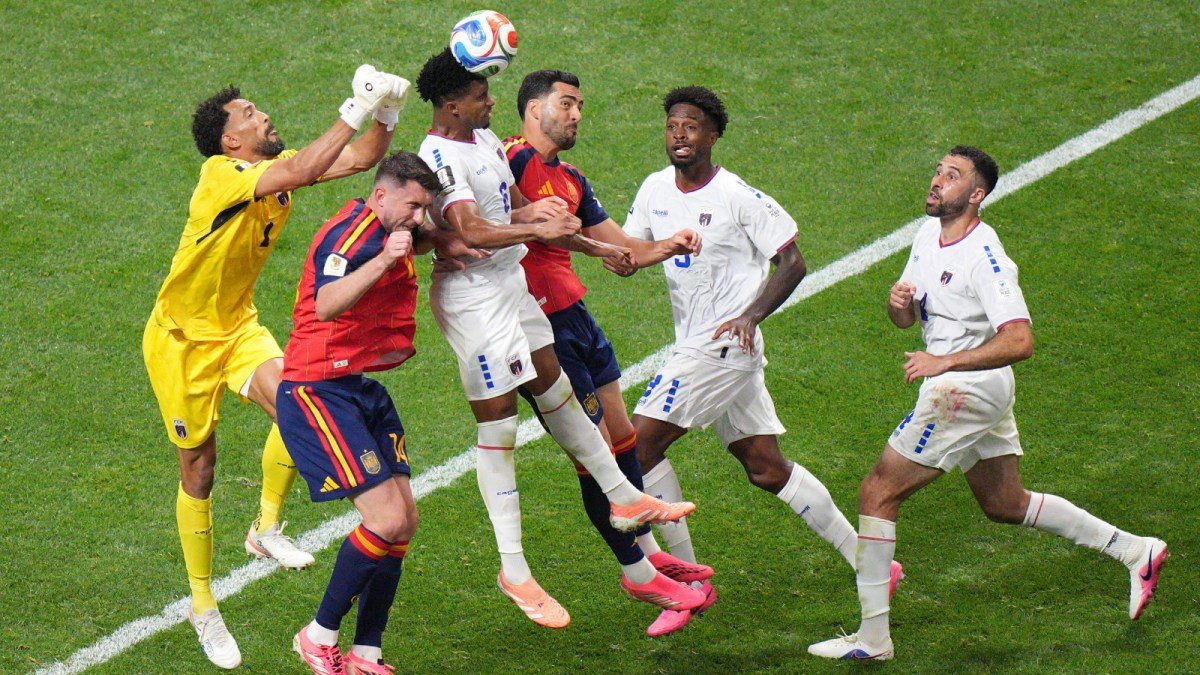
The FIFA World Cup has always been a stage for underdog stories, but few could have predicted what unfolded in Atlanta on June 15.
Cape Verde, making its historic World Cup debut, secured a remarkable 0-0 draw against Spain, one of the tournament favorites and the reigning European champions.
On paper, the contest appeared heavily one-sided. Spain controlled nearly 75% possession, registered 27 shots, and spent long periods camped inside Cape Verde’s half.
Yet football has never been decided on possession statistics alone.
Instead, Cape Verde delivered a defensive performance defined by resilience, organization, and unwavering belief, while 40-year-old goalkeeper Vozinha produced a career-defining display that instantly entered World Cup folklore.
The result not only earned Cape Verde their first-ever point at a FIFA World Cup but also sent an early warning to every team in Group H: this tournament debutant is not here simply to make up the numbers.
How Cape Verde Frustrated Spain’s Possession-Based Approach
From the opening whistle, Cape Verde made their tactical intentions clear.
Rather than pressing aggressively, they retreated into a compact five-man defensive line, often placing nearly every outfield player behind the ball.
The strategy was simple but highly effective: deny Spain space between the lines and force them into low-percentage opportunities.
Spain moved the ball patiently from flank to flank, searching for openings, but Cape Verde’s defensive shape rarely broke.
Every pass into dangerous areas was quickly met by multiple defenders, turning the penalty box into a crowded and frustrating space for the European giants.
The performance highlighted an enduring truth in modern football: possession only matters when it creates quality chances.
Despite dominating the ball, Spain struggled to generate the type of clear-cut opportunities needed to break down a disciplined low block.
Vozinha Becomes the Face of Cape Verde’s Historic Night
While Cape Verde’s collective defensive effort was exceptional, goalkeeper Vozinha emerged as the undeniable hero.
At 40 years old, the veteran delivered a player-of-the-match performance that combined experience, positioning, and composure under relentless pressure.
His most memorable moments included:
- A crucial save to deny Pedri in the first half
- A spectacular one-handed stop from Mikel Oyarzabal’s close-range header
- A reflex save after Ferran Torres struck the crossbar
- A diving intervention to push Aymeric Laporte’s header around the post
- Several commanding claims and clearances under pressure
As the final whistle blew, an emotional Vozinha left the field in tears after helping secure one of the greatest results in Cape Verdean football history.
| Match Statistic | Spain | Cape Verde |
|---|---|---|
| Possession | 75% | 25% |
| Total Shots | 27 | Limited opportunities |
| Goals | 0 | 0 |
| Player of the Match | — | Vozinha |
| World Cup Experience | Multiple titles and deep runs | Tournament debut |
Did Spain Underestimate Their Opponents?
Spain manager Luis de la Fuente made a notable decision by leaving attacking stars Lamine Yamal and Nico Williams out of the starting lineup.
The move appeared designed to manage workloads against a team many expected Spain to defeat comfortably.
However, the absence of their most dynamic wide players reduced Spain’s attacking unpredictability.
Ferran Torres and Gavi, deployed in wider roles, struggled to stretch Cape Verde’s defense or consistently win one-on-one situations.
Without the pace and creativity that Yamal and Williams typically provide, Spain became increasingly predictable.
The tactical decision may prompt questions about whether Spain underestimated the challenge posed by motivated and well-organized opponents.
Lamine Yamal’s Introduction Changed the Match
Recognizing the need for greater attacking urgency, De la Fuente introduced Yamal and Mikel Merino in the 70th minute.
The impact was immediate.
Yamal’s direct running and acceleration forced Cape Verde’s defenders to alter their shape and commit additional players to marking him.
For the first time in the match, Spain began creating spaces in wide areas.
In the 88th minute, Yamal delivered a perfectly weighted pass to Oyarzabal, only for Cape Verde’s defense to produce another crucial block.
Although Spain increased the pressure late on, Cape Verde remained composed and disciplined until the final whistle.
Echoes of Spain’s Previous World Cup Frustrations
For Spanish supporters, the result may have felt uncomfortably familiar.
Spain’s 2022 World Cup elimination against Morocco followed a similar pattern: overwhelming possession, countless passes, and an inability to break down a compact defensive structure.
While Spain’s technical quality remains among the best in international football, questions persist about whether they possess enough tactical flexibility against teams willing to defend deep.
Modern international tournaments increasingly reward adaptability rather than dominance for its own sake.
When opponents prioritize defensive organization over possession, Spain must find alternative ways to create opportunities.
What This Result Means for Group H
The draw dramatically alters the dynamics of Group H.
Spain entered the tournament expecting to establish early control, but dropping points against the group’s lowest-ranked side increases the pressure heading into their remaining fixtures.
Meanwhile, Cape Verde have gained more than just a point.
They now carry momentum, confidence, and belief that progression to the knockout stages is possible.
Every team in the group will now approach matches against the African side with increased caution.
The result also places added importance on the upcoming clash between Saudi Arabia and Uruguay, as the standings could tighten significantly after the opening round of fixtures.
| Key Takeaway | Impact on Group H |
|---|---|
| Cape Verde earn first World Cup point | Boosts knockout-stage hopes |
| Spain drop unexpected points | Increases pressure in remaining matches |
| Vozinha emerges as tournament story | Raises Cape Verde’s profile globally |
| Group remains wide open | Makes every upcoming fixture crucial |
Why Cape Verde’s Performance Matters Beyond the Scoreline
Cape Verde’s achievement extends beyond a single result.
With a population of fewer than 600,000 people, the island nation has become a symbol of how strategic planning, player development, and collective belief can help smaller footballing countries compete on the world’s biggest stage.
Their disciplined display serves as inspiration for emerging football nations hoping to challenge established powers.
In an era dominated by elite academies and massive financial resources, Cape Verde demonstrated that organization, teamwork, and tactical clarity can still level the playing field.
Conclusion
Spain may have controlled possession, territory, and chances, but Cape Verde controlled the narrative.
On their World Cup debut, they produced a performance built on resilience and determination, earning a memorable draw that will be celebrated for generations.
For Spain, the result serves as an early reminder that tournament football rewards efficiency rather than dominance.
For Cape Verde, it marks the beginning of a remarkable World Cup journey.
And for Vozinha, the emotional goalkeeper who stood between Spain and victory, it was the night his name became synonymous with one of the tournament’s first great upsets.
For breaking news and live news updates, like us on Facebook or follow us on Twitter and Instagram. Read more on Latest Sports on thefoxdaily.com.

COMMENTS 0