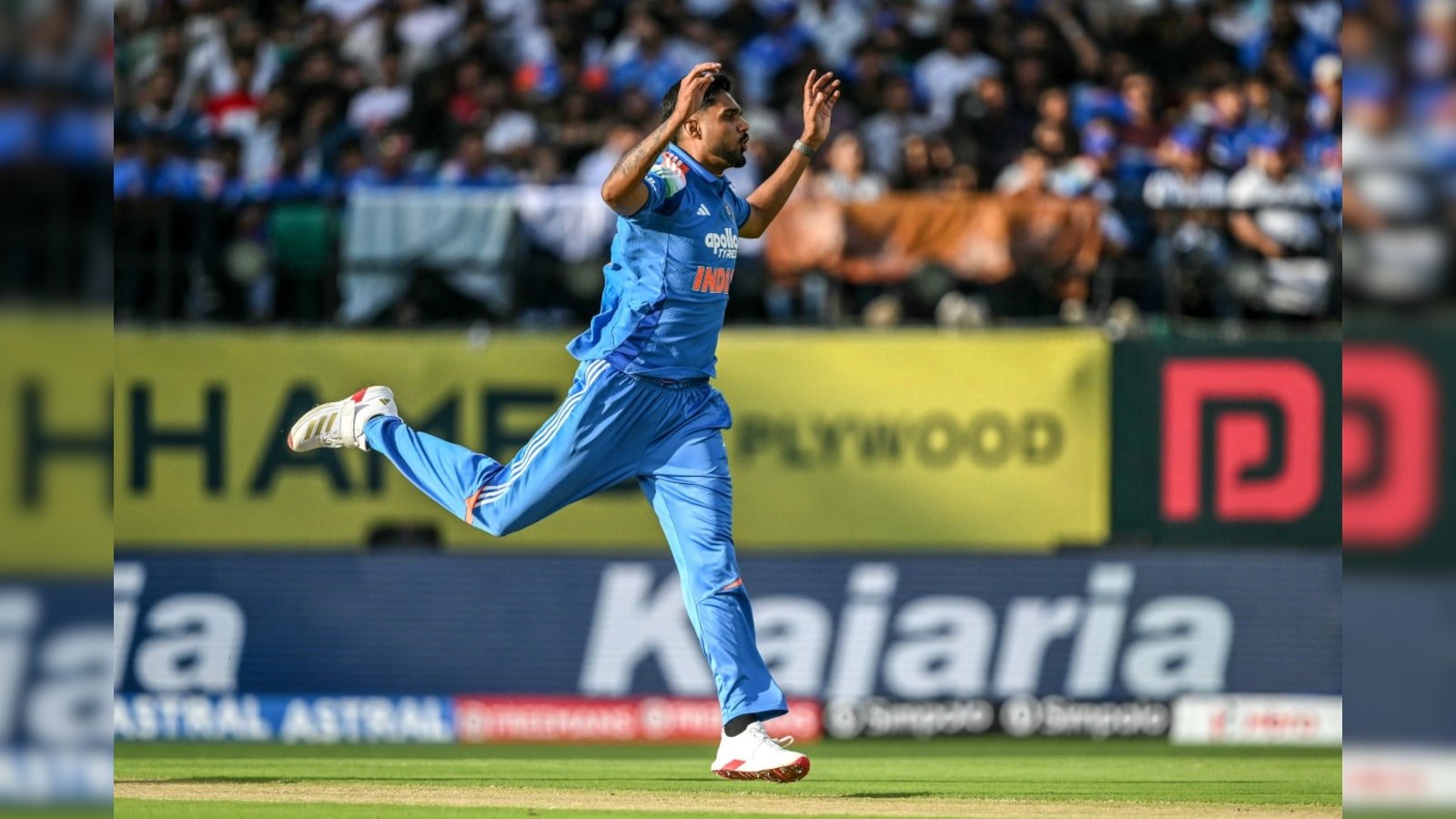
India’s convincing 170-run victory over Afghanistan in the second ODI was headlined by explosive centuries from Shubman Gill and Ishan Kishan, but former captain Sunil Gavaskar believes one of the biggest positives from the match came with the ball.
Left-arm pacer Gurnoor Brar delivered a standout performance, claiming 3 for 60 as India bowled Afghanistan out for 232 after posting a formidable total of 402.
Beyond the impressive figures, Brar’s performance reignited an important discussion about modern selection philosophy: should teams prioritise raw statistics or long-term potential?
For Gavaskar, the answer is clear.
Why Sunil Gavaskar Praised India’s Selection Committee
Speaking after the match, Gavaskar credited chief selector Ajit Agarkar and the selection panel for looking beyond conventional metrics and identifying qualities that may not immediately appear on a scorecard.
According to Gavaskar, Brar’s domestic numbers and India A performances were respectable but not necessarily exceptional enough to guarantee international selection.
However, selectors recognised attributes that statistics often fail to capture.
His smooth run-up, natural rhythm, ability to hit the deck hard and extract extra bounce convinced the team management that he could succeed at the highest level.
Equally important was the support he received after being selected.
Talent identification is only the first step. Consistent backing from captains, coaches and selectors often determines whether young players can transition successfully to international cricket.
Gurnoor Brar’s Spell Showed Why He Was Picked
Brar justified that faith with a performance that combined pace, discipline and intelligent use of conditions.
His dismissal of Afghanistan opener Rahmanullah Gurbaz particularly impressed Gavaskar.
The left-arm seamer used a well-directed bouncer that climbed sharply, forcing an uncomfortable response from the batter.
It was the kind of delivery that highlighted Brar’s greatest strength: his ability to generate awkward bounce while maintaining accuracy.
In modern ODI cricket, where batters often dominate, bowlers who can create uncertainty through subtle variations rather than extreme pace are increasingly valuable.
Brar’s skill set offers India something different.
The Value of Left-Arm Pacers in White-Ball Cricket
Left-arm fast bowlers have traditionally provided teams with a unique tactical advantage.
Their natural angle across right-handed batters creates different scoring challenges and forces opposition teams to adjust their game plans.
India has long searched for a reliable left-arm pace option capable of delivering consistently in major tournaments.
With the 2027 ODI World Cup on the horizon, Brar’s emergence could help address that need.
His ability to move the new ball, generate bounce on flat surfaces and attack different phases of an innings makes him a valuable addition to India’s growing pace arsenal.
How India’s Selection Strategy Is Evolving
Brar’s inclusion reflects a broader shift in India’s approach to talent identification.
Rather than selecting players solely on the basis of domestic averages, selectors are increasingly focusing on skills that translate effectively to international cricket.
Attributes such as adaptability, tactical awareness, physical fitness and role-specific expertise now carry greater importance.
This philosophy mirrors the strategies employed by leading international teams, where data analysis and scouting reports complement traditional performance metrics.
By investing in players with high ceilings rather than simply rewarding short-term numbers, India hopes to build a squad capable of sustained success across different conditions.
Shubman Gill’s Form Is Strengthening His Captaincy
Gavaskar also highlighted the connection between personal performance and leadership confidence.
Captain Shubman Gill led from the front with a magnificent 154 off 110 balls, sharing a match-winning 224-run partnership with Ishan Kishan.
According to Gavaskar, strong individual form often empowers captains to trust their instincts.
Whether it involves changing field placements, extending a bowler’s spell or making bold tactical calls, confidence at the crease frequently translates into clarity on the field.
When captains are performing well personally, they are more willing to make instinctive decisions without fear of criticism.
Gill’s recent form suggests he is growing into the leadership role with increasing assurance.
India’s Bowling Unit Still Has Questions to Answer
Despite securing the series with a game to spare, India still have areas to address before the final ODI in Chennai.
Gavaskar believes the spin department remains a work in progress.
While Kuldeep Yadav has bowled effectively, his performances have not always been reflected in his wicket tally.
Meanwhile, Harsh Dubey impressed with three wickets in the opening match but conceded runs at a higher rate than the team management would ideally prefer.
With conditions in Chennai traditionally favouring spin, the final ODI offers an opportunity to test combinations and clarify roles ahead of future assignments.
Key Performances from India’s Second ODI Win
| Player | Performance | Impact |
|---|---|---|
| Shubman Gill | 154 off 110 balls | Led India to 402 runs |
| Ishan Kishan | 125 off 79 balls | Shared a 224-run partnership with Gill |
| Gurnoor Brar | 3/60 | Led India’s pace attack |
| Kuldeep Yadav | Economical spell | Controlled the middle overs |
| Match Result | India won by 170 runs | Secured the series 2-0 |
Can Gurnoor Brar Become a Long-Term Option?
One impressive performance does not guarantee a permanent place in the national team, but Brar has undoubtedly strengthened his case.
His success against Afghanistan demonstrated that he possesses the skills required to compete at the international level.
The challenge now is consistency.
India’s fast-bowling depth means competition for places remains intense, and Brar will need to continue adapting to different conditions and opposition.
However, if he maintains his current trajectory, he could become an important component of India’s ODI plans.
Conclusion: Brar’s Rise Reflects India’s Future-Focused Vision
Sunil Gavaskar’s praise for Gurnoor Brar extends beyond a single spell or a single match.
It recognises a selection process that values potential, role clarity and long-term planning.
By identifying and backing players with specific skills, India is building a more versatile and balanced squad for the future.
As the road to the 2027 ODI World Cup continues, Brar’s emergence offers another encouraging sign that India’s next generation is ready to step forward.
For breaking news and live news updates, like us on Facebook or follow us on Twitter and Instagram. Read more on Latest Sports on thefoxdaily.com.






COMMENTS 0