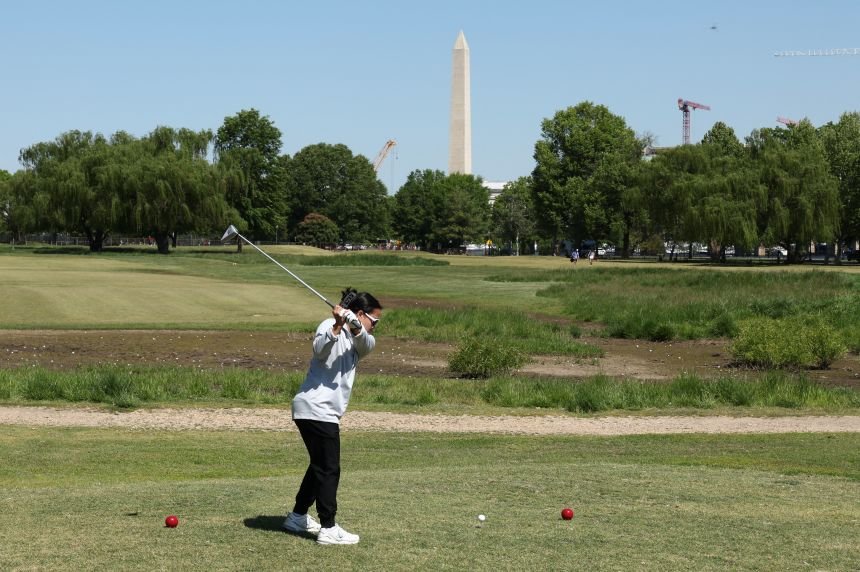
President Donald Trump’s proposal to transform East Potomac Golf Links into a championship-level golf course could reshape one of Washington, DC’s most accessible public spaces. While the plan promises a prestigious golfing destination capable of hosting major tournaments, it also raises questions about public access, affordability, recreation and the future of federally managed parks.
East Potomac Park is more than a municipal golf course. Located along the Potomac River, the area serves golfers, runners, cyclists, walkers and families looking for open space in the nation’s capital. Its appeal comes not from luxury facilities or exclusive amenities, but from its affordability, scenery and ability to accommodate people from different backgrounds.
That is why the proposed redevelopment has implications beyond golf. If the transformation reduces public access or introduces costs comparable to those at other championship courses, Washington could lose a rare recreational space where ordinary residents and visitors can enjoy the outdoors without spending a fortune.
The debate also raises a broader question about the purpose of America’s public spaces: Should iconic parks be redesigned around prestige and major sporting events, or should their primary role remain providing accessible recreation for everyone?
East Potomac Golf Links: A public golf course built around accessibility
East Potomac Golf Links represents an important part of Washington’s public recreation landscape. At a time when golf is growing in popularity and green fees at many courses are increasing, the municipal facility has offered an affordable way for people across the capital region to play.
According to the source account, a weekend round of 18 holes costs less than $50 for golfers who walk the course. Players who prefer to use a golf cart pay an additional $18. Those prices make the facility accessible to a broader range of golfers than many expensive destination courses.
The course attracts a varied community, from beginners learning the game to experienced players who regularly compete against friends or work to improve their handicaps. Its welcoming atmosphere is part of its value: People do not need to be wealthy or belong to an exclusive club to enjoy a round.
The course is not without shortcomings. Some tee boxes need rebuilding, bunkers require maintenance and certain fairway sections have patches where dirt is more prominent than grass. Slow rounds can also stretch to five hours, creating frustrations for golfers trying to complete their games.
Yet these imperfections have not erased the course’s appeal. For many players, the combination of reasonable fees, open access and a distinctive setting makes East Potomac worthwhile despite its maintenance issues.
This distinction matters when evaluating Trump’s proposal. Improving an aging public golf course and converting it into a high-end sporting destination are not necessarily the same objective. Maintenance could improve the experience without fundamentally changing who can afford to use the facility.
What makes East Potomac Park special beyond golf?
East Potomac Park’s significance extends well beyond its fairways. Its location provides views of Washington’s landmarks, seasonal scenery along the Potomac River and open areas where residents can escape the crowded streets and heavily visited attractions around the National Mall.
Golfers can aim shots toward the Washington Monument, even though the towering landmark remains far beyond the reach of a golf ball. In autumn, the foliage across the river in northern Virginia adds color to the landscape. During spring, cherry blossoms around the course’s exterior provide another seasonal attraction.
These features help make the area appealing even to people who are not particularly interested in golf. Its natural setting offers a different way to experience Washington, combining outdoor recreation with views of the capital’s landmarks.
There is also a social dimension that is harder to measure. Public golf courses allow strangers to share a game, form temporary partnerships and spend several hours together without the social barriers often associated with professional status or wealth.
At East Potomac, that experience is part of the attraction. Players can join a group, complete a round and build connections without needing to establish their occupation, income or social standing.
In a city closely associated with government, politics and professional ambition, such informal interactions offer a welcome contrast. The course functions as a shared public environment rather than an exclusive venue designed for a particular social class.
Ohio Drive and Hains Point: A vital space for runners and cyclists
One of the most significant concerns surrounding the proposed redevelopment is the potential impact on Ohio Drive SW and the surrounding public space at Hains Point.
Ohio Drive follows a route around the southern portion of the Tidal Basin area, continues around the tip of East Potomac Park at Hains Point and returns toward the vicinity of the Jefferson Memorial. The road and its surroundings form an important part of Washington’s outdoor recreation network.
For residents of Southwest DC, the route can be particularly valuable. The Hains Point loop offers runners several miles of relatively uninterrupted road, allowing them to maintain a steady pace away from some of the crowds that gather around the National Mall.
The route is also important to the city’s broader running community. Major events, including the Credit Union Cherry Blossom 10 Mile Run in spring and the Marine Corps Marathon in autumn, incorporate stretches of the area into their routes.
These races have developed identities around established courses and familiar landmarks. Significant changes to the surrounding park could therefore affect not only individual runners but also events that attract participants and spectators to Washington.
Cyclists and walkers also use the area as a place to exercise and spend time outdoors. Its appeal comes partly from the ability to move through a substantial stretch of public space without the congestion often associated with more central tourist destinations.
The plans published by Trump on Sunday, as described in the source account, appeared to focus on the golf course and did not visibly show Ohio Drive. That omission has prompted concern about what might happen to the road and surrounding open space if the proposal proceeds in its current form.
The available description does not establish that Ohio Drive will definitely be removed. However, the apparent absence of the road from the published plans highlights the need for clarity about which existing public facilities would remain, change or disappear.
Why Hains Point matters to families
Hains Point provides more than a route for organized sporting events. Its open spaces allow families to gather for cookouts, hold parties and give children room to run and play against the backdrop of the Potomac River.
These everyday uses are easy to overlook when a redevelopment proposal is evaluated primarily through the lens of architecture, tournament hosting or the quality of a golf course. Yet public parks serve a wide range of purposes, many of which do not generate revenue or attract national attention.
For families, an accessible park can provide an inexpensive alternative to paid attractions. Parents can spend time outdoors with their children without purchasing tickets, booking reservations or paying premium prices for entertainment.
Washington has internationally recognized museums and monuments, but those attractions do not replace the practical value of open green space. Children need room to play, residents need places to exercise and families benefit from areas where spending time together does not require a significant financial commitment.
If a redevelopment reduces the space available for these activities, the impact would extend well beyond golfers. It could affect a broad community of people who rely on East Potomac Park as part of their regular lives.
Trump’s championship golf vision: What is the proposal trying to achieve?
Trump’s stated ambition is to transform East Potomac Golf Links into a championship-level course capable of hosting major competitions, including the US Open and the Ryder Cup.
In his Sunday post, Trump said the proposed course would remain open to the public. In principle, that could create a high-profile golfing destination in Washington while allowing ordinary players to experience a course designed to meet elite competitive standards.
A successful redevelopment could potentially improve playing conditions, modernize facilities and raise the profile of golf in the capital. The possibility of hosting major tournaments would also give the project a national sporting dimension.
However, the central issue is not simply whether a championship course would be attractive. It is whether the proposed development could achieve those ambitions without sacrificing the affordability and wider recreational access that currently make the area valuable.
A course can technically remain open to the public while becoming financially inaccessible to many of the people who previously used it. Public ownership or open booking policies do not automatically guarantee that fees will remain affordable.
That distinction is particularly important for East Potomac. Its current appeal depends heavily on the opportunity to play without paying the hundreds of dollars associated with some of America’s best-known public courses.
Could East Potomac become too expensive for ordinary golfers?
Other prominent public golf courses illustrate the financial challenge that can accompany championship-level status. Facilities such as Pebble Beach Golf Links in Northern California, Torrey Pines in San Diego, Whistling Straits in Wisconsin, Pinehurst No. 2 in North Carolina and The Ocean Course at Kiawah Island in South Carolina attract golfers seeking prestigious playing experiences.
However, access to these destinations can come at a considerable cost. The source account cites green fees approaching $700 at Pebble Beach and The Ocean Course. Non-residents of San Diego can pay more than $250 for a round at Torrey Pines, while playing the top course at Whistling Straits can cost more than $700.
Pinehurst No. 2 presents a different barrier: Access to a tee time can require booking a stay of at least two nights at the resort, in addition to paying hundreds of dollars to play.
These examples demonstrate that public access and affordability are separate questions. A course may be open to visitors but still cater primarily to golfers with substantial disposable income.
If East Potomac adopts a similar pricing model, local golfers who currently depend on its comparatively low fees could find themselves priced out. The course could become a destination for wealthy visitors planning expensive golf trips rather than a regular recreational option for Washington residents.
Such an outcome would represent a fundamental change in the facility’s role. Instead of serving a diverse local community, the course could increasingly prioritize visitors willing and able to pay premium rates.
That does not mean a championship course must inevitably become unaffordable. Pricing structures, resident discounts, subsidized tee times and protected public-access policies could influence who benefits from the redevelopment. The key question is whether affordability would be treated as a central requirement or left to market forces.
Public parks and the risk of recreation becoming a luxury
The concerns surrounding East Potomac Park connect to a wider debate about the future of America’s public spaces. National parks, monuments, urban green spaces and publicly accessible recreation areas provide opportunities that would otherwise be available mainly to people who can afford private alternatives.
These spaces are valuable partly because they are shared. A public park can welcome a family seeking a picnic spot, an athlete preparing for a race, a cyclist completing a training ride and a golfer playing a weekend round.
When redevelopment prioritizes one expensive activity over a variety of existing public uses, the benefits may become concentrated among a narrower group of people. Even if the resulting facility is impressive, the community can lose something important if its range of users shrinks.
The concern is especially significant when public land is involved. A proposal to improve a facility on public property raises questions about how the land is managed, who makes decisions about its future and what obligations exist to preserve access for the public.
The East Potomac debate also raises questions about legal and regulatory safeguards. The source account points to concerns about the treatment of rules governing special public places and the court processes intended to examine the legality of developments.
Those concerns should be evaluated through the relevant legal and administrative processes rather than assumed to establish that the proposal is unlawful. Nevertheless, transparency about approvals, environmental considerations, public consultation and the scope of the project is essential when a major change to public land is proposed.
The broader precedent matters because decisions involving one park can influence expectations about others. If public spaces can be significantly transformed without clear protections for existing users, communities may become less confident that similar spaces will remain accessible in the future.
How the redevelopment could affect Washington’s identity
Washington, DC, occupies an unusual place in American life. Its monuments, museums and public spaces attract visitors from across the country, but they are also woven into the everyday routines of local residents.
Unlike many exclusive attractions, much of the capital’s public landscape can be experienced without paying an entrance fee. Residents can walk among major monuments, visit many Smithsonian museums and enjoy parks without needing to make expensive purchases.
That accessibility supports the idea that Washington belongs to more than its political institutions, wealthy visitors or cultural elite. It is a place where Americans from different backgrounds can experience the nation’s capital on relatively equal terms.
East Potomac Park reflects that principle through ordinary recreation rather than grand symbolism. Its value lies in the people who use it, the activities it accommodates and the opportunities it provides at a relatively low cost.
Transforming the site into an elite golfing destination could therefore create a tension between prestige and public service. A course capable of hosting a major tournament might enhance Washington’s sporting profile, but that achievement would be less meaningful if it came at the expense of accessible recreation.
The challenge for decision-makers is to determine whether the project can deliver improvements without undermining the park’s broader public purpose.
What should residents look for as the plans develop?
The debate over East Potomac Park will depend on more than the appearance of proposed golf-course designs. The practical details will determine how the project affects people who currently use the area.
Several questions deserve particular attention as additional information becomes available:
- Golf fees: Will the course retain affordable rates for local residents, beginners and regular public golfers?
- Public access: Will the surrounding park remain open to people who are not playing golf?
- Ohio Drive: What will happen to the road and its role in running, walking and cycling?
- Hains Point: Will families continue to have access to open areas for picnics, gatherings and children’s recreation?
- Major sporting events: How would tournament hosting affect everyday access, traffic and use of the surrounding area?
- Legal and environmental review: What approvals, assessments and public consultation will be required before work can proceed?
- Long-term management: What enforceable protections, if any, would guarantee that public access remains meaningful and affordable?
These questions distinguish a project that simply creates an impressive golf course from one that responsibly balances sporting ambitions with the needs of the surrounding community.
They also provide a practical basis for evaluating the proposal. Rather than judging the redevelopment solely by its design or potential tournament calendar, residents can examine whether it preserves the activities that make East Potomac Park valuable today.
Conclusion: The stakes go beyond a golf course
Donald Trump’s proposal to transform East Potomac Golf Links into a championship-level course presents a choice about the future of one of Washington’s important recreational spaces. The prospect of hosting major golf tournaments may be appealing, but the project also raises serious questions about affordability, public access and the treatment of shared land.
East Potomac Park is not simply a place to play golf. It provides a setting for runners training along Hains Point, cyclists seeking open roads, families gathering outdoors and residents looking for an inexpensive way to spend time in nature.
Those everyday uses are central to the park’s value. If the redevelopment preserves them while improving the golf course, the project could potentially offer benefits to a wide range of people. If it sacrifices them in pursuit of prestige and premium golfing, Washington could lose a distinctive part of its public life.
The central question is therefore not whether a championship golf course would look impressive or attract famous tournaments. It is whether the people who already use East Potomac Park would still be able to afford, reach and enjoy the space after the transformation.
Public parks are at their best when they serve the public in all its diversity. Protecting that principle at East Potomac will help determine whether the proposed redevelopment becomes an improvement to Washington or a costly loss for the wider community.
For breaking news and live news updates, like us on Facebook or follow us on Twitter and Instagram. Read more on Latest Sports on thefoxdaily.com.






COMMENTS 0