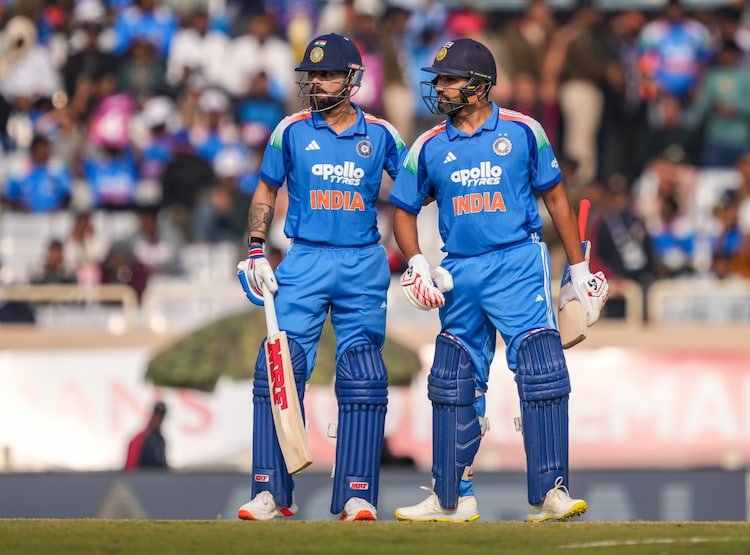
From the perspective of an editor who has closely followed Indian Cricket for years, 2025 will be remembered as one of the most testing phases in the illustrious careers of Virat Kohli and Rohit Sharma. Questions around their age, declining reflexes, form, and long-term commitment echoed across studios, social media platforms, and expert panels. Yet, time and again, the two modern greats responded in the only language that truly matters in cricket — performance.
Whenever doubts peaked, Kohli and Rohit delivered under pressure, reaffirming why they remain pillars of India’s batting lineup. Their resilience was most evident during India’s triumphant Champions Trophy campaign, where experience trumped skepticism. Virat Kohli’s match-winning century against arch-rivals Pakistan was a reminder of his unmatched temperament in high-stakes encounters. He followed it up with a crucial 84 against Australia in the semifinal, anchoring India when it mattered most.
Rohit Sharma, often labeled a big-match player, lived up to that reputation in the final. His composed yet authoritative 76 off 83 balls laid the foundation for India’s successful chase. The innings not only earned him the Player of the Match award but also reinforced his value as a leader and batter in knockout games.
After a five-month hiatus from international cricket, both veterans returned to action during the ODI Series in Australia. Rustiness was evident early on, and their initial struggles reignited speculation about whether time was finally catching up with them. Critics were quick to draw conclusions, but once again, the seasoned duo responded emphatically in the final ODI, stitching together a commanding partnership that swung momentum back in their favor.
While Rohit Sharma was adjudged Player of the Series in Australia, Virat Kohli mirrored that success on home soil. Although they successfully navigated through 2025 amid constant scrutiny, the debate surrounding their longevity is set to grow louder in 2026 — especially with the 2027 ODI World Cup looming large.
Why Scrutiny Will Intensify in 2026
The coming year presents a unique challenge. India’s ODI calendar in 2026 is relatively limited, which means fewer opportunities for senior players to assert their dominance. At the same time, domestic cricket continues to produce exciting young talents who are knocking on the selectors’ door with consistent performances.
In such a scenario, every failure by Kohli or Rohit is likely to be magnified, sparking renewed debates about succession planning. While both batters displayed flashes of vintage form at home and in Australia, maintaining elite consistency at this stage of their careers will be an uphill task.
The challenge becomes even steeper considering that the 2027 ODI World Cup will be hosted in South Africa. Known for its fast, bouncy pitches, the conditions demand sharp reflexes and peak physical fitness. With both Kohli and Rohit inching closer to their forties, concerns around adaptability and endurance are inevitable.
That said, questioning their ability to evolve would be unfair. Over the years, both batters have repeatedly shown a willingness to adapt their game. From embracing higher strike rates to refining fitness routines that meet modern standards, Kohli and Rohit have left no stone unturned in staying relevant in an ever-evolving format.
However, cricket is a ruthless sport where reputation offers limited protection. History serves as a stark reminder. In 2022, Shikhar Dhawan’s international career came to a quiet end despite his past heroics. After captaining India in New Zealand in Rohit Sharma’s absence and featuring in the subsequent Bangladesh series, he was swiftly overtaken by emerging talent.
How Long Can the Next Generation Be Kept Waiting?
Dhawan’s exit was accelerated by extraordinary performances from the next generation. Ishan Kishan’s blistering double century, followed closely by Shubman Gill’s own double hundred, reshaped India’s ODI pecking order almost overnight. A batter once seen as indispensable in ICC tournaments found himself out of contention within months.
Kohli and Rohit could face a similar crossroads as another World Cup approaches. In international cricket, a single innings can elevate a career or abruptly alter its trajectory. Devdutt Padikkal’s impressive run in the ongoing Vijay Hazare Trophy has already caught the selectors’ attention, while Yashasvi Jaiswal has convincingly shown that he is ready to shoulder responsibility as an ODI opener.
If consistency wavers, even legends are not immune to the unforgiving nature of selection. The competition is relentless, and Indian Cricket’s depth ensures that opportunities for comebacks are limited.
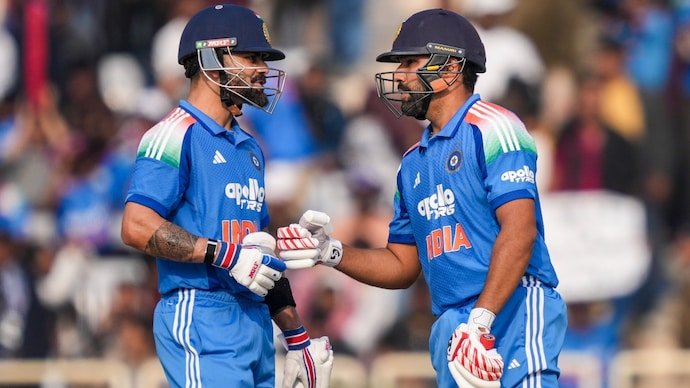
The Uncertain Road to the 2027 World Cup
As Indian cricket looks toward the future, the margin for error for its senior-most batters continues to shrink. With a packed pipeline of young talent and a restricted ODI schedule in 2026, every appearance by Virat Kohli and Rohit Sharma will carry immense weight.
Yet, history warns against writing off players of their stature. Time and again, both have responded to adversity with defining performances, driven by an unmatched hunger to compete and an exceptional understanding of their craft. Their ability to reinvent themselves remains their greatest asset as they navigate the final chapters of their international careers.
Sentiment alone will not secure their places, and the journey toward the 2027 ODI World Cup will be unforgiving. Still, if there are two batters capable of defying age, conditions, and expectations, it is Virat Kohli and Rohit Sharma. Whether they script a fairytale finish on their own terms or gradually make way for the next generation, their journey over the next two years will not only define their legacy but also shape the future of India’s One-Day International ambitions.
For breaking news and live news updates, like us on Facebook or follow us on Twitter and Instagram. Read more on Latest Sports on thefoxdaily.com.






COMMENTS 0