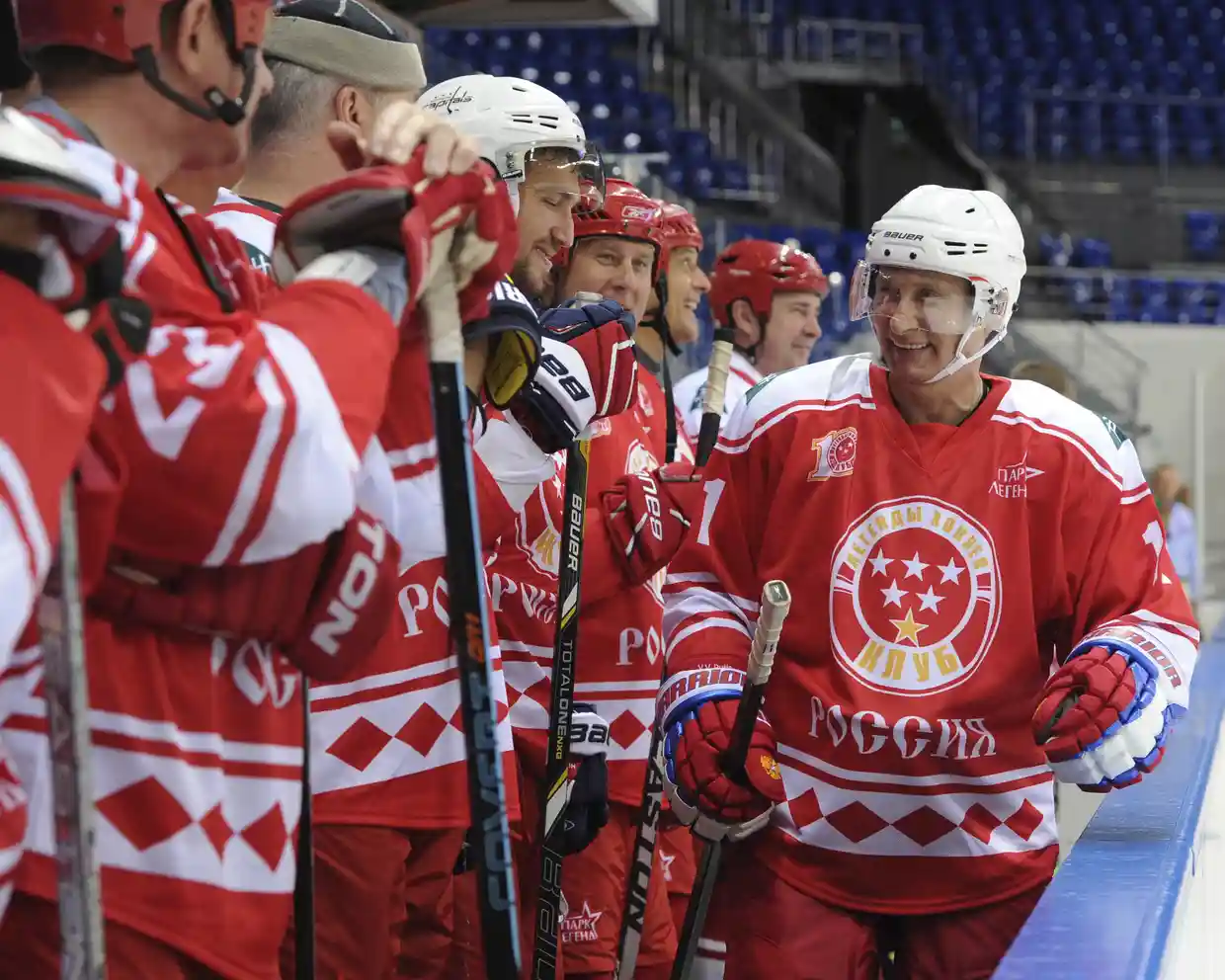
Russia’s full-scale invasion of Ukraine has brought an abrupt end to years of sporting cooperation and personal friendships between ice hockey communities in northern Finland, Norway and Russia. What was once a popular way for Arctic residents to travel, compete and build cross-border relationships has become a distant memory, leaving players and organisers questioning whether those connections can ever be restored.
For decades, amateur ice hockey provided a common ground for people living across the Arctic region. Teams regularly travelled between neighbouring countries, participated in friendly competitions and developed relationships that extended far beyond the rink. However, the pandemic first disrupted these activities, and Russia’s invasion of Ukraine in February 2022 brought almost all contact with Russian teams to a halt.
Now, even as the possibility of Russia returning to international ice hockey competition has emerged, the political and sporting divisions remain deep. For many Nordic hockey communities, rebuilding trust will require much more than simply restarting matches.
Barents Hockey League: The Arctic friendships lost after the war
For Janne Tervahauta, ice hockey against Russian teams was an important part of everyday social life. His team, Tunturi-Kiekko, based in Ivalo in northern Finland, regularly travelled around the Arctic to play against other teams through the Barents Hockey League.
The amateur competition brought together players from Finland, Norway and Russia. Although it was primarily an informal league for older players, it offered something valuable to communities separated by long distances and national borders.
Tervahauta, 51, described the importance of the competition and the relationships it created.
“This hockey league was amateur, and a kind of old guys league. But it was very important for us.”
Since the invasion of Ukraine, he has had no contact with Russian teams. The end of those regular encounters has been particularly disappointing because the league provided opportunities to meet people and explore different parts of the northern region.
“Of course it is very sad,” he said. “It was a very important league of Arctic people. To meet each other – and of course it is a way to see and travel in the north.”
For players such as Tervahauta, the loss is not simply about the cancellation of sporting fixtures. It represents the disappearance of a social network built over years through shared interests and repeated visits across borders.
How ice hockey helped build Russian-Nordic relations
Before February 2022, ice hockey played an important role in maintaining relationships between communities in northern Finland, Norway and Russia. The sport offered a practical way to encourage cooperation after the Cold War and helped people develop personal connections despite historical and political differences.
Russia’s international reputation in ice hockey also made the sport an important part of its soft-power influence. The country has produced some of the most recognised players in the game, including Washington Capitals star Alexander Ovechkin, the National Hockey League’s all-time leading goalscorer.
Ovechkin has also been the founder of PutinTeam, a pro-Putin social movement. His profile illustrates how closely Russian ice hockey has sometimes been connected with the country’s wider political image.
Across northern Europe, however, the most meaningful relationships were often formed away from professional arenas. Amateur tournaments, pre-season friendlies and training camps allowed players from neighbouring countries to meet regularly and develop friendships.
For many participants, these sporting connections offered a sense of regional identity that crossed national boundaries. The end of cooperation has therefore affected more than professional teams and international competitions.
RoKi Hockey recalls years of cooperation with Russian clubs
RoKi, based in Rovaniemi, the capital of Finnish Lapland, was another organisation that maintained regular sporting relationships with Russian teams. Known as the official team of Santa Claus, the club competes in Finland’s second-highest ice hockey league.
Before the war, RoKi regularly organised pre-season friendly matches against Russian sides and hosted summer training camps for teams from the Kontinental Hockey League (KHL).
Mika Toivola, chief executive of RoKi Hockey, described the cooperation as an important part of the Finnish and Russian ice hockey relationship.
“There was considerable cooperation between Finnish and Russian ice hockey,” Toivola said. “Finnish players played in Russia, Russian players played in Finland, and clubs also met in pre-season friendlies.”
That relationship ended abruptly in February 2022, just four days after Finland defeated Russian players to win men’s ice hockey gold at the Beijing Winter Olympics.
Since Russia’s invasion of Ukraine, the national teams have not played each other. Finland has also joined Nato, while the long border between Finland and Russia has completely closed.
These developments have fundamentally changed the environment in which cross-border sporting cooperation previously took place. Activities that once appeared routine are now closely connected to wider questions about security, politics and international responsibility.
Russia’s possible return to international ice hockey sparks boycott
The debate over Russian participation in international ice hockey has returned to the spotlight after the Court of Arbitration for Sport ordered the International Ice Hockey Federation to permit Russia to return to international competition before the men’s world championship in Germany in May.
The decision has caused concern in Finland and across parts of the international hockey community. It has also highlighted the pressure surrounding Russia’s potential return to major sporting competitions while its war against Ukraine continues.
Finland’s ice hockey association responded by announcing that it would boycott games against Russia. Sweden, Norway, Denmark, the Czech Republic, Austria, Latvia and Canada have also followed the boycott position.
Toivola supports the decision and believes allowing Russian national teams to return while the invasion continues would send the wrong message.
“At RoKi, we unequivocally condemn Russia’s war of aggression against Ukraine,” he said. “We believe that allowing Russian national teams to return to major international tournaments is wrong while Russia continues its war of aggression.”
His position reflects the wider difficulty facing international sport: whether sporting participation can be separated from the actions of a country’s government during an ongoing conflict.
Although Toivola hopes that peaceful sporting cooperation between Finland and Russia may eventually return, he believes ending the war is essential before trust can begin to recover.
“We must also remember the Ukrainian players, clubs and families whose daily lives are affected by the war,” he said. “This discussion is about more than who gets to compete for a world championship.”
His comments underline that the debate extends beyond eligibility rules and tournament participation. The experiences of Ukrainian players, clubs and families remain central to the question of how international hockey should respond to the conflict.
Norwegian players still hope to face Russian teams again
While national sporting organisations have taken a firm position on competition against Russia, some individual players continue to miss the personal relationships they developed through local hockey.
William Sjøstrand, a member of the Kirkenes Puckers, a Norwegian team that competed in the Barents Hockey League, described the absence of Russian opponents as a major loss.
Kirkenes is located in northern Norway, far from many other Norwegian towns but comparatively close to several Russian communities. That geographical reality made cross-border matches particularly important for local players.
Sjøstrand, who maintains contact with Russian players, expressed hope that the competition could eventually restart.
“We wait for the time when we can restart our game,” he said.
His comments demonstrate how the end of sporting cooperation has affected people on a local level. For players in remote Arctic communities, Russian teams were not simply international opponents; they were nearby sporting partners and familiar faces.
The documentary Puckers, which focuses on the Kirkenes Puckers, also reflects the importance of this community and its connection to the wider Barents Hockey League.
Barents Secretariat says years of friendship have been lost
The Barents Hockey League was organised with the involvement of the Barents Secretariat, which supported cross-border cooperation through sporting and community activities.
Margrethe Alnes, an adviser and project coordinator at the organisation, believes the league created something particularly valuable by bringing people together through a shared passion.
“Very good friendships and activities both for grownups and children. It went on for at least 10 years.”
Alnes explained that shared interests can provide a strong foundation for building relationships between people from different countries. Ice hockey offered a natural setting where participants could interact, develop networks and discover common ground.
“If you find a joint activity that both sides are interested in and have a passion for it is a good basis to create friendships and networks across borders, to find common ground.”
However, she believes the last four years have destroyed much of the progress made during the league’s existence. The conflict has damaged relationships and reversed years of work aimed at breaking down prejudice between communities.
Alnes expressed sadness about the end of the project while acknowledging that stopping cooperation became unavoidable after the invasion.
“It’s really sad that it’s all ended. It was inevitable, but still,” she said. “When the war ends sometime in the future, it will take some time to build up the trust again.”
Can Russian-Nordic ice hockey friendships ever recover?
The future of Russian-Nordic ice hockey relationships remains uncertain. Individual players may still maintain contact, and some former participants continue to hope that local competitions can eventually return. However, the conditions that made regular cooperation possible before 2022 have changed dramatically.
For professional organisations, the issue is closely connected to international sporting policy and the ongoing war in Ukraine. Finland, Norway and several other countries have indicated that they do not support playing against Russian national teams while the conflict continues.
At the community level, the challenge is different but equally significant. Players and organisers remember years of friendship, travel and shared sporting experiences, yet rebuilding those relationships will require time and renewed confidence.
Toivola has identified the end of the war as the first requirement for restoring cooperation. Alnes has also warned that even after the conflict ends, rebuilding trust will not happen immediately.
The Barents Hockey League demonstrated how a shared passion could bring together people from countries with different histories and political circumstances. Its disappearance shows how quickly international conflict can disrupt relationships built through years of ordinary human interaction.
Final thoughts
Russia’s invasion of Ukraine has transformed the sporting landscape across the Arctic, ending years of ice hockey cooperation between Finnish, Norwegian and Russian communities. The Barents Hockey League, once a source of friendship and regional connection, remains suspended, while professional organisations face difficult decisions over Russia’s potential return to international competition.
For players such as Janne Tervahauta and William Sjøstrand, the absence of Russian teams means losing more than regular opponents. It means losing friendships and opportunities that made life in remote northern communities more connected.
There is still hope that peaceful sporting cooperation may return one day. But as former organisers and club representatives have acknowledged, ending the war will only be the beginning. Restoring the trust created on Arctic ice hockey rinks could take considerably longer.
For breaking news and live news updates, like us on Facebook or follow us on Twitter and Instagram. Read more on Latest Sports on thefoxdaily.com.






COMMENTS 0