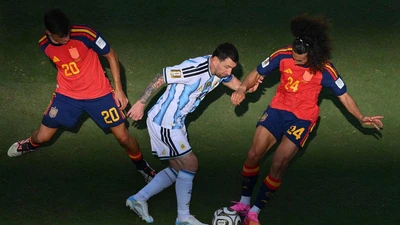
The FIFA World Cup 2026 Final was expected to be remembered as the closing chapter of one of football’s greatest careers. Instead, alongside Spain’s historic victory, a controversial moment involving Lionel Messi has become one of the most discussed incidents of the tournament.
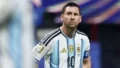
As Spain defeated argentina 1-0 after extra time in New York-New Jersey, emotions ran high throughout the match. The tension reached another level when television cameras captured Messi appearing to draw the referee’s attention to Spain defender Marc Cucurella during a heated exchange. The moment immediately sparked debate among fans, pundits, and former players, with Wayne Rooney leading criticism of what he viewed as unsporting behavior.
The controversy has added another layer to an already emotional World Cup final, raising broader questions about sportsmanship, gamesmanship, leadership, and the immense pressure elite athletes face on football’s biggest stage.
What Happened Between Lionel Messi and Marc Cucurella?
The incident occurred during a stoppage in normal time when cameras focused on a discussion involving Spain defender Marc Cucurella.
Cucurella appeared to be speaking while partially covering his mouth with his hand, a common practice among footballers seeking privacy during on-field conversations. Shortly afterward, Messi was seen approaching referee Slavko Vincic and seemingly pointing toward the interaction.
The gesture attracted attention because FIFA has increasingly focused on player conduct, communication, and disciplinary standards during international tournaments.
Although no disciplinary action was ultimately taken against Cucurella, the moment quickly became one of the defining talking points of the final.
Why Wayne Rooney Criticized Lionel Messi
Wayne Rooney, one of England’s most celebrated footballers, did not hide his disappointment when discussing the incident after the match.
According to Rooney, football’s biggest stars should set an example for sportsmanship, particularly during major tournaments watched by millions around the world.
The former Manchester United captain argued that attempting to influence disciplinary decisions against opponents crossed a line that many supporters would prefer not to see in a World Cup final.
Rooney’s criticism gained significant attention because of the respect he has consistently shown toward Messi throughout his career. His comments were therefore interpreted by many as genuine concern rather than personal criticism.
Other Former Players Join the Debate
Rooney was not alone in questioning the incident.
Former England internationals Joe Hart and Micah Richards also expressed concerns about the possibility of players being punished based on such situations.
Their arguments centered on a simple principle: World Cup finals should ideally be decided by footballing actions rather than technical disciplinary interpretations.
Many analysts felt that even if Messi believed he was acting within the rules, encouraging punishment for a relatively minor incident was not in the spirit most fans expect from football’s showcase event.
Others defended Messi, arguing that elite athletes regularly seek advantages within the laws of the game and that similar actions occur frequently across professional football.
The Thin Line Between Gamesmanship and Unsportsmanlike Conduct
The controversy highlights one of football’s oldest debates: where is the boundary between intelligent gamesmanship and behavior considered unsporting?
Modern football is filled with examples of players attempting to gain advantages through psychological pressure, tactical fouls, appeals to referees, and strategic communication.
Supporters often view these actions differently depending on context.
- Fans of a team may describe it as competitive intelligence.
- Opponents may call it manipulation.
- Neutral observers often debate whether it respects the spirit of the game.
This subject remains controversial because football’s written laws and unwritten traditions do not always align perfectly.
Why Sportsmanship Matters in a World Cup Final
The FIFA World Cup final occupies a unique place in global sport.
Unlike regular club matches, it attracts billions of viewers and serves as a showcase for football worldwide. Every action by players, coaches, and officials is examined under extraordinary scrutiny.
As a result, sportsmanship often becomes as significant as performance.
Great World Cup moments are not limited to goals and trophies. Many are remembered because of respect shown between rivals, emotional displays of unity, and gestures that transcend competition.
That is why incidents perceived as unsporting frequently generate reactions far beyond what might occur during ordinary matches.
Argentina’s Tournament Discipline Under the Spotlight
The Messi-Cucurella incident did not occur in isolation.
Throughout the FIFA World Cup 2026, Argentina faced repeated scrutiny regarding disciplinary matters.
Several matches involving the defending champions featured heated moments, confrontations, and contentious decisions.
The final itself continued that trend.
As tensions escalated during the closing stages, Argentina suffered major setbacks, including dismissals that significantly affected their chances of defending the title.
These incidents contributed to a narrative that followed the team throughout the tournament and intensified criticism after the final whistle.
The Emotional Weight of Messi’s Final World Cup Appearance
Any analysis of the controversy must also acknowledge the emotional circumstances surrounding Lionel Messi.
At 39 years old, the 2026 FIFA World Cup was widely viewed as his final appearance on football’s grandest stage.
The possibility of ending his international career with another World Cup triumph vanished when Ferran Torres scored the decisive goal for Spain in extra time.
Images of Messi in tears afterward became some of the most powerful photographs of the tournament.
For a player who has carried the expectations of an entire footballing nation for nearly two decades, the emotional burden was immense.
That context does not necessarily excuse controversial behavior, but it helps explain the intensity of the moment.
How Pressure Changes Player Behavior
Sports psychologists frequently point out that athletes operating under extreme pressure can react differently than they would under normal circumstances.
World Cup finals create a unique environment where:
- National expectations reach extraordinary levels.
- Careers can be defined by a single moment.
- Emotions fluctuate rapidly.
- Every decision carries enormous consequences.
- Physical and mental fatigue accumulate after a long tournament.
Under these conditions, even experienced players may make decisions they later view differently.
This reality is one reason why football controversies often generate both criticism and empathy simultaneously.
Comparing Leadership Expectations for Football Icons
One reason Messi’s actions attracted such attention is that global superstars are often held to higher standards than other players.
| Leadership Expectation | Why It Matters |
|---|---|
| Respect for opponents | Sets an example for younger players |
| Composure under pressure | Influences team behavior |
| Sportsmanship | Shapes public perception |
| Fair competition | Protects the integrity of the game |
| Emotional control | Maintains professionalism |
Football legends are often expected to embody these qualities because of their influence on supporters around the world.
As a result, moments that might pass unnoticed for other players often become major headlines when involving someone of Messi’s stature.
Spain’s Victory Should Not Be Forgotten
Amid the controversy, it is important not to overlook Spain’s achievement.
The Spanish national team navigated a demanding tournament and ultimately emerged as world champions through disciplined football, tactical flexibility, and resilience under pressure.
Ferran Torres’ extra-time winner secured one of the biggest victories in Spanish football history.
Yet, as often happens in modern sports, post-match narratives involving controversy have competed for attention with the actual result.
For Spain, the challenge now will be ensuring that history remembers their triumph rather than the debates that followed it.
What Happens Next for Lionel Messi?
The future remains uncertain.
While many observers believe the 2026 FIFA World Cup marked Messi’s final international tournament, no official long-term decision has been confirmed.
Questions remain regarding:
- A possible farewell appearance.
- Future involvement with Argentina.
- Potential participation in international events.
- His legacy after another remarkable World Cup campaign.
Regardless of what comes next, Messi’s place among football’s greatest players remains secure.
However, the final chapter of his World Cup journey will now include both extraordinary achievements and lingering controversy.
Conclusion: A Debate That Reflects Football’s Complexity
The criticism from Wayne Rooney, Joe Hart, and Micah Richards has transformed a brief moment in the FIFA World Cup 2026 final into a wider conversation about sportsmanship, leadership, and competitive behavior.
Some fans believe Lionel Messi crossed a line by attempting to draw attention to Marc Cucurella’s actions. Others argue that such behavior is part of elite competition and should not overshadow an incredible career.
What makes the debate so compelling is that both perspectives contain elements of truth. Football is a sport driven by passion, pressure, and emotion, particularly on its biggest stage.
As the dust settles on the World Cup, Spain will celebrate a historic triumph, Argentina will reflect on a painful defeat, and football supporters will continue discussing one of the tournament’s most controversial moments. Whether viewed as gamesmanship or poor sportsmanship, the incident serves as another reminder that football’s biggest stories are often about much more than the final score.
For breaking news and live news updates, like us on Facebook or follow us on Twitter and Instagram. Read more on Latest Sports on thefoxdaily.com.


COMMENTS 0