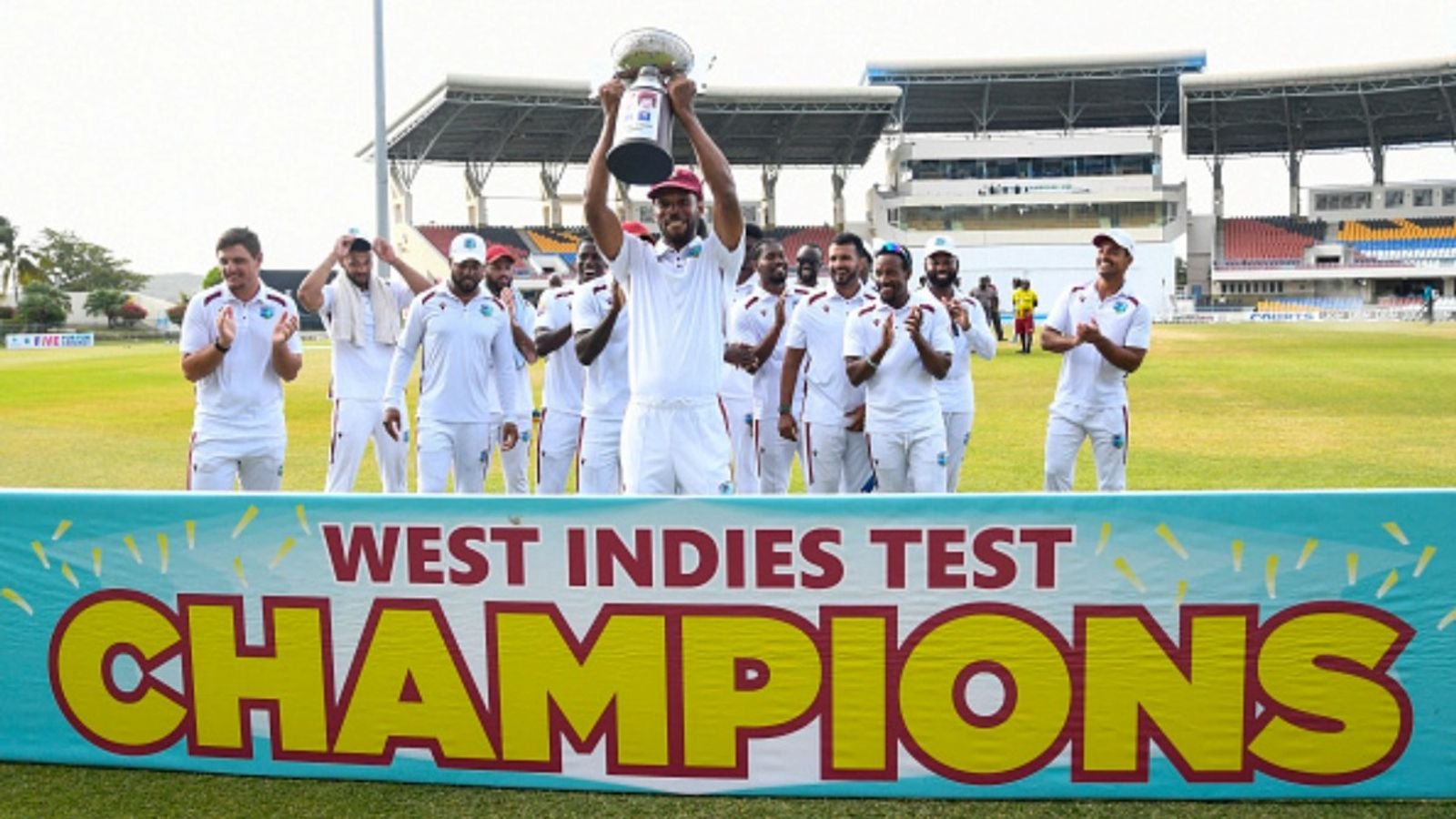
West Indies Cricket has spent much of the past two decades searching for consistency in the longest format of the game. While flashes of brilliance have occasionally reminded the cricket world of the Caribbean’s glorious past, sustained success has often proved elusive. That is why the recently concluded Test series against Sri Lanka represents more than just another bilateral victory—it could mark an important turning point for West Indies cricket.
By securing a 1-0 series win over Sri Lanka after the second Test ended in a draw, West Indies achieved something they had not managed for 23 years: defeat Sri Lanka in a Test series. The result also ended a lengthy drought of home Test series victories and injected fresh confidence into a team seeking to rebuild its reputation in red-ball cricket.
Although the drawn second Test produced only minor changes in the World Test Championship standings, the significance of the series extends far beyond the points table. It highlights the progress being made by a developing West Indies side and raises important questions about what lies ahead for both teams in the WTC 2025-27 cycle.
West Indies Finally Break a Long-Standing Barrier
Test cricket is often described as the ultimate measure of a team’s quality because success requires skill, patience, adaptability, and mental toughness over five days. For West Indies, victories against major Test nations have become increasingly difficult in recent years.
That makes this series triumph particularly meaningful.
The Caribbean side entered the series determined to improve their standing in world cricket and prove they could compete consistently against established Test nations. By securing a victory in the opening Test and avoiding defeat in the second, they completed a series win that had eluded several generations of West Indian cricketers.
Beyond the statistics, the achievement provides a psychological boost. Breaking long droughts often removes mental barriers that can weigh heavily on players and teams.
Why the Series Win Matters More Than the Scoreline Suggests
On paper, a 1-0 victory in a two-Test series may appear straightforward. However, the result carries deeper implications.
West Indies have spent years attempting to establish stability in Test cricket while competing against nations with larger player pools, stronger domestic structures, and greater financial resources.
The victory demonstrates that progress is possible when experienced leadership combines with emerging talent.
Several positive signs emerged throughout the series:
- Improved batting resilience.
- Longer partnerships under pressure.
- Greater consistency from middle-order players.
- Better game management during crucial sessions.
- Strong performances from both senior and younger cricketers.
These factors often matter more than the final score because they indicate sustainable growth rather than isolated success.
Roston Chase’s Leadership Provides Stability
Captaincy in Test cricket requires a unique combination of tactical awareness and emotional intelligence. Unlike shorter formats, Test captains must make strategic decisions across multiple days while managing changing conditions and fluctuating momentum.
Roston Chase deserves significant credit for guiding West Indies through a series that carried considerable historical importance.
His leadership reflected patience and discipline, qualities that are essential in modern Test cricket. Rather than chasing short-term gains, West Indies often appeared focused on controlling sessions and gradually building pressure.
That approach proved particularly valuable during the drawn second Test, where avoiding reckless decisions ensured the team secured the series victory.
A Run-Fest in Antigua
The second Test at Antigua developed into a high-scoring contest that showcased the batting strength of both teams.
Sri Lanka set the tone with an impressive first innings total of 549 for 9 declared, creating a challenging platform for the hosts.
West Indies responded admirably, producing a substantial score of their own and ensuring the contest remained competitive throughout all five days.
| Team | 1st Innings | 2nd Innings |
|---|---|---|
| Sri Lanka | 549/9 declared | 251/9 declared |
| West Indies | 499 | 109/0 (Draw) |
The match demonstrated the importance of batting depth in Test cricket. Rather than relying on one standout performer, both sides benefited from multiple significant contributions.
Lahiru Udara’s Career-Defining Knock
One of the standout performances of the match came from Sri Lankan opener Lahiru Udara, whose magnificent 188 formed the foundation of his team’s first-innings total.
Long innings in Test cricket require exceptional concentration and technical discipline. Udara displayed both qualities while navigating changing bowling plans and field placements.
His innings also highlighted Sri Lanka’s ability to develop technically sound batters capable of succeeding in overseas conditions.
For a team undergoing transition after several retirements in recent years, such performances provide valuable encouragement.
Justin Greaves and Shai Hope Lead West Indies’ Fightback
If Udara delivered the innings of the match for Sri Lanka, Justin Greaves and Shai Hope provided the answer for West Indies.
Greaves’ remarkable 180 showcased maturity and shot selection, while Hope’s century reinforced his reputation as one of the Caribbean’s most dependable batters.
Their contributions reduced Sri Lanka’s first-innings advantage and ensured West Indies remained firmly in contention.
More importantly, their partnership reflected a growing ability within the team to build substantial innings rather than relying on brief periods of attacking play.
That evolution is essential if West Indies hope to compete consistently against the world’s top Test nations.
The Bigger Story: West Indies’ Red-Ball Revival
For years, discussions about West Indies cricket have focused heavily on T20 success.
The Caribbean region has produced some of the most explosive white-ball cricketers in history, leading many observers to question whether Test cricket remained a priority.
This series victory offers evidence that red-ball development is beginning to produce results.
Several trends suggest positive momentum:
- Players are spending longer periods at the crease.
- Bowlers are maintaining discipline over extended spells.
- The team appears tactically more organized.
- Young players are gaining valuable Test experience.
- Leadership structures appear increasingly stable.
While one series does not guarantee long-term success, it provides a strong foundation for future progress.
How the Result Affected the World Test Championship
The World Test Championship was introduced to add greater context and significance to bilateral Test series.
Every result contributes to a larger race for qualification to the WTC Final, making even drawn matches important.
The Antigua draw slightly improved the percentage points of both teams while leaving their overall positions unchanged.
| Position | Team | PCT |
|---|---|---|
| 1 | Australia | 87.50 |
| 2 | South Africa | 75.00 |
| 3 | New Zealand | 72.22 |
| 4 | Bangladesh | 58.33 |
| 5 | India | 48.15 |
| 6 | Sri Lanka | 41.67 |
| 8 | West Indies | Improved after draw |
Although neither side made a dramatic move up the standings, every point could prove crucial as the cycle progresses.
What Sri Lanka Can Take Away From the Series
Despite losing the series, Sri Lanka produced several encouraging performances.
The batting unit demonstrated resilience, particularly during the second Test. Multiple players contributed meaningful scores, indicating that the team possesses the depth required to compete abroad.
However, the series also exposed areas requiring improvement.
Converting strong batting positions into victories remains a challenge. In modern Test cricket, posting large totals is only part of the equation. Teams must also capitalize on opportunities to force results.
Sri Lanka will likely view the series as a missed opportunity but not necessarily a disappointing tour.
Why Home Dominance Still Matters in Test Cricket
One lesson reinforced by this series is the continuing importance of home conditions.
Successful Test nations traditionally build their campaigns around strong home performances before seeking additional victories overseas.
For West Indies, establishing themselves as a difficult team to beat in Caribbean conditions could be the first step toward broader success.
Historically, the world’s strongest Test teams have protected their home turf while gradually improving abroad.
If West Indies can follow a similar path, this series may be remembered as a pivotal moment in their development.
The Upcoming Challenges for Both Teams
The conclusion of this series immediately shifts attention toward future assignments.
West Indies vs Pakistan
West Indies will next host Pakistan in a two-Test series that promises a completely different challenge.
Pakistan traditionally possess a balanced attack and a batting lineup capable of producing match-winning performances. Success in that series would further strengthen confidence within the Caribbean camp.
Sri Lanka vs India
Sri Lanka’s upcoming home series against India will be one of the most important contests of their WTC campaign.
India remains among the strongest Test nations in the world, making the series a significant opportunity for Sri Lanka to climb the standings.
Strong performances against elite opposition could quickly erase disappointment from this defeat.
A Comparison With Previous West Indies Test Cycles
One reason this victory stands out is that it reflects measurable progress compared to previous years.
Earlier West Indies teams often struggled to convert competitive positions into wins. Promising starts frequently faded due to batting collapses or inconsistent bowling.
In contrast, the current squad appears more balanced.
The ability to respond after conceding large totals, as seen in Antigua, suggests growing resilience. Such characteristics are often shared by teams that eventually become consistent performers in Test cricket.
Can This Be a Turning Point for Caribbean Cricket?
The most intriguing question following the series is whether this success can serve as a catalyst for a broader resurgence.
Cricket remains deeply embedded in Caribbean sporting culture, and strong Test performances often inspire renewed enthusiasm among supporters and young players.
While it would be premature to declare a full-scale revival, achievements like this create momentum. They provide evidence that long-term investment, patience, and player development can produce tangible results.
Perhaps most importantly, they give players confidence that they can compete successfully at the highest level.
Conclusion
West Indies’ 1-0 Test series victory over Sri Lanka may not dominate global headlines in the way major ICC tournaments do, but its significance should not be underestimated. Ending a 23-year wait for a Test series win against Sri Lanka and breaking a lengthy drought of home series success represents a meaningful achievement for a team striving to rebuild its identity in red-ball cricket.
The drawn second Test showcased resilience, batting depth, and leadership, while also delivering valuable World Test Championship points. For Sri Lanka, there were enough positive performances to suggest brighter days ahead despite the defeat.
As both teams prepare for crucial upcoming series, this contest may ultimately be remembered not only for the result but for what it revealed about their future direction. For West Indies, the victory offers hope that a new chapter in Test cricket could finally be beginning.
For breaking news and live news updates, like us on Facebook or follow us on Twitter and Instagram. Read more on Latest Sports on thefoxdaily.com.






COMMENTS 0