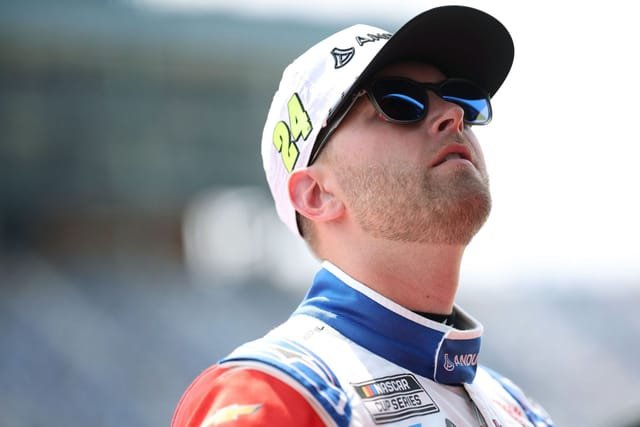
NASCAR has always been a sport fueled by pressure, emotion, and split-second decisions. Drivers routinely communicate frustration over team radios, crew chiefs push for better execution, and tensions often rise during difficult races. Yet every so often, a radio exchange captures attention not because of what was said, but because of who said it.
That is precisely why the recent confrontation between William Byron and crew chief Rudy Fugle at EchoPark Speedway has become one of the biggest talking points in the NASCAR garage.
The incident prompted former NASCAR Cup Series champion Kevin Harvick to publicly express concern about the state of the No. 24 team, suggesting that the visible frustration may be a symptom of larger issues developing behind the scenes.
For a team that has spent years establishing itself as one of the most stable and successful partnerships in NASCAR, the debate now centers on a crucial question: Was this simply a frustrating afternoon, or does it represent the first visible sign of a team under growing pressure as the playoffs approach?
Why the William Byron-Rudy Fugle Exchange Drew So Much Attention
Radio disagreements are hardly uncommon in NASCAR.
Over the years, fans have heard countless emotional conversations between drivers and crew chiefs. The nature of stock-car racing creates constant stress, and emotions often run high when results fail to match expectations.
However, what made this incident different was the reputation of the individuals involved.
William Byron is widely regarded as one of the calmest and most composed drivers in the Cup Series. Similarly, Rudy Fugle has built a reputation as a measured and highly respected crew chief capable of maintaining strong relationships under pressure.
When personalities known for professionalism suddenly display visible frustration, observers naturally wonder whether deeper issues are developing.
Kevin Harvick’s Warning: Why He Is Concerned
Harvick’s comments resonated because they focused less on the argument itself and more on what it revealed.
According to the former champion, the concern is not that Byron and Fugle disagreed. Rather, it is that both appeared noticeably out of character.
In professional sports, isolated emotional moments rarely cause alarm. Sustained behavioral changes, however, often attract attention because they can indicate underlying problems.
Harvick suggested that the frustration being displayed publicly may reflect mounting pressure inside the team as expectations collide with recent performance challenges.
His warning effectively shifted the conversation from a single radio exchange to the overall health of the No. 24 operation.
The “Milk and Cookies” Reference Explained
One of the most interesting elements of Harvick’s comments involved his reference to “milk and cookies.”
Within Hendrick Motorsports, the phrase carries historical significance.
Years ago, team owner Rick Hendrick reportedly intervened during tensions between Jimmie Johnson and crew chief Chad Knaus by bringing milk and cookies to encourage communication and resolve disagreements.
The story has since become part of NASCAR folklore, symbolizing leadership intervention when successful teams begin experiencing internal friction.
By invoking that phrase, Harvick was essentially suggesting that senior management may need to step in before frustrations escalate further.
Why Expectations Are Different for William Byron
The reaction to the incident has also been amplified by Byron’s position within the NASCAR landscape.
As one of Hendrick Motorsports’ cornerstone drivers, Byron is expected to contend for victories, championships, and deep playoff runs every season.
Success creates its own pressure.
When a team becomes accustomed to winning, anything less can feel like underachievement. Minor setbacks that might be accepted elsewhere often become major concerns within elite organizations.
That dynamic is especially relevant as the regular season approaches its conclusion.
The Pressure of NASCAR’s Playoff System
The modern NASCAR playoff format has fundamentally changed how teams evaluate success.
In previous eras, consistency across an entire season was often enough to remain competitive. Today, teams must peak at the right moment and avoid prolonged slumps.
This reality places enormous pressure on organizations entering the final stretch of the regular season.
| Challenge | Impact on Teams |
|---|---|
| Playoff Qualification | Increases urgency for strong results |
| Limited Preparation Time | Reduces opportunities to solve issues |
| Championship Expectations | Magnifies internal pressure |
| Competitive Field | Makes mistakes more costly |
For championship-caliber teams like the No. 24 group, every race becomes part of a larger playoff preparation process.
As a result, frustrations can intensify when performance falls below expectations.
Rudy Fugle’s Perspective: Passion, Not Dysfunction
While outside observers have interpreted the radio exchange as a warning sign, Fugle offered a very different explanation.
According to the crew chief, the frustration stemmed from the team’s inability to get the car performing at the desired level rather than any personal conflict between him and Byron.
This distinction is important.
Many successful driver-crew chief relationships involve intense disagreements. Competitive environments often encourage direct communication because both parties share the same objective: winning races.
Fugle’s argument is that emotional exchanges can actually be healthy when they reflect passion and accountability rather than personal resentment.
In his view, the conflict was directed toward performance problems, not toward each other.
The Difference Between Healthy Conflict and Team Crisis
This is where the debate becomes particularly interesting.
Not all conflict is harmful.
In fact, many championship-winning teams experience disagreements because high standards naturally produce strong opinions.
The challenge is determining whether conflict remains productive or becomes destructive.
Healthy conflict typically involves:
- Shared goals.
- Mutual respect.
- Constructive problem-solving.
- Quick resolution.
Unhealthy conflict often includes:
- Repeated communication breakdowns.
- Personal attacks.
- Declining trust.
- Reduced collaboration.
At present, there is little evidence to suggest the Byron-Fugle relationship has crossed into the second category.
However, Harvick’s concern stems from the possibility that continued frustration could eventually create those conditions.
Why Communication Matters More Than Ever in Modern NASCAR
Today’s NASCAR environment is far more complex than it was decades ago.
Teams analyze enormous amounts of data, make constant setup adjustments, and react to rapidly changing track conditions.
Success depends on seamless communication between drivers, engineers, crew chiefs, and pit crews.
Even minor communication issues can have significant consequences during a race weekend.
That reality explains why observers pay such close attention to radio conversations. They provide a rare glimpse into how teams function under pressure.
The Historical Pattern of Championship Teams Under Stress
Interestingly, many championship-winning teams have experienced moments similar to what Byron and Fugle recently displayed.
Some of NASCAR’s most successful partnerships endured public disagreements before ultimately achieving major success.
The common factor was their ability to address problems quickly rather than allowing frustration to linger.
History suggests that tension alone does not determine a team’s future. The response to that tension is what matters most.
The Unique Insight Competitors Are Missing
Most discussions have focused on whether the radio meltdown indicates a team in crisis.
However, the more important issue may be organizational expectations.
Hendrick Motorsports operates under a different standard than most NASCAR teams.
For smaller organizations, occasional setbacks are expected. For Hendrick, every race is viewed through the lens of championship contention.
That environment naturally creates more visible frustration because the gap between expectation and performance feels larger.
The radio exchange may therefore reveal less about dysfunction and more about the relentless pursuit of excellence within elite organizations.
Teams that expect to win often react more strongly when they fail to meet their own standards.
What Happens Next for the No. 24 Team?
The coming weeks will provide important clues.
If performance improves and communication stabilizes, the incident will likely be remembered as a temporary emotional moment during a difficult stretch.
If frustrations continue to surface publicly, concerns about deeper organizational issues will grow louder.
Leadership within Hendrick Motorsports will undoubtedly monitor the situation closely, particularly with the playoffs approaching.
The objective will not be eliminating emotion but ensuring that frustration remains productive rather than disruptive.
Prediction: The Team’s Response Will Define Its Championship Hopes
Championship contenders are rarely judged by how they perform when everything goes perfectly.
Instead, they are judged by how they respond when adversity arrives.
William Byron and Rudy Fugle have built one of NASCAR’s strongest partnerships through years of success. That history suggests they possess the experience and trust necessary to navigate difficult periods.
The key question is whether the recent frustrations become a catalyst for improvement or a distraction during the most important phase of the season.
Conclusion
The radio confrontation between William Byron and Rudy Fugle has sparked legitimate discussion about the state of the No. 24 team, particularly after Kevin Harvick publicly expressed concern about signs of mounting frustration.
While the exchange was unusual given the personalities involved, it does not automatically indicate a team in crisis. Competitive pressure, playoff expectations, and performance struggles often create emotional moments in elite motorsports.
The true significance of the incident will ultimately depend on what happens next. If Hendrick Motorsports responds effectively and the team rediscovers its form, the controversy may become little more than a footnote in a championship campaign.
If the frustrations persist, however, Harvick’s warning could prove to be an early indication of larger challenges facing one of NASCAR’s premier organizations.
For breaking news and live news updates, like us on Facebook or follow us on Twitter and Instagram. Read more on Latest Sports on thefoxdaily.com.

COMMENTS 0