Indian cricket has always thrived on competition. From the legendary battles for middle-order spots in the 2000s to the current race for places across formats, internal competition has often been one of the biggest reasons behind India’s sustained success.
The latest chapter in that story features Yashasvi Jaiswal, whose unbeaten century against Afghanistan in the third ODI has reignited discussions about India’s future batting lineup. While India comfortably completed a 3-0 series sweep, the performance sparked an interesting debate after former India batter Cheteshwar Pujara suggested that Jaiswal’s rise is creating “slight pressure” on Rohit Sharma.
The comment was not intended as criticism of India’s captain. Instead, it reflected the reality of elite sport, where emerging talents constantly challenge established stars and push teams toward higher standards.
Jaiswal’s magnificent 110 not out off 86 deliveries was more than a match-winning innings. It was a reminder that India’s next generation is ready to compete for major roles whenever opportunities arise.
India vs Afghanistan 3rd ODI: Match Summary
India entered the final ODI looking to complete a clean sweep, and the hosts produced a near-perfect performance.
| Match Details | Result |
|---|---|
| Afghanistan | 218 All Out |
| India | 224/1 |
| Result | India Won by 9 Wickets |
| Series Result | India Won 3-0 |
| Venue | Chennai |
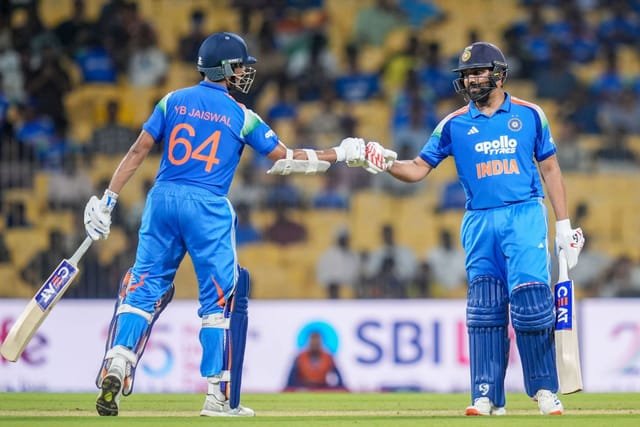
The chase was dominated by an outstanding opening partnership between Rohit Sharma and Yashasvi Jaiswal, which effectively ended the contest before Afghanistan could apply any pressure.
Yashasvi Jaiswal’s Match-Winning Century
Opportunities at the international level are precious, especially in a team as competitive as India. Jaiswal understood that reality and played accordingly.
The left-hander remained unbeaten on 110 from 86 balls, combining controlled aggression with impressive shot selection. His innings included 14 boundaries and three sixes, highlighting his ability to score quickly without compromising consistency.
| Yashasvi Jaiswal vs Afghanistan | Performance |
|---|---|
| Runs | 110* |
| Balls Faced | 86 |
| Fours | 14 |
| Sixes | 3 |
| Strike Rate | 127.90 |
| Result | India Won by 9 Wickets |
The innings demonstrated maturity beyond his years and reinforced why many experts believe he is one of India’s most important batting prospects.
What Cheteshwar Pujara Really Meant
Pujara’s observation regarding pressure on Rohit Sharma generated attention, but the comment deserves proper context.
He was not suggesting that Rohit’s position is under immediate threat. Instead, he highlighted how exceptional performances from younger players naturally increase competition for places.
Every successful cricket team needs players pushing each other for selection. That competition prevents complacency and ensures that standards remain exceptionally high.
In many ways, Pujara’s comment was a compliment to Jaiswal rather than criticism of Rohit.
Why the Team Management’s Trust Was Significant
One of the most important aspects of Jaiswal’s innings was the responsibility attached to the opportunity.
India’s management backed him despite intense competition for batting positions. The decision involved tactical adjustments, including changes to the batting order to accommodate his inclusion.
Such decisions are rarely made lightly at the international level.
By converting that opportunity into a century, Jaiswal justified the faith shown in him and strengthened his case for future selections.
The Improvement That Stood Out
Elite players learn quickly from mistakes, and Jaiswal’s innings provided evidence of that growth.
In the previous match, he lost his wicket while attempting an aggressive cut shot. Against Afghanistan in the final ODI, observers noticed a clear adjustment in his technique.
Rather than playing risky aerial cuts, he kept the ball under control and focused on maintaining possession of his wicket.
- Better shot selection.
- Improved risk management.
- Stronger control against short deliveries.
- More disciplined batting approach.
- Enhanced innings-building ability.
These subtle improvements often separate good players from great ones.
The Opening Partnership That Dominated Afghanistan
While Jaiswal’s century deservedly earned headlines, the partnership with Rohit Sharma was equally important.
Together, the pair added 170 runs for the opening wicket, removing any realistic chance of an Afghanistan comeback.
| Opening Partnership | Performance |
|---|---|
| Partnership Runs | 170 |
| Rohit Sharma | 79 (69) |
| Yashasvi Jaiswal | 110* (86) |
| Outcome | India Dominated Chase |
The partnership showcased how experience and youth can complement each other effectively in modern ODI cricket.
Is Jaiswal Really Putting Pressure on Rohit Sharma?
The answer is both yes and no.
From a selection standpoint, Rohit Sharma remains one of India’s most accomplished and influential players. His experience, leadership, and track record ensure that he remains central to India’s plans.
However, every emerging player who performs consistently creates pressure within the squad structure. That pressure is not negative—it is a sign of a healthy and competitive environment.
Jaiswal’s performances ensure that selectors have strong alternatives available whenever future transitions become necessary.
India’s Long-Term Succession Planning
One of the key themes emerging from this series is India’s preparation for the future.
Successful teams rarely wait until senior players retire before identifying replacements. Instead, they gradually integrate younger players while experienced stars remain part of the setup.
India appear to be following that strategy.
Players like Jaiswal are being given opportunities not because established stars have failed, but because the team wants to build depth and ensure continuity.
That approach has helped several successful cricket nations maintain competitiveness across generations.
Piyush Chawla’s Key Observation
Former India spinner Piyush Chawla highlighted another important aspect of Jaiswal’s innings: his ability to convert starts into major scores.
Many talented batters can reach 30 or 40 consistently. Far fewer possess the ability to transform those starts into match-defining hundreds.
Jaiswal has repeatedly demonstrated that quality throughout his career.
Once he settles at the crease, he often shifts focus from survival to domination, making him particularly dangerous in longer formats of white-ball cricket.
The Competition at the Top of India’s Batting Order
India’s batting depth remains one of the strongest in world cricket.
| Top-Order Options | Status |
|---|---|
| Rohit Sharma | Senior Leader |
| Shubman Gill | First-Choice Star |
| Yashasvi Jaiswal | Emerging Contender |
| Abhishek Sharma | Developing Prospect |
| Ruturaj Gaikwad | Strong Backup Option |
This competition creates selection headaches, but it also strengthens India’s overall squad quality.
Why This Century Could Influence Future Selections
Performance timing matters in international cricket.
Jaiswal’s century arrived when selectors continue evaluating combinations for upcoming bilateral series and major ICC tournaments.
A score of this magnitude makes it difficult to overlook his credentials.
Beyond the runs themselves, the innings demonstrated temperament, adaptability, and awareness of the match situation—qualities that selectors value highly.
The Bigger Picture: India’s Golden Generation Continues
One fascinating aspect of Indian cricket is how quickly one generation of stars is followed by another.
As established players continue delivering at the highest level, emerging talents are simultaneously preparing for larger roles.
That overlap creates a powerful environment where younger players learn directly from proven performers while gradually building their own identities.
Jaiswal’s latest innings is another example of that process in action.
Conclusion
Yashasvi Jaiswal’s unbeaten 110 against Afghanistan was a significant innings for multiple reasons. It helped India complete a dominant series sweep, validated the team management’s faith in his abilities, and reinforced his status as one of India’s brightest young batting talents.
Cheteshwar Pujara’s observation about creating “slight pressure” on Rohit Sharma should be viewed as evidence of healthy competition rather than controversy. Strong teams thrive when younger players challenge established stars, and India currently appear to possess that ideal balance.
For Jaiswal, the challenge now is consistency. If he continues converting opportunities into performances of this quality, his role in India’s ODI future will become increasingly difficult to ignore. The century may have secured victory against Afghanistan, but its long-term impact on India’s batting plans could prove even more significant.
For breaking news and live news updates, like us on Facebook or follow us on Twitter and Instagram. Read more on Latest Sports on thefoxdaily.com.






COMMENTS 0