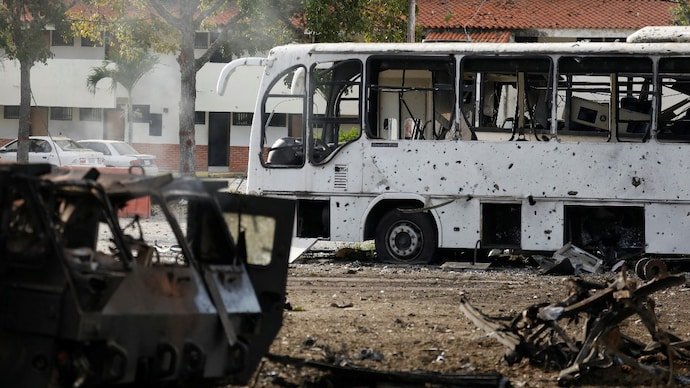
As speculation spread rapidly on social media and global news platforms, a prominent whistleblower attorney who has spent years representing victims of Havana Syndrome—officially referred to as Anomalous Health Incidents (AHI)—has pushed back against claims that the United States deployed sonic weapons during an operation in Venezuela.
The allegation originated from a Venezuelan security guard who claimed that US forces used advanced technology during an operation in the Caribbean nation, allegedly triggering extreme physical distress. According to the guard, those present experienced unbearable pain, bleeding from the nose, and an inability to stand, describing the sensation as if their “brains were exploding.”
While the dramatic account reignited debate over the use of directed energy or sonic weapons, legal and intelligence experts caution against drawing premature conclusions.
Whistleblower Attorney Rejects Venezuela Sonic Weapon Claim
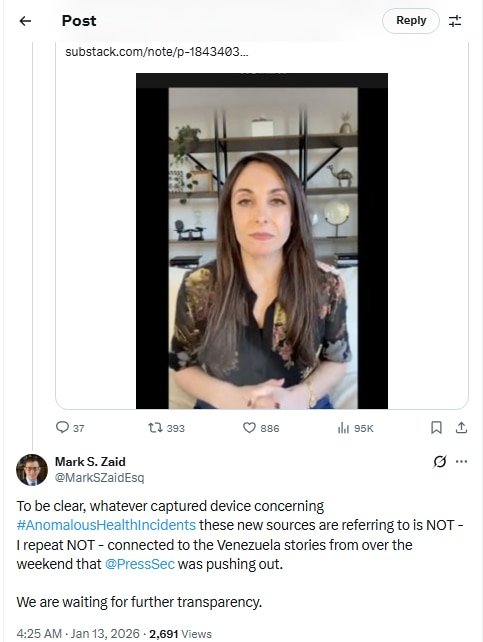
Mark S. Zaid, a US-based attorney who has represented dozens of federal employees affected by Havana Syndrome, publicly rejected the claim that any sonic or directed energy weapon was used by American forces in Venezuela. Zaid has testified before the US congress, most recently in May 2024, on the long-term neurological and physical effects associated with AHIs.
Taking to X (formerly Twitter), Zaid reshared a post by journalist Sasha Ingber, who covers issues intersecting with the intelligence community. In her post, Ingber cited two individuals familiar with US special operations, claiming that American forces had captured a device linked to Havana Syndrome months earlier and were testing it to understand its functioning.
Zaid acknowledged that he, too, had heard from multiple independent sources that the US government possesses “one or more such devices.” However, he firmly stressed that these revelations had no connection to the Venezuela operation currently under public discussion.
“As the lawyer for some thirty federal victims of #AnomalousHealthIncidents, primarily from the Intelligence Community, I can attest that I have the same information about USG having one or more of these devices—and from separate sources,” Zaid wrote, adding pointedly, “It’s time for the CIA to share what it knows.”
White House Silence Fuels Speculation
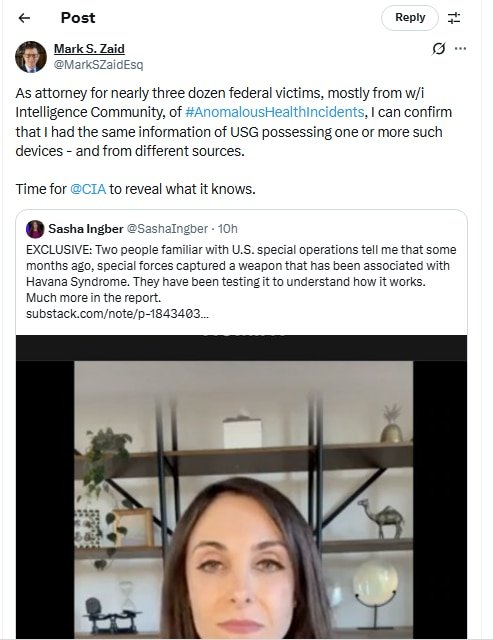
The controversy intensified after White House Press Secretary Karoline Leavitt shared a post recounting the Venezuelan guard’s vivid description of the alleged attack. The post quickly drew international attention, with many interpreting it as a tacit endorsement of the claim.
However, the White House has not issued any official clarification on whether Leavitt’s post was meant to validate the allegation. As of now, there has been no formal response addressing whether the US administration considers the claims credible.
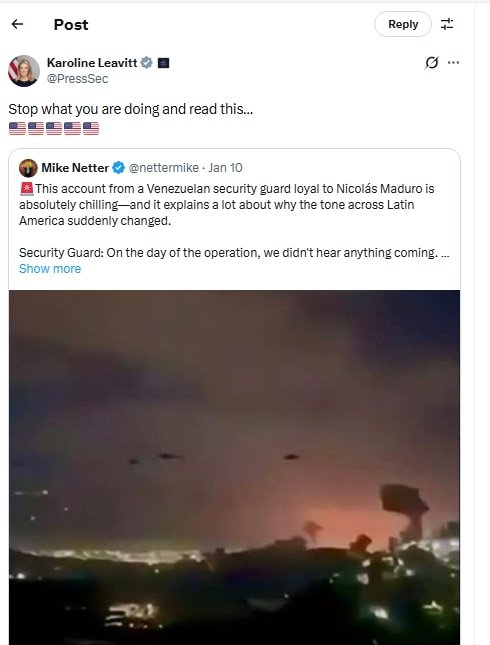
Zaid later clarified his position in a separate post, stating unequivocally that the intercepted device referenced by intelligence-linked sources “has nothing to do with the stories about Venezuela that the press secretary was promoting.” He emphasized that transparency from intelligence agencies remains overdue.
Directed Energy Weapons: What Do Experts Say?
A former US intelligence official, speaking in the context of the Venezuelan claim, noted that the symptoms described by the security guard bear resemblance to the effects associated with directed energy weapons. These systems, which can involve microwaves or other focused energy forms, are designed to disable targets without traditional explosives.
“Some of those systems can cause bleeding, pain, burning sensations and the inability to function,” the source explained, while stopping short of confirming their use in Venezuela.
Globally, allegations of such weapons have surfaced before. Notably, china has denied claims that it deployed microwave weapons against Indian troops during the 2020 military standoff along the Line of Actual Control in Ladakh.
Understanding Havana Syndrome and Past Investigations
The phenomenon now known as Havana Syndrome first emerged in Cuba in 2016, shortly after the United States and Havana restored diplomatic relations following decades of hostility. CIA officers were among the earliest to report unexplained symptoms, including dizziness, headaches, cognitive impairment and hearing issues.
According to reporting by the BBC, cases soon expanded beyond Cuba, affecting hundreds of US diplomats, intelligence officers and their family members across multiple continents.
After years of investigation, US intelligence agencies concluded in March 2023 that it was “very unlikely” a foreign adversary’s energy weapon was responsible for the incidents. The Guardian reported that this conclusion followed a comprehensive review of nearly 1,000 AHI cases worldwide.
Conclusion: Claims, Counterclaims and the Need for Transparency
While the Venezuelan guard’s account has captured global attention, experts urge caution. The attorney most closely associated with representing Havana Syndrome victims has explicitly denied any link between known AHI-related devices and the alleged US operation in Venezuela.
As debates over sonic and directed energy weapons continue, the episode underscores a broader issue: the lack of transparency surrounding advanced military technologies and their health effects. Until official agencies provide clearer disclosures, such allegations—whether substantiated or not—are likely to keep resurfacing in an increasingly information-driven geopolitical landscape.
For breaking news and live news updates, like us on Facebook or follow us on Twitter and Instagram. Read more on Latest World on thefoxdaily.com.






COMMENTS 0