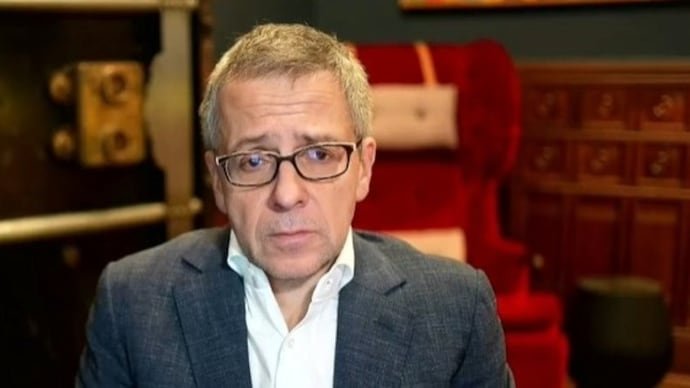
Drawing on experience, expertise, and authoritative geopolitical analysis, this article presents a comprehensive and trustworthy account of Ian Bremmer’s insights on the US operation in Venezuela and its wider global implications.
The US military operation that resulted in the capture of Venezuelan leader Nicolas Maduro has sent shockwaves across the international community. According to Ian Bremmer, president of the Eurasia Group and one of the world’s most respected geopolitical thinkers, this episode is not an isolated act but a clear signal of a deeper transformation in global order — the emergence of what he calls a “G-Zero world.”
Speaking in an in-depth interview with India Today TV, Bremmer argued that the United States is steadily abandoning the international system it once built — a system grounded in democratic norms, collective security, free trade, and the rule of law. In its place, Washington is increasingly embracing unilateralism driven by raw military power.
Bremmer described the Venezuela raid as a short-term political victory for US President Donald Trump, particularly in domestic optics. However, he cautioned that the long-term costs could be significant, as the move undermines multilateral institutions such as the United Nations, the IMF, the World Bank, and NATO.
Despite global unease, Bremmer noted the striking absence of meaningful retaliation from either allies or adversaries. This, he said, underscores the unmatched scale of US military dominance in today’s world. Yet, power without restraint, he warned, creates instability and erodes trust.
Addressing comparisons with Russia’s invasion of Ukraine, Bremmer rejected any direct equivalence. He stressed that Ukraine’s government was democratically elected, whereas Maduro, he said, had stolen an election. Still, Bremmer emphasized that regime change without consultation damages US credibility regardless of the target.
He further observed that President Trump’s statements about the US “running” Venezuela should be seen less as a governing plan and more as coercive leverage. The likely objectives, Bremmer suggested, include security cooperation, access to oil and critical minerals, and the severing of Caracas’ ties with US adversaries such as Iran, Russia, and Hezbollah.
Turning to India, Bremmer highlighted New Delhi’s comparatively strong position in this volatile global environment. India’s strategic autonomy, stable leadership, diversified global partnerships, and limited dependence on US trade allow it to hedge effectively in an increasingly unpredictable world.
Ian Bremmer’s Interview: Full Transcript and Analysis
Good evening to all viewers.
The US operations in Caracas on January 3, which resulted in the capture of Venezuelan President Nicolas Maduro, have triggered widespread outrage and renewed debates about sovereignty, regime change, and international law. To unpack these developments, we are joined by Dr. Ian Bremmer, founder of the Eurasia Group, a leading political scientist, government adviser, and author of the influential annual Top Risks report. Thank you for joining us on India Today, Dr. Bremmer.
Question: When a US raid captures a sitting president on foreign soil in 2026, how do you assess the global moral compass?
Ian Bremmer: I describe this as a “G-Zero world.” The United States is stepping away from the international system it once championed — one built on the rule of law, collective security, free trade, and democratic values. These principles no longer align with President Trump’s America First agenda.
This is not solely Trump’s doing. He is more a symptom and an accelerant of trends that have been unfolding for over a decade. I first wrote about the G-Zero concept in 2012, describing a world with no single leader or coalition willing or able to provide global direction.
What we are witnessing now is dramatic. The US is effectively rewriting the rules of international engagement, embracing a “law of the jungle” model where military power defines outcomes. And Venezuela will not be the last such episode.
Question: How does this differ from regime-change actions the US has historically criticized?
Bremmer: It differs fundamentally from Russia’s invasion of Ukraine. Ukraine’s leadership was democratically elected. Maduro was not — the election was stolen. That said, the process still matters. The US did not consult congress or its allies, and opposition exists both domestically and internationally.
What’s more telling is the reaction — or lack thereof. Even countries traditionally aligned with Venezuela, such as china, Russia, and Iran, have not acted meaningfully in response. European nations express concern, but condemnation has been muted. Power explains this silence.
Question: Are you concerned this sets a precedent for China or Russia?
Bremmer: In the long run, yes. The US benefits immensely from a rules-based order and strong alliances. By weakening that system, Washington is empowering authoritarian regimes that thrive without checks and balances. This will ultimately damage America’s global standing.
However, Russia did not invade Ukraine because of US precedent — it did so because it believed it could. China views Taiwan as a domestic issue, restrained more by strategic and economic realities than by international law.
Still, US-led institutions like the UN, IMF, World Bank, and NATO are under growing strain because America itself is retreating from its own framework.
Question: President Trump has said the US will “run” Venezuela and hinted at taking its oil. What blowback do you foresee?
Bremmer: Trump often speaks rhetorically. There is no plan to govern Venezuela directly. What this really signals is pressure — a message that future Venezuelan leaders must align with US demands or face consequences.
These demands may include cutting ties with US adversaries, granting preferential access to oil, curbing drug trafficking, and accepting returning migrants. Democratic elections, while important to some US policymakers, are not Trump’s priority.
Oil production remains low, investment cycles are long, and political stability is uncertain. Moreover, much of what Trump implements could be reversed by the next US president. This limits long-term confidence.
Question: In your Top Risks 2026 report, you describe the US as unpredictable. What does this mean for India?
Bremmer: India is better positioned than most. It is a vital strategic partner for the US in balancing China, yet it is not overly dependent on American trade. India also enjoys strong ties with japan, the Gulf states, and much of the Global South.
Crucially, India benefits from stable, long-term leadership, allowing consistent foreign and economic policy — something the US struggles with due to frequent political shifts.
Question: Is this now a world where power matters more than rules?
Bremmer: Power matters more than it used to, but rules have not disappeared. Many countries are hedging — pursuing trade deals, strengthening defense cooperation, and seeking multilateral engagement where possible.
Even China seeks influence within existing institutions rather than replacing them outright. This is not pure chaos, but it is a far less orderly world.
Question: Finally, is a weakened Europe Trump’s greatest advantage?
Bremmer: Trump’s greatest advantage is consolidated power within the world’s most powerful country and his willingness to break norms. He does see benefit in a weaker Europe, diverging sharply from previous US administrations.
However, while Venezuela had a clear operational plan, there is no comparable strategy for places like Greenland. Trump is impulsive, and priorities can shift quickly.
It is always a pleasure speaking with you. 2026 is shaping up to be a year of profound risk and uncertainty.
Thank you for watching.
For breaking news and live news updates, like us on Facebook or follow us on Twitter and Instagram. Read more on Latest World on thefoxdaily.com.


COMMENTS 0