- What Happened and Why It Matters
- A Pattern of Military Leadership Changes
- Context: War with Iran and Strategic Realignment
- Who Is General Randy George?
- Incoming Leadership: General Christopher LaNeve
- Broader Political Context
- Analysis: Strategy or Instability?
- Impact on the US Army and Military Operations
- Timeline of Recent Leadership Changes
- Insight: Civil-Military Balance in Focus
- Conclusion: A Defining Moment for Pentagon Leadership
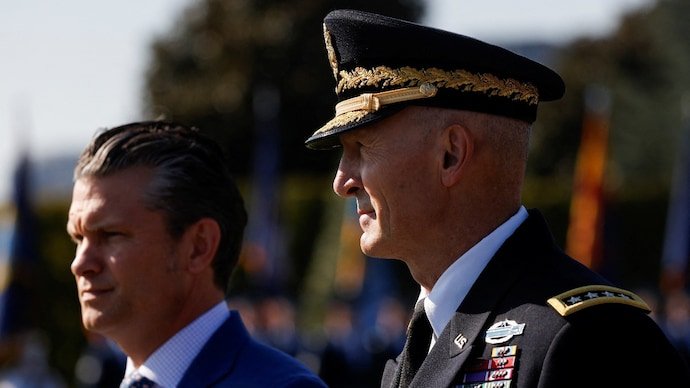
US Defense Secretary Pete Hegseth has asked US Army Chief of Staff General Randy George to step down and retire immediately, marking a significant leadership shift within the Pentagon during the ongoing conflict with Iran. The decision, confirmed on Friday, comes without an official explanation from the Department of Defense, though multiple reports suggest it is part of a broader effort to align Military leadership with President Donald Trump’s strategic vision.
General Christopher LaNeve, who currently serves as the Army’s Vice Chief of Staff, is expected to replace George. The sudden transition occurs at a time when the United States is deeply engaged in military operations, raising concerns about continuity, command stability, and the broader implications for US defense policy.
What Happened and Why It Matters
According to Pentagon spokesperson Sean Parnell, General George will retire effective immediately, ending his tenure as the 41st Chief of Staff of the Army. While the statement expressed gratitude for his decades of service, it did not provide any reasoning behind the abrupt decision.
However, sources cited by CBS News indicated that the move was driven by Defense Secretary Hegseth’s desire to install leadership that would more closely implement President Donald Trump’s vision for the Army. A separate report from Fox News suggested that Hegseth personally contacted George and informed him that “it was time for a leadership change,” without elaborating further.
“It was time for a leadership change in the Army,” a senior official reportedly quoted Hegseth as saying.
The lack of transparency has sparked debate among defense analysts and political observers, particularly given the timing during an active military conflict.
A Pattern of Military Leadership Changes
General George’s removal is not an isolated incident. Since taking office, Pete Hegseth has overseen a sweeping reshuffle of top military leadership, reportedly removing more than a dozen generals and admirals. This effort appears aimed at restructuring the Pentagon’s leadership to better align with the administration’s National Security priorities.
Earlier rounds of changes included the removal of senior figures such as Admiral Lisa Franchetti, the Navy’s top uniformed officer, and General Jim Slife, a senior Air Force leader. Additionally, President Donald Trump previously dismissed General Charles “CQ” Brown as Chairman of the Joint Chiefs of Staff.
This ongoing reshaping of military leadership suggests a deliberate strategy rather than isolated personnel decisions.
Context: War with Iran and Strategic Realignment
The timing of General George’s removal is particularly significant. The United States is currently engaged in a high-stakes conflict with Iran, requiring coordinated military planning and experienced leadership. Removing a top Army official during such a period naturally raises questions about operational continuity.
Some analysts argue that leadership changes during wartime can disrupt command structures and decision-making processes. Others suggest that such moves may reflect a desire for tighter control and clearer alignment between political leadership and military execution.
In simple terms, this is not just a personnel change—it is a signal of how the administration wants the war to be managed.
Who Is General Randy George?
General Randy George is a seasoned infantry officer with decades of military experience. A graduate of the US military Academy at West Point, he has served in multiple major conflicts, including the Gulf War, Iraq War, and Afghanistan war.
He was confirmed as Chief of Staff of the Army in 2023, a role that typically carries a four-year term. Before that, George served as Vice Chief of Staff of the Army and held key advisory roles, including serving as a senior military aide to former Defense Secretary Lloyd Austin.
His career has been marked by operational experience and strategic leadership, making his sudden departure all the more notable.
Incoming Leadership: General Christopher LaNeve
General Christopher LaNeve, who is set to replace George, has a diverse operational background. He previously commanded the Eighth Army in South Korea and later served as a top military aide to Defense Secretary Hegseth.
His relatively rapid rise within the Pentagon has drawn attention, especially given the short duration of some of his previous assignments. Supporters argue that his close working relationship with Hegseth could ensure smoother implementation of policy decisions.
Critics, however, question whether such appointments prioritize loyalty over institutional experience.
Broader Political Context
The leadership shake-up comes amid reports of potential changes across other key positions within the Trump administration. According to The Atlantic, there has been speculation about possible departures involving figures such as FBI Director Kash Patel, Director of National Intelligence Tulsi Gabbard, Army Secretary Daniel Driscoll, and Labor Secretary Lori Chavez-DeRemer.
While the timing and certainty of these changes remain unclear, they point to a broader pattern of restructuring within the administration.
President Donald Trump has not publicly confirmed these potential moves, leaving room for speculation about the administration’s next steps.
Analysis: Strategy or Instability?
The removal of General George can be interpreted in multiple ways, depending on perspective. From one angle, it reflects a strategic effort to ensure that military leadership is fully aligned with the administration’s goals. In this view, decisive leadership changes are seen as necessary for effective governance, especially during a conflict.
From another perspective, frequent turnover at the highest levels of military leadership could signal instability. The US military traditionally values continuity, chain of command, and institutional experience—factors that can be disrupted by rapid personnel changes.
The truth likely lies somewhere in between. While alignment between civilian leadership and military command is essential, the manner and timing of such changes can significantly impact effectiveness.
Impact on the US Army and Military Operations
The immediate impact of this leadership change will be felt within the US Army’s command structure. General LaNeve will need to quickly establish authority, maintain morale, and ensure operational continuity during an ongoing conflict.
At a broader level, the move could influence how the Army approaches strategy, resource allocation, and coordination with other branches of the military.
For allies and adversaries alike, such changes are closely watched as indicators of internal dynamics within the US defense establishment.
Timeline of Recent Leadership Changes
| Period | Event | Details |
|---|---|---|
| 2023 | George Appointed | Confirmed as US Army Chief of Staff |
| February 2025 | Initial Firings | Multiple top generals and admirals removed |
| 2025–2026 | Ongoing Changes | More than a dozen senior leaders replaced or retired |
| April 2026 | George Removed | Asked to step down and retire immediately |
Insight: Civil-Military Balance in Focus
This development brings renewed attention to the delicate balance between civilian leadership and military autonomy. In democratic systems, the military operates under civilian control, but effective governance also relies on professional military expertise.
Striking the right balance is critical—especially during wartime, when decisions carry high stakes and long-term consequences.
In many ways, this episode is less about one individual and more about how power, policy, and military strategy intersect.
Conclusion: A Defining Moment for Pentagon Leadership
The removal of General Randy George marks a significant moment in the ongoing transformation of US military leadership under Defense Secretary Pete Hegseth and President Donald Trump. While the official reason remains unclear, the broader context suggests a deliberate effort to reshape the Pentagon’s leadership structure.
As the conflict with Iran continues, the effectiveness of this new leadership approach will be closely scrutinized. Whether it leads to stronger alignment and clearer strategy—or introduces new challenges—remains to be seen.
One thing is certain: in times of war, leadership decisions are never just about individuals—they are about direction, control, and the future of military strategy.
For breaking news and live news updates, like us on Facebook or follow us on Twitter and Instagram. Read more on Latest World on thefoxdaily.com.





COMMENTS 0