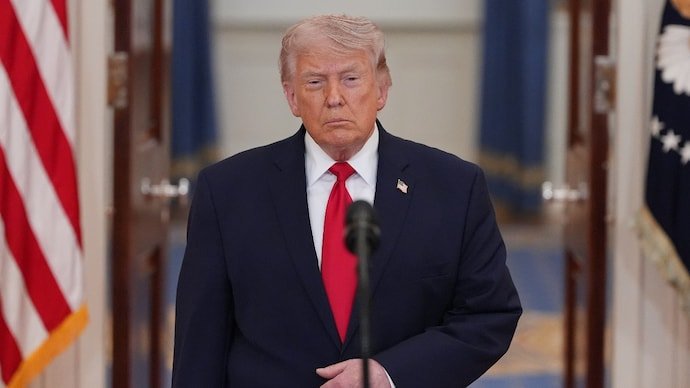
US President Donald Trump has unveiled a sweeping federal budget proposal for 2027 that places defence spending at the centre of national priorities. The plan allocates a record $1.5 trillion for military expenditure, marking one of the largest defence budgets in US history.
The proposal comes at a time of heightened geopolitical tensions, including a US-led conflict involving Iran, and reflects the administration’s stated goal of strengthening military capabilities to ensure what it calls “peace through strength.”
At the same time, the budget outlines a 10% reduction in non-defence spending, signalling a significant shift in how federal resources could be distributed if the plan is approved.
What the Budget Proposes
The proposed $1.5 trillion defence allocation underscores a clear prioritisation of military readiness and global strategic positioning. According to the administration, increased funding is essential to maintaining US leadership and deterring potential adversaries.
“President Trump is committed to rebuilding our military to secure peace through strength,” the budget document states.
The defence budget would be split into two main funding routes:
- $1.1 trillion through the regular congressional appropriations process
- $350 billion through budget reconciliation, which requires only a simple majority in Congress
This dual-track approach is designed to increase the likelihood of at least partial approval, even in a divided legislature.
Cuts to Domestic Spending
While defence sees a massive boost, the proposal calls for notable reductions in domestic programs. The administration has suggested that several responsibilities currently handled by the federal government should be shifted to state and local authorities.
These include areas such as:
- Childcare support
- Portions of healthcare spending
- Other social welfare programs
Trump emphasised this approach in public remarks, arguing that the federal government cannot sustain both extensive domestic programs and large-scale military commitments.
“We’re fighting wars. We can’t take care of day care,” Trump said, adding that such responsibilities could be managed at the state level.
Context: Rising Global Tensions
The timing of the budget proposal is closely linked to current global developments. Ongoing military tensions, particularly involving Iran, have reinforced the administration’s argument for increased defence spending.
In this context, the budget reflects a strategic calculation: prioritising military strength as a means of ensuring National Security and global stability.
However, critics argue that such a shift could come at the expense of domestic welfare and long-term economic balance.
Federal Finances Under Pressure
The proposal arrives against the backdrop of significant fiscal challenges. The United States is currently facing:
- Annual deficits approaching $2 trillion
- Total national debt exceeding $39 trillion
A large portion of federal spending is already committed to mandatory programs such as Social Security, Medicare, and Medicaid. These entitlement programs account for nearly two-thirds of the total federal budget, which is estimated at around $7 trillion annually.
This leaves a relatively smaller portion of discretionary spending—traditionally divided between defence and domestic programs—making any shift in priorities particularly impactful.
Key Allocations Beyond Defence
In addition to military funding, the budget outlines several targeted investments across government sectors:
| Sector | Proposed Allocation/Change | Purpose |
|---|---|---|
| Department of Justice | +13% increase | Focus on combating violent crime |
| National Park Service | $10 billion fund | Beautification projects in Washington, DC |
| Aviation Safety | +$481 million | Air traffic control hiring and safety upgrades |
These allocations suggest that while domestic spending is being reduced overall, certain areas remain priorities for the administration.
Congressional Hurdles Ahead
It is important to note that the president’s budget proposal does not carry the force of law. Congress ultimately decides federal spending and often modifies or rejects elements of the White House plan.
The 2027 budget is expected to face intense debate, particularly given existing political divisions and ongoing disputes over current-year funding.
Lawmakers are already grappling with disagreements on issues such as Department of Homeland Security funding and Immigration policy, with negotiations further complicated by a partial government shutdown.
Analysis: A Strategic but Controversial Shift
Trump’s budget proposal represents a clear ideological and strategic shift—one that prioritises military strength over domestic expansion.
Supporters argue that in an increasingly uncertain world, robust defence spending is essential to maintaining peace and protecting national interests.
Critics, however, warn that reducing federal involvement in social programs could place additional burdens on states and widen inequalities in access to essential services.
The proposal also raises questions about long-term fiscal sustainability, particularly given the already high levels of debt and deficit.
In essence, the budget sets up a classic policy trade-off: security versus social spending.
What It Means Going Forward
As Congress begins deliberations, the budget is likely to serve as a starting point for broader negotiations rather than a final blueprint.
Historically, lawmakers have adjusted presidential proposals significantly, especially when it comes to cuts in domestic programs.
However, the scale of the proposed defence spending increase ensures that it will remain a central issue in upcoming fiscal debates.
Conclusion: Defining Priorities in a Complex World
The $1.5 trillion defence budget proposal highlights the administration’s focus on military strength in a time of global uncertainty. At the same time, it signals a move toward a leaner federal role in domestic policy.
Whether this approach gains traction in Congress remains to be seen. What is certain, however, is that the proposal has set the stage for a significant debate over how the United States balances security, economic stability, and social responsibility.
As negotiations unfold, the outcome will shape not just the 2027 budget, but the broader direction of US policy in the years ahead.
For breaking news and live news updates, like us on Facebook or follow us on Twitter and Instagram. Read more on Latest World on thefoxdaily.com.




COMMENTS 0