
US President Donald Trump claimed on Saturday that American forces had captured Venezuelan President Nicolás Maduro and his wife, Cilia Flores, following what he described as “large-scale Airstrikes” on the Venezuelan capital, Caracas. The claim came hours after multiple explosions, fires, and widespread power outages were reported across the city.
Writing on his Truth Social platform, Trump said the United States had “successfully carried out a large-scale strike against Venezuela and its leader,” adding that Maduro and Flores were apprehended and flown out of the country during a joint operation involving US law enforcement agencies.
Trump said further details would be shared at a press conference scheduled for 11 a.m. (US time) at Mar-a-Lago.

According to unnamed US officials cited by CBS News, Maduro was captured early Saturday by members of Delta Force, the US military’s elite special operations unit. Officials declined to provide further operational details, stating only that the mission took place in the early hours of the morning.
Delta Force previously carried out the 2019 operation that resulted in the death of former Islamic State leader Abu Bakr al-Baghdadi.
Maduro’s alleged capture has not been independently verified, and Venezuelan officials swiftly rejected Trump’s assertions.
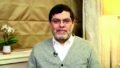
Shortly after the reported US strikes, Venezuelan Defence Minister Vladimir Padrino López released a video statement announcing the nationwide deployment of military units. He described the US action as “the worst aggression” Venezuela had ever faced and called for unity and resistance.
“They have attacked us, but they will not subdue us,” Padrino López said, adding that all branches of the armed forces were being mobilised in accordance with “Maduro’s orders.” He did not address claims that the president had been captured.
The defence minister also urged calm, warning citizens not to give in to panic or unrest. “Let’s not succumb to the chaos the enemy seeks to instil,” he said.
A Month-Long Push to Remove Maduro
Saturday’s strike marked the culmination of months of escalating pressure by the Trump administration to remove Maduro, who has ruled Venezuela since 2013 following the death of Hugo Chávez.
In an interview with The Times, Trump credited the operation’s reported success to military readiness and planning, praising “a lot of great troops and a lot of good planning.”
Earlier this week, Trump said it would be “smart” for Maduro to resign and repeatedly warned that land-based military operations in the South American oil-producing nation were under consideration.
Washington has accused Maduro of running a “narco-state” and of manipulating last year’s presidential election, which the Venezuelan opposition claims it won decisively. Maduro has dismissed the allegations, insisting they are part of a Western-backed plot to remove him illegally from power. Several foreign governments have also disputed the election results.
Explosions Rock Caracas
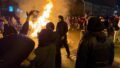
In the early hours of January 3, 2026, residents of Caracas reported at least seven explosions across the city, along with sightings of low-flying aircraft. The blasts forced many residents into the streets as fires broke out in several neighbourhoods.
Videos circulating on social media showed thick plumes of smoke rising over parts of the capital, while reports emerged of power outages affecting a major military installation in southern Caracas.
It was not immediately clear whether there were casualties. The reported strikes lasted less than 30 minutes, and it remained uncertain whether further military action would follow.
Venezuela’s government labelled the operation an “imperialist attack,” accusing Washington of striking both military and civilian targets. In an official statement, authorities called on supporters to mobilise.
“People to the streets!” the statement read. “The Bolivarian government calls on all social and political forces in the country to mobilise and denounce this imperialist aggression.”
According to the statement, Maduro declared a “state of external disturbance,” a form of emergency rule allowing the suspension of certain civil liberties and expanded military authority, and ordered all national defence plans to be activated.
Pressure Campaign in the United States
The airstrikes followed months of intensified US pressure on Maduro, whom American authorities accuse of narco-terrorism and facilitating large-scale drug trafficking. Maduro’s government has consistently denied the allegations.
Last week, the CIA reportedly carried out a drone strike on a docking facility believed to be used by Venezuelan drug cartels — the first known direct US strike on Venezuelan territory since Washington began targeting suspected smuggling vessels in September.
Trump has repeatedly defended military action in and around Venezuela, arguing that US raids on suspected drug-trafficking operations are necessary to protect American interests. Maduro has dismissed those actions as a pretext for regime change.
According to figures released by the Trump administration, the US military has conducted at least 35 strikes on vessels in the Caribbean Sea and eastern Pacific since early September, resulting in at least 115 deaths.
These operations coincided with a significant US military buildup near South America, including the deployment of the country’s most advanced aircraft carrier in November — described by officials as the largest US military presence in the region in decades.
Trump has characterised the campaign as part of an “armed conflict” against drug cartels, saying the strikes are aimed at halting the flow of narcotics into the United States.
For breaking news and live news updates, like us on Facebook or follow us on Twitter and Instagram. Read more on Latest World on thefoxdaily.com.



COMMENTS 0