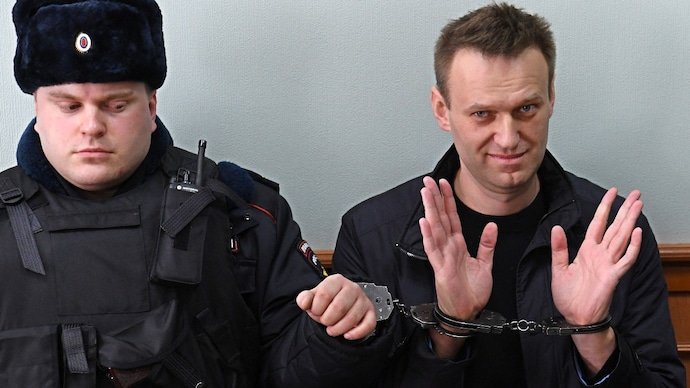
In a significant diplomatic development, US Secretary of State Marco Rubio has stated that Washington does not dispute a joint European report alleging that Russian opposition leader Alexei Navalny was poisoned using a toxin derived from South American poison dart frogs.
The report, issued jointly by Britain, France, Germany, Sweden, and the Netherlands, claims that forensic analysis confirmed the presence of epibatidine – a rare and highly potent toxin – in samples taken from Navalny’s body.
While the United States did not formally join the European statement, Rubio described the findings as “concerning” and indicated there was no reason for Washington to doubt the conclusions reached by its allies.
Rubio: “We Don’t Have Any Reason to Question It”
Speaking during a press conference in Bratislava, Slovakia, Marco Rubio acknowledged awareness of the report and its implications.
“Obviously, the report is known to us. This is a concerning report. We are aware of that case of Mr. Navalny and certainly… we don’t have any reason to question it,” Rubio told reporters.
His remarks signal a measured but notable stance from Washington – one that stops short of direct endorsement but does not challenge the findings put forward by key European allies.
When asked why the United States did not co-sign the joint statement, Rubio clarified that the initiative originated from the European countries involved.
“Those countries got to that conclusion. They organized that. It doesn’t mean we disagree with the outcome. It simply wasn’t our endeavor. Depending on the intelligence they have gathered, nations occasionally take action,” he said.
He added, “We’re not arguing or fighting these nations over it. However, they published their report.”
European Report: Epibatidine Detected in Navalny’s Remains
The joint statement released Saturday by Britain, France, Germany, Sweden, and the Netherlands asserted that laboratory analysis of samples from Navalny’s body “conclusively” verified the presence of epibatidine.
Epibatidine is a powerful alkaloid toxin found in certain species of South American poison dart frogs. It is not naturally occurring in Russia, a detail that European investigators highlighted as significant in their assessment.
According to the statement, the toxicology findings were consistent across multiple independent laboratories, reinforcing the credibility of the forensic examination.
The allegations, if substantiated, would mark a dramatic escalation in accusations surrounding the circumstances of Navalny’s death and further strain already fragile relations between Russia and Western nations.
Russia Rejects Allegations as “Western Propaganda Hoax”
Russia’s state news agency TASS dismissed the accusations, describing them as “a Western propaganda hoax.”
The Russian government has consistently denied wrongdoing in connection with Navalny’s death. Moscow previously stated that the opposition leader died in February 2024 while serving a prison sentence in an Arctic penal colony, following convictions on charges of extremism and other offenses – accusations Navalny had strongly denied.
Russian authorities have maintained that his death was due to natural causes, a claim that has been widely questioned by Western governments and Human Rights organizations.
Navalny’s Death: A Geopolitical Flashpoint
Alexei Navalny, one of President Vladimir putin’s most prominent critics, had long been a symbol of political opposition within Russia. His imprisonment and subsequent death drew widespread international condemnation.
Navalny was convicted on multiple charges, including extremism, which he rejected as politically motivated. His death in custody in February 2024 intensified scrutiny of Russia’s human rights record and further deepened diplomatic tensions between Moscow and the West.
The latest toxicology findings – if validated beyond dispute – could reshape the global narrative surrounding Navalny’s death and potentially trigger additional Sanctions or coordinated international action.
US Position: Cautious Alignment Without Formal Endorsement
Washington’s decision not to formally join the European statement reflects a nuanced diplomatic posture. By acknowledging the report as credible while refraining from direct participation, the United States appears to be balancing alliance solidarity with strategic caution.
Rubio’s comments suggest that the US is carefully evaluating intelligence assessments while maintaining alignment with its European partners.
As investigations and geopolitical responses continue to unfold, Navalny’s death remains not just a domestic Russian matter but a focal point in the broader contest between Russia and the West – with implications for sanctions policy, diplomatic relations, and global security dynamics.
For breaking news and live news updates, like us on Facebook or follow us on Twitter and Instagram. Read more on Latest World on thefoxdaily.com.





COMMENTS 0