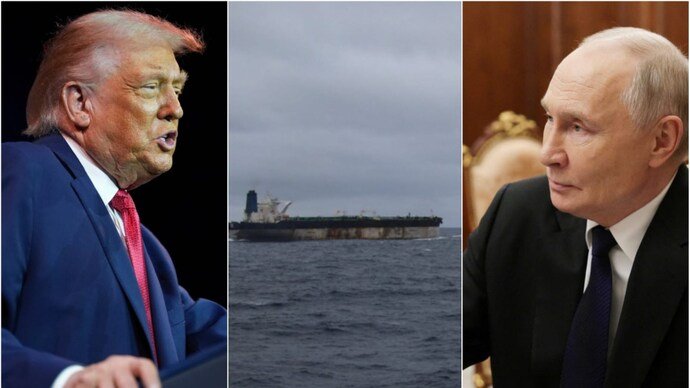
Tensions between the United States and Russia have intensified following the dramatic seizure of an oil tanker flying the Russian flag in the North Atlantic. The incident, which took place far from US territorial waters, has raised serious concerns about a new geopolitical flashpoint between the two nuclear-armed powers.
US authorities maintain that the seizure was a lawful enforcement action linked to sanctions on Venezuela’s oil trade. Moscow, however, has strongly objected, calling the operation unlawful, disproportionate, and a direct violation of freedom of navigation under international maritime law.
The interception of the tanker concludes a weeks-long pursuit that reportedly involved significant US and allied military resources. The operation has drawn sharp reactions from Russia and prompted questions about the broader implications for global shipping, sanctions enforcement, and already strained US–Russia relations.
The timing of the seizure is also notable. It comes just days after US Marines detained Venezuelan leader Nicolas Maduro, amid President Donald Trump’s renewed and aggressive push to tighten oil sanctions worldwide. Against this backdrop, the tanker incident has added fuel to an already volatile diplomatic environment.
Why the Russian-Flagged Oil Tanker Was Seized
- Russian-flagged tanker seized in the North Atlantic: The US European Command confirmed that American forces seized the tanker Marinera, previously known as Bella-1, “pursuant to a warrant issued by a US federal court.”
- Ship allegedly linked to Venezuela under US sanctions: According to US officials, the tanker was part of a network accused of evading sanctions by transporting oil for Venezuela. The vessel was reportedly blacklisted by Washington in 2024.
- Crew allegedly evaded boarding and altered the ship’s identity: US authorities claim the tanker refused a boarding request by the US Coast Guard in December. Following this, the ship crossed the Atlantic, changed its name, switched its registration to Russia, and painted a Russian flag on its hull.
- Tracked for weeks across the Atlantic: Open-source maritime tracking data placed the vessel between Scotland and Iceland shortly before the seizure. US forces reportedly tracked the tanker for more than two weeks after it departed the Caribbean.
- British Royal Air Force involvement: The UK Ministry of Defence confirmed that Britain provided “pre-planned operational support, including basing” to the US. A British naval vessel assisted in the pursuit, while the Royal Air Force conducted aerial surveillance. London stated that the operation was conducted “in full compliance with international law,” according to a Reuters report.
- Russian warships shadowed the tanker: During the pursuit, Russia reportedly deployed naval vessels and a submarine near the tanker, significantly heightening fears of a direct military confrontation between NATO forces and Russia.
- Moscow protests ‘disproportionate’ US action: Russia’s foreign ministry said the tanker was sailing peacefully under its flag and was subjected to “heightened attention from the US and NATO militaries” despite operating far from American waters.
- Russia says seizure violated international maritime law: Moscow argued that the operation breached the UN Convention on the Law of the Sea, stressing that freedom of navigation applies on the high seas, as cited in a Reuters report.
- Contact with the vessel reportedly lost: Russia’s transport ministry said communication with the tanker was lost after US naval forces boarded the Marinera.
- Washington signals more seizures ahead: US officials revealed that another Venezuela-linked tanker, Sophia, was intercepted in the Caribbean following the North Atlantic operation, indicating that the US plans to continue enforcing oil sanctions globally.
According to US European Command, the seizure of the Marinera was carried out under the authority of a US federal court warrant. Washington maintains that the tanker was an active participant in a sanctions-evasion network supporting Venezuela’s oil exports.
US officials allege that after initially refusing to cooperate with the Coast Guard, the vessel deliberately altered its identity to avoid detection. This included renaming the ship, changing its flag state, and visually marking it as Russian, actions that US authorities say were intended to obstruct sanctions enforcement.
The role of the United Kingdom has also drawn attention. British defence officials confirmed their support for the operation, emphasizing that their involvement was planned in advance and complied fully with international legal standards.
Russia, however, has categorically rejected these claims. Moscow insists the tanker was operating lawfully and has accused the US and its allies of overreach. The presence of Russian naval assets near the tanker during the pursuit underscores how close the situation came to escalating into a direct confrontation.
Russian officials have also expressed concern over the loss of communication with the vessel following the boarding, calling for transparency regarding the crew’s safety and the ship’s status.
Meanwhile, Washington has made it clear that the seizure is not an isolated incident. US sources say similar enforcement actions will continue as part of a broader strategy to choke off revenue streams linked to sanctioned oil exports, particularly those connected to Venezuela.
As diplomatic exchanges between Washington and Moscow grow sharper, the tanker seizure has emerged as yet another test of international maritime norms and great-power relations—one that could have lasting implications for global shipping and geopolitical stability.
For breaking news and live news updates, like us on Facebook or follow us on Twitter and Instagram. Read more on Latest World on thefoxdaily.com.




COMMENTS 0