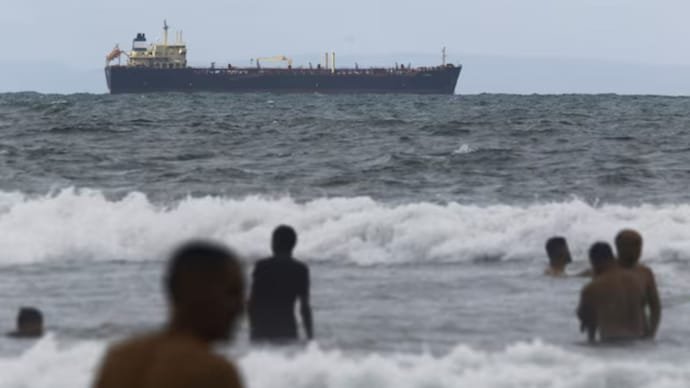
Nearly a dozen oil tankers transporting Venezuelan crude oil and refined fuel have departed the country’s waters since the beginning of the year, openly challenging a US-imposed export blockade, according to data reviewed by Reuters and maritime intelligence firm TankerTrackers.com.
The departures come despite a strict ban announced by US President Donald Trump in mid-December, targeting all sanctioned vessels linked to Venezuela. The ban was imposed weeks before US forces carried out a high-profile operation early Saturday morning that led to the capture of Venezuelan President Nicolás Maduro. Trump reaffirmed on Saturday that the oil embargo remains firmly in place even after Maduro’s removal.
Shipping data shows that all identified vessels are currently under US sanctions. Alarmingly, most are navigating international waters without a declared national flag or valid ship safety documentation. According to PDVSA records and TankerTrackers.com, roughly half of these vessels are supertankers traditionally used to transport Venezuelan crude to china.
It remains unclear whether Washington quietly authorized or tolerated these shipments. Notably, Trump stated on Saturday that China—Venezuela’s largest oil buyer—would continue receiving Venezuelan crude, raising further questions about the scope and enforcement of the blockade.
A US official told Reuters on Monday that the maritime “quarantine” was specifically aimed at sanctioned tankers but declined to provide details regarding the vessels that had already departed Venezuelan waters.
Requests for comment from the US State Department, the White House, Venezuela’s oil ministry, PDVSA, and Chevron went unanswered.
According to shipping contracts with PDVSA and satellite imagery analyzed by TankerTrackers.com, the tankers are collectively carrying an estimated 12 million barrels of Venezuelan heavy crude and fuel oil. Their final destinations remain unknown.
Most of the vessels were originally bound for Asian markets after loading cargo in December but were left stranded in Venezuelan waters when the US blockade took effect. Their sudden departures suggest a calculated risk taken amid tightening economic pressure.
In addition, three smaller sanctioned vessels—traveling empty after internal voyages or after unloading imports such as Russian naphtha—also exited Venezuelan waters, further complicating enforcement efforts.
TankerTrackers.com reported that at least four tankers departed on Saturday via a northern route around Margarita Island, pausing briefly near Venezuela’s maritime boundary before entering open waters.
Three individuals familiar with PDVSA shipping documents told Reuters that at least four supertankers were explicitly authorized by Venezuelan authorities to operate in “dark mode,” meaning they switched off satellite tracking systems. This tactic is commonly used by vessels carrying sanctioned oil from countries such as Iran, Russia, and Venezuela.
“We managed to move some supplies out,” a PDVSA insider told Reuters. “The shipments were approved despite the risks, but we don’t believe this route can be sustained for long.”
The same source said PDVSA’s board of directors was expected to receive new directives during a scheduled meeting later Monday with Venezuela’s interim president and oil minister, Delcy Rodríguez, to reassess export strategy under mounting pressure.
Chevron Resumes Limited Oil Exports
In a parallel development, US energy major Chevron resumed oil exports from Venezuela to the United States on Monday, following a four-day pause, according to shipping data and industry sources.
Chevron is currently the only company authorized by Washington to export Venezuelan crude without violating sanctions. A chartered tanker is transporting approximately 300,000 barrels of heavy crude to refineries along the US Gulf Coast.
Unlike PDVSA, Chevron’s operations remain relatively insulated from the blockade due to special US waivers. The company has emerged as PDVSA’s most significant joint venture partner in recent years.
PDVSA, by contrast, was forced to halt most exports last week and began scaling back production over the weekend. With storage tanks nearly full and tankers immobilized, the state oil company was running out of space to hold crude.
Prior to the recent departures, nearly 20 million barrels of export-bound oil were stranded aboard tankers, according to TankerTrackers.com.
Oil exports remain Venezuela’s primary source of revenue. The interim government, led by Vice President and Oil Minister Delcy Rodríguez, relies heavily on export income to fund public spending and maintain economic stability.
Following Maduro’s imprisonment, the National Assembly on Monday reappointed Jorge Rodríguez as president of Venezuela, while his sister Delcy Rodríguez was sworn in as acting president.
On Sunday, Trump warned that further military action could be ordered if Venezuelan authorities fail to cooperate with US efforts to restructure the oil sector and curb drug trafficking.
China currently remains the largest buyer of Venezuelan oil, underscoring the geopolitical complexity surrounding enforcement of the US blockade.
For breaking news and live news updates, like us on Facebook or follow us on Twitter and Instagram. Read more on Latest World on thefoxdaily.com.





COMMENTS 0