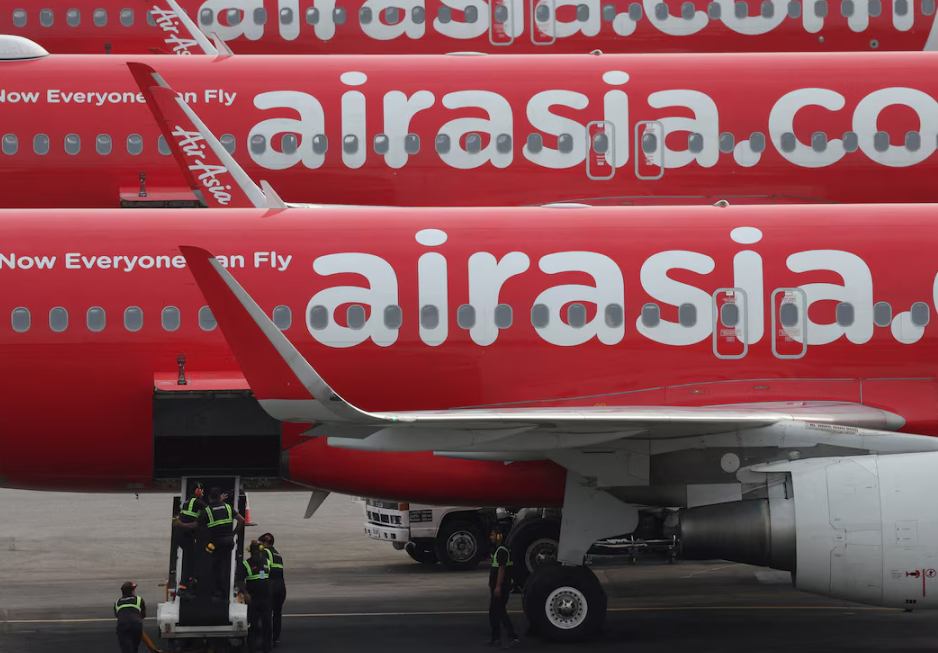
AirAsia is facing growing financial pressure as Malaysia’s government discusses contingency plans with rival airlines Malaysia Airlines and Batik Air while the low-cost carrier seeks more than $1 billion in fresh financing.
The discussions do not indicate that AirAsia is being taken over or that its operations are being transferred. According to people familiar with the matter, the government is assessing possible scenarios, including whether rival airlines could absorb parts of AirAsia’s domestic routes and passenger volumes if the company’s financial situation deteriorates.
The situation has gained urgency because AirAsia remains a major player in Malaysia’s aviation market. The airline says it accounts for about 40% of Malaysia’s overall aviation market and approximately 60% of domestic flying.
Malaysia Holds Talks With Malaysia Airlines and Batik Air
Malaysia’s government has increased discussions with Malaysia Airlines and Batik Air in recent weeks as authorities monitor AirAsia’s financial health.
The talks involve the finance ministry and state-linked airport operator Malaysia Airports Holdings Berhad, or MAHB. The discussions are described as scenario planning rather than confirmation of an impending shutdown or takeover.
The central question is whether Malaysia Airlines and Batik Air could expand their operations to serve passengers and routes currently handled by AirAsia if circumstances required it.
Both airlines have reportedly indicated that they would prefer to expand organically rather than acquire AirAsia’s entire business. However, large-scale absorption of AirAsia’s operations would be considerably more difficult without access to the aircraft currently supporting those routes.
Aircraft Leases Are a Key Issue
One of the most important issues in any potential contingency arrangement is AirAsia’s aircraft fleet.
People familiar with the discussions said Malaysia Airlines and Batik Air would consider taking over AirAsia’s operations on a large scale only if they could also assume its aircraft leases.
This matters because airlines cannot easily replace another carrier’s capacity simply by taking over routes. Aircraft availability, airport slots, crews, maintenance arrangements and regulatory approvals all affect how quickly capacity can be expanded.
AirAsia has already been restructuring its fleet, including returning 25 older aircraft to lessors as part of its cost-reduction efforts.
Why AirAsia Is Under Financial Pressure
One of the biggest challenges for AirAsia has been the sharp increase in jet fuel costs.
The airline has been affected by higher fuel prices linked to the broader Middle East conflict. Its average jet fuel cost increased 66% in the second quarter from the previous quarter to $183 per barrel, according to the information reported in the source.
Fuel is one of the largest variable expenses for airlines. When fuel prices rise sharply, carriers can either absorb the additional cost, increase fares, reduce capacity or pursue a combination of these measures.
For a low-cost airline, the challenge can be particularly complex because customers are generally sensitive to ticket prices. Passing the entire increase through to fares may reduce demand, while absorbing the increase can weaken profitability.
AirAsia Seeks More Than $1 Billion in Financing
AirAsia has been working to secure additional financing as it restructures its balance sheet.
The airline said it is advancing discussions with financial institutions for up to $1 billion from international debt markets along with approximately 700 million ringgit in local credit facilities.
The financing is primarily intended to restructure existing debt and meet the company’s financial requirements.
However, two people familiar with the matter estimated that AirAsia could require at least $3 billion of fresh capital to address its financial position. AirAsia disputed the implication that its publicly stated financing targets were insufficient, saying its targets were adequate to meet its requirements.
| Financial indicator | Reported figure |
|---|---|
| Current liabilities as of June 30 | 18.4 billion ringgit |
| Cash and bank balances as of June 30 | 954 million ringgit |
| Amount sought from international debt markets | Up to $1 billion |
| Targeted local credit facilities | 700 million ringgit |
| Estimated additional capital requirement cited by sources | At least $3 billion |
| Second-quarter net loss | 831 million ringgit |
| Second-quarter foreign-exchange losses | 331 million ringgit |
| Jet fuel average in Q2 | $183 per barrel |
AirAsia Owes Airport Operator at Least 500 Million Ringgit
Another financial pressure point is AirAsia’s relationship with airport operator MAHB.
People familiar with the matter said AirAsia owed MAHB at least 500 million ringgit for services including landing and parking fees.
Two people said MAHB had already granted repayment extensions to the airline. MAHB declined to comment on specific commercial arrangements, while AirAsia did not directly address the reported amount.
AirAsia instead emphasized its strong and constructive relationship with key partners, including MAHB.
Airport-related obligations are particularly important for airlines because operating aircraft requires continuing access to airport infrastructure. Any restructuring of payment arrangements therefore becomes part of the broader effort to preserve operational continuity.
AirAsia Reported a Large Quarterly Loss
AirAsia reported a net loss of 831 million ringgit for the second quarter ended June 30.
The result was affected by higher jet fuel expenses as well as foreign-exchange losses of approximately 331 million ringgit.
The figures demonstrate how several pressures can hit an airline at the same time. Fuel costs can increase operating expenses, while currency movements can affect aircraft leases, financing obligations and other costs denominated in foreign currencies.
This combination can make an airline’s financial position more vulnerable even when passenger demand remains relatively strong.
AirAsia Says Business Continuity Remains the Focus
AirAsia has pushed back against speculation about its financial and operational future.
Farouk Kamal, deputy group CEO of AirAsia Group, said the company does not comment on operational or financial speculation or unannounced corporate arrangements.
The airline said it remains focused on maintaining business continuity and stable operations across its markets and continues to see strong underlying demand across its network.
That distinction is important. Financial stress does not necessarily mean an airline will stop flying. Airlines can respond through debt restructuring, asset sales, route changes, fleet adjustments, new capital and negotiations with suppliers and creditors.
AirAsia’s Restructuring Strategy
AirAsia has already taken several steps to reduce its cost base.
Cutting Underperforming Routes
The airline has been reducing routes that do not perform sufficiently well. Route rationalization can help concentrate aircraft capacity on markets where demand and profitability are stronger.
Returning Older Aircraft
AirAsia has returned 25 older aircraft to lessors. Reducing the fleet can lower certain operating and leasing costs, although it can also reduce available capacity.
Renegotiating Supplier Contracts
The airline is also renegotiating contracts with vendors to reduce costs. Supplier negotiations can become an important part of an airline restructuring because the business relies on a broad network of service providers, maintenance companies and airport-related suppliers.
Seeking New Financing
AirAsia is simultaneously seeking new debt and local credit facilities to restructure its obligations and improve its financial position.
Government Support Is Another Option Under Discussion
Malaysia’s government is also considering whether some form of support or endorsement could strengthen AirAsia’s efforts to raise capital from external investors.
The exact nature of any potential government support remains unclear.
The finance ministry has hired Alton Aviation Consultancy to assess AirAsia’s funding needs as authorities consider the airline’s importance to the Malaysian economy.
AirAsia is significant not only because of its market share but also because of its role as an employer and provider of relatively affordable air connectivity across the region.
What Would Happen If AirAsia Reduced Its Domestic Capacity?
If AirAsia were forced to materially reduce its domestic operations, rival airlines could potentially expand capacity to fill some of the gap.
However, replacing a major low-cost carrier would not be straightforward.
Malaysia Airlines and Batik Air would need to consider aircraft availability, airport capacity, crew requirements, route economics and passenger demand. AirAsia’s low-cost model also differs from the operating models of traditional full-service and other hybrid carriers.
| Potential scenario | Possible consequence |
|---|---|
| AirAsia secures new financing | Greater ability to restructure debt and maintain operations |
| AirAsia continues restructuring | Potentially smaller fleet and fewer underperforming routes |
| Rival airlines expand organically | Malaysia Airlines and Batik Air could add capacity on selected routes |
| Large-scale capacity transfer | Aircraft leases and operational infrastructure would become critical |
| Government provides some form of support | Could strengthen AirAsia’s ability to secure external financing, depending on the structure |
Why Jet Fuel Is Central to the Crisis
The current situation also demonstrates how geopolitical developments can quickly affect airline finances.
Airlines are highly exposed to fuel prices because aviation fuel is essential to every flight. When international oil markets experience a supply shock, the resulting increase in jet fuel prices can raise costs across the industry.
AirAsia’s reported 66% quarter-on-quarter increase in average jet fuel costs illustrates the scale of the pressure it has faced.
At the same time, airlines may have limited ability to increase ticket prices by the same amount because passengers can compare fares across competing carriers. This creates a difficult balance between protecting demand and protecting margins.
What Investors and Industry Observers Will Watch
- Fresh capital: Whether AirAsia completes its targeted international and local financing arrangements.
- Debt restructuring: Whether the new financing materially improves the company’s financial position.
- Jet fuel prices: Whether the Middle East-related energy shock persists or begins to ease.
- MAHB payments: How the airline manages reported airport-related obligations and repayment arrangements.
- Fleet strategy: Whether additional aircraft are returned, leased or retained as part of restructuring.
- Route capacity: Whether Malaysia Airlines and Batik Air begin expanding on routes where AirAsia reduces capacity.
- Government policy: Whether authorities ultimately provide financial or other support to AirAsia.
AirAsia’s Situation Is Not Yet a Confirmed Market Exit
The government discussions should be interpreted carefully. Scenario planning with rival airlines does not itself mean that Malaysia has decided to transfer AirAsia’s operations or that the carrier is preparing to leave the market.
AirAsia continues to operate across its network and has publicly emphasized business continuity. At the same time, the reported liabilities, quarterly loss, fuel-cost increase and need for new financing explain why authorities are preparing contingency scenarios.
The government’s approach appears to involve assessing several possible outcomes rather than relying on a single solution. Financing support, debt restructuring, route adjustments and additional capacity from competing airlines could all form part of the broader response depending on how AirAsia’s financial position develops.
Outlook for AirAsia and Malaysia’s Aviation Market
AirAsia enters an important restructuring period as it tries to strengthen its finances while maintaining operations in a highly competitive aviation market.
The immediate challenge is securing sufficient capital and managing costs while jet fuel prices remain elevated. The airline’s restructuring efforts, including route cuts, fleet changes and supplier negotiations, could help reduce expenses, but the effectiveness of those measures will depend partly on fuel prices and passenger demand.
For Malaysia, AirAsia’s financial stability matters beyond one company. The airline holds a substantial share of domestic flying and provides low-cost connectivity across the region. A major reduction in its capacity would therefore have implications for competing airlines, airports, travelers and tourism-related businesses.
The next phase will depend heavily on AirAsia’s ability to secure financing and restructure its obligations. Meanwhile, the government’s discussions with Malaysia Airlines and Batik Air show that authorities are preparing for multiple possibilities while continuing to monitor the carrier’s financial health.
For breaking news and live news updates, like us on Facebook or follow us on Twitter and Instagram. Read more on Latest Business on thefoxdaily.com.

COMMENTS 0