The Artificial Intelligence boom is creating a new challenge for the US Federal Reserve as policymakers seek to bring Inflation back to their 2% target without unnecessarily weakening the broader economy. While massive investments in AI infrastructure are supporting demand and adding to price pressures, higher interest rates could place a disproportionate burden on smaller businesses and households that depend heavily on borrowing.
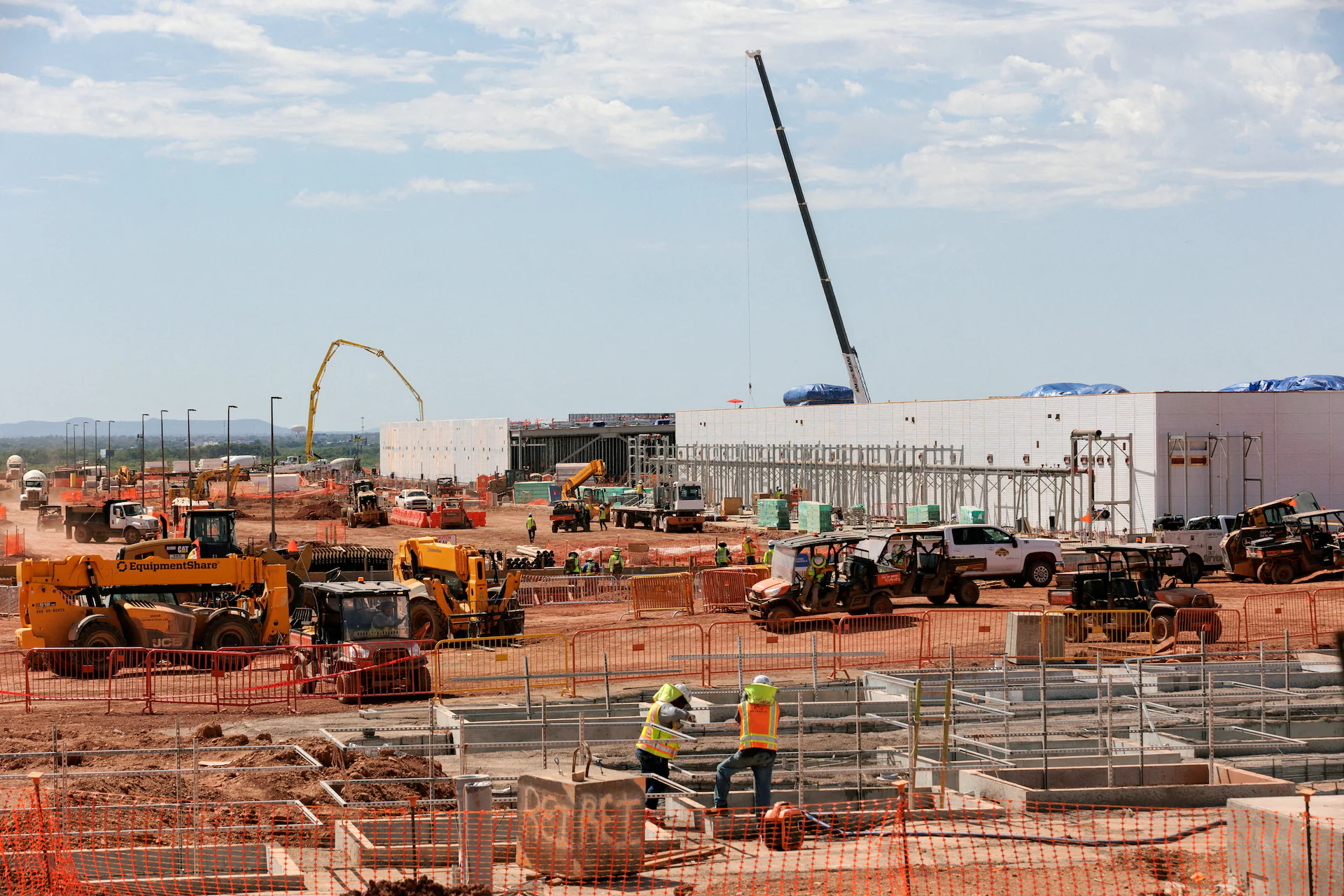
Major technology companies and AI developers continue to invest heavily in computing infrastructure, data centres and related equipment. These investments are helping sustain economic activity even as the Federal Reserve considers whether tighter monetary policy is necessary to contain inflation.
The difficulty is that higher borrowing costs do not affect every part of the economy equally. Large technology companies with substantial financial resources may be better positioned to continue investing, while smaller firms, homebuyers and consumers relying on loans or credit cards may have to reduce spending.
Federal Reserve officials are therefore confronting a complicated policy question: how can they slow inflationary demand associated with the AI boom without causing unnecessary damage to other sectors of the economy?
AI Investment Adds to the Federal Reserve’s Inflation Challenge
The rapid expansion of AI infrastructure has become an increasingly important factor in the US economic outlook. Companies are investing in data centres, computing equipment and supporting infrastructure to meet growing demand for AI services.
These projects can generate demand for construction, electrical equipment, advanced computing components and other industrial products. When investment expands faster than available supply, businesses may face higher costs and longer delivery times, adding to inflationary pressures.
The scale of spending has also raised questions about how monetary policy affects an economy in which some of the largest investors may be less sensitive to borrowing costs than traditional businesses.
At a recent International Monetary Fund meeting in Thailand, Federal Reserve Chair Kevin Warsh acknowledged that AI investment represented a shock to prices and demand. He also pointed to the potential long-term benefits of wealth creation and productivity growth.
Warsh said central bankers responsible for maintaining price stability and supporting full employment must recognise the economic effects of this investment surge. However, the challenge remains determining how the Fed should respond to the resulting inflationary pressures.
Why Higher Interest Rates May Hit Small Businesses Harder
The Federal Reserve generally influences economic activity by changing borrowing costs and financial conditions. Higher interest rates can discourage borrowing, reduce spending and delay investment, helping bring demand into line with available supply.
However, the effects vary considerably across businesses and households. Large technology companies with access to substantial cash reserves or alternative financing sources may be able to maintain investment plans even when interest rates rise.
Smaller businesses often depend more heavily on bank loans to finance equipment, expand operations, manage inventories and cover day-to-day expenses. Higher borrowing costs can therefore force them to delay investment, reduce spending or reconsider plans to hire additional workers.
Consumers can face similar pressures when they rely on credit cards, personal loans or other forms of borrowing to meet household expenses. Rising financing costs may leave less money available for discretionary purchases, weakening demand across the wider economy.
Nela Richardson, chief economist at ADP, said the Federal Reserve had several possible routes to achieving its inflation target, but not every option remained open.
Richardson identified small businesses, indebted consumers and potentially the stock market as areas through which tighter financial conditions could affect spending. She also pointed to weakness in the housing market, suggesting that parts of the economy were already facing pressure.
Fed Expected to Hold Rates Steady at October Meeting
The Federal Reserve is scheduled to meet on October 27-28, with policymakers expected at the time of the report to keep interest rates unchanged at 3.75%-4.00%.
Officials are debating the pace and extent of any additional tightening as they assess persistent inflation, economic growth and the resilience of the labour market. The outlook has become more complicated as AI-related investment supports demand while other sectors remain sensitive to borrowing costs.
An unexpectedly strong inflation report recently added to expectations that interest rates might need to remain higher for longer or rise further. US stocks fell last week as investors reassessed the potential implications for monetary policy.
Cleveland Federal Reserve President Beth Hammack has argued that higher interest rates could slow economic activity at the margins, including through more moderate stock market gains and weaker activity outside the AI boom.
Speaking to Reuters, Hammack said her objective was not to stop economic growth but to moderate it enough to prevent excessive pricing pressures.
Her comments highlight the central challenge facing policymakers: restraining demand sufficiently to reduce inflation without triggering a broad economic downturn.
Stock Market and Housing Could Become Channels for Slower Demand
The stock market is another potential channel through which higher interest rates could affect consumer spending. Rising rates can put pressure on share valuations by increasing financing costs and changing the relative attractiveness of different investments.
When stock prices rise, wealthier households may feel more comfortable spending on travel, services and other discretionary purchases. A sustained market decline can weaken that wealth effect and lead some households to become more cautious.
Richardson suggested that the stock market could become part of the adjustment process if higher borrowing costs eventually reduce valuations and spending supported by investment gains.
However, the effects are unlikely to be uniform. Households with substantial investments may respond differently from those whose spending depends primarily on wages and access to credit.
Housing is another sensitive sector. Higher mortgage rates can make home purchases more expensive, reduce demand for new properties and discourage construction projects.
Warsh previously acknowledged that housing and agriculture were experiencing strains from higher borrowing costs, although he did not consider overall credit conditions restrictive at the time.
If monetary tightening places additional pressure on housing, the impact could extend to builders, suppliers, contractors and other businesses connected to residential construction.
Why the Labour Market May Not Absorb the Inflation Shock
Traditionally, higher interest rates can reduce inflation by slowing hiring, increasing unemployment and weakening consumer spending. When households become less confident about employment prospects, they may postpone purchases, reducing demand for goods and services.
However, the relationship between inflation and employment has been less pronounced during the period following the COVID-19 pandemic. The unemployment rate remained within a relatively narrow range of approximately 4.0%-4.3% for more than two years, according to the report.
Businesses that struggled to recruit workers during the pandemic have often been reluctant to dismiss employees. At the same time, immigration policies under President Donald Trump have constrained labour force growth, affecting the supply of available workers.
This combination has complicated the Fed’s efforts to assess how much economic activity can be reduced without producing a significant increase in unemployment.
If the labour market remains relatively stable despite higher interest rates, policymakers may have less room to rely on rising unemployment as a mechanism for reducing inflation. At the same time, if demand remains strong because of AI investment and related spending, inflation could prove more persistent than expected.
Federal Reserve Officials Debate a Less Painful Route to Lower Inflation
Some Federal Reserve policymakers believe inflation can decline without causing a major slowdown in economic growth, consumption or employment.
Richmond Fed President Tom Barkin and St. Louis Fed President Alberto Musalem have argued that a credible central bank can influence the behaviour of businesses and households by demonstrating its commitment to controlling prices.
Under this approach, companies may become less willing to raise prices aggressively if they believe monetary policy will prevent demand from remaining excessively strong. Workers and employers may also moderate wage demands when they expect inflation to ease.
Such an outcome could allow inflation to decline without the severe economic contraction sometimes associated with aggressive monetary tightening.
However, the strategy depends partly on whether inflation expectations respond to the central bank’s actions and whether demand pressures begin to ease. Strong investment spending, persistent supply constraints or new economic shocks could complicate that process.
Former Chicago Fed President Charles Evans questioned whether policymakers had sufficiently explained how they expected to balance price stability and employment.
Evans said the claim that inflation could be reduced without creating a conflict with unemployment required further explanation, particularly because the risks associated with raising interest rates to control inflation were already well understood.
AI Infrastructure Demand Keeps Business Investment Strong
The AI boom is supporting activity beyond the technology companies developing AI models and services. Businesses involved in data-centre construction, computing equipment and supporting infrastructure are also benefiting from increased investment.
As companies expand capacity, suppliers face pressure to meet orders for equipment and materials. These conditions can sustain business activity and investment even as other parts of the economy respond to tighter monetary policy.
Christopher Gorman, chief executive of Cleveland-based KeyCorp, told attendees at a National Association for Business Economics conference that commercial clients continued to report strong business conditions and plans for investment.
He said companies discussed risks such as immigration restrictions and tariffs but also described strong demand and plans for additional investment and price increases.
Gorman’s comments suggest that inflationary pressures may not be limited to the technology sector itself. Businesses supporting the AI infrastructure buildout can experience increased demand, potentially giving them greater scope to raise prices.
For the Federal Reserve, this creates a difficult situation. Higher rates may have a limited immediate effect on companies determined to expand AI infrastructure, while businesses and consumers with less financial flexibility could experience a more direct impact.
Possible Developments That Could Ease Inflation
Several developments could help reduce inflationary pressure without requiring substantially higher interest rates. Changes in energy prices, trade policy and the pace of infrastructure investment could all influence the economic outlook.
A resolution to the Iran war that lowers oil prices could reduce energy costs for households and businesses. Lower fuel prices can also help ease transportation and production expenses across the economy.
A halt in the expansion of US tariffs could reduce some trade-related cost pressures. Tariffs can increase the cost of imported goods and components, potentially affecting manufacturers, retailers and consumers.
The pace of data-centre construction is another factor. If investment becomes more measured or faces delays because of local opposition, demand for some equipment, materials and construction services could moderate.
These developments remain uncertain, and their effects would depend on the scale and duration of any changes. A reduction in one source of inflationary pressure could also be offset by stronger demand elsewhere.
Fiscal Policy Changes Could Influence Consumer Spending
Fiscal policy may also affect the Federal Reserve’s efforts to control inflation. Juhi Dhawan, a macro strategist at Wellington Management, pointed to upcoming changes involving public health benefits and the expiration of tax breaks.
According to Dhawan, the changes could amount to a fiscal adjustment worth approximately 0.5% of gross domestic product. Depending on how they affect household finances and spending, these measures could reduce demand in parts of the economy.
However, weaker demand would not necessarily be distributed evenly across income groups or industries. Lower-income households often have less financial flexibility to absorb reductions in disposable income, while businesses dependent on consumer spending could face weaker sales.
Dhawan also noted that the stock market beyond the largest AI-focused technology companies had not been particularly robust. Corporate earnings were not expected to be as strong the following year, and some evidence suggested lower-income consumers were approaching a point where they might reduce spending.
These conditions could help moderate inflation, but they could also place additional pressure on businesses and households already dealing with elevated living and financing costs.
Smaller Businesses and Consumers Could Bear the Economic Cost
The uneven impact of monetary policy is emerging as a central concern in the debate over AI-driven inflation. Large companies investing heavily in AI may continue spending because of long-term strategic objectives, while smaller firms face more immediate constraints from financing costs.
Dhawan said inflation could ease if housing weakened further, construction outside data centres slowed and non-AI businesses found the cost of funding prohibitive.
She also warned that household finances were fragile because inflation-adjusted wages were stagnating at best. If real wages fail to grow meaningfully, consumers may struggle to maintain spending as borrowing costs remain high.
For smaller businesses, higher financing costs can delay investment, limit expansion and reduce hiring. For households, the same conditions can make mortgages, credit-card balances and other debt more expensive to manage.
Such adjustments could reduce demand enough to bring inflation closer to the Federal Reserve’s target. However, they would also risk widening the gap between businesses and households that can withstand higher rates and those that depend more heavily on affordable credit.
Outlook: Fed Must Balance AI Growth Against Price Stability
The Federal Reserve faces a complex policy environment as AI investment supports demand and creates new sources of inflationary pressure. While the technology boom could deliver long-term productivity and wealth gains, its immediate effects on investment, infrastructure and prices may complicate the path back to 2% inflation.
Higher interest rates remain one of the Fed’s main tools for cooling demand, but their effects are uneven. Smaller businesses, consumers reliant on credit and interest-sensitive sectors such as housing could face greater pressure than major technology companies with substantial financial resources.
Policymakers are therefore weighing whether inflation can decline through more moderate demand, improved supply conditions and changing expectations without causing a sharp increase in unemployment.
The outcome will depend on the trajectory of AI investment, the labour market, energy prices, trade policy and household spending. As the Federal Reserve approaches its October 27-28 meeting, the key question is not only whether higher interest rates can bring inflation down, but also which parts of the economy will bear the greatest cost of achieving that goal.
For breaking news and live news updates, like us on Facebook or follow us on Twitter and Instagram. Read more on Latest Business on thefoxdaily.com.






COMMENTS 0