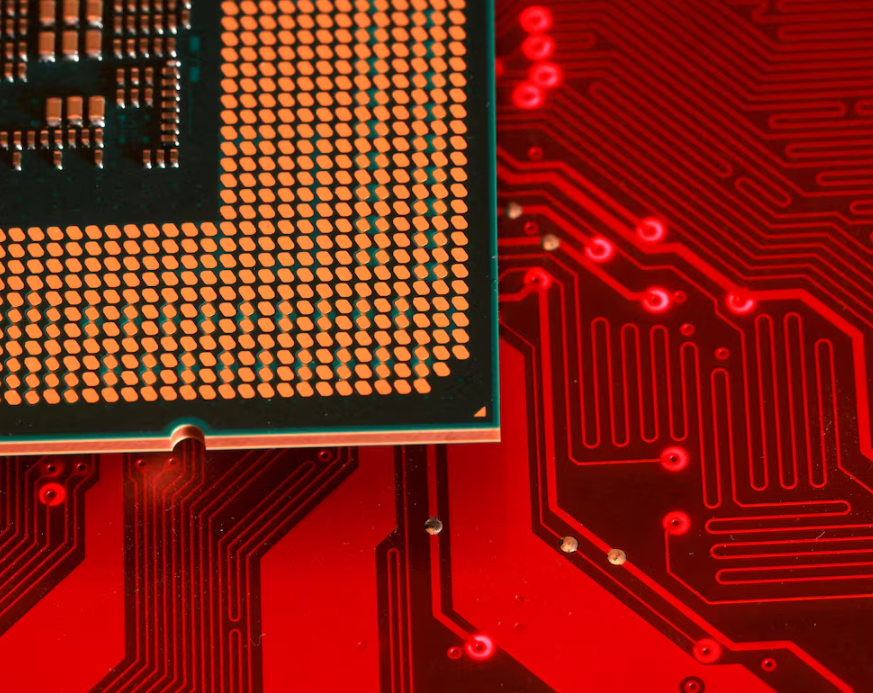
Japan and the United States are discussing the construction of a new semiconductor factory as part of a broader $550 billion investment agreement, according to a report by Japan’s Nikkei business daily.
The proposed project could represent a major expansion of semiconductor manufacturing capacity and deepen cooperation between two important technology economies. Nikkei reported that the facility could require an investment of between 2 trillion yen and 3 trillion yen, equivalent to roughly $12.85 billion to $19.27 billion based on the exchange rate cited in the report.
The potential factory would reportedly be operated by GlobalFoundries and focus on logic semiconductors. However, the project remains under discussion, meaning its final size, location, investment structure and construction timeline could still change.
Japan and US Discuss New Semiconductor Factory
The reported factory is being considered within the framework of a $550 billion investment agreement between Japan and the United States.
Semiconductor manufacturing has become an increasingly important part of economic and strategic policy. Chips are essential components in smartphones, automobiles, data centres, industrial equipment, telecommunications infrastructure and artificial intelligence systems.
A new factory would therefore have implications beyond the semiconductor industry itself. Additional domestic production capacity could help strengthen supply chains and provide manufacturers with another source of advanced logic chips.
According to Nikkei, the project could be valued at between 2 trillion yen and 3 trillion yen. At the exchange rate of $1 to 155.66 yen cited by Reuters, that corresponds to approximately $12.85 billion to $19.27 billion.
| Reported project detail | Information |
|---|---|
| Countries involved | Japan and the United States |
| Broader agreement | $550 billion investment agreement |
| Potential factory investment | 2 trillion yen to 3 trillion yen |
| Approximate dollar value | $12.85 billion to $19.27 billion |
| Reported operator | GlobalFoundries |
| Chip focus | Logic semiconductors |
| Status | Under discussion |
Why Logic Semiconductors Matter
Logic semiconductors perform computational and processing functions in electronic devices. They are different from memory chips, which primarily store data.
Logic chips are used across a wide range of industries, including automotive systems, communications equipment, industrial machinery and computing infrastructure.
The reported factory’s focus on logic semiconductors could therefore give the project relevance across several parts of the technology and manufacturing ecosystem.
The exact technology node and types of processors that would be manufactured at the proposed facility have not been disclosed in the report. Those details would be important for determining the factory’s position within the global semiconductor supply chain.
GlobalFoundries Could Operate the Facility
Nikkei reported that GlobalFoundries would operate the proposed semiconductor factory.
GlobalFoundries is a major semiconductor foundry that manufactures chips for other companies. A foundry model allows customers to design semiconductor products while relying on a specialised manufacturer to produce them at scale.
If the reported project moves forward, GlobalFoundries’ role could connect Japanese investment and U.S.-linked industrial policy with an established semiconductor manufacturing platform.
The company has manufacturing operations in several regions and has historically focused on providing production capacity for a broad range of semiconductor applications rather than concentrating exclusively on the most advanced processor technologies.
What the $550 Billion Investment Agreement Means
The proposed chip factory is reportedly part of a much larger $550 billion investment framework between Japan and the United States.
A commitment of this scale can encompass multiple investment projects rather than a single factory. Semiconductor manufacturing is particularly capital intensive because building a modern facility requires significant spending on construction, specialised equipment, utilities and production infrastructure.
The reported semiconductor project alone could account for as much as 3 trillion yen. That makes it potentially one of the most significant individual manufacturing investments associated with the broader framework.
However, the factory should not be treated as a confirmed investment until the governments and companies involved formally announce its structure and implementation plans.
Why Semiconductor Supply Chains Are a Strategic Priority
The semiconductor industry has experienced repeated supply-chain disruptions in recent years. Shortages have affected industries ranging from automobiles to consumer electronics and industrial equipment.
These disruptions highlighted the risks of relying heavily on a small number of manufacturing locations.
Governments have subsequently placed greater emphasis on expanding semiconductor production capacity and diversifying supply chains. Japan and the United States are both seeking stronger domestic and allied semiconductor ecosystems.
A new factory involving the two countries could fit into that broader effort by adding production capacity while strengthening industrial links between their technology sectors.
Japan’s Role in the Semiconductor Supply Chain
Japan remains an important part of the global semiconductor ecosystem, particularly in semiconductor materials, manufacturing equipment and related industrial technologies.
The country also has a long history in semiconductor manufacturing. Although its position in leading-edge chip production has changed over several decades, Japanese companies remain significant suppliers to the global industry.
Investment in additional manufacturing could complement those strengths by connecting Japan’s materials and equipment capabilities with large-scale semiconductor production.
For Japan, semiconductor investment can also support broader industrial objectives, including technology resilience, manufacturing employment and supply-chain security.
Why the United States Wants More Chip Manufacturing Capacity
The United States has been encouraging greater semiconductor production capacity on American soil and within allied economies.
Semiconductors are essential to national infrastructure and modern industries, making reliable access to chip production strategically important.
Building factories is also a long-term process. Semiconductor facilities require substantial capital investment and years of planning, construction, equipment installation and production qualification.
A Japan-US project could therefore contribute to a broader network of semiconductor manufacturing rather than relying on production concentrated in a limited number of locations.
Potential Economic Impact of a $12.85 Billion-$19.27 Billion Factory
If the project is ultimately approved and constructed, the reported investment range would make it a major industrial development.
The economic impact would extend beyond direct factory employment. Semiconductor facilities require construction contractors, equipment suppliers, chemical suppliers, logistics providers, engineering firms and specialised technical workers.
Once operational, a factory can also generate continuing demand for maintenance, utilities, transportation, testing and other industrial services.
The wider economic impact would depend on the factory’s final capacity, technology and supply-chain connections.
| Potential area | Possible significance |
|---|---|
| Semiconductor production | Adds new logic-chip manufacturing capacity |
| Supply chains | Could diversify manufacturing sources |
| Japan-US cooperation | Deepens technology and industrial ties |
| Employment | Creates construction and specialised manufacturing opportunities |
| Industrial suppliers | Potential demand for equipment, materials, engineering and logistics |
| Technology resilience | Could strengthen semiconductor availability across allied supply chains |
How the Project Could Affect Global Semiconductor Competition
The global semiconductor market includes manufacturers and foundries across the United States, Taiwan, South Korea, Japan, Europe and China.
Competition is no longer based only on chip design. Manufacturing capacity, access to semiconductor equipment, specialised materials, packaging capabilities and reliable energy supplies are also increasingly important.
A large new logic-chip facility could therefore contribute to the geographic diversification of semiconductor production.
However, the significance of the project would depend heavily on what chips it manufactures. A factory focused on mature or specialised processes would serve different markets from a facility designed for the most advanced processors used in high-performance computing and artificial intelligence.
Important Questions About the Proposed Factory
The Nikkei report provides the estimated investment size and potential operator, but several major details remain unclear.
- Where would the semiconductor factory be located?
- Which specific semiconductor technologies would it manufacture?
- What would be the factory’s annual production capacity?
- How would the reported investment be divided between Japan, the United States and GlobalFoundries?
- When would construction begin?
- When could commercial production start?
- Which companies would purchase chips manufactured at the facility?
Answers to these questions would determine the project’s ultimate importance to the semiconductor industry.
Project Remains at the Discussion Stage
One of the most important points in the report is that Japan and the United States are still discussing the factory.
This means the reported investment should not be interpreted as a completed transaction or a confirmed construction project.
Large semiconductor projects can change substantially before final approval. Governments and companies must determine financing, land, infrastructure, equipment requirements, technology, production targets and commercial demand.
The final project could therefore differ from the initial proposal in terms of investment, capacity or timing.
What to Watch Next
Investors and semiconductor-industry observers will likely watch for official announcements from the Japanese and U.S. governments, GlobalFoundries and other companies involved in the investment framework.
Confirmation of the factory location and technology would provide the first major indication of its intended role. Details about financing and production capacity would then help establish the project’s scale.
Another important factor will be the broader implementation of the $550 billion investment agreement. Individual projects can progress at different speeds, and not every proposed investment necessarily results in immediate construction.
Japan-US Chip Investment: Key Takeaways
- Japan and the United States are reportedly discussing a semiconductor factory under their broader $550 billion investment agreement.
- Nikkei estimates the potential factory investment at 2 trillion yen to 3 trillion yen, or approximately $12.85 billion to $19.27 billion.
- GlobalFoundries is reportedly expected to operate the facility, with logic semiconductors as its focus.
- The project remains under discussion, so its final size, location, financing and timeline have not been established.
- A large new factory could strengthen semiconductor supply-chain diversification and deepen Japan-US industrial cooperation.
Conclusion
The reported Japan-US semiconductor factory represents a potentially significant addition to global chip manufacturing, particularly if the project proceeds at the reported 2 trillion yen to 3 trillion yen investment scale.
GlobalFoundries’ reported involvement would connect the project with an established semiconductor foundry, while the focus on logic chips could give the facility applications across automotive, industrial, communications and computing markets.
For now, however, the proposal remains under discussion. The next major developments will be confirmation of the project’s location, technology, financing, production capacity and construction schedule. Those details will determine how substantially the investment changes the semiconductor supply chain and the broader industrial relationship between Japan and the United States.
For breaking news and live news updates, like us on Facebook or follow us on Twitter and Instagram. Read more on Latest Business on thefoxdaily.com.

COMMENTS 0