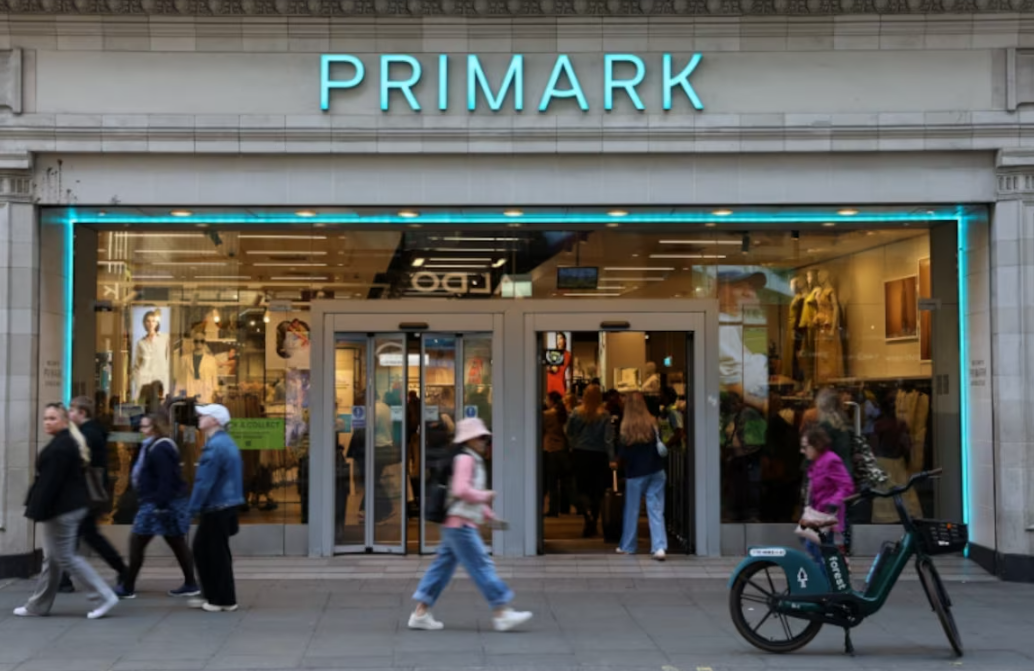
Primark, the budget fashion retailer owned by Associated British Foods, is preparing to introduce home delivery in Britain, marking a major change in a business model that has traditionally relied heavily on physical stores.
The decision comes as Primark looks for new avenues of profitable growth and prepares to be separated from AB Foods’ food businesses. The retailer already operates Click & Collect in Britain, but it has historically resisted home delivery because shipping low-priced fashion items directly to customers was considered difficult to make economically viable.
AB Foods now believes changing consumer behaviour, Primark’s stronger digital capabilities and developments in online retail have created an opportunity to make home delivery commercially attractive.
Why Primark Is Changing Its Online Strategy
Primark’s reluctance to offer home delivery has long been tied to its low-price business model. Unlike premium fashion retailers, Primark sells many products at relatively low prices, meaning delivery, packaging, warehouse handling and returns can represent a significant share of the selling price.
That equation becomes particularly challenging when customers order only one or two inexpensive items.
However, the economics of digital retail have changed. Primark has gained experience through its Click & Collect service, giving the company more information about online customer behaviour, inventory management and fulfilment.
AB Foods said Primark’s digital maturity, combined with developments in the online market, now provides an opportunity for profitable growth through home delivery.
The move therefore represents more than simply adding another delivery option. It signals that Primark believes its digital business has reached a stage where online sales can complement its large store network without undermining the economics of its value-fashion model.
Primark Acquires Automated Fulfilment Facility in Sheffield
To support the new strategy, Primark has acquired a highly automated fulfilment facility in Sheffield, northern England.
The facility is expected to play an important role in handling online orders. Automation can help retailers reduce the cost and time associated with picking, packing and processing large numbers of individual customer orders.
This is especially important for Primark because its low prices leave less room for additional fulfilment costs.
A highly automated warehouse could allow the retailer to increase order volumes while controlling labour and operational expenses. The investment also provides Primark with infrastructure that can support its digital operations as the company expands beyond physical stores.
When Will Primark Home Delivery Start?
Primark has not yet provided a specific launch date for its British home-delivery service.
AB Foods CEO George Weston told analysts that he was not giving a timetable for the introduction of home delivery.
That means customers should not necessarily expect the service immediately. The acquisition of the Sheffield facility is an important preparatory step, but Primark still needs to build the operational systems required to make nationwide delivery work efficiently.
Primark’s Click & Collect Experience Is an Important Advantage
Primark already has an established digital presence through Click & Collect in Britain. That experience gives the company an advantage compared with a retailer starting its online fulfilment journey from scratch.
Click & Collect allows Primark to connect digital browsing with its physical store network. Customers can select products online and collect them from participating stores, while Primark retains part of the cost advantage associated with its physical retail model.
Home delivery changes that equation because the company becomes responsible for the final delivery journey to the customer’s address.
The move suggests Primark now believes it can manage those additional costs well enough to create profitable online growth.
Primark’s Weak Fourth-Quarter Sales Add Pressure
The decision to expand home delivery comes at a challenging time for Primark’s trading performance.
AB Foods expects Primark’s like-for-like sales to decline by 3.0% in the fourth quarter to September 12.
The performance is uneven across regions. Sales in the UK and Ireland are expected to increase by 0.4%, while continental European sales are forecast to decline by 4.3%.
This regional split is important because it shows that Primark’s challenges are not uniform. The retailer appears to be performing more resiliently in its core UK and Ireland markets, while continental Europe remains more difficult.
Why Continental Europe Is a Challenge for Primark
AB Foods said trading in continental Europe remained challenging, with actions to strengthen Primark’s customer proposition still at an earlier stage.
That suggests Primark is working on several aspects of its European offering, potentially including product selection, pricing, store experience and customer engagement.
The European consumer environment is also being affected by broader pressures such as inflation and cautious household spending.
For a value-focused retailer, this creates a complicated situation. Consumers may appreciate low prices when household budgets are under pressure, but they can also become more selective about what they buy.
Primark therefore needs to maintain its reputation for affordability while continuing to provide enough newness and value to encourage customers to spend.
Why Primark’s Home Delivery Could Matter After the Demerger
AB Foods confirmed in April that it intends to demerge Primark from its food businesses. The separation is expected to be completed in December 2027.
That makes Primark’s future growth strategy particularly important.
Once separated from AB Foods, Primark will operate as a standalone business. Investors are likely to pay closer attention to its ability to generate sustainable revenue growth, improve margins and adapt to changes in consumer behaviour.
Home delivery could become one component of that strategy.
A successful digital channel could expand Primark’s reach beyond the customers who live close to its stores. It could also allow the company to capture purchases from customers who prefer shopping from home.
However, the service will need to be carefully managed because rapid online growth without sufficient profitability could undermine the very economic advantage Primark is trying to preserve.
Primark’s Business Model Is Built Around Low Prices
Primark’s success has historically been closely connected to its physical-store model and high-volume sales.
The retailer’s low prices encourage customers to buy multiple items during store visits. Its large stores also provide an environment where shoppers can browse a wide range of clothing and other products.
Home delivery introduces a different shopping dynamic.
Online customers can search for specific products, compare items more easily and potentially place smaller orders. Primark therefore needs to ensure that its delivery economics encourage sufficiently large or profitable baskets.
The challenge is not simply generating online sales. It is generating profitable online sales.
Primark’s Home Delivery Strategy at a Glance
| Area | Current Position | Potential Impact |
|---|---|---|
| Home delivery | Planned for Britain | Creates a new direct-to-consumer sales channel |
| Click & Collect | Already available | Provides digital retail experience and customer data |
| Fulfilment | Sheffield facility acquired | Supports automated online order processing |
| UK & Ireland sales | Like-for-like sales expected up 0.4% | Shows greater resilience in Primark’s core market |
| Continental Europe | Like-for-like sales expected down 4.3% | Remains a key area for improvement |
| Demerger | Expected December 2027 | Primark will become independent from AB Foods’ food businesses |
AB Foods Faces Wider Business Challenges
Primark is only one part of Associated British Foods, which also owns grocery, agriculture, ingredients and sugar businesses.
The company’s grocery operations are expected to deliver mid-single-digit sales growth in the fourth quarter, while ingredients sales are forecast to rise by about 10%.
However, the sugar business remains under pressure.
AB Foods expects losses in sugar for the full 2025-26 financial year to be toward the upper end of its previous guidance range of £25 million to £60 million.
Lower average selling prices in Europe have contributed to weaker sugar sales and profitability in the UK and Spain.
AB Foods also expects sugar losses of between £70 million and £170 million in 2026-27, adding another significant challenge to the group’s outlook.
Why AB Foods Shares Fell 9%
AB Foods shares fell around 9% in early trading after the company reported the latest trading outlook.
The decline reflected concerns about Primark’s weaker fourth-quarter performance as well as continuing losses in the sugar business.
The market reaction illustrates the importance of Primark to investor sentiment around AB Foods. Although the group owns several businesses, Primark is a major retail asset and its performance can strongly influence expectations for the company.
The planned demerger makes this even more significant because investors will increasingly assess Primark on its own growth prospects.
AB Foods Maintains Its Overall Profit Outlook
Despite the challenges, AB Foods said its adjusted operating profit for the 2025-26 financial year is expected to remain broadly in line with previous expectations.
The company also expects adjusted earnings per share to be ahead of its previous assumptions.
For 2026-27, AB Foods expects progress in most of its businesses, although sugar remains a major exception. The company also expects an impact from integrating its recently acquired Hovis bread brand into its grocery operations.
This mixed outlook explains why the Primark home-delivery announcement should not be viewed in isolation. The company is simultaneously trying to improve retail performance, manage pressure in sugar and prepare for a major corporate restructuring.
Could Home Delivery Strengthen Primark’s Competitive Position?
Primark operates in an increasingly competitive fashion market where customers expect convenience alongside low prices.
Traditional value-fashion retailers are competing not only through store locations and product prices but also through websites, mobile shopping, delivery services and digital customer engagement.
Primark’s decision to enter home delivery could therefore help close a major gap between its traditional store-led model and the expectations of digital shoppers.
The opportunity is particularly important as younger consumers become increasingly comfortable discovering and purchasing fashion online.
However, Primark’s advantage remains its ability to sell products at highly competitive prices. If delivery charges or fulfilment expenses become too high, the retailer could struggle to maintain that advantage online.
The Real Test Will Be Profitability
Primark’s home-delivery launch should ultimately be judged on economics rather than headline online sales growth.
A retailer can increase digital revenue quickly by offering aggressive discounts and absorbing delivery costs. But that does not necessarily create a healthy business.
Primark’s strategy appears more disciplined. The company is first building fulfilment capabilities and has specifically described home delivery as an opportunity for profitable growth.
The Sheffield facility could be central to achieving that objective by improving automation and reducing the operational cost of processing online orders.
Consumer Spending Remains a Key Risk
AB Foods remains cautious about consumer sentiment, inflation and higher energy costs.
These factors can influence Primark in two opposing ways. Financial pressure can encourage shoppers to look for cheaper fashion, which could benefit a value retailer. But the same pressure can reduce discretionary spending overall.
Primark therefore needs to strike a careful balance between affordability, fashion appeal and product availability.
Its performance in Britain compared with continental Europe will also remain an important indicator of whether its current customer proposition is working effectively across different markets.
What Investors Will Watch Next
Several developments will be important as Primark moves toward its home-delivery launch and eventual separation from AB Foods.
- Home-delivery launch timing: The company has not yet announced a specific date.
- Online profitability: Investors will want to know whether delivery can generate attractive margins.
- Digital demand: Click & Collect performance should provide an important indicator of customer appetite.
- UK trading: The company’s strongest market needs to maintain momentum.
- Continental Europe: Primark must improve performance in a difficult region.
- Demerger progress: The planned December 2027 separation will reshape AB Foods and Primark.
- Consumer sentiment: Inflation and energy costs could influence discretionary spending.
What Primark’s Move Means for the Future
The decision to introduce home delivery represents a notable evolution for one of Britain’s best-known value-fashion retailers.
For years, Primark’s physical-store model helped it keep prices low, while direct-to-consumer delivery was viewed as too expensive relative to the value of individual products. That position is now changing.
The combination of digital experience, Click & Collect and a new automated fulfilment facility suggests Primark believes the economics of online retail have improved enough to justify the move.
The timing is also significant. With the company scheduled to be separated from AB Foods by December 2027, Primark is building the foundations of a more digitally capable standalone retailer.
Bottom Line
Primark’s planned home-delivery service in Britain is one of the most significant changes to its traditionally store-focused business model. The retailer has long resisted direct-to-consumer delivery because of the difficulty of making the economics work at low price points.
Now, after developing its Click & Collect capabilities and acquiring an automated fulfilment facility in Sheffield, Primark believes there is an opportunity to grow online profitably.
The move comes alongside weaker fourth-quarter like-for-like sales, particularly in continental Europe, and a broader period of change for AB Foods ahead of the planned 2027 demerger.
The biggest question is not whether Primark can sell fashion online. It is whether the company can deliver those products to customers while preserving the low-price, high-volume economics that made the brand successful in the first place.
For breaking news and live news updates, like us on Facebook or follow us on Twitter and Instagram. Read more on Latest Business on thefoxdaily.com.

COMMENTS 0