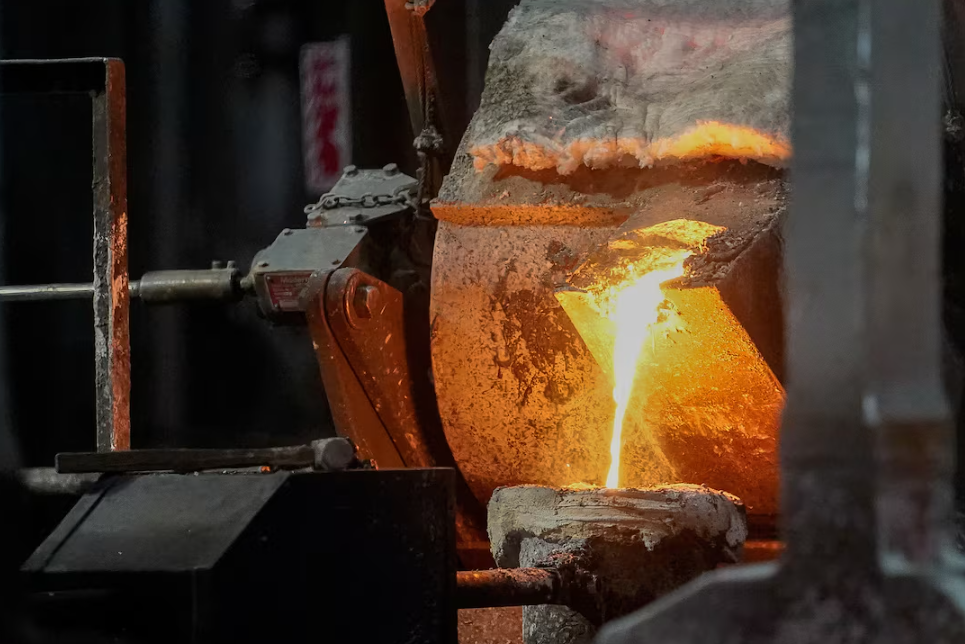
Trump’s Oklahoma aluminum smelter project has reached a critical stage as a proposed $4 billion facility in Inola faces a local referendum, continuing litigation and questions over its permitting process. The project, being developed by Emirates Global Aluminium (EGA) and Century Aluminum, is designed to produce 750,000 metric tons of primary aluminum annually and become the first new U.S. primary aluminum smelter since 1980.
The project has attracted federal and state attention because aluminum is an important material for transportation, aerospace, electrical infrastructure and defense. At the same time, opposition has grown in Inola, where the city council has extended a moratorium on smelter permits and scheduled a referendum on whether the facility should proceed. Reuters reported that the moratorium now runs through April 7, 2027. 0
The dispute illustrates the challenge of building large industrial projects when national supply-chain objectives collide with local permitting authority, environmental concerns and community opposition.
What Is the Oklahoma Aluminum Smelter Project?
The planned facility, known as Oklahoma Primary Aluminum, is a joint project between Abu Dhabi-based Emirates Global Aluminium and Chicago-based Century Aluminum. Under their joint development agreement, EGA holds a 60% interest and Century Aluminum holds 40%.
The proposed smelter is expected to produce approximately 750,000 metric tons of primary aluminum annually. Official project information says the facility is intended to more than double current U.S. primary aluminum production and create approximately 1,000 permanent jobs, alongside thousands of construction jobs. 1
The project is planned for the Tulsa Port of Inola industrial park in Rogers County, Oklahoma. The location provides access to the McClellan-Kerr Arkansas River Navigation System and the wider Mississippi River transportation network, which the developers say can support movement of industrial materials and finished aluminum.
Why the Project Matters to U.S. Aluminum Supply
Primary aluminum is produced by processing alumina through an energy-intensive smelting process. The metal is then used by manufacturers across a wide range of industries.
The United States relies substantially on imported primary aluminum. That dependence has made domestic smelting capacity an important part of discussions about industrial resilience and critical-material supply chains.
The Oklahoma project has therefore been presented by its supporters as more than a conventional industrial investment. Its proposed scale would significantly increase domestic primary aluminum production and could create opportunities for additional manufacturing businesses to locate near the facility.
The Oklahoma Department of Commerce has said the project could help create an aluminum-focused industrial hub, while a local downstream company has already explored the possibility of developing an aluminum fabrication facility near the proposed smelter. 2
Why Has the Oklahoma Smelter Become a Political Issue?
The project became a major issue in Oklahoma’s Republican gubernatorial primary. Attorney General Gentner Drummond opposed the smelter and filed a lawsuit seeking to block the development, citing concerns surrounding the project.
Former state Senator Mike Mazzei, another Republican candidate, had previously opposed the project but changed his position after President Donald Trump endorsed him, according to Reuters. Mazzei subsequently won the August 25 runoff by less than one percentage point, with the difference amounting to roughly 2,000 votes. 3
The political dispute matters because the governor’s office and state agencies have roles in Oklahoma’s broader economic-development and regulatory environment, while local authorities retain important powers over land-use and municipal decisions.
President Trump has publicly supported the project as part of his broader effort to expand domestic industrial and critical-mineral production. Reuters reported that Trump also indicated that other locations could potentially host the facility if Oklahoma does not proceed with it. 4
Inola City Council Extends Smelter Moratorium
The biggest immediate obstacle is now at the local level.
Inola officials previously supported the project but imposed a moratorium on smelter permits in June following growing opposition. The original moratorium was due to expire in September, but the city council voted unanimously on September 14 to extend it through April 2027.
The council also scheduled a referendum for April 7, 2027, giving local voters a direct role in determining whether the project should move forward under the city’s jurisdiction. Reuters reported that the proposed smelter is located within the Port of Inola industrial park, which is inside the city’s limits. 5
| Issue | Current Position |
|---|---|
| Project location | Port of Inola industrial park, Oklahoma |
| Developers | Emirates Global Aluminium and Century Aluminum |
| Planned investment | About $4 billion |
| Planned annual capacity | 750,000 metric tons of aluminum |
| Project ownership | EGA 60%, Century Aluminum 40% |
| Local moratorium | Extended through April 7, 2027 |
| Local referendum | Scheduled for April 7, 2027 |
| State legal challenge | Proceeding in Rogers County court |
Can the Project Be Moved Outside Inola?
Another important question concerns the project’s location within the city’s jurisdiction.
Oklahoma Governor Kevin Stitt has suggested that the industrial park could potentially be moved outside Inola’s city limits if the city continues opposing the smelter. Such a move could change which local government has authority over aspects of the project.
However, Reuters reported that it was not immediately clear how the governor could accomplish such a move because state law requires local approval for the change. The issue could therefore become another legal and administrative dispute rather than providing an immediate solution. 6
The question is significant because relocating the industrial park’s jurisdiction could alter the project’s permitting pathway. It could also intensify the broader debate over the balance between state economic-development objectives and municipal decision-making authority.
What Is the Status of the Lawsuit Against the Smelter?
Oklahoma Attorney General Gentner Drummond filed a legal action in June seeking to block the proposed smelter. The companies attempted to move the case from state court to federal court, arguing in part that aluminum’s importance to national security supported federal jurisdiction.
The U.S. Department of Justice supported the project in the dispute and argued against the lawsuit’s removal of environmental regulatory processes established by Congress, according to Reuters.
A federal judge subsequently rejected the attempt to keep the case in federal court and remanded the matter to Rogers County. The September 3 federal court order specifically stated that it was expressing no view on the merits of the underlying state-law claims or the federal preemption defense. 7
That means the jurisdictional question has been resolved for now, but the underlying dispute has not been decided on its merits.
Why the Legal Case Matters
The litigation could influence the project’s timetable because major industrial facilities require multiple approvals before construction and operations can begin.
Oklahoma’s Department of Environmental Quality has already received an air-quality construction permit application for the proposed facility and began reviewing it under the state’s environmental permitting framework. The agency has emphasized that additional permits may also be required. 8
Consequently, the project faces several separate decision points rather than a single approval. Local government decisions, environmental permits, court proceedings, infrastructure arrangements and financing all have the potential to influence the development schedule.
What Are EGA and Century Aluminum Saying?
The project developers have criticized the extension of the local moratorium and the decision to hold a referendum before the legal process has concluded.
EGA and Century Aluminum have argued that proceeding with a local vote while the court process continues could create additional financial and legal uncertainty. They have also emphasized their intention to address environmental concerns and strengthen community engagement.
In a regulatory filing this month, the companies said they planned to reduce fluoride emissions from the proposed smelter by 37%. They also said they intended to publish an economic impact study within weeks, according to Reuters. 9
Those measures are important because environmental performance is one of the central questions surrounding large-scale aluminum smelting. Primary aluminum production consumes substantial amounts of electricity and requires careful management of industrial emissions.
Why Aluminum Is Strategically Important
Aluminum combines relatively low weight with strength and corrosion resistance, making it useful across transportation, construction, aerospace, packaging, electrical systems and defense-related manufacturing.
For the United States, domestic primary production can also reduce dependence on overseas suppliers. The proposed Oklahoma facility has therefore been positioned as part of a wider effort to strengthen domestic industrial capacity.
The U.S. Department of Energy has described the project as an effort to expand domestic aluminum production and reduce reliance on imports. 10
However, increasing domestic production requires more than building a smelter. Aluminum smelting is highly dependent on reliable electricity, infrastructure, raw-material supply and long-term operating economics.
Power Supply Is a Major Project Requirement
Electricity is one of the most important inputs for a primary aluminum smelter. The developers have been working on a long-term power supply arrangement as part of the project’s development.
Century Aluminum has previously stated that construction would depend on detailed engineering and negotiations concerning a competitive long-term power supply agreement. The companies have targeted construction later in 2026 in earlier project announcements, although subsequent developments could affect the timetable. 11
This makes the electricity agreement an important milestone for investors and policymakers watching the project.
Potential Economic Impact on Oklahoma
If constructed, the smelter could create a significant industrial investment in northeastern Oklahoma. The developers expect approximately 1,000 permanent direct jobs and around 4,000 construction jobs.
The potential impact could extend beyond direct employment. New aluminum production can attract downstream manufacturers that use aluminum as an input, including fabricators and component producers.
The Oklahoma Department of Commerce has already highlighted the possibility of developing a broader aluminum manufacturing hub around the project. 12
At the same time, projected economic benefits need to be considered alongside infrastructure requirements, environmental compliance, public costs and the concerns raised by residents. The economic impact study promised by the developers could provide additional information for that discussion.
What Happens Next for the Oklahoma Smelter?
The project’s future now depends on several parallel processes.
- Local referendum: Inola voters are expected to vote on the project on April 7, 2027.
- Legal proceedings: The underlying lawsuit will continue in Rogers County following the federal court’s remand decision.
- Environmental permitting: Oklahoma regulators will continue reviewing the project’s permit applications.
- Project engineering: EGA and Century must continue detailed engineering and development work.
- Power arrangements: A competitive long-term electricity supply remains an important requirement for a major smelting facility.
- Community engagement: The developers face the task of addressing local concerns over environmental and economic impacts.
- Economic study: The companies have said they plan to release an economic impact assessment.
Key Milestones to Watch
| Milestone | Why It Matters |
|---|---|
| State-court litigation | Could affect the legal pathway for development |
| Environmental permits | Required for construction and operation |
| Local referendum | Scheduled to determine the local position on the smelter |
| Power supply agreement | Essential for the energy-intensive smelting process |
| Economic impact study | Could provide additional information about projected regional benefits |
| Emission-reduction plans | Important to the project’s environmental case |
| Construction decision | Would determine whether the project moves from development toward physical construction |
What Could Determine the Project’s Final Outcome?
The Oklahoma aluminum smelter is no longer simply a question of whether the developers want to build the facility. Its progress depends on the interaction of local government authority, state law, environmental permitting, litigation, infrastructure planning and community opinion.
Federal officials and project supporters emphasize the importance of increasing domestic aluminum production, while opponents have raised concerns about the project’s local and environmental implications. Those competing considerations are now being tested through legal and administrative processes.
The companies’ decision to propose a reduction in fluoride emissions and release an economic impact study indicates that environmental performance and local economic benefits are likely to remain central to the debate.
Conclusion: Oklahoma Smelter Faces a Longer Road to Construction
Trump’s Oklahoma aluminum smelter project has cleared several important development stages but now faces significant local and legal hurdles. The $4 billion EGA-Century Aluminum project would produce about 750,000 metric tons of aluminum annually and could substantially increase U.S. primary aluminum capacity.
Yet the project’s immediate future remains uncertain. Inola’s city council has extended its permit moratorium through April 2027 and scheduled a referendum, while the legal challenge continues in state court after a federal judge remanded the case to Rogers County. 13
For the developers, the next phase will involve navigating the legal process, environmental permitting, power-supply requirements and community opposition. For Oklahoma and federal policymakers, the project represents a broader test of how the United States can expand critical-material production while addressing local regulatory and environmental concerns.
The next major milestones will be the continuing court proceedings, regulatory decisions and the scheduled April 2027 referendum. Until those issues are resolved, construction timing and the ultimate future of the Inola smelter remain unsettled.
For breaking news and live news updates, like us on Facebook or follow us on Twitter and Instagram. Read more on Latest Business on thefoxdaily.com.

COMMENTS 0