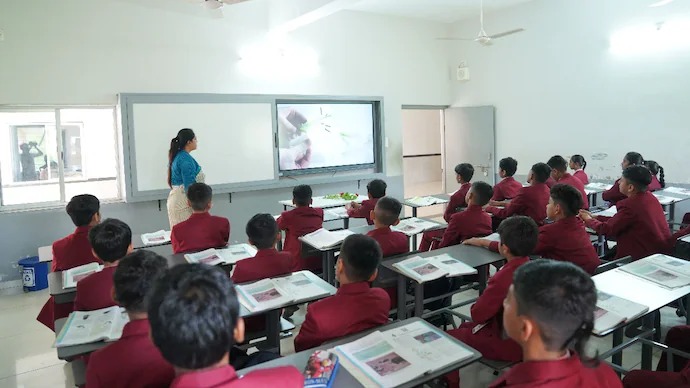
The Bihar Education Department has made formal attire mandatory for Teachers and non-teaching employees working in Government Schools across the state, prohibiting casual clothing such as jeans and T-shirts during working hours. The directive is aimed at maintaining discipline and decorum on school premises, with district education authorities instructed to ensure strict implementation.
The order was issued by Additional Chief Secretary (ACS) of the Education Department, C K Anil, shortly after he assumed charge. Instructions were communicated to District Education Officers (DEOs) through official letters issued on Friday, October 30. The directions apply to government school staff and are expected to be implemented across Bihar.
Jeans, T-shirts and casual clothing prohibited during school hours
Under the new instructions, teachers and non-teaching employees must wear formal attire while attending their duties. Jeans, T-shirts and other forms of casual clothing will not be permitted on school premises during working hours.
The department has asked district-level officials to communicate the instructions to schools and monitor compliance. DEOs have been made responsible for ensuring that teachers and other employees follow the prescribed dress code. School authorities are also expected to ensure that staff members adhere to the rules while on duty.
The directive places particular emphasis on maintaining a professional environment in educational institutions. Teachers are expected to set an example through their conduct and appearance, while school staff members are required to follow the same standards of workplace discipline.
Department says earlier dress-code instructions were not being followed
The latest directive is not the first time Bihar’s Education Department has addressed the issue of informal clothing among its employees. The department’s communication reportedly notes that instructions on formal attire had already been issued, but complaints and reports indicated that some teachers and non-teaching staff continued to wear jeans and T-shirts to school.
The renewed order is intended to reinforce those earlier instructions and make compliance a priority for district authorities. The department has asked all DEOs to ensure that the directions reach the institutions under their jurisdiction and are followed during teaching and office hours. :chatgpt-content-reference{index=”0″}
The distinction is important because the October 30 communication appears to be a renewed enforcement measure rather than the introduction of an entirely new policy on workplace clothing. Its immediate focus is on ensuring that existing expectations about formal attire are followed consistently across government schools.
DJ and disco activities also prohibited on school campuses
The instructions extend beyond the clothing worn by teachers and other employees. The Education Department has also expressed concern about reports of DJ, disco and other activities considered inappropriate for school premises.
According to the reported contents of the directive, such activities will not be permitted on school campuses because the department considers them inconsistent with the academic environment expected in educational institutions. Officials have been told to prevent programmes that could undermine the discipline and decorum of schools.
The department’s position is that school premises should remain focused on education and activities that contribute to students’ learning and development. The restrictions are intended to distinguish organised educational and cultural programmes from entertainment activities that the department considers unsuitable for the school environment.
Cultural programmes allowed on occasions listed in academic calendar
The directive does not impose a complete ban on music and dance in government schools. Cultural programmes can still be organised on special occasions specified in the education calendar, provided they are conducted in a disciplined and dignified manner.
This means schools can continue to hold scheduled cultural activities, but such events must follow the conditions laid down by the department. The instructions place particular emphasis on the nature and conduct of programmes, rather than prohibiting every form of music or cultural participation.
Schools will therefore need to ensure that activities organised for occasions recognised in the academic calendar remain appropriate for an educational institution. School authorities are expected to distinguish these programmes from DJ, disco and other activities that have been specifically restricted. :chatgpt-content-reference{index=”1″}
District Education Officers given responsibility for implementation
District Education Officers will play a central role in putting the instructions into practice. The Education Department has communicated the order to DEOs across Bihar and asked them to ensure that schools under their supervision follow the requirements.
Implementation will involve communicating the rules to school heads, teachers and non-teaching employees. District officials will also need to monitor whether staff members attend school in formal attire and whether activities organised on school premises comply with the department’s instructions.
The directive calls for strict compliance, although the reported details do not specify a uniform penalty or a separate disciplinary procedure for every possible violation. Any action taken against employees would therefore depend on the applicable departmental rules and instructions issued by the competent authorities.
School heads and other institutional authorities will also have a practical responsibility in ensuring that the directions are followed. They are responsible for maintaining an orderly school environment and coordinating with district officials when questions about implementation arise.
What the new Bihar school instructions mean for teachers
For teachers and non-teaching employees in government schools, the immediate requirement is to attend work in formal clothing during teaching and office hours. Jeans and T-shirts are specifically identified as examples of informal attire that will not be allowed on school premises while staff are performing their duties.
The reported order does not provide a detailed list of approved clothing combinations or prescribe a particular uniform for all employees. Instead, it uses the broader requirement of formal attire. Staff members are therefore expected to follow the department’s standard of formal and dignified workplace clothing.
The instructions also make clear that school employees are expected to maintain appropriate conduct on campus. The department has linked staff behaviour and the organisation of activities to its objective of preserving a disciplined and dignified educational environment.
For school administrators, the order creates responsibilities in two areas: ensuring that employees follow the formal dress requirement and preventing activities that fall outside the permitted cultural and academic programme framework.
Focus on discipline in Bihar’s government schools
The renewed instructions form part of the Education Department’s administrative focus on discipline and institutional standards in government schools. The department has emphasised that schools should maintain an atmosphere suitable for teaching and learning, with staff members expected to follow professional standards while on duty.
Teachers have a role that extends beyond classroom instruction. They interact with students throughout the school day and contribute to the overall environment of an institution. The department’s directive reflects its position that professional conduct, including workplace attire and behaviour, should be consistent with the responsibilities of school employees.
At the same time, the instructions leave room for cultural activities when they are connected to occasions included in the academic calendar. This distinction allows schools to organise scheduled programmes while placing restrictions on events that the department considers inappropriate.
Earlier restrictions on casual clothing in Bihar’s government offices
Bihar has previously issued instructions restricting casual clothing in government workplaces. In June 2023, the state’s Education Department directed its own officers and employees to attend office in formal dress and prohibited casual outfits, particularly jeans and T-shirts. The stated objective at that time was to maintain office decorum and workplace culture. :chatgpt-content-reference{index=”2″}
The earlier instruction concerned employees working in the Education Department’s offices. The latest reported communication specifically addresses teachers and non-teaching staff in government schools and educational institutions, extending the focus to the workplace environment within schools.
Another reported instruction issued in July 2026 had also addressed formal attire among teachers and non-teaching employees in government schools. The October 30 communication therefore comes amid repeated efforts to reinforce expectations around clothing and conduct in educational institutions. :chatgpt-content-reference{index=”3″}
Statewide compliance will depend on district-level monitoring
The practical impact of the directive will depend on how effectively it is communicated and implemented across Bihar’s government school network. District Education Officers have been asked to ensure compliance, while school authorities will need to communicate the requirements to staff and monitor conduct on their campuses.
The order covers both teaching and non-teaching employees during teaching and office hours. It also addresses activities organised within school premises, making the instructions relevant to school administration beyond the question of staff clothing.
For now, the department’s message is that formal attire, disciplined behaviour and appropriate school programmes are expected across government educational institutions. Teachers and other employees will have to follow the dress-code instructions, while cultural events will remain permissible on specified occasions under the conditions set out in the education calendar.
The October 30 directive, issued by Additional Chief Secretary C K Anil, places responsibility on district authorities to translate these instructions into practice. Its effectiveness will ultimately depend on consistent implementation across schools and adherence by the employees covered by the order.
For breaking news and live news updates, like us on Facebook or follow us on Twitter and Instagram. Read more on Latest Education on thefoxdaily.com.





COMMENTS 0