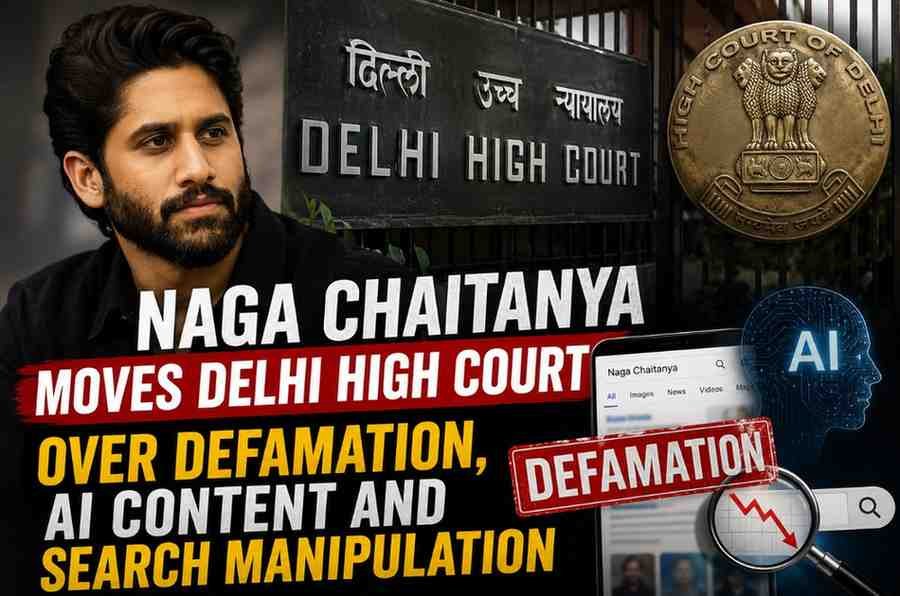
The Naga Chaitanya Delhi High Court case has quickly become one of the most talked-about intersections of celebrity, technology, and law in India. The actor’s decision to approach the court over online content suggesting he cheated on Samantha Ruth Prabhu is not just about personal reputation it is about a growing digital problem that affects public figures and ordinary users alike.
At its core, the issue raises urgent questions: Who controls your digital identity? What happens when misinformation spreads faster than truth? And how far can the law go in protecting reputation in the age of AI?
Introduction: What Happened and Why It Matters
Who: Actor Naga Chaitanya
What: Filed a legal plea in the Delhi High Court
When: Amid rising circulation of misleading online content
Where: Delhi High Court, India
Why: To stop defamatory content and misuse of his identity
How: Through a personality rights and defamation claim
The controversy revolves around online material ranging from manipulated videos to misleading headlines that allegedly links Chaitanya to unverified claims about his personal life, particularly his past relationship with Samantha Ruth Prabhu. Compounding the issue is the use of explicit search terms designed to attract clicks and amplify false narratives.
This is no longer just celebrity gossip. It is a case study in how digital ecosystems can distort reality.
Background: The Rise of Digital Defamation in the AI Era
To understand the significance of this case, one must look beyond the individuals involved. Over the past decade, the internet has evolved from a platform of information to a battlefield of attention. Algorithms reward engagement, not accuracy.
Today, three major forces drive online misinformation:
- Clickbait economics Sensational headlines generate traffic
- AI-generated content Deepfakes and synthetic media blur truth
- Search manipulation Keywords engineered to exploit curiosity
In this environment, even a baseless claim can gain traction if it is repeated often enough.
What Are “Explicit Search Terms” and Why Are They Dangerous?
One of the most critical aspects of the case is the mention of explicit search terms. These are not just random keywords they are strategically designed phrases used to manipulate search engine results.
Here’s how they work:
- They combine a public figure’s name with sensational or inappropriate phrases
- They exploit trending topics or controversies
- They increase visibility through search engine algorithms
The result? Users searching for legitimate information are redirected toward misleading or harmful content.
| Factor | Legitimate Content | Manipulated Content |
|---|---|---|
| Intent | Inform or educate | Attract clicks and traffic |
| Accuracy | Fact checked | Often misleading or false |
| SEO Strategy | Keyword relevance | Sensational keyword stuffing |
| Impact | Builds trust | Damages reputation |
Key Developments in the Case
1. Legal Action for Personality Rights
The case is rooted in the concept of personality rights the idea that individuals have control over how their name, image, and identity are used.
2. Targeting AI and Deepfake Content
Reports suggest that part of the complaint involves AI generated visuals and manipulated media that falsely represent reality.
3. Search Engine Manipulation Concerns
The use of explicit keywords is seen as a deliberate attempt to push defamatory narratives into mainstream visibility.
4. Broader Legal Implications
This case could influence how Indian courts handle digital defamation, deepfakes, and algorithm driven harm.
Why This Case Matters Beyond Celebrity News
It is tempting to view this as just another Bollywood controversy but that would miss the bigger picture.
This case highlights three major shifts:
1. Reputation Is Now Algorithm-Driven
Your online identity is no longer defined by you alone. It is shaped by search engines, social media trends, and viral content.
2. Truth Competes With Virality
In many cases, false information spreads faster than verified facts. Once a narrative gains momentum, correcting it becomes difficult.
3. Legal Systems Are Catching Up
Courts are increasingly being asked to address issues that did not exist a decade ago like deepfakes and AI misuse.
Expert Insight: The Psychology Behind Viral Rumors
Why do such stories gain traction so easily?
Psychologists point to a concept called “negativity bias” people are naturally drawn to controversial or scandalous information. Combine that with celebrity culture, and the effect multiplies.
In simple terms: the more shocking the claim, the faster it spreads.
Comparison: Traditional Media vs Digital Misinformation
To understand the scale of the problem, consider this comparison:
| Aspect | Traditional Media Era | Digital Era |
|---|---|---|
| Speed of News | Slow and controlled | Instant and viral |
| Verification | Mandatory | Often skipped |
| Accountability | High | Fragmented |
| Reach | Limited | Global |
The shift from editorial control to algorithmic amplification is at the heart of today’s misinformation crisis.
Real-World Impact: Not Just a Celebrity Problem
While this case involves a public figure, the implications are far reaching.
- Professionals can lose job opportunities due to false online information
- Students may face harassment بسبب viral rumors
- Businesses can suffer reputational damage from misleading content
In many ways, celebrities are simply the most visible victims of a much larger issue.
The Legal Landscape in India: Evolving but Challenging
India’s legal framework does provide remedies for defamation and misuse of identity. However, challenges remain:
- Jurisdiction issues with global platforms
- Speed of content removal
- Difficulty in tracking anonymous creators
This is why cases like this are important they push the system to evolve.
A Unique Angle: The “Search Engine Reputation Economy”
One overlooked aspect of this story is the emergence of what experts call the “search engine reputation economy.”
In this system:
- Visibility equals credibility
- Ranking equals perceived truth
- Clicks equal influence
This means that even false content can appear trustworthy if it ranks high enough on search results.
This is not just a tech issue it is a societal one.
Prediction: What Happens Next?
This case could set important precedents:
- Stricter accountability for platforms
- Faster takedown mechanisms
- Clearer laws on AI-generated content
We may also see the rise of digital reputation management laws in India.
What Can Individuals Learn From This?
You don’t need to be a celebrity to protect your online identity. Here are practical steps:
- Verify before believing or sharing
- Report misleading content
- Be mindful of search behavior
- Build a positive digital footprint
Think of your online presence as your digital CV it deserves protection.
Conclusion: A Defining Moment for Digital Accountability
The Naga Chaitanya Delhi High Court case is more than a legal dispute it is a reflection of the times we live in. In an era where information travels at the speed of a click, the line between truth and fiction is increasingly blurred.
This case underscores a critical reality: reputation is no longer just personal it is algorithmic.
As courts, platforms, and users navigate this new landscape, one thing is clear: the future of digital spaces will depend on how seriously we take the responsibility of information.
And perhaps the biggest takeaway is this in a world full of noise, truth needs protection more than ever.
For breaking news and live news updates, like us on Facebook or follow us on Twitter and Instagram. Read more on Latest Entertainment on thefoxdaily.com.

COMMENTS 0