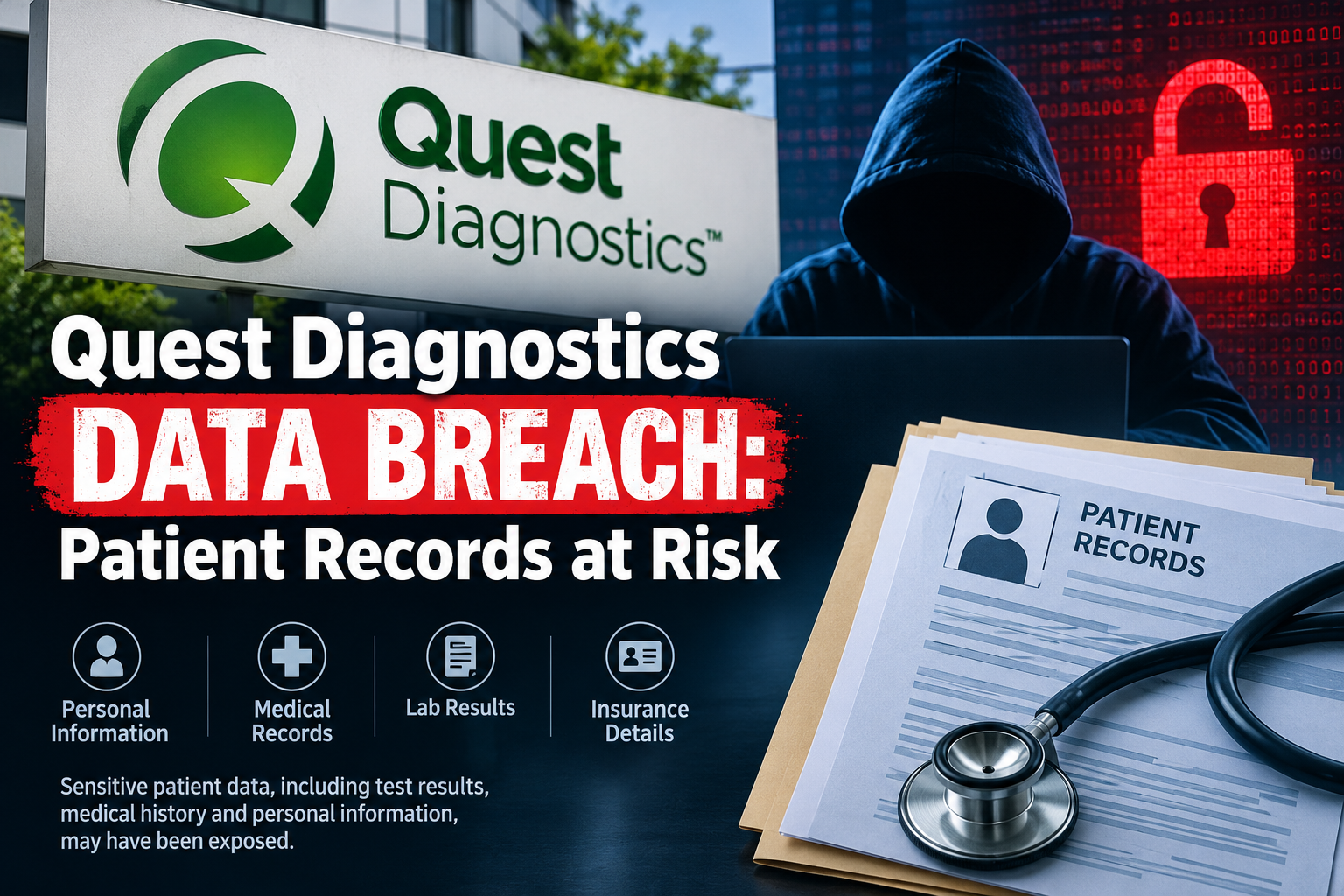
Quest Diagnostics, one of the major medical laboratory service providers in the United States, has reported a Cybersecurity breach involving a system used by certain clients to order laboratory tests and access results. The company said it discovered unauthorised access to its Quanum Lab Services Manager platform on Wednesday and notified federal law enforcement, according to the supplied report.
The incident raises fresh concerns about the security of digital healthcare systems, where patient information moves between laboratories, healthcare providers and other authorised users. Quest has indicated that certain patient records may have been accessed, but the full scope of the incident remains unclear. The company is investigating with assistance from external cybersecurity specialists.
For patients, the immediate concern is whether their information was involved and what steps may be necessary if it was exposed. For healthcare organisations, the incident highlights the importance of securing the digital platforms that support routine clinical operations, including test ordering and the delivery of laboratory results.
What Happened in the Quest Diagnostics Cyber Breach?
According to the company’s regulatory filing described in the report, Quest Diagnostics identified unauthorised access to Quanum Lab Services Manager and began investigating the incident. The company also notified federal law enforcement and brought in external cybersecurity experts to help assess the breach and support its response.
Quanum Lab Services Manager is a platform used by certain clients to place laboratory test orders and receive or look up results. Because the system supports the exchange of medical information, unauthorised access could have implications for the confidentiality of patient records.
However, unauthorised access to a platform does not, by itself, establish that every record available through it was viewed, copied or misused. The precise information accessible to the intruder, the duration of the access and the number of affected individuals must be established through the investigation.
Quest’s statement that certain patient records may have been accessed indicates a potential exposure, but it does not establish the final number of affected patients or confirm that every potentially accessible record was compromised.
What remains unknown?
At the stage described in the report, several important questions remained unanswered:
- Number of affected patients: Quest had not established how many individuals may have been affected.
- Types of information involved: The company had not confirmed which specific patient records or data fields were accessed.
- Extent of unauthorised access: The full scope of the incident was still under investigation.
- Potential misuse: The available information did not establish whether the records had been used for identity theft, fraud or another purpose.
- Patient notification: The supplied report did not establish whether individual notifications had begun or what additional protective measures might be offered.
These distinctions matter because a cybersecurity incident can range from unauthorised entry into a system to the confirmed extraction and misuse of sensitive information. The evidence gathered during an investigation determines which description accurately reflects what happened.
Quest Diagnostics Has Faced Major Data Security Incidents Before
The latest breach is not the first time Quest Diagnostics has had to address a patient information security incident. Previous events illustrate why the distinction between a company’s own systems and those of an outside service provider is important when assessing healthcare data risks.
The 2016 incident: Information accessed through an online application
In December 2016, Quest Diagnostics disclosed an unauthorised intrusion involving its MyQuest by Care360 internet application. The company said information belonging to approximately 34,000 individuals had been obtained.
The exposed information included names, dates of birth and laboratory results, as well as telephone numbers in some cases. Quest said the affected information did not include Social Security numbers, credit card details, insurance information or other financial information.
The company reported that it had addressed the vulnerability, notified affected individuals and engaged a cybersecurity firm to assist with the investigation. The incident demonstrated how an online application used to access healthcare information can become a potential entry point for unauthorised access.
The 2019 incident: A third-party billing provider
A separate incident in 2019 affected information associated with approximately 11.9 million Quest Diagnostics patients through American Medical Collection Agency, a billing collections service provider that worked with a billing services intermediary.
In that case, the unauthorised access occurred in the collection agency’s system rather than Quest Diagnostics’ own databases. Information potentially involved included financial details, medical information and other personal information. Quest’s regulatory disclosures stated that laboratory test results were not included in the affected information described in the incident.
This distinction is significant. Healthcare organisations routinely rely on external companies for billing, scheduling, information technology and other services. A security failure at one of these providers can expose patient information even when the healthcare organisation’s primary systems are not the source of the breach.
The current Quanum incident differs from the 2019 event because the latest report identifies unauthorised access to a Quest Diagnostics platform. Investigators will need to establish the method of entry, the records involved and whether any additional systems were affected before the incident can be fully assessed.
The earlier incidents do not establish that the same vulnerability or attack method was involved in the latest breach. Each incident requires its own technical investigation.
How the Latest Breach Could Affect Patients
The practical consequences for patients will depend on what information was accessed and whether it was copied, retained or used without permission. Until Quest establishes the scope of the incident, it is not possible to determine the specific risks for individual patients.
Medical information can be particularly sensitive because it may reveal details about a person’s health, diagnostic investigations or treatment. If identifying information is exposed alongside laboratory records, it could potentially be used in targeted scams or other forms of misuse.
For example, someone possessing genuine details about a person’s medical testing might attempt to impersonate a healthcare provider, send a fraudulent message about an outstanding bill or persuade the recipient to disclose additional personal information. This is a possible risk associated with exposed medical information, not evidence that such activity has occurred in the Quest incident.
The type of information involved will determine which precautions are appropriate. A breach involving names and laboratory information presents a different set of concerns from one involving government identification numbers, financial account details or login credentials.
What patients can do while the investigation continues
Patients who use Quest Diagnostics or receive care through providers that use its services can take reasonable precautions without assuming that their information has definitely been compromised.
- Watch for official notifications. If the company determines that an individual was affected, any notice should explain the information involved and the steps the recipient can take.
- Be cautious with unexpected messages. Treat unsolicited emails, text messages or telephone calls claiming to concern laboratory results, medical bills or account security with care.
- Verify requests independently. If a message requests personal information, payment or login details, contact the healthcare provider through a known, trusted channel rather than relying on contact information supplied in the message.
- Use strong, unique passwords. Patients who use online healthcare accounts should avoid reusing passwords across services and enable multifactor authentication where available.
- Review relevant financial activity. If a notification confirms that financial information or government identification details were exposed, follow the specific protective recommendations provided by the affected organisation and relevant authorities.
- Avoid spreading unverified claims. Do not assume that a particular test result, diagnosis or personal identifier was exposed unless reliable information establishes that it was involved.
These measures are precautionary. They do not imply that every patient who has used Quest Diagnostics is affected or that the breach has resulted in fraud.
Why Healthcare Cybersecurity Incidents Can Have Wider Consequences
Medical laboratories occupy an important position in the healthcare system. Their work supports diagnosis, treatment decisions and ongoing monitoring of patients with a wide range of conditions. Digital platforms allow laboratories and authorised healthcare professionals to exchange information more efficiently, but they also create systems that must be protected against unauthorised access.
The risk extends beyond the direct theft of personal information. If a system used for ordering tests or retrieving results becomes unavailable, healthcare providers may need alternative procedures to continue their work. Depending on the system and the duration of any disruption, this could create additional administrative work or delay access to information.
However, a data breach and a service outage are not the same thing. Unauthorised access does not automatically mean laboratory testing has stopped, medical results have been altered or patient care has been disrupted.
Reporting on the latest incident indicated that the breach had not materially disrupted Quest Diagnostics’ overall business operations. The company also took precautionary steps involving access to the affected platform. The extent of any service limitations and the time required to restore normal functionality are separate questions from whether patient records were accessed.
For patients and healthcare providers, the distinction is important. The confidentiality of medical information, the integrity of laboratory results and the availability of testing services are related but separate aspects of healthcare security.
The PHP Vulnerability Was Not Linked to the Quest Breach
The Quest incident was reported amid wider cybersecurity concerns involving vulnerabilities in PHP, a programming language used to build and operate many websites and online applications.
Security vulnerabilities in widely used software can create substantial challenges because the same technology may be deployed across many organisations. When a serious flaw becomes known, affected organisations may need to assess their systems, apply security updates and check whether any unauthorised activity occurred.
Such work can be urgent, particularly when organisations rely on exposed systems for essential services. Applying a software update, however, is only one part of a broader security response. Organisations may also need to review access controls, investigate suspicious activity and verify that affected services remain secure.
Despite the timing of the two developments, Quest Diagnostics confirmed that its cyber breach was not related to the PHP issue, according to the report.
The distinction illustrates a wider lesson about cybersecurity reporting: incidents occurring during the same period are not necessarily connected. Establishing a relationship between two events requires technical evidence, such as an identified vulnerability, a confirmed attack path or other findings from an investigation.
What Happens After a Healthcare Data Breach?
Once a healthcare organisation identifies possible unauthorised access to patient information, the response generally involves determining how the intrusion occurred, identifying the systems and records involved, containing the incident and assessing the risk to affected individuals.
Quest Diagnostics has said it is working with external cybersecurity specialists and has notified federal law enforcement. These steps form part of the investigation, but they do not by themselves establish that the breach has been fully contained or that every potentially affected record has been identified.
The investigation will need to establish the extent of the unauthorised access, what information was involved and whether further protective measures are necessary. Findings from that process will help determine what information can be shared with affected patients and whether additional notifications are required.
How US healthcare privacy rules apply
In the United States, the Health Insurance Portability and Accountability Act, commonly known as HIPAA, establishes requirements for protecting certain health information and notifying affected individuals about qualifying breaches of unsecured protected health information.
The HIPAA Breach Notification Rule generally requires covered entities to notify affected individuals following a reportable breach without unreasonable delay and no later than 60 calendar days after discovery. Separate reporting requirements apply to the US Department of Health and Human Services, with additional obligations depending on the circumstances and number of individuals affected.
The exact requirements depend on the nature of the incident, the organisations involved and the information at risk. The discovery of unauthorised access does not, on its own, establish every legal obligation that applies to a particular event.
For Quest Diagnostics, the continuing investigation is therefore important not only for understanding the technical details but also for determining the appropriate notification and response measures.
What the Incident Reveals About Protecting Digital Medical Records
The latest breach highlights a difficult challenge for healthcare organisations: providing convenient digital access to medical information while ensuring that only authorised users can reach sensitive records.
Platforms used to order laboratory tests and retrieve results must support legitimate clinical and administrative activity. At the same time, access should be restricted to appropriate users, and suspicious activity must be detected and investigated promptly.
Several security practices are particularly relevant to systems handling medical information.
- Access controls: Organisations need to ensure that users can access only the information and functions required for their roles.
- Multifactor authentication: Requiring an additional verification step can reduce the risk associated with compromised passwords, although it cannot prevent every form of attack.
- Continuous monitoring: Monitoring systems for unusual access patterns can help security teams identify potentially suspicious activity.
- Timely security updates: Software and infrastructure should be maintained to address known vulnerabilities.
- Incident response planning: Organisations need established procedures for containing unauthorised access, investigating potential exposure and communicating with affected parties.
- Third-party risk management: Healthcare companies must also consider the security practices of vendors and service providers that handle sensitive information on their behalf.
These measures reduce risk but cannot guarantee that a system will never be compromised. Effective cybersecurity depends on multiple safeguards working together, supported by regular reviews and a response process that can adapt when new threats emerge.
What to Watch for as the Quest Investigation Continues
The most important next development will be a clearer account of the information involved in the breach. Establishing the number of affected patients and the categories of records accessed will help determine the scale of the incident and the precautions that may be necessary.
Patients should also watch for information about notification procedures, any additional security measures and the availability of the affected digital service. If Quest identifies specific risks, its guidance should help affected individuals understand whether further action is appropriate.
Another key question is whether the investigation identifies weaknesses in the platform’s security controls or evidence of access to other systems. No conclusion about the cause or broader scope of the breach should be drawn before the company or investigators establish the relevant facts.
The incident also renews attention on how healthcare organisations protect information across interconnected systems. As laboratory services increasingly rely on digital platforms, security must account for the full process through which medical information is created, accessed, transmitted and stored.
The Bottom Line: Patient Data Security Remains a Critical Healthcare Issue
Quest Diagnostics’ disclosure of unauthorised access to its Quanum Lab Services Manager raises legitimate concerns about the privacy of patient records. The company has acknowledged that certain records may have been accessed, notified federal law enforcement and engaged external cybersecurity specialists to assist with its response.
However, the full scope of the incident remains uncertain. The number of affected individuals, the specific information involved and the potential consequences cannot be established from the available details alone.
The company’s previous data security incidents provide context, but they should not be taken as evidence that the latest breach followed the same pattern or exposed the same types of information.
For patients, the sensible approach is to remain alert to official communications, verify unexpected requests for personal information and follow any specific guidance issued if they are identified as affected. For healthcare organisations, the incident reinforces the need to protect digital platforms through layered security measures, careful access management and effective incident response procedures.
Ultimately, the significance of the Quest Diagnostics breach will depend on what the investigation establishes. Clear information about the records involved, the security failure and the measures taken in response will be essential to understanding the impact on patients and the steps needed to reduce the risk of similar incidents in the future.
For breaking news and live news updates, like us on Facebook or follow us on Twitter and Instagram. Read more on Latest Health on thefoxdaily.com.






COMMENTS 0