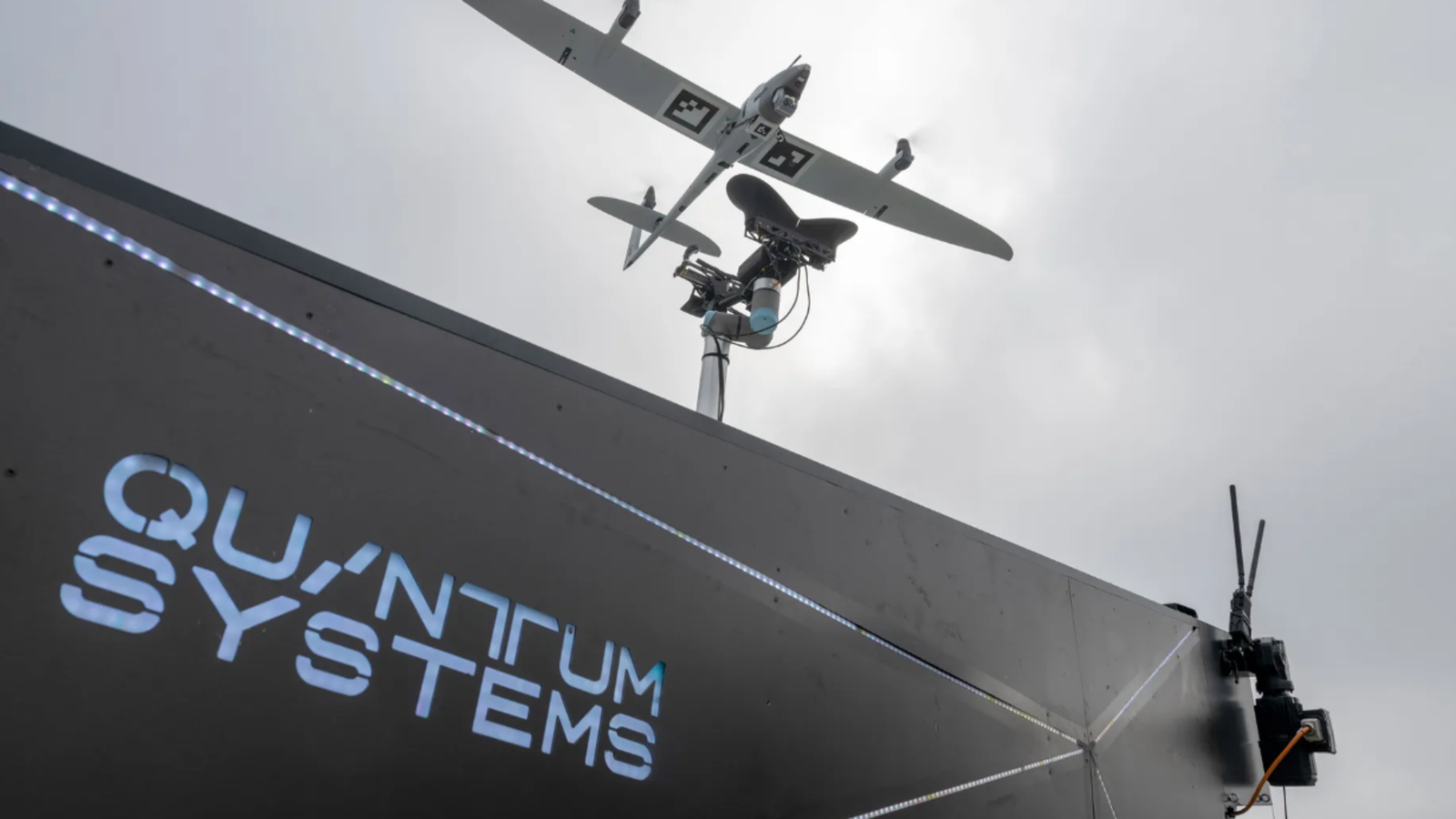
German drone manufacturer Quantum Systems has confirmed a cyberattack in which unidentified hackers attempted to introduce malicious software into its update distribution infrastructure. The attackers reportedly disguised the malware as a legitimate update for Qbase, the company’s software platform used for planning and managing drone operations. Although the intrusion reached several customer systems, security checks detected the suspicious package before it could reach the aircraft themselves.
The incident is particularly sensitive because Quantum Systems supplies reconnaissance drones to Ukraine and Germany. Its Vector aircraft are used by Ukrainian forces, while the German armed forces operate the same platform under the name Falke. An attack targeting software infrastructure connected to these systems raises concerns about the security of military technology supply chains, even when the aircraft themselves remain unaffected.
According to reports, the malicious package circulated through infrastructure belonging to several customers, including systems associated with Germany’s Bundeswehr. The German military temporarily suspended operations involving its Quantum Systems drone fleet while the incident was assessed. The manufacturer subsequently launched an investigation with Cybersecurity specialists and German government agencies.
Hackers Disguise Malicious Code as a Legitimate Qbase Update
The attackers reportedly gained access to Quantum Systems’ corporate network and inserted malicious code into an internal server used for distributing software updates. Rather than delivering an obviously suspicious application, they disguised the harmful package as a legitimate Qbase update.
This approach is particularly concerning because software updates are normally trusted by organisations. Customers routinely install updates to receive new features, correct technical problems and address security vulnerabilities. If attackers manage to compromise the infrastructure responsible for distributing those updates, they may be able to exploit the trust organisations place in the software supplier.
The technique is commonly associated with a software supply chain attack. Instead of attacking every customer individually, criminals or state-linked threat actors target a trusted software provider or distribution mechanism. If the compromise succeeds, malicious code can potentially reach multiple organisations through an update or another trusted delivery channel.
In the Quantum Systems incident, the compromised package reportedly travelled to several customer servers. However, security inspections identified the suspicious software before it could be installed on or affect the actual aircraft.
That distinction is central to understanding the incident. The attackers reportedly reached infrastructure connected to customers, but the available information does not establish that they gained control of operational drones or interfered with their flight systems.
Why an Attack on Drone Software Is a Serious Security Concern
Military reconnaissance drones depend on more than their physical aircraft. Their operational capabilities are supported by software used for mission planning, navigation, data handling and the management of information collected during flights.
Quantum Systems develops aircraft and software designed to support these activities. Its Qbase platform is associated with flight planning for reconnaissance aircraft, making the integrity of its software distribution infrastructure an important part of the wider security environment.
If malicious code were successfully delivered through a trusted update mechanism, the potential consequences could extend beyond an ordinary corporate network compromise. Depending on the software’s privileges and functionality, an attacker might attempt to interfere with mission planning, access sensitive information, alter software behaviour or establish a foothold in systems connected to military operations.
However, these are potential risks associated with compromised drone software, not confirmed outcomes of this particular attack. The supplied incident details indicate that security checks detected the malicious package before it reached the aircraft.
Why Attackers Target the Software Supply Chain
Directly attacking military aircraft can be technically difficult because defence systems often operate with specialised security controls and restricted access. Targeting a software supplier may offer a different route into the broader ecosystem.
Manufacturers maintain relationships with multiple customers, distribute software and provide technical services that support equipment throughout its operational life. Their systems can therefore become attractive targets for attackers seeking access to several organisations through a single intrusion.
A compromised update server is especially sensitive because customers may regard software received through an official distribution channel as trustworthy. If a malicious package passes through the normal update process without being detected, it could potentially receive access that an unknown external application would not.
This makes update verification, software integrity checks and independent security monitoring essential for organisations operating sensitive technology.
Ukraine-Bound Vector Drones and Germany’s Falke Programme in Focus
The incident has drawn attention because Quantum Systems supplies reconnaissance aircraft to military customers in both Ukraine and Germany.
The company’s Vector is a vertical takeoff and landing reconnaissance drone designed to support intelligence, surveillance and reconnaissance activities. Its ability to operate without requiring a conventional runway makes this type of aircraft useful in environments where launch and recovery infrastructure may be limited.
Ukraine uses Vector aircraft for military reconnaissance, while Germany’s Bundeswehr operates the platform under the name Falke. The systems support missions in which aerial observation and information gathering can provide military personnel with a better understanding of conditions on the ground.
Because the same manufacturer’s software and technical infrastructure support equipment supplied to different customers, a compromise involving its corporate network can create concerns across multiple organisations.
The reported presence of the malicious package on Bundeswehr servers therefore made the incident more than a routine corporate cybersecurity problem. It raised questions about whether systems connected to military equipment had received compromised software and whether the attack could have affected operational readiness.
Security inspections reportedly identified the package before it reached the aircraft, but the German military still took precautionary action while the investigation continued.
Bundeswehr Temporarily Suspends Operations Involving Its Drone Fleet
Following the discovery of the suspicious software, the Bundeswehr temporarily suspended operations involving its Quantum Systems drone fleet while authorities examined the incident.
The decision reflected the sensitivity of the systems involved. Even when there is no confirmed evidence that an aircraft has been compromised, military organisations may need to establish that software, connected infrastructure and operational equipment remain trustworthy before resuming normal activities.
A temporary suspension can provide time for technical teams to inspect affected servers, review software packages and determine whether malicious code has reached any operational components.
In a military environment, the consequences of overlooking a compromised update could be significant. A drone that appears to function normally may still present a security concern if the software supporting its operations has not been fully verified.
The reported suspension should not be interpreted as confirmation that the aircraft were infected or that the attackers successfully gained control of them. The available information indicates that security checks detected the malicious package before it reached the drones.
The investigation therefore needs to establish whether any customer systems were affected beyond receiving or storing the suspicious update, whether the package was executed anywhere and whether other parts of the company’s infrastructure were accessed.
German Security Agencies Join the Investigation
Quantum Systems said it discovered the cybersecurity incident in late October. The company subsequently identified an active intrusion involving its internal systems and brought in cybersecurity specialists to investigate the activity of the unidentified attackers.
The response involved the manufacturer’s internal security personnel, independent experts and several German government agencies. The investigation included participation from three important national security and cybersecurity institutions:
- Military Counterintelligence Service (MAD): Germany’s military counterintelligence organisation, responsible for security matters involving the armed forces.
- Federal Office for the Protection of the Constitution (BfV): Germany’s domestic intelligence agency, which monitors threats to the country’s constitutional order and security.
- Federal Office for Information Security (BSI): Germany’s national cybersecurity authority, responsible for information security and supporting protection against digital threats.
The involvement of these organisations reflects the potential national security implications of an attack against a defence technology supplier. The investigation is not limited to identifying how hackers entered the corporate network. Authorities also need to understand whether the intrusion affected customer infrastructure, whether military systems received malicious software and whether sensitive information was accessed.
Cooperation between the company, independent specialists and government agencies can help establish a clearer picture of the incident. It also allows investigators to examine the attack from different perspectives, including corporate network security, military counterintelligence and software integrity.
Quantum Systems Says the Aircraft Were Not Affected
Despite the seriousness of the intrusion, Quantum Systems has sought to reassure customers that the attack did not compromise the aircraft themselves. The company’s position is that security controls detected the malicious package before it reached the drones.
The distinction between an intrusion into corporate infrastructure and a compromise of operational equipment is important. A company may experience unauthorised access to internal servers without every connected customer device being affected.
In this case, the reported discovery of malicious software on customer servers demonstrates that the attackers managed to move beyond the manufacturer’s internal environment. However, the available information does not establish that the code was successfully executed on aircraft or that flight operations were manipulated.
Quantum Systems has characterised the incident as an attempted attack that was detected and contained before the aircraft were compromised. Its reassurance should nevertheless be considered alongside the continuing investigation, which is intended to establish the full extent of the intrusion.
For customers operating military equipment, confidence depends not only on whether aircraft remain operational but also on whether the software and infrastructure supporting them can be trusted. That requires careful verification of affected systems and update packages.
European Defence Companies Face Persistent Cyber Threats
Quantum Systems described the attack as part of a broader pattern of cyber threats targeting European defence companies, particularly organisations supplying equipment and services to Ukraine.
Since Russia’s full-scale invasion of Ukraine in 2022, European defence manufacturers and technology providers have become increasingly important to military support, equipment production and the development of new capabilities. Their networks can contain sensitive technical information, customer details, software and communications connected to defence programmes.
That makes defence suppliers potential targets for cyber espionage, intellectual property theft, disruption and attempts to compromise technology used by military customers.
In its statement, Quantum Systems said:
“The European defence industry has been facing persistent cyberattacks for years. Companies at the forefront of supporting Ukraine are being targeted precisely because our work is critically relevant to customers’ security.”
The statement highlights the company’s view that cyberattacks against defence suppliers are connected to the strategic importance of their work. However, investigators have not publicly identified the individuals or groups responsible for this particular intrusion.
Attributing cyberattacks can be difficult. Attackers may use compromised infrastructure, stolen credentials and techniques designed to conceal their identities. Investigators generally need to examine technical evidence, infrastructure connections, malware characteristics and other intelligence before drawing conclusions about who was responsible.
Until authorities release further findings, the identity and motivation of the attackers remain unconfirmed.
Quantum Systems Develops More Than Reconnaissance Drones
Quantum Systems is a German defence technology manufacturer that develops unmanned aircraft and software for military and other specialised applications. Its portfolio includes several aircraft designed for different operational requirements.
- Vector: A reconnaissance aircraft used by military customers, including Ukraine and Germany.
- Trinity: A vertical takeoff and landing aircraft developed for aerial data collection and surveying applications.
- Twister: Part of the company’s broader unmanned aircraft portfolio.
- Interceptor drones: Systems developed partly in cooperation with Ukrainian companies, reflecting the growing importance of unmanned technology in modern defence operations.
The company also develops software intended to support mission planning and the analysis of information gathered by its aircraft. This combination of hardware and software means that cybersecurity is an essential part of its products and customer relationships.
As military organisations become more dependent on connected systems, the security of the companies supplying those systems becomes increasingly important. A weakness in a manufacturer’s internal network can potentially affect the wider environment in which its equipment is maintained, updated and operated.
What the Attack Reveals About Military Drone Cybersecurity
The Quantum Systems incident demonstrates why protecting Military Drones requires more than securing the aircraft themselves. The entire technology supply chain must be considered, including corporate networks, software development environments, update servers and customer infrastructure.
There are several security measures that defence manufacturers and military customers can use to reduce the risks associated with similar attacks.
Verify Every Software Update
Organisations should validate software updates before installation, including checking digital signatures, package integrity and the authenticity of the distribution source. A package should not be trusted simply because it appears to come from an official supplier.
Separate Corporate Networks From Operational Systems
Corporate networks and systems used to support military equipment should be separated through appropriate security boundaries. Network segmentation can limit how far an attacker moves after gaining access to one environment.
Monitor Software Distribution Infrastructure
Update servers and software repositories require continuous monitoring. Unusual changes to packages, unexpected administrative activity and unauthorised modifications should trigger investigation before updates are distributed to customers.
Maintain Independent Security Checks
Customer organisations should retain the ability to inspect and validate software received from suppliers. Independent checks can help identify malicious packages even when the original distribution infrastructure has been compromised.
Prepare Incident Response Procedures
Defence customers need clear procedures for suspending affected systems, investigating suspicious software and restoring operations safely. The temporary suspension of the Bundeswehr’s Quantum Systems fleet illustrates how precautionary measures may be necessary while technical investigations are underway.
Investigation Continues as Attackers Remain Unidentified
The cyberattack against Quantum Systems highlights the growing risks facing companies that develop and supply technology for modern military operations. By reportedly disguising malware as a legitimate Qbase update, the attackers attempted to exploit the trust between a defence manufacturer and its customers.
The intrusion reached several customer servers, including infrastructure associated with the Bundeswehr. However, security checks reportedly detected the malicious package before it reached the aircraft, preventing the incident from becoming a confirmed compromise of the operational drones.
German security agencies are working with the manufacturer and cybersecurity specialists to establish the full scope of the intrusion. Investigators still need to determine who was responsible, how the attackers gained access, what information may have been exposed and whether any customer systems require additional remediation.
For now, the incident serves as a warning about the security of military software supply chains. As reconnaissance drones and other connected defence systems become increasingly important, protecting the software used to operate and maintain them is just as critical as securing the hardware itself.
For breaking news and live news updates, like us on Facebook or follow us on Twitter and Instagram. Read more on Latest Technology on thefoxdaily.com.






COMMENTS 0