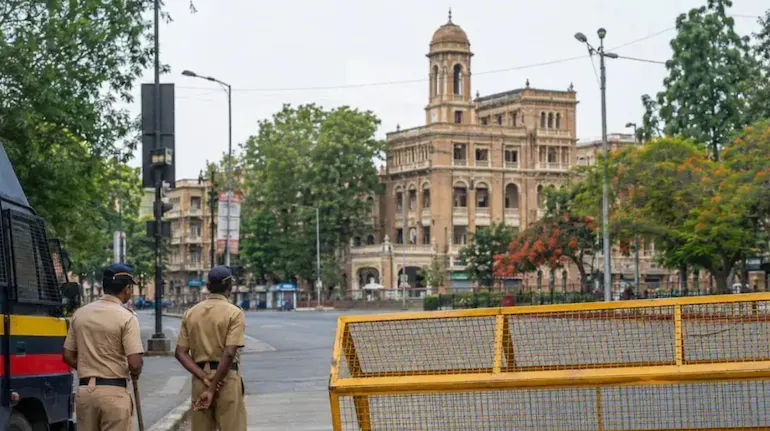
The Brihanmumbai Municipal Corporation (BMC), long known for maintaining one of the largest financial reserves among municipal bodies in India, is facing a significant financial shift as its infrastructure spending gathers pace. The civic body’s reserves declined from Rs 81,449 crore in February 2026 to Rs 79,873 crore on October 31, 2026, representing a reduction of Rs 1,576 crore in just eight months.
The decline is drawing attention because Mumbai is simultaneously undertaking an extensive programme of infrastructure development involving water supply, wastewater treatment, transportation-related facilities and other major civic projects. According to a financial report submitted to the BMC Standing Committee, the corporation’s total financial commitments towards major infrastructure projects are estimated at Rs 2.34 lakh crore.
Although the reduction in reserves raises questions about the long-term sustainability of the corporation’s spending strategy, civic officials have maintained that the situation is unlikely to trigger a financial crisis during the current financial year. They point to stronger property tax collections and higher premium income from the building proposal department as important sources of revenue.
The BMC is also exploring a different funding strategy. Its plan to raise at least Rs 10,000 crore through green bonds indicates that the corporation wants to finance environmentally focused infrastructure without depending entirely on its accumulated reserves.
The bigger question is whether Mumbai can maintain its infrastructure investment momentum while protecting the financial cushion that has traditionally given its municipal administration considerable spending flexibility.
BMC Financial Reserves Decline by Rs 1,576 Crore in Eight Months
The latest financial figures highlight a gradual reduction in the BMC’s accumulated reserves.
As of February 2026, when the corporation presented its annual budget, its financial reserves stood at Rs 81,449 crore. By October 31, the figure had fallen to Rs 79,873 crore.
The difference represents a decline of approximately 1.93% over eight months. Although this reduction does not by itself indicate an immediate financial emergency, it becomes more significant when viewed alongside the longer-term movement in the corporation’s reserves.
In 2021, the BMC reportedly held financial reserves of Rs 91,690 crore. By October 2026, the balance had decreased to Rs 79,873 crore.
That represents a reduction of Rs 11,817 crore over five years, or approximately 12.9% of the 2021 reserve level.
The figures suggest that the corporation is increasingly using its accumulated financial resources while managing a growing infrastructure programme. However, a decline in reserves should not automatically be interpreted as an operating loss or a sign that the corporation cannot meet its immediate obligations.
Municipal reserves and annual operating income serve different financial purposes. Reserves represent accumulated resources, while recurring revenue from taxes, fees and other municipal activities helps finance continuing expenditure. Understanding this distinction is essential when assessing the BMC’s financial position.
Why Mumbai’s Infrastructure Spending Is Putting Pressure on Reserves
Mumbai’s infrastructure requirements are extensive. The city needs reliable water distribution, wastewater treatment capacity, improved environmental infrastructure and long-term solutions to its growing urban demands.
These projects frequently require large investments before they begin generating their intended public benefits. Construction, land-related requirements, engineering work, equipment procurement and associated project expenses can create substantial financial commitments over several years.
The BMC’s estimated infrastructure commitments of Rs 2.34 lakh crore illustrate the scale of its development programme.
It is important to distinguish between project commitments and money already spent. The Rs 2.34 lakh crore figure represents the estimated financial commitments towards major infrastructure projects, not necessarily the amount that has already been withdrawn from the corporation’s reserves.
Many large civic projects are implemented in phases. Their financial requirements can extend across multiple budget years, meaning that the corporation must plan not only for immediate construction expenses but also for future payment obligations.
This creates a balancing challenge. The BMC needs to invest enough to address Mumbai’s infrastructure deficiencies, but it must also preserve sufficient financial resources for routine administration and unexpected expenditure.
The 50% Reserve Rule: Why the BMC Cannot Spend All Its Savings
One of the most important details in the corporation’s financial framework is the restriction on how much of its reserves can be used for infrastructure development.
Under the BMC’s financial rules, only 50% of its reserves can be utilised for infrastructure development. The remaining amount is kept aside to meet fixed liabilities and other financial responsibilities.
These obligations include:
- Employee pensions: Financial resources required to meet pension-related commitments to municipal employees.
- Gratuity payments: Payments associated with employee retirement and other eligible service-related benefits.
- Contractor security deposits: Money held against contractual obligations and refundable deposits.
- Other fixed liabilities: Financial commitments that the corporation must be prepared to meet.
This arrangement is important because municipal finances cannot be managed in the same way as an ordinary infrastructure investment account. A civic body must continue paying employees, maintaining public services and meeting contractual obligations even when major development projects demand additional funding.
Using the October 31 reserve figure of Rs 79,873 crore, the 50% infrastructure-use ceiling would correspond to approximately Rs 39,936.5 crore, assuming the entire reported reserve balance is subject to the same calculation.
However, this should not be confused with the amount of money currently available for fresh projects. Actual usable funds would depend on previous allocations, existing commitments, the precise classification of reserves and applicable financial rules.
The distinction also explains why a corporation can report nearly Rs 80,000 crore in reserves while still exploring additional borrowing or bond-based financing for its development programme.
Property Tax and Building Premiums: The Revenue Sources Supporting BMC
Despite the decline in accumulated reserves, civic officials have expressed confidence that the corporation can manage its financial requirements during the current financial year.
Two revenue sources are particularly important in this assessment: property tax collections and premiums generated through the building proposal department.
Property Tax Collections
Property tax is one of the important recurring revenue sources for municipal administrations. It provides a financial base that can support civic expenditure without requiring the corporation to withdraw an equivalent amount from its accumulated savings.
For the BMC, improved property tax collections offer an opportunity to strengthen its revenue position while continuing to finance essential municipal responsibilities.
Better collections can also reduce the pressure on reserves over time, particularly when recurring revenue grows alongside the city’s expenditure requirements.
However, the actual financial contribution will depend on collection performance, outstanding dues and the corporation’s ability to sustain revenue growth. The reported improvement is encouraging, but it does not automatically eliminate the long-term funding challenge created by large infrastructure commitments.
Premium Income From the Building Proposal Department
The second source identified by civic officials is higher premium income generated by the building proposal department.
Development-related premiums are connected to regulatory and building approval processes. In a city such as Mumbai, where land and redevelopment activity are important parts of the urban economy, these payments can contribute meaningfully to municipal revenue.
Higher premium collections can provide additional financial flexibility, particularly when construction and redevelopment activity remains strong.
However, such revenue may be influenced by property market conditions, project approvals and the pace of development activity. Unlike a stable recurring tax base, premium income can fluctuate depending on the volume and nature of construction-related transactions.
For this reason, relying on both recurring revenue and development-linked income requires careful budgeting. Strong premium collections in one period do not necessarily guarantee the same level of income in subsequent years.
BMC Plans to Raise Rs 10,000 Crore Through Green Bonds
One of the most significant elements of the BMC’s funding strategy is its plan to raise at least Rs 10,000 crore through green bonds.
The corporation had appointed a private firm earlier in 2026 to assist with the fundraising process, according to the reported financial developments.
Green bonds are debt instruments through which an issuer raises money for projects that meet specified environmental objectives. Unlike a conventional grant, money raised through bonds generally has to be repaid according to the terms of the borrowing arrangement.
For municipal corporations, this financing method can provide access to a broader pool of investors interested in environmentally focused infrastructure.
In the BMC’s case, the proposed fundraising is expected to support several projects involving wastewater treatment, water infrastructure and other environment-related development.
The plan also represents a potential shift in how Mumbai finances major civic improvements. Instead of relying exclusively on accumulated reserves and annual revenue, the corporation is looking towards capital-market instruments to support long-term development.
Why Green Bonds Could Matter for Mumbai
Mumbai’s environmental infrastructure needs are closely connected to its long-term urban development. Wastewater management, water availability and treatment capacity are essential for maintaining public health and supporting a growing metropolitan population.
Green bonds can connect these infrastructure requirements with investors seeking projects that have defined environmental objectives.
However, issuing bonds is not the same as receiving free funding. The corporation would need to account for repayment obligations, financing costs, project implementation and the financial returns or public benefits associated with the funded infrastructure.
The success of the proposed Rs 10,000 crore fundraising exercise will therefore depend not only on investor interest but also on the corporation’s ability to structure, deploy and manage the money responsibly.
Which Major Infrastructure Projects Could Receive Green Bond Funding?
The proposed green bond proceeds are expected to support a portfolio of water and environmental infrastructure projects across Mumbai and its surrounding areas.
Among the projects identified are wastewater treatment plants in Dharavi, Versova, Bhandup, Ghatkopar, Bandra and Malad.
These facilities are important because wastewater treatment helps reduce the amount of untreated sewage entering natural water bodies and the surrounding environment.
Wastewater Treatment Plants Across Mumbai
The planned treatment facilities cover several important parts of the city. Their locations indicate that the proposed investment is not limited to a single neighbourhood or infrastructure corridor.
Wastewater treatment is a particularly important municipal responsibility in densely populated urban areas. As residential and commercial activity expands, the volume of sewage requiring collection and treatment also places pressure on existing infrastructure.
Improved treatment capacity can help reduce environmental pollution and strengthen the city’s ability to manage wastewater more effectively.
However, the effectiveness of such facilities depends on more than construction. Sewer connectivity, operating capacity, maintenance, energy requirements and the proper functioning of treatment systems are equally important.
A completed treatment plant cannot deliver its full intended benefit if wastewater does not reach it through an effective collection network.
Desalination Projects and Water Security
The BMC’s proposed green bond funding is also expected to support desalination projects.
Desalination involves removing dissolved salts and other impurities from seawater to produce water suitable for further treatment and use.
For a coastal city such as Mumbai, the technology offers a potential additional source of water beyond conventional freshwater supplies.
However, desalination projects can require substantial investment in infrastructure, electricity and long-term operations. Their financial and environmental viability depends on factors such as energy efficiency, operating costs and the management of concentrated brine produced during the process.
Consequently, desalination should be viewed as a potential component of a broader water-security strategy rather than an automatic replacement for existing water sources.
Two Water Tunnel Projects
Two water tunnel projects are also included among the infrastructure developments expected to receive support.
Water tunnels can help transport water through underground routes and improve the distribution network in areas where conventional surface infrastructure faces geographical or space-related limitations.
For a densely developed city, underground water infrastructure can be particularly valuable because large surface-level construction corridors are difficult to secure.
The ultimate benefits will depend on the tunnels’ capacity, integration with existing pipelines and their ability to improve the reliability of water distribution.
Proposed Gargai Dam
The proposed Gargai dam is another major water infrastructure project included in the broader funding plan.
Water supply planning is a long-term challenge for Mumbai, and additional storage and supply infrastructure can form part of the city’s strategy to meet future requirements.
However, large dam projects also involve substantial planning, environmental considerations, land-related requirements and construction expenditure.
The inclusion of the Gargai project in the proposed green bond funding programme highlights the scale of the BMC’s ambition to strengthen the city’s water infrastructure.
BMC’s Financial Position: What the Numbers Actually Reveal
The available figures provide a useful picture of the corporation’s financial position and the pressures created by its infrastructure programme.
| Financial indicator | Reported figure |
|---|---|
| BMC reserves in 2021 | Rs 91,690 crore |
| BMC reserves in February 2026 | Rs 81,449 crore |
| BMC reserves on October 31, 2026 | Rs 79,873 crore |
| Decline between February and October 2026 | Rs 1,576 crore |
| Five-year reduction in reserves | Rs 11,817 crore |
| Estimated infrastructure commitments | Rs 2.34 lakh crore |
| Proposed green bond fundraising | At least Rs 10,000 crore |
| Permitted infrastructure use of reserves | 50% |
Three observations emerge from these figures.
First, the decline in reserves is not limited to the latest eight-month period. The five-year reduction suggests that the corporation has been drawing down its accumulated financial cushion over a longer period.
Second, the estimated infrastructure commitments are significantly larger than the proposed green bond fundraising. The Rs 10,000 crore target is an important potential funding source, but it represents only one component of the corporation’s overall infrastructure financing requirements.
Third, the 50% restriction on reserve utilisation makes financial planning particularly important. The BMC cannot treat its entire reserve balance as money available for new construction because a substantial portion must remain available for existing liabilities.
Could the Declining Reserves Become a Financial Problem for Mumbai?
The immediate assessment from civic officials is that the reduction in reserves is unlikely to create a financial crisis during the current financial year. Nevertheless, the longer-term financial implications deserve attention.
A municipal corporation needs sufficient liquidity to manage unexpected expenses, maintain public services and meet contractual obligations. Infrastructure spending may be necessary, but it should not weaken the financial capacity required to operate the city.
The central challenge for the BMC is therefore not simply how much money it has spent. It is whether its future revenue can keep pace with its development commitments and recurring expenditure.
If property tax collections remain strong and development-related premium income continues to support the budget, the corporation may have greater flexibility to finance projects without excessive dependence on reserves.
Green bonds could provide another funding channel, although the resulting debt obligations would need to be incorporated into future financial planning.
On the other hand, weaker revenue collections, higher construction costs or delays in major projects could increase financial pressure. These are potential risks rather than established outcomes, but they illustrate why monitoring the corporation’s reserve position is important.
What Mumbai Residents Should Watch in the Coming Months
The BMC’s financial position matters beyond the corporation’s balance sheet. Its spending decisions influence infrastructure delivery, water availability, environmental management and the quality of municipal services experienced by residents.
Several developments will be particularly important to monitor.
- Green bond fundraising: Whether the corporation successfully raises the proposed Rs 10,000 crore and under what financial terms.
- Property tax performance: Whether improved collections continue to strengthen recurring municipal revenue.
- Development premium income: Whether the building proposal department can sustain the higher revenue levels identified by civic officials.
- Infrastructure execution: Whether the proposed wastewater, desalination, water tunnel and Gargai projects progress according to their respective implementation plans.
- Reserve management: Whether the corporation can maintain adequate funds for pensions, gratuity, contractor deposits and other fixed liabilities while financing development.
These indicators will offer a clearer understanding of whether the BMC’s infrastructure expansion is being supported by a sustainable financing strategy.
The Bigger Picture: Mumbai’s Infrastructure Ambitions Meet Financial Discipline
The BMC’s declining reserves represent an important development in the financial management of India’s richest civic body. The corporation still reported reserves of Rs 79,873 crore at the end of October 2026, but the reduction of Rs 11,817 crore over five years shows why its funding strategy deserves closer examination.
Mumbai cannot postpone essential infrastructure improvements indefinitely. Wastewater treatment, water supply expansion and environmental projects require long-term investment, particularly as the city’s urban requirements continue to evolve.
At the same time, a large reserve balance is valuable only if it is managed responsibly. Pension obligations, contractor deposits and routine civic expenditure must remain protected even as the corporation takes on ambitious development projects.
The proposed Rs 10,000 crore green bond programme could help diversify the BMC’s funding sources and connect environmental infrastructure with dedicated investment. But the real test will be how efficiently the money is raised, spent and repaid.
For Mumbai residents, the most important measure will ultimately be whether the financial commitments translate into functioning wastewater treatment plants, more dependable water infrastructure and measurable improvements in urban environmental management.
The BMC’s challenge is no longer simply maintaining a large financial reserve. It is finding the right balance between spending on Mumbai’s future and preserving the financial strength needed to run the city today.
For breaking news and live news updates, like us on Facebook or follow us on Twitter and Instagram. Read more on Latest India on thefoxdaily.com.

COMMENTS 0