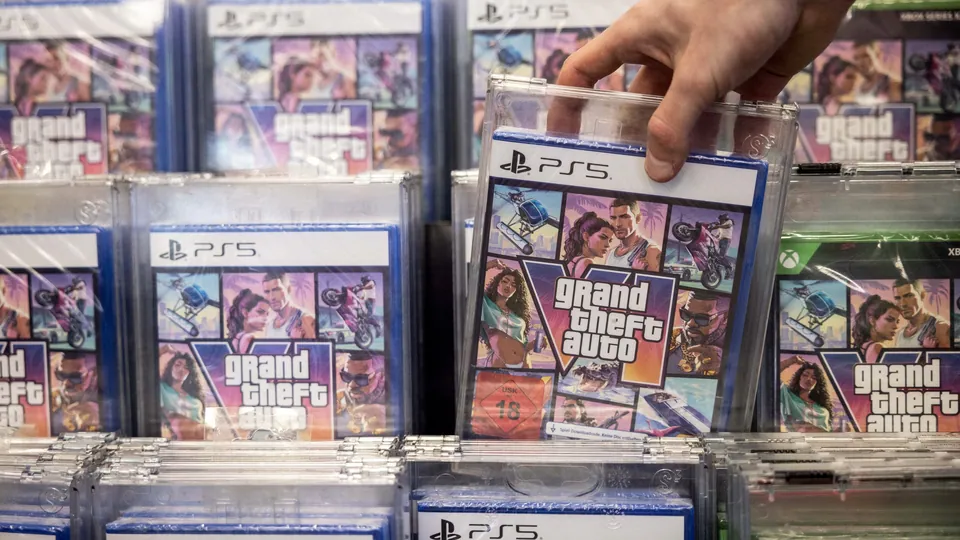
The global launch of Grand Theft Auto VI (GTA 6) has brought renewed attention to an important chapter in India’s video game development industry: the rise of Rockstar India’s Bengaluru studio from a small game development company founded nearly three decades ago. For Rajesh Rao, founder of Dhruva Interactive, the success of the latest GTA title represents more than a major achievement for Rockstar Games. It is a moment of recognition for the Indian developers who spent years proving that they could contribute to the world’s biggest gaming productions.
Rockstar India, which operates from Bengaluru, grew out of Dhruva Interactive, widely recognised as India’s first game development studio. Rockstar acquired the studio in May 2019, bringing approximately 300 employees into its organisation. The acquisition connected a team built in Bengaluru with one of the most prominent names in the global video game industry.
Rao, who stepped away following the acquisition, has largely remained outside the public spotlight. In a rare interview with Hindustan Times, he described his reaction to GTA 6’s launch as a “quiet sense of vindication” for an industry that barely existed when he established Dhruva in 1997.
His reflections also highlight a larger question for India’s gaming industry: can the country move beyond contributing development services to international franchises and begin creating original games that achieve global commercial success?
GTA 6 Launch Reconnects Rockstar India’s Story With Bengaluru
GTA 6’s release on November 19 has drawn attention to the global development network behind the franchise, including the contribution of Rockstar’s Indian operations. The Bengaluru studio has its roots in Dhruva Interactive, a company that helped establish the foundations of professional game development in India.
For Rao, seeing a team that originated in Bengaluru become part of a studio associated with a major global gaming franchise carries significance beyond the commercial success of a single release.
He said he had maintained a low profile since stepping away after the 2019 acquisition and had not followed what his former colleagues were working on at Rockstar. He also said he had never asked about their specific contributions to the company’s projects.
However, he described the launch as a milestone for the broader Indian development ecosystem. Nearly 30 years earlier, the idea that a Bengaluru-based team could operate at the highest level of global AAA game production would have seemed difficult to imagine.
His sense of vindication, therefore, is rooted in the progress made by Indian artists and engineers over several decades. Their growing involvement in complex international projects represents a shift from the limited responsibilities Indian studios were initially trusted with.
How Rajesh Rao Founded Dhruva Interactive in 1997
Dhruva Interactive began in March 1997, at a time when India had almost no established video game development industry. There was no meaningful domestic gaming market, limited infrastructure and no large consumer base capable of supporting original commercial games.
Rao had started a multimedia company after graduating from engineering college in 1995. Operating from a small office on Indiranagar’s 12th Main in Bengaluru, the company developed touchscreen kiosks and training modules.
The turning point came in February 1997, when an Intel representative introduced the team to the capabilities of the Pentium II processor. The demonstration included Shiny Entertainment’s game MDK, which exposed Rao and his colleagues to the possibilities of 3D game development.
The team was signed into Intel’s Early Access Technology Program to develop a 3D rendering engine. That opportunity prompted the company to reinvent itself as Dhruva Interactive, a name inspired by the pole star, traditionally associated with direction and guidance.
The early years involved substantial experimentation. Dhruva spent approximately 20 months on research and development, financing the work through revenue from its existing multimedia business.
Rao also travelled to the Electronic Entertainment Expo (E3) in Atlanta in 1997. The experience convinced him that the company needed to demonstrate technology capable of attracting attention from international publishers.
Dhruva subsequently developed a software-based 3D engine optimised for Pentium processors. One of its important features was that it could operate without dedicated hardware acceleration, making the technology suitable for a wider range of computers.
Mission: Impossible Became Dhruva’s First Major Breakthrough
On November 26, 1998, Dhruva signed its first game-development contract: a PC port of Mission: Impossible for French publisher Infogrames.
The agreement was an important milestone because it gave an Indian studio an opportunity to work directly with an international publisher at a time when India was barely recognised on the global gaming map.
The company expanded from five employees to 15 and delivered a beta version of the project. However, Infogrames eventually shelved the game.
Although the project did not become a commercial release, it provided Dhruva with a credible development portfolio, international exposure and a recommendation that helped the company approach other publishers.
It also revealed a fundamental problem facing Indian game developers. Without a domestic market large enough to support original titles, building and selling independent games was difficult. To survive, studios increasingly had to provide development services to international publishers.
That experience shaped Dhruva’s business strategy for years. Instead of relying on an Indian consumer market that did not yet exist, the company focused on earning the trust of publishers in North America and Europe.
Building India’s Early Game Development Talent
One of Dhruva’s biggest challenges was finding people who understood video games as a creative and technical medium. India had engineering graduates and fine arts talent, but game development was not an established academic discipline.
Rao recalled that many of the company’s early recruits had never even seen a gaming console. The studio responded by introducing new employees to games before assigning them development responsibilities.
New hires were given access to consoles and spent their first two weeks playing games. The objective was to help them understand game mechanics, visual design and the broader experience expected by international players.
This approach reflected the reality of building an industry from scratch. Dhruva was not simply recruiting skilled workers; it was teaching people an entirely new creative medium while simultaneously developing products for global audiences.
In 2001, the studio created a Wild West demonstration project called Saloon to attract publishers in the United States and Europe. Since the Bengaluru team had never visited an actual saloon, it researched the setting and recreated its visual details from available information.
The demonstration impressed publishers and helped Dhruva secure additional work. The project later became part of the story of India’s early gaming industry, with author Thomas Friedman featuring the anecdote in his book The World Is Flat.
Why Rajesh Rao Started the NASSCOM Game Developer Conference
Dhruva’s early progress also exposed a weakness within India’s developing gaming ecosystem: studios often operated independently, with limited collaboration and little exchange of knowledge.
Rao said that the industry spent years learning through trial and error. In 2007, recognising how much time had been lost because developers worked in isolation, he started the NASSCOM Game Developer Conference, which later became the India Game Developer Conference (IGDC).
The objective was to create a platform where developers could share technical knowledge, discuss production challenges and learn from one another. Rao wanted the event to serve the people building games rather than functioning primarily as a corporate networking platform.
The initiative reflected his belief that an industry cannot mature through individual companies alone. It also needs experienced professionals, shared knowledge, stronger professional networks and opportunities for new developers to learn from established studios.
How Rockstar Acquired Dhruva Interactive in 2019
Dhruva’s relationship with Rockstar did not begin through a long-standing development partnership. According to Rao, the two companies had never worked together before the acquisition.
The circumstances leading to the deal emerged after Starbreeze acquired Dhruva in 2017. By late 2018, Starbreeze was undergoing a major financial restructuring and needed to sell assets.
As Dhruva’s chief executive, Rao was responsible for finding a potential buyer. He contacted several companies he believed might be interested in acquiring the studio, with Rockstar among them.
The transaction was completed in May 2019. Approximately 300 Dhruva employees transitioned into Rockstar India as part of the acquisition.
Rao said he did not know how many of those employees remained with Rockstar at the time of the interview because he had stepped back after the transition and did not track the company’s internal workforce figures.
The acquisition was significant because it brought an established Indian development team directly into Rockstar’s organisation rather than leaving it as an external service provider.
Why Rockstar May Have Preferred Acquiring an Established Indian Studio
Rao did not claim to know Rockstar’s internal reasons for acquiring Dhruva. However, he explained why owning an established development team can make strategic sense for publishers working on large-scale AAA games.
Major video game productions can involve hundreds of developers, long development cycles and complex technical processes. Maintaining confidentiality, consistent quality and coordination across different teams is particularly important for companies managing major franchises.
In such an environment, a dedicated studio operating within the publisher’s organisation can be more closely integrated into its development pipelines, tools and creative culture.
Rao estimated that building a 300-person studio capable of handling AAA production in India could take around a decade of experimentation and development. Acquiring a company with 22 years of experience, established leadership and a portfolio of major game credits offered a way to bypass much of that process.
The transaction also demonstrated that Indian studios could develop capabilities valuable enough to attract direct investment from major international publishers.
What Indian Developers Actually Contribute to Global AAA Games
One of the important questions surrounding Rockstar India’s role in GTA 6 is whether Indian developers are involved in creative decision-making or primarily responsible for production work assigned by teams elsewhere.
Rao’s account offers a broader view of how responsibilities have evolved. During the late 1990s and early 2000s, international publishers were often reluctant to trust Indian studios with anything beyond basic and repetitive asset creation.
Over time, Indian teams developed the technical experience and production capabilities required to handle more complex work. Their responsibilities expanded to include full environments, hero vehicles, technical art and co-development activities on major franchises.
Dhruva’s work included projects associated with Forza Motorsport, Halo, PayDay and Quantum Break. Its broader portfolio also featured titles such as Forza Horizon, TOCA Race Driver, Formula 1 and Spider-Man.
However, Rao drew an important distinction between contributing to an established international franchise and owning the creative direction of that franchise. In his assessment, the core creative leadership of Western game properties naturally remains with the companies that own the intellectual property.
He argued that Indian developers will achieve greater creative independence when studios in the country begin creating and owning original intellectual property rather than relying primarily on production contracts.
Why Dhruva Avoided Cheap, High-Volume Outsourcing Work
Dhruva’s growth strategy was also shaped by a deliberate decision not to compete primarily on low prices or large volumes of work.
Rao said the company viewed development services as a way to finance the eventual creation of its own games. As a result, it prioritised technically challenging projects that could build expertise and long-term relationships with international publishers.
Dhruva avoided high-volume, low-margin and commoditised work. Rao believed competing against larger and cheaper outsourcing providers, particularly those in China, would be a difficult business strategy.
The decision had a financial cost. The company grew more slowly in terms of revenue and did not expand its workforce at the pace of traditional IT services firms.
However, the strategy helped Dhruva develop a reputation for quality and reliability. It built repeat relationships with major clients, including Microsoft, Sony, Codemasters, Electronic Arts and Starbreeze.
Rao said that, in later years, Dhruva had more business opportunities than it could accommodate. That reputation helped establish the studio’s strategic value when Starbreeze and subsequently Rockstar considered its future.
Forza Motorsport Was a Turning Point for Dhruva
Dhruva’s credibility with major international publishers developed through several important projects rather than one sudden breakthrough.
The Mission: Impossible PC port gave the company its first major opportunity. Rao later demonstrated the studio’s work to Ed Fries, who was then heading Microsoft Gaming Studios, helping open the door to further opportunities with Microsoft.
Codemasters in the United Kingdom also helped establish Dhruva’s art services business by trusting the Indian team with vehicle-related work for racing games.
However, Rao identified the selection of Dhruva for Microsoft’s Forza Motorsport franchise in 2002 as a major turning point.
The relationship continued for more than 15 years, with Dhruva contributing to every Forza title during that period. The work helped the studio establish a long-term partnership and build a portfolio that attracted additional opportunities from Microsoft, Sony and EA.
The wider lesson was that international trust developed through consistent delivery. Dhruva did not gain access to major projects simply because it was based in a lower-cost market. It built its reputation by demonstrating that an Indian team could meet the technical and production standards required by global publishers.
Why India Should Not Try to Build Its Own GTA Immediately
Despite the growing capabilities of Indian developers, Rao believes that trying to create a game on the scale of GTA should not be the industry’s immediate ambition.
He described “GTA-scale” as the wrong benchmark for India, arguing that even most Western and Japanese studios cannot or should not attempt to develop billion-dollar games that take a decade to complete.
Instead, he believes the more important goal is to create original Indian games that can earn international recognition and achieve commercial success.
Rao identified three major requirements for achieving that ambition.
1. Patient Risk Capital for Game Development
Game development involves uncertainty. Original titles can take three to five years to produce, and even well-developed projects can fail commercially.
Rao believes Indian investors are more accustomed to business models associated with software-as-a-service and consumer internet companies than to the longer and riskier investment cycles of creative industries.
Without patient capital, studios may struggle to finance original games through development, testing, marketing and eventual release.
2. Stronger Creative Leadership
India has developed a substantial pool of skilled artists and engineers, but Rao believes the country still needs more experienced game directors, designers and producers who have successfully launched original intellectual properties.
Technical production skills are essential, but creating a successful game also requires decisions about gameplay, storytelling, world-building, character development and the overall player experience.
Rao pointed to the presence of international companies such as Zynga in Bengaluru as one factor that helped develop experienced professionals. Some employees who gained experience in established studios later went on to create their own companies.
3. A Domestic Market Willing to Pay for Games
For decades, India’s limited purchasing power and underdeveloped gaming infrastructure made it difficult for studios to build sustainable businesses by selling original games to domestic players alone.
Rao believes that situation is changing. He estimates that India now has more than 500 million players, alongside growing purchasing power and a larger audience for digital entertainment.
He also sees an opportunity to create games rooted in Indian social and cultural experiences, with content available in local languages.
Rather than immediately attempting a massive international franchise, Rao believes Indian studios should build successful independent and AA games, retain ownership of their intellectual property and use those achievements as a foundation for larger projects.
How AI Could Change Opportunities for Indian Game Studios
Artificial intelligence could also influence the next phase of India’s gaming industry. Rao argued that modern game-development engines, tools and digital distribution platforms have already reduced some of the barriers that once prevented smaller studios from competing internationally.
AI could further help small teams produce high-quality games by supporting parts of the development process and making certain tasks more accessible.
However, technology alone will not create successful original games. Studios will still need strong creative leadership, a clear understanding of players and the financial capacity to develop and market their products.
The opportunity lies in using accessible tools to build distinctive games rather than simply reproducing the production models of much larger international studios.
Rajesh Rao Says He Would Chase Original Indian Games If Starting Today
Looking back at his journey, Rao said he never originally intended Dhruva Interactive to become a services-focused company. His ambition in 1997 was to become the “Yash Chopra of games for India” by creating iconic entertainment for a mass-market Indian audience.
He believed Indian players would respond to games reflecting their own cultural and social experiences, just as Indian audiences support domestic films, television and music.
Dhruva continued investing some of its services revenue into original game development across PC multiplayer, Java mobile and smartphone platforms. Those efforts eventually led to GameTantra, which was spun out as a separate venture.
However, the timing was difficult. Rao said some international releases, including Maria Sharapova Tennis, generated revenue, while the company’s attempts to develop games for India struggled because the domestic market was not ready.
For a business trying to survive, entering a market before the necessary infrastructure and consumer demand exist can be as damaging as entering too late. Dhruva ultimately had to focus more heavily on services to sustain its operations.
Nearly three decades later, Rao believes the opportunity has changed. With more than 500 million players and rising purchasing power, India has a much stronger foundation for original game development.
He said that if he were a young founder starting a gaming company today, he would pursue his original ambition from the beginning rather than prioritising services.
India’s Gaming Industry Faces Its Next Big Test
The story connecting Dhruva Interactive, Rockstar India and GTA 6 reflects how far India’s game development capabilities have progressed since the 1990s. A small Bengaluru company that began by experimenting with 3D technology eventually developed into a team that attracted one of the world’s most recognised game publishers.
The acquisition gave hundreds of Indian developers an opportunity to work within a major international studio, while Dhruva’s former employees have also carried their experience into other AAA companies and new ventures.
But Rao’s larger message goes beyond celebrating India’s contribution to international franchises. He believes the next stage of growth will depend on whether Indian studios can create games of their own, retain intellectual property rights and build businesses around original ideas.
India has developed the technical workforce, gained international production experience and built a much larger domestic gaming audience. The remaining challenge is to combine those advantages with long-term investment, creative leadership and commercially successful original titles.
For Rao, GTA 6’s launch is a moment of validation for the people who helped establish the industry. For the next generation of Indian developers, the bigger opportunity may be to create the games that put India on the global gaming map under its own intellectual property.
For breaking news and live news updates, like us on Facebook or follow us on Twitter and Instagram. Read more on Latest India on thefoxdaily.com.






COMMENTS 0