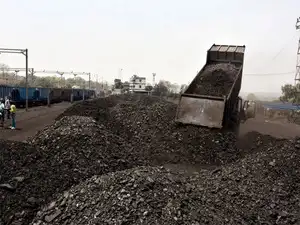
India’s commercial coal mine auction programme has attracted a strong response, with the 16th round receiving 85 bids for 18 coal blocks. The Ministry of Coal said the latest round also drew 20 first-time bidders, signalling growing participation from companies that have not previously taken part in the commercial coal auction process.
The number of bids represents a significant increase in participation, with submissions rising nearly fourfold compared with the previous round. The response comes as the government seeks to expand commercial coal mining, bring more domestic resources into production and encourage private investment in a sector central to India’s electricity and industrial requirements.
According to the Ministry’s announcement, the bids will now undergo technical scrutiny before eligible participants are allowed to compete in the next stage. The strong response is expected to strengthen competition for the blocks, although the final outcome will depend on the evaluation process and the subsequent electronic auctions.
85 Bids Received for 18 Coal Blocks in the 16th Auction Round
The 16th round of commercial coal mine auctions has recorded 85 bid submissions for 18 coal blocks. The response is particularly significant when compared with the previous round, which received 21 bids for eight blocks. The latest figure is approximately four times higher.
The Ministry of Coal also reported participation from 20 first-time bidders. Their entry indicates that the auction framework is attracting companies beyond established players in the mining industry.
However, the number of bids should not be confused with the number of successful bidders or mines awarded. Several companies may compete for the same block, and submitting a bid does not guarantee qualification or eventual allocation.
The 16th round had initially offered 25 coal blocks across nine coal-bearing states. These included fully explored and partially explored mines, giving companies opportunities to participate in projects at different stages of geological assessment.
Who Can Participate in India’s Commercial Coal Mine Auctions?
India’s commercial coal mining framework is designed to allow participation by established mining companies, new entrants and businesses with relevant technology or investment capabilities. The government opened commercial coal mining to private players in 2020, moving away from restrictions that had previously limited the sale and use of mined coal.
One of the major features of the framework is the absence of end-use restrictions. Successful bidders are not required to use the coal exclusively for a particular industrial purpose, allowing them to sell it in the open market subject to the applicable rules and contractual conditions.
The government has also permitted 100 per cent foreign direct investment through the automatic route in commercial coal mining. Lower upfront payment requirements and provisions allowing certain payments to be adjusted against future revenue share are intended to make participation more accessible to new companies.
The entry of 20 first-time bidders in the latest round is relevant in this context. It suggests that interest in coal mining is not limited to companies with an established history in the sector. However, their participation will translate into actual investment only if they qualify, secure blocks and take the projects towards production.
What Happens After the Coal Auction Bids Are Submitted?
The 85 submissions will first go through a technical evaluation process. A multi-disciplinary Technical Evaluation Committee will examine the documents and assess whether bidders meet the requirements prescribed for the auction.
The next stage will involve shortlisting participants who satisfy the technical conditions. Only qualified bidders will be eligible to take part in the electronic auction conducted through the MSTC platform.
The broad process involves the following stages:
- Bid submission: Interested companies submit the required online bids and supporting documents for the coal blocks.
- Technical evaluation: The committee examines the submissions to determine whether bidders meet the prescribed eligibility and documentation requirements.
- Shortlisting: Participants found technically qualified are shortlisted for the next stage.
- Electronic auction: Qualified bidders compete through the online auction process on the MSTC platform.
- Allocation and agreements: Successful bidders proceed through the formal allocation and agreement process before developing the mines in accordance with applicable conditions.
This two-stage approach separates technical eligibility from financial competition. It also means that the 85 bids received in the latest round are not 85 confirmed contenders for final allocation. The number of participants eligible for the electronic auction will become clear after the committee completes its assessment.
Why Is the Government Expanding Commercial Coal Mining?
Coal continues to play a major role in India’s energy system, particularly in electricity generation and industries such as steel and cement. Increasing domestic production is therefore an important part of the government’s strategy to strengthen energy security and reduce dependence on imported coal.
Commercial mining auctions are intended to bring additional companies and investment into the sector. Under the system, coal blocks are allocated through competitive bidding rather than being distributed through discretionary allotments.
For the government, the model is expected to generate revenue through the winning bidders’ revenue-sharing commitments, while successful projects can attract investment in mining infrastructure, equipment, transportation and related services.
Higher domestic production can also support industries that depend on a reliable supply of coal. However, the benefits depend on how quickly auctioned blocks receive the necessary approvals, develop infrastructure and begin commercial operations.
Coal Production, Investment and Employment: What the Auctions Could Deliver
The Ministry of Coal has projected substantial economic benefits from the commercial coal auction programme. Earlier auction rounds have brought new companies into the sector and created a pipeline of projects expected to generate investment, government revenue and employment as mines become operational.
In September 2026, the government said that 147 coal mines had been successfully auctioned across the first 15 completed rounds. These mines were expected to generate annual revenue of approximately Rs 47,500 crore, attract capital investment of nearly Rs 55,000 crore and create around 4.9 lakh employment opportunities across coal-bearing states.
These figures represent projections associated with the auctioned mines rather than jobs or revenue already realised in full. Actual outcomes depend on mine development, production levels, infrastructure availability and the pace at which projects become operational.
The latest round adds to this pipeline. If the blocks receiving bids are eventually allocated and developed, they could contribute to future coal production and create additional economic activity in mining regions.
Why the Rise in First-Time Bidders Matters
The participation of 20 first-time bidders is an important feature of the latest auction round because it points to a wider pool of companies exploring opportunities in commercial coal mining.
New participants can bring additional capital, operational capabilities and technology into the sector. Their entry may also increase competition for coal blocks, potentially encouraging bidders to make more competitive offers.
At the same time, entering the auction process is only the first step. Mining projects require significant investment, technical expertise, regulatory approvals and long-term planning. Companies without previous mining experience may need to build capabilities or work with experienced operators to develop their blocks successfully.
The technical evaluation and electronic auction stages will therefore be important in determining how many new participants progress beyond the initial submission stage.
What the Latest Auction Response Means for India’s Coal Sector
The fourfold increase in bid submissions suggests that the 16th round has generated greater interest than the previous round. The participation of first-time bidders also points to the government’s efforts to widen access to commercial coal mining opportunities.
Still, the immediate priority is the technical evaluation of the 85 submissions. The number of qualified bidders, the competition during electronic auctions and the eventual allocation of blocks will determine how much of this interest translates into concrete mining projects.
For India’s Energy Sector, the longer-term challenge will be converting auction activity into reliable domestic coal production. Block allocation alone does not guarantee an immediate increase in supply. Exploration, mine development, environmental and other statutory clearances, transportation links and operational readiness all influence when production can begin.
The latest response gives the Ministry of Coal a larger pool of bids to evaluate and potentially advances the government’s objective of attracting more private investment. The real measure of success, however, will be how efficiently the selected companies develop the mines and contribute to domestic production, employment and revenue in the coming years.
For breaking news and live news updates, like us on Facebook or follow us on Twitter and Instagram. Read more on Latest India on thefoxdaily.com.






COMMENTS 0