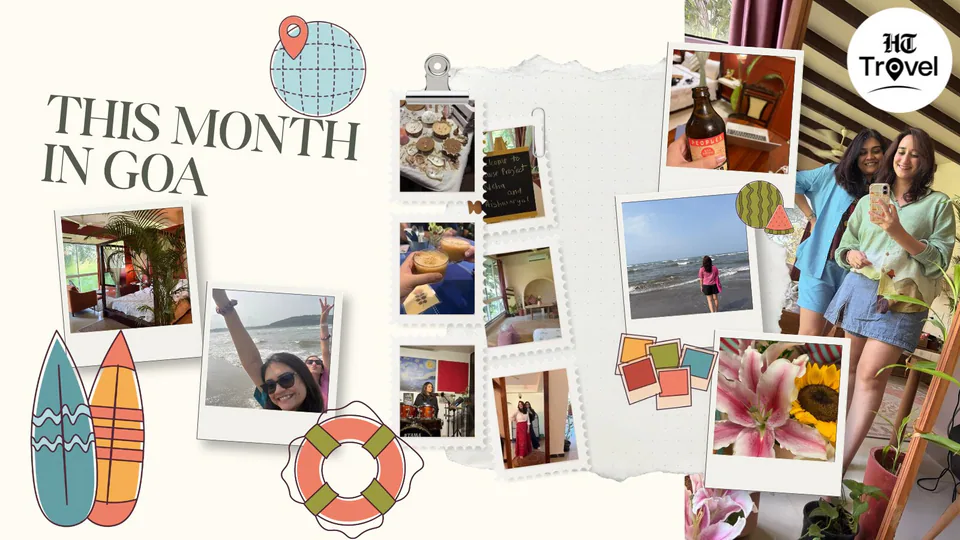
North Goa is often associated with packed beach clubs, lively restaurants, flea markets and late-night parties. For many visitors, a holiday here becomes a series of plans, with one attraction leading to another. But there is another way to experience the region: spend less time rushing between popular spots and more time enjoying the surroundings, discovering local places and allowing a holiday to unfold at its own pace.
That was the idea behind a recent stay at The Pause Project, a property in North Goa that combines convenient access to popular destinations with an atmosphere designed for slowing down. Located close to the area’s familiar nightlife circuit, the property offers a noticeable contrast once guests step inside. Its spacious rooms, warm hospitality and community-oriented setting make it possible to enjoy the convenience of a central location without feeling constantly surrounded by the crowds.
The experience also offered a glimpse into the lives of its founders, Pavika and Siddharth, whose move from corporate careers to hospitality developed gradually. Their story, along with the recommendations they have gathered over five years of hosting, helped reveal a side of Goa that goes beyond its usual tourist attractions.
The Pause Project: A peaceful base in the middle of North Goa
One of the most useful aspects of staying at The Pause Project is its location. The property is situated in an area where popular clubs, restaurants and other attractions are within easy reach. Yet, the atmosphere inside feels considerably more relaxed than the activity outside.
This balance is particularly useful for travellers who want to explore North Goa without spending their entire holiday travelling between places. The property makes it possible to plan a night out, visit a beach or discover a local restaurant and then return to a quieter environment.
Food arrangements were also straightforward during the stay. A wide range of restaurants could be accessed through Zomato, while several local food outlets were within walking distance. This meant guests did not have to depend entirely on elaborate plans for everyday meals.
The property also has a community-oriented character. It attracts local residents as well as people who have moved to Goa from other cities. This mix gives the building a social atmosphere without making interaction compulsory for guests who prefer privacy.
Spacious rooms Hazel and Terra offer a comfortable stay
The stay included time in two rooms, Hazel and Terra, both of which stood out for their thoughtful layouts and generous space. Rather than filling every corner with furniture, the interiors prioritise comfort and practical movement.
For travellers accustomed to compact hotel rooms, the difference is noticeable. There is enough space to move around, unpack, settle in and use the room comfortably. The layout feels less restrictive, making the accommodation suitable for guests who want to spend time indoors rather than treat their room as somewhere to sleep between outings.
The top-floor room was particularly enjoyable because of its panoramic windows and natural light. The open views created a sense of space, while the daylight made the interiors feel inviting. These details can have a considerable effect on a stay, especially when the purpose of the trip is to relax rather than follow a packed itinerary.
The design reflects Pavika’s interest in interiors and her preference for spaces that feel personal rather than decorated simply for appearance. The furniture and layout serve a purpose, while the overall atmosphere remains warm and comfortable.
How Pavika turned her interest in design into a hospitality business
Pavika’s approach to designing The Pause Project has roots in interests she developed long before entering the hospitality business. Raised in Jaipur, she was drawn to design from an early age. During her college years in Mumbai, she learnt graphic design and took up small assignments to earn pocket money.
Her interest in sourcing and styling interiors became more practical when she and Siddharth furnished their three-bedroom home. Much of the furniture, upholstery and quilts came from Jaipur, allowing them to bring traditional craftsmanship and personal choices into their living space.
When they later decided to list two spare rooms on Airbnb, Pavika reused much of the furniture they already owned. This meant the rooms could be prepared without purchasing an entirely new collection of furnishings. The experience also demonstrated how thoughtful design and resourcefulness could contribute to a distinctive guest environment.
One anecdote from their hosting journey captures the personal connection that can develop around these details. An international guest liked the quilts so much that they wanted to take ten of them back to Paris. Pavika helped connect the guest with an artisan near Hawa Mahal, giving them a way to source similar pieces directly.
It is a small example of how accommodation can become more than a transaction. A well-designed room can introduce guests to materials, crafts and local connections that they might not otherwise encounter during a short holiday.
From corporate careers to building a life in Goa
Pavika and Siddharth did not initially move to Goa with the intention of starting a hospitality business. Both had corporate backgrounds and were working remotely when the pandemic changed their routines.
During one trip through Goa, their car broke down and took almost a month to repair. Rather than simply waiting for the vehicle, they used the unexpected delay to explore the region more closely. They visited co-working spaces, met people building businesses and reconnected with former colleagues who had also moved to Goa.
The combination of a more relaxed lifestyle, access to nature and opportunities to work remotely made them consider relocating. Having spent the first wave of the pandemic in a cramped apartment in Delhi, they decided to rent a larger house in Goa.
The house, however, turned out to be more spacious than two people needed while working long hours. With their landlord’s permission, they listed two spare rooms on Airbnb. What began as a practical way to use the extra space gradually developed into a business as guests arrived from different parts of the world, with some staying for weeks or even a month.
Over time, several guests became friends, and hosting evolved from an informal arrangement into a more structured venture.
Pavika’s professional journey includes chemical engineering with a specialisation in food technology, experience in food manufacturing and research, an MBA from the Indian School of Business and work in the digital startup sector. Her experience includes organisations such as Ola, Paytm and Hindustan Times.
Siddharth studied mechanical engineering at NIT Kurukshetra before completing an MBA in marketing at MICA. His professional background includes work in internet classifieds and business-to-business software services.
Five years into hosting, the couple describe the experience as rewarding but acknowledge the mental, financial and emotional effort involved in building a business together. Siddharth describes it as a woman-led venture, with Pavika taking the lead and him supporting her. He credits her design sensibility and the respect she brings to her relationships with guests and the team.
A community atmosphere beyond the usual tourist circuit
The experience at The Pause Project was shaped not only by the rooms but also by the people working there. Guests were added to a WhatsApp group, making it convenient to ask questions, seek recommendations and arrange everyday requirements.
What made the suggestions useful was their range. Instead of limiting recommendations to well-known beaches and tourist attractions, the team also pointed guests towards experiences that offered a glimpse of local life.
One such recommendation was the Goa Collective Bazaar at Hilltop. Visiting the Friday night flea market turned into one of the memorable evenings of the trip. It offered an opportunity to explore a different atmosphere and discover a part of Goa that might not have featured in a conventional holiday plan.
The building itself adds to this sense of community. Alongside travellers, it attracts people who have relocated to Goa and are interested in meeting others with similar lifestyles and interests. This creates opportunities for conversations and shared experiences without requiring every guest to participate.
Another interesting feature is the independently operated speciality coffee shop in the basement. Run by a couple, the café brings another small business into the same building. Its presence adds to the property’s character, making it feel like a shared space rather than simply a collection of accommodation units.
Drumming sessions add an unexpected experience to the stay
One of the more unusual activities during the visit was a drumming session with Siddharth. He has been playing drums for 22 years and is part of the progressive rock band Time Throttle, which has performed 42 shows across 11 Indian cities.
His enthusiasm for music made the session an enjoyable introduction for beginners. Rather than presenting it as a formal music lesson, the activity worked as an informal icebreaker and offered guests something different from the usual beach and restaurant routine.
The session was complimentary during the visit. Guests interested in trying the activity can ask the team whether an arrangement can be made during their stay.
Experiences such as these give The Pause Project a more personal identity. They also reflect the interests of the people behind the property, allowing guests to discover activities that are not necessarily part of a standard accommodation package.
Where to go in North Goa: Local recommendations from the hosts
After five years of living in Goa and welcoming travellers, Pavika and Siddharth have developed a list of places and experiences they enjoy recommending. Their suggestions cover beaches, food, nature and activities that offer a slower way to explore the region.
Cabo de Rama Beach for a quiet coastal break
Pavika recommends Cabo de Rama Beach for visitors who want a quieter stretch of coastline. Her suggestion is simple: use the private steps leading down to the beach, carry a book and spend some time without making plans.
The recommendation reflects the broader idea behind a slower Goa holiday. Instead of moving between several attractions in a single day, visitors can choose one place and give themselves time to enjoy it.
Mandrem Beach for a relaxed day by the sea
Mandrem is among the couple’s favourite beaches. Its long, wide stretch of sand and relatively gentle waves make it suitable for visitors looking for a relaxed beach day.
The area also has restaurants and beach shacks, along with changing and shower facilities. At approximately 20 minutes from The Pause Project, it is a convenient option for guests who want to spend time by the sea without committing to a long journey.
Lazy Dog for food and a beach-shack atmosphere
Located at the far end of Mandrem, Lazy Dog is recommended by Siddharth for its food, friendly staff and more private setting. The restaurant has the relaxed character of a beach shack and is also pet-friendly, making it an option for people travelling with dogs.
Shower facilities and towels are available for a small rental fee, which can be useful for visitors planning to spend much of the day at the beach. The hosts have even had guests spend an entire day there writing the first chapter of a book.
The Western Ghats for greenery and nature experiences
Travellers who want a break from beaches can explore the hinterlands around the Western Ghats, close to the Goa border. Siddharth recommends this part of the region for its green hills, water bodies, lakes and small waterfalls.
Local organisations arrange curated trips in these areas, and the hosts can connect interested guests with groups they know. Such excursions offer a different perspective on Goa, particularly for visitors who associate the state mainly with its coastline.
Local Beat for a day of Goan food and outdoor activities
Local Beat is another experience the couple regularly recommends to friends and guests. The day begins at around 8 am with breakfast at a local woman’s home, followed by a gentle hike.
The group then visits a waterfall, where life jackets are provided for those who want to swim. Guests can relax, enjoy fresh fruit and try cocktails made with Feni and Urrak. A Goan lunch is served in the forest near the waterfall, followed by time to swim, rest or take a short walk before returning.
The experience combines food, nature and local hospitality, making it a way to spend a day beyond the usual tourist circuit.
Fountain View Restaurant for a traditional fish thali
For a local meal, Siddharth suggests Fountain View Restaurant, located on the way to Anjuna. The restaurant has an old-school atmosphere and attracts local diners.
His recommendation is the Kingfish Thali, with the option of asking whether it can be customised. During summer, he suggests pairing the meal with Urrak, a seasonal Goan cashew-based spirit.
Why a slower holiday also requires setting boundaries
Moving to Goa in search of a relaxed lifestyle does not automatically guarantee a slower pace. Pavika explained that she and Siddharth experienced this themselves after relocating.
Initially, they were balancing full-time jobs, hosting responsibilities and frequent visits from friends, colleagues and relatives who wanted to catch up whenever they travelled to Goa. For the first two and a half months, the couple tried to accommodate everyone, often meeting visitors after work and returning to professional responsibilities later in the evening.
Eventually, they realised that a more sustainable routine required boundaries. The experience influenced their understanding of hospitality and the importance of respecting personal space.
They believe hosting should work both ways. Guests should feel welcome, but they should also understand the expectations of the household and respect the people who live and work there. Their Airbnb listing explains which areas are private or shared, the kind of interaction guests can expect and how they can contact the hosts before booking.
This approach was evident during the stay. The team was available to answer questions and offer suggestions, but guests were not expected to interact constantly. It was possible to seek assistance when needed and enjoy privacy the rest of the time.
For travellers, this balance can make a significant difference. Good hospitality does not always mean continuous attention. Sometimes, it means having reliable people available while being free to spend the holiday independently.
What makes The Pause Project worth considering for a North Goa getaway?
The appeal of The Pause Project lies in the combination of location, spacious accommodation, personal design choices and a community-oriented atmosphere. It offers access to North Goa’s popular destinations while creating an environment where guests can return to a quieter setting.
Hazel and Terra provide comfortable spaces to unwind, while the team makes everyday arrangements and local recommendations easier. The coffee shop, flea market outing and drumming session add experiences that go beyond the usual hotel stay.
The story of Pavika and Siddharth also gives the property a personal dimension. Their move from corporate careers to hosting grew out of an unexpected change in circumstances, an interest in living differently and the decision to make use of the extra space in their home. Over time, that experiment developed into a business shaped by design, music, community and relationships with guests.
Most importantly, the stay offered a reminder that a holiday in North Goa does not have to revolve around a packed schedule. Visitors can still enjoy the region’s beaches, restaurants and nightlife while leaving room for quieter experiences, local food and time to do very little.
Sometimes, the most rewarding part of a trip is not how many places you manage to visit, but how comfortably you experience the time you have. At The Pause Project, that idea feels less like a holiday slogan and more like the natural rhythm of the stay.
For breaking news and live news updates, like us on Facebook or follow us on Twitter and Instagram. Read more on Latest Lifestyle on thefoxdaily.com.

COMMENTS 0