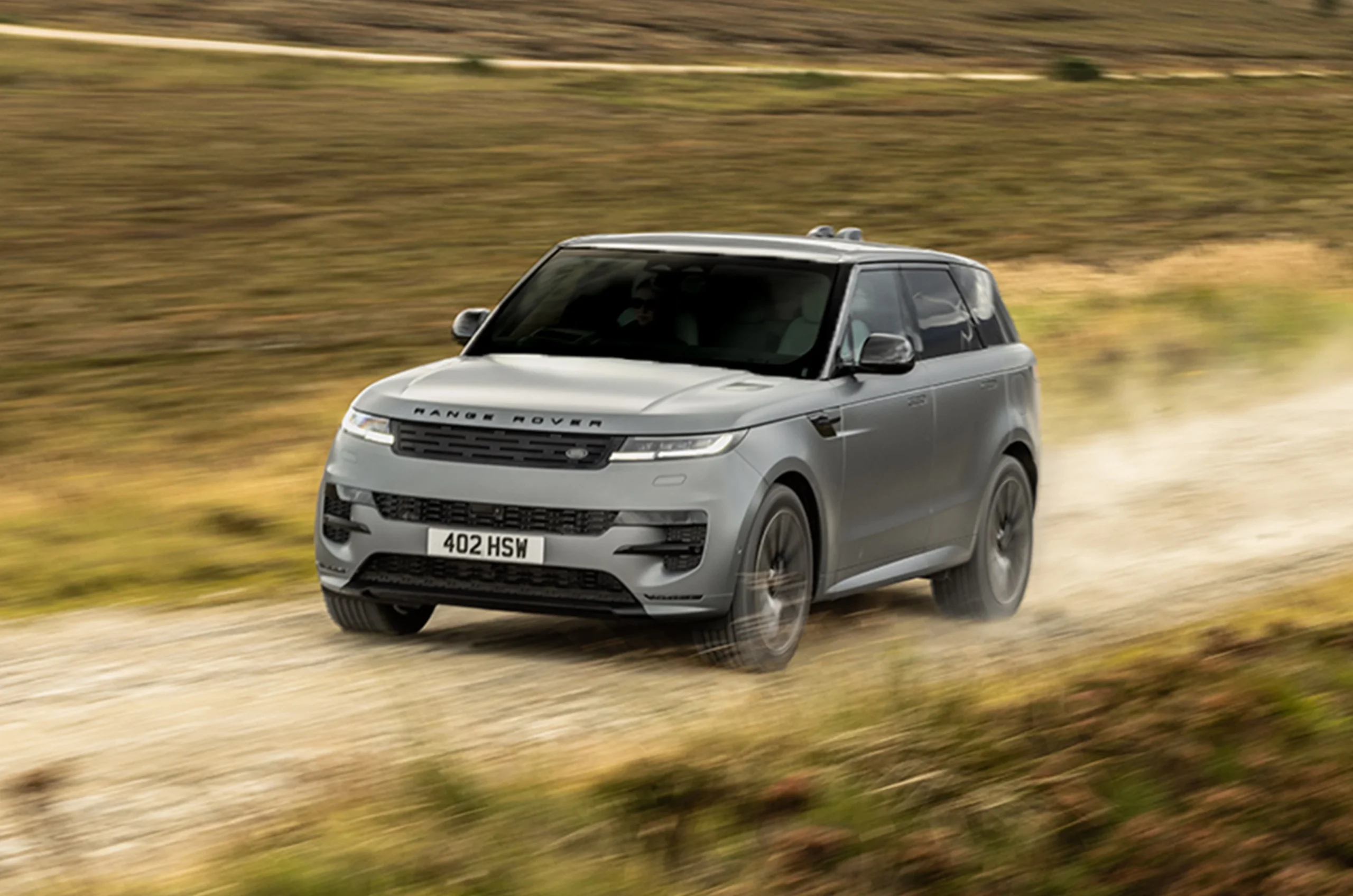
The Range Rover Sport Electric takes a familiar approach to electrification: it looks almost identical to its ICE-powered sibling, but packs an entirely different powertrain underneath. Jaguar Land Rover (JLR) believes an electric vehicle does not need radically different styling to stand out. Instead, it should retain the character and identity of the model, with electrification simply offering another powertrain choice.
Sharing its platform and much of its hardware with the larger Range Rover Electric, the Sport Electric promises a combination of luxury, performance and off-road capability. However, the two SUVs have noticeably different driving characters. We drove the new electric Sport through the Scottish Highlands to find out what makes it different.
Range Rover Sport Electric: Pros and Cons
What we like:
- Looks almost identical to the ICE-powered Range Rover Sport
- Excellent combination of on-road dynamics and off-road capability
- Well-crafted and premium interiors
What we don’t like:
- Ride can become bumpy in Sport mode over uneven surfaces
- Power delivery could feel more dramatic for a performance-focused SUV
Range Rover Sport Electric Performance and Refinement – 8/10
Lively throttle response, but it misses the wild character of the SVR.
The Range Rover Sport Electric shares its platform and powertrain hardware with the larger Range Rover Electric. Both models use a 118kWh battery pack and a dual-motor setup producing a combined 550hp and 850Nm of torque. The Sport Electric has a claimed range of 609km, marginally higher than that of its larger sibling.
Both SUVs also claim an identical 0-100kph acceleration time of 4.3 seconds. However, the way they deliver their performance is noticeably different. According to JLR, the Sport Electric delivers torque around 50 per cent faster than the larger Range Rover, giving it a more immediate and energetic response to throttle inputs.
Press the accelerator and the Sport Electric moves forward eagerly, with a sharper response that suits its name. The larger Range Rover, in comparison, builds speed in a more relaxed and composed manner. Despite sharing the same output figures, the two vehicles have distinct personalities.
However, the electric Sport does not quite deliver the drama of the old Sport SVR. The latter’s quick-revving V8 engine and sharp-shifting gearbox added an engaging mechanical character that an electric powertrain cannot entirely replicate. The Sport Electric is certainly quick, but its performance feels more controlled than wild.
One interesting feature is its synthesised driving sound. Rather than attempting to imitate a V8 engine or producing a futuristic spaceship-like noise, JLR has opted for a turbine-like soundtrack. It gives the impression of a rotating mechanical component, almost like a supercharger or turbine, and complements the electric powertrain without sounding overly artificial.
Range Rover Sport Electric Ride Comfort and Handling – 7/10
Well-composed handling, but the ride gets unsettled in Sport mode over rough surfaces.
Although the Sport Electric shares its basic powertrain hardware with the larger Range Rover Electric, its suspension setup is different. It gets active anti-roll bars, which help improve body control and make the SUV feel more responsive through corners.
Turn-in is quick, and the vehicle feels more agile than its larger sibling. Rear-wheel steering also contributes to its manoeuvrability, helping the sizeable SUV feel more manageable when changing direction.
However, selecting Dynamic mode makes the suspension feel noticeably stiffer. This works well on smooth roads, where the Sport Electric feels composed through corners and responds enthusiastically to steering inputs. But on uneven roads, the firmer setup can become a drawback.
During the drive through the Scottish Highlands, the roads featured plenty of bumps and undulations. In Dynamic mode, the SUV felt unsettled over these surfaces, with more movement being transmitted into the cabin than expected. The larger Range Rover Electric felt more comfortable in similar conditions.
The Sport Electric does have an advantage in terms of its lower centre of gravity. Its centre of gravity sits 73mm lower than that of the plug-in hybrid Range Rover Sport, helping improve stability and handling. On smooth roads and through well-surfaced corners, it feels more athletic than the larger Range Rover.
Range Rover Sport Electric Battery, Charging and Range – 8/10
Claimed range is sufficient for highway journeys, but off-roading will affect efficiency.
The Range Rover Sport Electric uses a 118kWh battery pack, the same unit found in the larger Range Rover Electric. JLR claims a driving range of 609km, which is marginally higher than the figure quoted for its larger sibling.
However, the real-world range of the two SUVs is expected to be broadly similar. Driving conditions, speed and terrain will play an important role in determining how far the Sport Electric can travel on a charge.
Off-road driving is particularly demanding on an electric SUV. Steep climbs, uneven terrain and challenging driving conditions can increase energy consumption, reducing the available range. Buyers planning to take the Sport Electric away from paved roads will need to keep a close eye on the range indicator.
While the supplied information confirms the battery capacity and claimed range, detailed charging times and charging specifications have not been provided.
Range Rover Sport Electric Exterior Design and Engineering – 8/10
Strikes a good balance between a sporty appearance and a large luxury SUV stance.
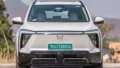
At first glance, the Range Rover Sport Electric looks remarkably similar to the ICE-powered version. JLR has avoided giving it an entirely new design, ensuring that it remains recognisable as a Range Rover Sport.
The most noticeable difference is at the front, where the electric version gets a redesigned grille. Rather than using a completely blanked-off panel, JLR has retained a proper grille with horizontal inlet patterns, similar to the larger Range Rover Electric.
Other familiar design elements include the prominent bonnet with its raised central section, slim LED headlights and small air vents that add to the sporty appearance. The Range Rover lettering across the bonnet further reinforces its identity.
From the side, the differences are even harder to spot. The main giveaway is the EV lettering on the hubcaps, while the familiar clamshell bonnet line and elegant shoulder line running towards the doors remain unchanged. The test vehicle featured First Edition lettering on the side insert.
The rear design also stays close to the conventional Sport. It gets slim tail-lights separated by a section carrying the Range Rover lettering in black. JLR has avoided the increasingly common connected tail-light design, retaining a cleaner appearance. The absence of exhaust outlets is another indication that this is the electric version.
Range Rover Sport Electric Interior Space and Comfort – 8/10
Comfortable seating and a premium cabin, although rear space is not particularly generous.
The cabin of the Range Rover Sport Electric offers a premium experience, with well-crafted materials and a familiar layout. Rear-seat space is reasonably good, with sufficient legroom and headroom for passengers. However, it does not offer the generous space associated with the larger long-wheelbase Range Rover.
The front and rear seats are heated, ventilated and reclinable, adding to passenger comfort. However, the seats are not as plush or opulent as those in the larger Range Rover. This is intentional, as the Sport is designed to offer a more driver-focused experience.
The driving position is also 20mm lower than that of the larger Range Rover. This gives the driver a sportier seating position while retaining a commanding view of the road ahead.
Range Rover Sport Electric Features and Safety – 8/10
Well-equipped with the premium features expected from a Range Rover.
The dashboard layout is shared with the larger Range Rover Electric, and several components carry over. The cabin gets a curved 13.1-inch touchscreen infotainment system and a 13.7-inch digital instrument cluster, giving it a modern and technology-focused appearance.
The feature list includes:
- 13.1-inch curved touchscreen infotainment system
- 13.7-inch digital instrument cluster
- Heated, ventilated and reclinable front seats
- Heated, ventilated and reclinable rear seats
- Active noise cancellation
- 3D surround-view camera
- Full-colour head-up display
- Camera-based rear-view mirror
- Meridian sound system
- Panoramic sunroof
- Four-zone climate control
- Rear armrest with integrated cupholders
The camera-based rear-view mirror can be switched to a conventional mirror when required. Its perspective, depth perception and refresh rate feel natural, making it easier to use than some similar systems.
Four-zone climate control is another useful addition, allowing individual temperature and fan-speed adjustments for different occupants. The combination of premium audio, active noise cancellation and comfortable seating further enhances the cabin experience.
The 3D surround-view camera also helps when manoeuvring the large SUV in tight spaces. Overall, the equipment package is in line with what buyers would expect from a luxury electric SUV carrying the Range Rover badge.
Range Rover Sport Electric Value for Money – 8/10
Not as dramatic as the SVR, but electrification improves performance while retaining impressive capability.
The Range Rover Sport Electric shares its platform and powertrain with the larger Range Rover Electric, but the two vehicles have different driving personalities. Electrification feels particularly well suited to the larger Range Rover, which benefits from its relaxed and effortless power delivery.
The Sport Electric, meanwhile, offers sharper throttle response and more engaging handling. However, those looking for the most dramatic driving experience from a Range Rover Sport will still find the SVR more exciting, thanks to its V8 engine and traditional performance character.
That said, the electric Sport makes a strong case as a luxury performance SUV. Its combination of rapid acceleration, premium interiors and impressive off-road ability makes it a compelling package. Few Electric SUVs can match the breadth of capabilities it offers beyond paved roads.
There is a catch, though. Indian buyers will have to wait until next year for its arrival, and the electric version is expected to carry a premium over the conventional models. Unlike the ICE-powered versions, the Sport Electric will be imported as a completely built-up unit (CBU).
Prices are expected to start at around Rs 1.8 crore, with the final pricing likely to be announced in January. The listed expected price elsewhere is Rs 2.40 crore, so the final India pricing remains to be confirmed.
Range Rover Sport Electric: Verdict
The Range Rover Sport Electric is not simply an electric version of the conventional Sport with a different powertrain. It has its own driving character, combining sharper throttle response and more agile handling with the comfort and off-road ability expected from a Range Rover.
Its familiar exterior design will appeal to buyers who do not want their electric SUV to look radically different, while the premium cabin and extensive equipment make it a convincing luxury offering. The firmer ride in Dynamic mode and the lack of the SVR’s dramatic character are its main compromises.
Ultimately, the Sport Electric is a different interpretation of the Range Rover Sport formula. It may not be the wildest version, but its combination of electric performance, luxury and off-road capability makes it an interesting addition to the range.
For breaking news and live news updates, like us on Facebook or follow us on Twitter and Instagram. Read more on Latest Automobile on thefoxdaily.com.


COMMENTS 0