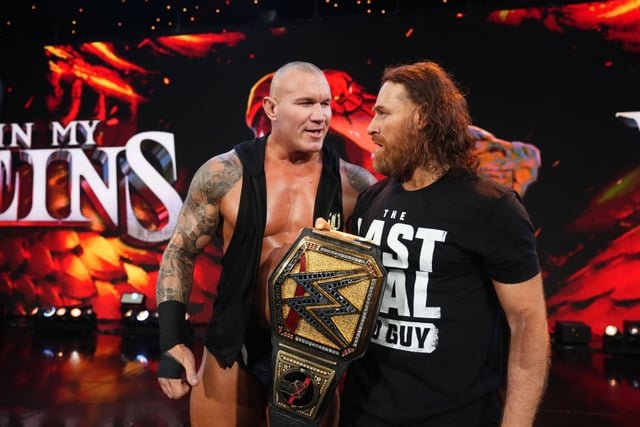
WWE SmackDown on September 18, 2026, delivered several important developments on the road to Money in the Bank, but some of the night’s creative decisions left room for criticism. Trick Williams and Jacy Jayne earned spots in the upcoming Money in the Bank Ladder Matches, while the WWE Championship storyline received another major development.
The episode also featured Cody Rhodes in another sit-down interview, a non-title match involving the MFTs and Shinsuke Nakamura and Kyoki, and another WWE Championship match being arranged by SmackDown General Manager Nick Aldis.
From repetitive match finishes to questionable character progression and an increasingly frequent WWE Championship defense schedule, the September 18 episode had several booking choices that could have been handled differently. Here are four areas where the show’s creative direction created avoidable problems.
4. Cody Rhodes’ Interview Took Valuable TV Time
Cody Rhodes remains one of WWE’s biggest stars, so giving him television time is understandable. The problem was less about Rhodes appearing and more about how the segment was structured.
Rhodes had already participated in a sit-down interview earlier in September ahead of his match against Randy Orton at Sunday Night’s Main Event. His latest interview once again focused on the decision he made during his previous encounter with Orton.
The segment eventually established that Rhodes would not repeat the same mistake if he found himself in a similar situation with The Viper. However, the point could have been communicated much more efficiently.
In professional wrestling, interview segments are most effective when they either advance a storyline, reveal new character information or create anticipation for an upcoming match. Rhodes’ latest appearance did provide some character context, but it did not substantially change the direction of his storyline.
Other Stars Could Have Benefited From the Time
The bigger issue was opportunity cost.
WWE television time is limited, particularly on a weekly show containing multiple storylines. Several other performers could have used those minutes to strengthen their programs.
Fatal Influence, Finn Balor and Blake Monroe are examples of acts that could have received additional attention during the episode. Giving secondary storylines more time can help WWE create a deeper roster rather than repeatedly relying on its biggest names.
That does not mean Rhodes should have been absent from SmackDown. A shorter interview with a sharper message could have achieved the same purpose while leaving additional time for other performers.
3. Trick Williams Qualifying for Money in the Bank Created a Storyline Problem
Trick Williams secured his place in the men’s Money in the Bank Ladder Match by defeating Randy Orton and Rey Fenix. On paper, qualifying for one of WWE’s most important annual matches is a significant accomplishment for the United States Champion.
The problem comes from the unresolved situation between Williams and Baron Corbin.
Corbin attacked Williams and Lil Yachty the previous week, creating the expectation that the rivalry could continue. Yet the attack did not have a meaningful effect on Williams’ qualifying match.
That creates a disconnect between two storylines. If Corbin is being positioned as a serious antagonist for Williams, a triple-threat Money in the Bank qualifier presented a natural opportunity for him to interfere without making the booking feel completely out of place.
The United States Championship Also Needed More Attention
Williams is currently the United States Champion, but the episode did little to make his championship reign feel like the central part of his character.
A champion entering a Money in the Bank qualifier can create an interesting conflict. The champion already has a title, yet winning the briefcase could potentially give him another route toward the top of the card.
However, WWE could have strengthened that story by making the consequences clearer. Instead, Williams simply advanced to the ladder match while his ongoing rivalry with Corbin remained largely separate.
Randy Orton’s elimination also represented another missed storytelling opportunity. Orton is an established main-event performer, and placing him in the Money in the Bank match could have added considerable experience and credibility to the field.
His elimination does not automatically make the decision wrong, but it leaves WWE with the question of how it intends to use Orton following the qualifier.
2. WWE Repeated the Same Finish in Both Money in the Bank Qualifiers
The most noticeable creative issue of the night was the similarity between the finishes of the men’s and women’s Money in the Bank qualifying matches.
Both contests were triple-threat matches, a format that naturally creates several possible finishing scenarios. Multiple competitors mean that interference, alliances, surprise eliminations and opportunistic victories can all be used without requiring a complicated storyline.
Instead, WWE essentially used the same formula twice.
In the women’s qualifier, Jade Cargill hit Jaded on Alexa Bliss before Jacy Jayne knocked Cargill out of the way and took advantage of the situation to win.
The men’s match followed a similar pattern. Randy Orton hit Rey Fenix with an RKO, after which Trick Williams took advantage of the situation to secure the victory.
Why Repetition Matters in Wrestling
A repeated finish can reduce the impact of the second match, especially when both contests occur on the same episode.
The issue is not that either finish was impossible or illogical. Wrestling often relies on opportunistic victories. The problem is that viewers were given almost identical storytelling beats in consecutive qualifying matches.
There were several alternatives available.
WWE could have used outside interference, particularly because interference is not automatically illegal in a triple-threat match. A faction member could have distracted a competitor, an existing rival could have attacked someone, or two wrestlers could have temporarily worked together before turning on each other.
Those approaches could have connected the Money in the Bank qualifiers to existing rivalries while also making each match feel distinct.
The lack of variety was especially noticeable because only a small number of matches were featured on the episode. When a show has limited matches, each one needs its own identity.
1. The WWE Championship Is Being Defended Too Frequently
The biggest booking concern on the September 18 episode involved the Undisputed WWE Championship.
Following the latest developments involving Sami Zayn and Kevin Owens, the WWE Championship was set for another defense. This means the title will have been defended four times since SummerSlam, with three of those defenses taking place on SmackDown.
During the same period, Roman Reigns defended the World Heavyweight Championship once, while the United States Championship was defended twice.
The difference is important because championship frequency can affect how special a title feels.
| Championship | Defenses Since SummerSlam | Key Booking Concern |
|---|---|---|
| Undisputed WWE Championship | 4 | High frequency can reduce the sense of occasion around major defenses |
| World Heavyweight Championship | 1 | Much less frequently defended during the same period |
| United States Championship | 2 | Fewer defenses despite being a secondary championship |
The issue is not simply the number of matches. Championship defenses can help establish a title as important, but frequent defenses against similar opponents or under similar circumstances can eventually make individual matches feel less significant.
Why Saving a Defense for Money in the Bank Could Have Helped
One possible approach would have been to save Zayn’s first major defense for Money in the Bank rather than placing another title match on the following SmackDown.
Premium live events provide a natural platform for championship matches because the larger stage can make the outcome feel more consequential.
Weekly defenses can still work when they serve a strong storyline. For example, a champion defending against a rival after weeks of escalation can create urgency. However, if the title is repeatedly defended without a substantial change in the surrounding story, the championship itself can lose some of its perceived scarcity.
Nick Aldis’ Role Creates Another Booking Question
Nick Aldis’ position as SmackDown General Manager gives WWE an in-story explanation for many of the show’s major matches. However, repeatedly booking championship matches also raises questions about how the authority figure is being used.
If WWE wants the WWE Championship to remain protected from outside interference, it has several storyline tools available. Aldis could establish consequences for anyone attempting to disrupt a title match, such as fines, suspensions or other disciplinary measures within the show’s fictional structure.
More importantly, such rules could become part of the storyline instead of simply being treated as a backstage problem.
That would give Aldis a clearer role while also creating additional stakes around championship matches.
The Bigger Lesson From SmackDown’s Booking
The four issues share one underlying problem: WWE has several strong individual storylines, but they do not always connect efficiently.
Trick Williams’ United States Championship, his rivalry with Baron Corbin and his Money in the Bank qualification could have been connected into one larger story. Similarly, the two triple-threat qualifiers could have been used to advance multiple rivalries instead of functioning primarily as qualification matches.
The same principle applies to Cody Rhodes. His interview could have advanced his story with Randy Orton while simultaneously setting up another performer or upcoming segment.
This kind of interconnected booking can make a two-hour or three-hour wrestling show feel richer without necessarily adding more matches.
What WWE Can Improve Going Forward
- Give interviews a clear purpose: Major stars can remain prominent while shorter segments create room for other wrestlers.
- Connect ongoing rivalries: Existing feuds should have consequences when wrestlers enter major qualifying matches.
- Avoid repeating finishes: Similar match structures should ideally have different endings and storytelling beats.
- Protect championship importance: Major titles can benefit from defenses that feel meaningful rather than routine.
- Use authority figures creatively: Nick Aldis can establish storyline rules and consequences that make future matches more compelling.
Conclusion
WWE SmackDown on September 18, 2026, moved several important stories forward, particularly with Trick Williams and Jacy Jayne qualifying for Money in the Bank. However, the episode also featured creative choices that could have been more effective.
Cody Rhodes’ lengthy interview occupied valuable television time without dramatically changing his storyline, while Trick Williams’ qualification left his Baron Corbin rivalry without a major consequence. The two Money in the Bank qualifiers also relied on strikingly similar finishes.
The most significant issue was the frequency of WWE Championship defenses compared with the other major titles. The championship remains central to SmackDown, but repeated defenses can make individual title matches feel less distinctive if they are not tied to major story developments.
Ultimately, the episode demonstrates how small booking decisions can influence the bigger picture. WWE does not necessarily need more matches or longer segments to make SmackDown feel stronger. Connecting existing stories, varying match finishes and making championship defenses feel like events could give future episodes greater narrative momentum.
For breaking news and live news updates, like us on Facebook or follow us on Twitter and Instagram. Read more on Latest Sports on thefoxdaily.com.






COMMENTS 0