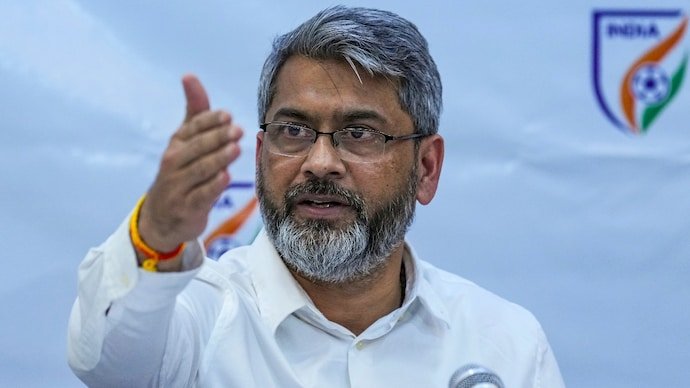
Indian Football finds itself at a critical crossroads. Questions surrounding league structures, commercial rights, player development, and international competitiveness continue to dominate discussions across the sport. Yet amid these pressing challenges, the All India Football Federation (AIFF) has taken a step that has quickly become one of the most talked-about developments in Indian football—the proposal to change its name to the Football Federation of Bharat (FFB).
The decision, approved during a Special General Body Meeting in New Delhi, is still subject to approval from the Ministry of Youth Affairs and Sports and subsequently FIFA. However, the announcement has already generated intense debate among football stakeholders, supporters, former players, and administrators.
For supporters, the discussion is no longer just about a name change. It has become a larger conversation about priorities, governance, identity, and the future direction of football in India.
What Is the AIFF Proposing?
The federation has approved a proposal to rename the All India Football Federation as the Football Federation of Bharat (FFB).
According to federation officials, the move is part of a broader effort to align the organization with the country’s evolving national identity.
The proposal is still at an early stage and requires multiple approvals before becoming official. These include:
- Approval from the Sports Ministry.
- Ratification by the federation’s governing bodies.
- Recognition and approval from FIFA.
Until those approvals are secured, AIFF remains the official governing body of Indian football.
Why the Timing Has Become Controversial
The biggest criticism surrounding the proposal is not necessarily the name itself but its timing.
Indian football is currently facing several major challenges that many stakeholders consider more urgent than a branding exercise.
These include:
- Uncertainty regarding the Indian Super League’s long-term structure.
- Lack of clarity around commercial rights.
- Concerns over youth development pathways.
- India’s struggles in international football.
- Questions about the sport’s overall growth strategy.
As a result, many observers believe that discussions about structural reforms and competitive progress should take precedence over organizational rebranding.
The Bigger Issue: Indian Football’s Direction Remains Unclear
The controversy surrounding the proposed name change has exposed a larger concern within Indian football: the absence of a clearly defined long-term roadmap.
Despite increased investment and professionalization over the last decade, India’s football ecosystem continues to face recurring challenges.
The national team remains far from qualifying for the FIFA World Cup, domestic competitions continue to undergo structural changes, and many clubs face financial uncertainty.
Supporters are increasingly asking a simple question: What is the long-term vision for Indian football?
The debate over the federation’s name has inadvertently amplified this concern.
The ISL Situation Remains the Most Pressing Challenge
Perhaps no issue currently affects Indian football more than uncertainty surrounding the Indian Super League (ISL).
The league has served as the country’s premier football competition for more than a decade and has played a crucial role in attracting investment, developing infrastructure, and increasing fan engagement.
However, questions remain regarding:
- Commercial ownership models.
- Revenue distribution.
- Long-term governance structures.
- Broadcast partnerships.
- Club sustainability.
While the federation has confirmed a September 4 start date for the 2026-27 season, the broader framework governing the league remains unresolved.
For many stakeholders, resolving these issues carries far greater importance than changing the federation’s name.
Why Football Identity Matters in Global Sports
Supporters of the proposed name change argue that national sporting bodies often evolve alongside changing national identities.
Several countries have adopted alternative international naming conventions or updated official designations to better reflect cultural and linguistic preferences.
In theory, rebranding can:
- Strengthen national identity.
- Create a modern organizational image.
- Improve brand recognition.
- Align institutions with contemporary public sentiment.
However, successful rebranding efforts typically occur alongside meaningful organizational progress rather than serving as a substitute for it.
This distinction lies at the heart of the current debate.
Football Fans Want Progress, Not Symbolism
The reaction from many football supporters highlights a growing frustration within the community.
Fans generally measure success through outcomes such as:
- Improved national team performances.
- Stronger domestic leagues.
- Better youth academies.
- Higher attendance figures.
- Greater international competitiveness.
Symbolic changes, while potentially meaningful, rarely satisfy supporters if underlying issues remain unresolved.
This explains why the proposed name change has received mixed reactions despite its cultural significance.
Indian Football’s Performance Problem
Beyond administrative debates, the most significant challenge remains performance on the pitch.
India has made progress in infrastructure and league development over the past decade, but translating those improvements into international success has proven difficult.
The national team continues to face obstacles in:
- Consistent qualification campaigns.
- Player development depth.
- Competitive exposure.
- Talent identification systems.
- Elite coaching pathways.
Until these areas improve substantially, administrative decisions will inevitably be judged against broader footballing outcomes.
Comparing Priorities: Branding vs Structural Reform
| Issue | Potential Impact on Indian Football |
|---|---|
| Federation Name Change | Branding and identity enhancement |
| ISL Governance Reform | Long-term league stability |
| Youth Development Programs | Future talent generation |
| National Team Investment | International competitiveness |
| Broadcast and Commercial Rights | Financial sustainability |
This comparison illustrates why many stakeholders believe structural reforms should remain the primary focus.
The Commercial Rights Battle Explained
One of the most important developments in Indian football revolves around the future management of commercial rights.
Recent discussions have centered on whether clubs should play a greater role in operating the ISL and managing commercial assets.
The debate is significant because commercial revenue directly affects:
- Club sustainability.
- Player salaries.
- Infrastructure investment.
- Grassroots development.
- Broadcast quality.
Any uncertainty in this area can influence the sport’s growth trajectory for years to come.
Could the Name Change Ultimately Benefit Football?
It is possible that the proposed transition from AIFF to FFB could eventually become part of a broader modernization strategy.
If accompanied by meaningful reforms, improved governance, and stronger football development initiatives, the rebranding could help create a fresh institutional image.
However, branding alone is unlikely to change perceptions.
Supporters and stakeholders will ultimately judge success based on measurable outcomes rather than organizational titles.
The Global Lesson Indian Football Can Learn
Successful football nations rarely focus exclusively on symbolism.
Countries that have transformed their footballing fortunes typically prioritize:
- Long-term planning.
- Youth development.
- Coaching excellence.
- League stability.
- Financial sustainability.
- Consistent governance.
Identity and branding can support these efforts, but they rarely replace them.
The strongest football ecosystems are built on structures, not slogans.
What Happens Next?
The proposed name change will now move through multiple approval stages before any final decision is made.
Meanwhile, Indian football’s more immediate challenges remain unresolved.
The future structure of the Indian Super League, commercial rights arrangements, and broader development strategies will likely continue to dominate discussions throughout the coming months.
How effectively the federation addresses those issues may ultimately determine how this proposal is remembered.
Conclusion
The proposal to rename the All India Football Federation as the Football Federation of Bharat has become one of the most debated developments in Indian football this year. While supporters view it as an effort to align the federation with evolving national identity, critics question whether such a move should be prioritized amid ongoing uncertainty surrounding the sport’s future.
The controversy reflects a broader reality: Indian football is searching for direction at a crucial moment in its development. Questions about league governance, commercial sustainability, youth development, and international competitiveness remain far more consequential than the name of the governing body.
Ultimately, whether the federation is called AIFF or FFB, the success of Indian football will be determined not by branding decisions but by the ability to create a stronger, more competitive, and more sustainable football ecosystem for future generations.
For breaking news and live news updates, like us on Facebook or follow us on Twitter and Instagram. Read more on Latest Sports on thefoxdaily.com.






COMMENTS 0