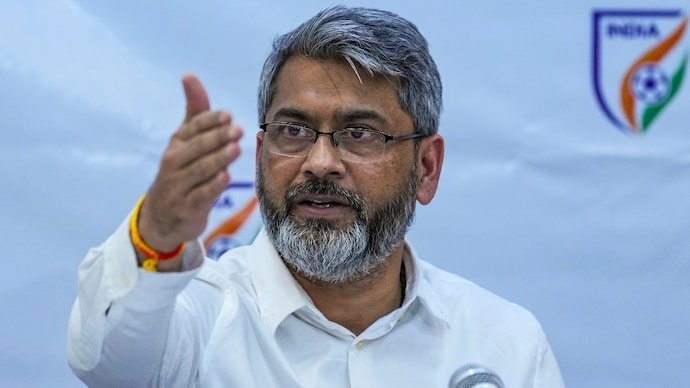
Indian Football finds itself at a crossroads. Once considered a sleeping giant with enormous untapped potential, the sport is now facing growing concerns about stagnation, inconsistent planning, and declining international competitiveness. Those concerns became even louder when former India head coach Stephen Constantine described the current situation as a “free-fall,” arguing that the country is moving further away from meaningful progress rather than closer to global relevance.
Constantine’s comments have reignited a debate that has existed for years: Why has a nation of more than a billion people struggled to establish itself as a serious footballing power? More importantly, what must change if Indian football hopes to compete consistently in Asia and eventually dream of FIFA World Cup qualification?
His criticism goes beyond short-term results. Instead, it targets the structural foundations of Indian football, including league organization, youth development, coaching pathways, governance, and long-term planning. These are issues that many football experts have highlighted for years but which remain largely unresolved.
The Current State of Indian Football
Indian football’s challenges are not limited to one disappointing tournament or one poor coaching appointment. The concerns run much deeper.
In recent years, the national team has struggled to build momentum despite increased investment, greater media attention, and the growth of professional football infrastructure. While occasional successes have generated optimism, India has yet to establish itself as a consistent force in Asian football.
The gap between ambition and reality remains significant.
Football administrators often speak about World Cup qualification, but results on the field suggest that India is still working toward more immediate objectives such as regular AFC Asian Cup qualification and regional dominance.
This disconnect between long-term dreams and present realities is one of the central themes of Constantine’s criticism.
Why Stephen Constantine’s Opinion Carries Weight
Not every former coach commands attention years after leaving a national team. Stephen Constantine is different.
Across two separate spells, he became one of the most influential coaches in modern Indian football history. His tenure coincided with one of India’s most significant periods of improvement in international rankings and competitiveness.
| Achievement | Impact on Indian Football |
|---|---|
| Qualified for AFC Asian Cup 2019 | Returned India to Asia’s premier tournament |
| SAFF Championship Success | Strengthened regional standing |
| Intercontinental Cup Victory | Boosted international confidence |
| FIFA Ranking Rise | Improved global reputation and credibility |
Because of these achievements, Constantine’s concerns cannot easily be dismissed as criticism from an outsider. He understands both the strengths and weaknesses of the Indian football ecosystem.
The Biggest Problem: Lack of Long-Term Vision
One of the most important points raised by Constantine is the absence of a coherent long-term strategy.
Successful football nations rarely achieve progress through short-term decisions. Instead, they implement development plans that stretch across multiple decades.
Countries such as Japan and South Korea transformed themselves through patient investment in youth academies, coaching education, grassroots participation, and competitive domestic leagues.
India has often attempted to accelerate progress through isolated initiatives rather than building a complete football ecosystem.
Without a unified vision connecting grassroots football, youth development, domestic competitions, and the senior national team, sustainable success becomes extremely difficult.
The Promotion and Relegation Debate
Among Constantine’s strongest recommendations was the need for a proper football pyramid featuring promotion and relegation.
In established football nations, promotion and relegation create competition throughout the entire system.
The benefits include:
- Greater accountability for clubs.
- Increased opportunities for smaller teams.
- Improved talent discovery.
- More meaningful matches throughout the season.
- Stronger football culture at regional levels.
A healthy football pyramid encourages investment beyond a handful of elite clubs and creates pathways for players from every corner of the country.
For a nation as geographically and culturally diverse as India, this structure could be particularly valuable.
Youth Development Remains the Missing Foundation
If there is one area where nearly every football expert agrees, it is youth development.
No country becomes a football powerhouse without consistently producing talented young players.
India has millions of football enthusiasts, but the pathway from grassroots football to professional football remains fragmented.
Many promising youngsters never receive elite coaching, modern facilities, or consistent competitive opportunities during crucial development years.
The result is a smaller pool of elite-level players compared to countries with established youth systems.
Modern football success begins long before players reach the senior national team. It starts in academies, schools, local leagues, and development programs.
The Coaching Development Challenge
Another issue highlighted by Constantine concerns the development of Indian coaches.
While there has been progress in recent years, India still faces a shortage of coaches with extensive experience at the highest international levels.
Successful football nations invest heavily in coaching education because coaches shape player development, tactical understanding, and overall football culture.
Developing a generation of highly qualified Indian coaches could create long-term benefits that extend across every level of the sport.
Rather than focusing exclusively on foreign expertise, a balanced approach that develops domestic coaching talent may prove more sustainable.
The Khalid Jamil Appointment and the Experience Debate
One of the most discussed aspects of Constantine’s interview was his assessment of Khalid Jamil’s appointment as India’s head coach.
The debate is not necessarily about whether an Indian coach should lead the national team. In fact, many supporters welcome the idea of greater domestic representation.
The key question is preparation.
International football presents unique challenges that differ significantly from club football. Managing a national team requires dealing with limited training time, diverse player pools, international tournament pressure, and tactical adaptability against different styles of opposition.
Constantine’s argument centers on creating a structured pathway where coaches gain international experience before assuming the country’s most important football role.
This approach mirrors systems used successfully in several leading football nations.
Why World Cup Qualification Is Not the Immediate Goal
Perhaps the most controversial part of Constantine’s assessment is his view that India should stop focusing on World Cup qualification for now.
At first glance, this may sound pessimistic.
In reality, it reflects a strategic mindset.
Elite sporting programs often achieve major goals by breaking them into smaller, realistic milestones.
For Indian football, those milestones could include:
- Consistent AFC Asian Cup qualification.
- Dominating South Asian competitions.
- Improving FIFA rankings.
- Developing stronger domestic leagues.
- Increasing player exports to foreign leagues.
Achieving these objectives would create a stronger foundation for eventual World Cup ambitions.
Skipping steps rarely works in football development.
Learning from Japan’s Transformation
A useful comparison is Japan.
Today, Japan is one of Asia’s strongest football nations and regularly competes with elite teams on the global stage.
However, that success was not built overnight.
Japanese football authorities implemented a comprehensive long-term strategy involving:
- Professional league expansion.
- Grassroots participation programs.
- Coach education initiatives.
- Youth academy investment.
- International exposure for players.
The results became visible only after years of sustained effort.
India could potentially benefit from adopting a similarly patient and systematic approach.
The New Zealand Friendly Debate
Constantine also questioned India’s decision to schedule friendlies against New Zealand instead of stronger Asian opposition.
This criticism reflects a broader debate about the purpose of international friendlies.
Friendlies can serve multiple objectives:
- Building confidence.
- Testing tactics.
- Evaluating players.
- Preparing for specific competitions.
If India’s primary competitive targets involve Asian tournaments and qualifiers, there is logic in seeking opponents whose style resembles future rivals.
Matches against nations such as Japan, Saudi Arabia, South Korea, China, or the UAE may provide more relevant tactical preparation.
The Financial Opportunity India Cannot Ignore
An often-overlooked aspect of Indian football’s struggles is the enormous commercial opportunity at stake.
Football is the world’s most popular sport, and India possesses one of the largest sports audiences on the planet.
If the national team becomes more competitive, the potential impact extends far beyond results on the pitch.
Benefits could include:
- Increased sponsorship investment.
- Higher television revenues.
- Growth of local football academies.
- Expansion of professional clubs.
- Greater employment opportunities within the football industry.
The economic upside makes football development a strategic opportunity rather than merely a sporting objective.
An Overlooked Insight: The Real Competition Is Asia, Not Europe
Many discussions about Indian football focus on comparisons with European giants such as England, Spain, Germany, or France.
That comparison can be misleading.
India’s most important benchmark should be Asia’s leading football nations.
The gap between India and Japan, South Korea, Australia, Saudi Arabia, and Iran remains substantial. Closing that gap should be the immediate objective.
Once India becomes consistently competitive within Asia, broader global ambitions become far more realistic.
What Must Happen Next?
If Indian football hopes to reverse what Constantine describes as a free-fall, several priorities appear essential.
- Create a long-term national football strategy.
- Strengthen youth development pathways.
- Expand coaching education programs.
- Improve league stability and competitiveness.
- Develop a stronger promotion and relegation system.
- Increase exposure against high-quality opposition.
- Align administrative decisions with footballing objectives.
None of these reforms offer instant results. However, together they could create the foundation required for sustainable growth.
Conclusion: A Harsh Warning That Indian Football Cannot Ignore
Stephen Constantine’s assessment may sound blunt, but it reflects concerns that many within Indian football have expressed for years. His message is not that India lacks talent or potential. Rather, it is that potential alone is not enough.
Football success requires structure, patience, planning, and consistent execution. The dream of qualifying for a FIFA World Cup remains alive, but dreams become reality only when supported by strong foundations.
India’s immediate challenge is not reaching the World Cup. It is building a football system capable of regularly competing with Asia’s best. If administrators, coaches, clubs, and stakeholders embrace that reality, Constantine’s warning could ultimately become the catalyst for meaningful change rather than another missed opportunity.
For breaking news and live news updates, like us on Facebook or follow us on Twitter and Instagram. Read more on Latest Sports on thefoxdaily.com.






COMMENTS 0