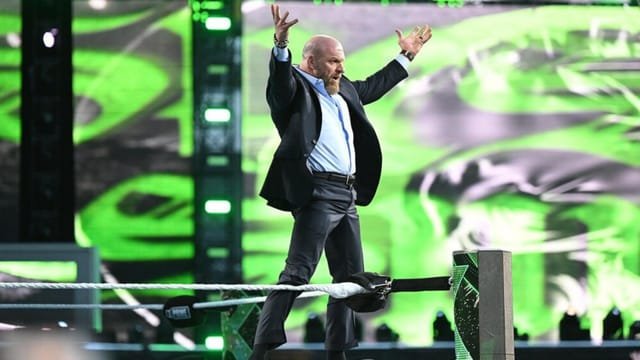
Professional wrestling has always operated on a simple, unspoken contract with its audience: the talent is the product. The stories are delivered by the performers inside the ring, not the executives sitting in boardrooms or giving interviews about creative decisions. When that boundary blurs, something fundamental about the presentation shifts. And according to Al Snow, a former WWF Hardcore Champion and a man who has spent decades inside the wrestling business, that boundary has been blurring at WWE for a while now, and it is costing the company more than it realizes.
Speaking on Vince Russo’s The Brand podcast, Snow leveled a pointed critique at both Triple H, WWE’s Chief Content Officer, and WWE President Nick Khan, arguing that placing behind-the-scenes power players in public-facing roles is not just a creative misstep. It is, in his words, always bad business.
The Trigger: Nick Khan’s WrestleMania 40 Comments Open a Bigger Conversation
Snow’s comments did not emerge in a vacuum. The conversation was sparked by WWE President Nick Khan’s recent remarks about the WrestleMania 40 main event, specifically his claim that Roman Reigns vs. Cody Rhodes was always the intended plan, and that The Rock’s involvement was always part of the design.
The problem with that framing, as Snow and others have noted, is that it directly contradicts what The Rock himself has said publicly about how his comeback came together. When executives make public claims that contradict the accounts of the actual talent involved, it creates a credibility problem, not just for the specific story being told, but for the broader culture of transparency that WWE has been trying to cultivate under its current leadership.
That contradiction is what pulled Snow into the discussion. And once he was in it, he had more to say than just a comment on one disputed talking point.
Al Snow on Triple H: The Problem With Putting the Writer in Front of the Camera
Snow’s core argument about Triple H is rooted in a principle that applies well beyond professional wrestling: the people who create the product should not also be the ones selling it, especially when the product itself depends on audiences suspending their awareness of the machinery behind it.
As Snow said on the podcast:
“Triple H is the same thing in that he’s at the forefront. His voice is on every piece of advertising for WWE. He is the face of WWE. Why? No one’s buying a ticket to see Triple H anymore. He is behind the scenes. He’s the writer. And I’ve always had a problem with that, where you put someone who has that much power behind the camera in front of it, it never goes well. It never goes the way it should. It’s always bad business because it’s just human nature.”
The argument is more nuanced than it might first appear. Snow is not suggesting that Triple H lacks credibility or that his creative vision is flawed. He is making a structural point about the nature of storytelling and audience trust.
When the writer of a television show does a press tour talking about plot decisions, it can be interesting. It can generate headlines. But it also pulls audiences out of the world being created, reminding them that there are deliberate choices being made behind what they are watching. In scripted entertainment, that behind-the-curtain awareness tends to diminish investment rather than enhance it.
In professional wrestling, that dynamic is even more sensitive, because the entire premise of the product rests on audiences investing emotionally in characters and conflict. The more visible the creative architecture becomes, the harder that investment is to sustain.
Triple H’s voice appearing on advertising, his face representing the WWE brand in public communications, and his public interviews discussing creative direction all pull in the opposite direction from the immersion that the product requires to work at its highest level.
The Nick Khan Problem: Executives Belong Behind Closed Doors
If Snow’s critique of Triple H was pointed, his assessment of Nick Khan’s public presence was even more direct. As he explained on the same episode:
“Now you’ve got executives who are supposed to be seen, not even seen, let alone heard. They’re supposed to be behind the scenes, and they’re supposed to be behind doors and in offices, and that because we’re never going to buy a ticket to see Nick Khan.”
This is a sharper and arguably more defensible version of the argument. Triple H, at least, has a decades-long connection to the WWE audience as a performer. His face and voice are familiar, and there is an argument, however contested, that his credibility as a former in-ring talent gives him a kind of earned authority in the public eye.
Nick Khan has no such history with the fanbase. He came to WWE from the entertainment industry, bringing deal-making expertise and business acumen that has undeniably shaped the company’s commercial trajectory. But the skills that make him valuable in a negotiation room do not translate into anything the audience finds meaningful or engaging. When Khan speaks publicly about creative decisions or historical storytelling choices, he does so as a figure the audience has no emotional connection to and no reason to trust on matters of wrestling narrative.
Snow’s point is that this is not a personal failing of Khan’s. It is a structural problem with the decision to make him a public voice on subjects that audiences are not interested in hearing from him about.
| Figure | Official Role | Public Presence | Al Snow’s Concern |
|---|---|---|---|
| Triple H (Paul Levesque) | Chief Content Officer | Face of WWE advertising, public creative spokesperson | Writer visible in front of the camera undermines storytelling immersion |
| Nick Khan | WWE President | Public interviews on creative and historical decisions | Business executive commenting on wrestling narrative has no credibility with the audience |
| Vince McMahon (historical) | Former Chairman and CEO | Eventually became on-screen character Mr. McMahon | Even the most powerful executive becoming talent crossed the same line Snow describes |
Is Snow Right? The Broader Principle at Stake
Al Snow is not the first person to raise this concern, and he will not be the last. The tension between WWE’s corporate reality and its creative presentation is one that has existed in various forms throughout the company’s history.
There is a compelling counter-argument to Snow’s position. In the modern media landscape, audiences are more sophisticated than ever about the production machinery behind their favorite entertainment. Podcast culture, social media, and the explosion of behind-the-scenes content across every form of entertainment have normalized a level of transparency that previous generations of wrestling promoters would have found unthinkable. Audiences now routinely consume both the finished product and detailed accounts of how it was made, without necessarily losing investment in one or the other.
But professional wrestling occupies a uniquely delicate position within that landscape. Unlike a prestige drama or a superhero film, wrestling asks its audience to invest emotionally in outcomes whose scripted nature is publicly acknowledged but rarely foregrounded. The moment the machinery becomes too visible, it does not just reduce immersion. It actively reminds audiences of the gap between the stories being told and the commercial interests shaping them.
When Nick Khan publicly states that Roman Reigns vs. Cody Rhodes was always the plan, and that claim contradicts what The Rock has said, it does not just damage the credibility of that specific historical account. It raises a broader question in the audience’s mind: how much of what they are being told about WWE’s creative process is accurate, and how much is post-hoc narrative management designed to make business decisions look like creative vision?
That question, once planted, is difficult to uproot. And it is exactly the kind of question that Snow is warning about.
The WrestleMania 40 Contradiction: A Case Study in Why This Matters
The specific incident that triggered this conversation is worth examining in more detail, because it illustrates Snow’s broader point in a very concrete way.
WrestleMania 40 was one of the most commercially and creatively successful WrestleManias in recent memory. The main event story involving Cody Rhodes, Roman Reigns, and The Rock was a genuinely compelling piece of long-term storytelling that paid off years of investment in the Bloodline narrative. The finished product was excellent.
But the behind-the-scenes story of how it came together has never been entirely clear, and the accounts from different parties have not always aligned. The Rock’s own comments about his comeback suggested a degree of improvisation and opportunism that does not match the “always the plan” framing that Nick Khan offered in his recent comments.
When an executive makes a claim that the talent involved contradicts, it creates a credibility problem that neither a great match nor a successful pay-per-view can fully resolve. It is precisely the kind of outcome that Snow is pointing to when he argues that executives speaking publicly about creative decisions is always bad business.
Al Snow’s Perspective: The Credibility of the Source
It is worth noting who Al Snow is and why his perspective carries weight in this conversation, even if it is not universally shared.
Snow spent years working at multiple levels of the wrestling industry, as a performer, as a trainer, and as someone who has observed the business from positions that gave him genuine insight into how creative decisions get made and how they are communicated. He is not a casual observer making general complaints. He is someone with specific knowledge of how the wrestling business is supposed to operate when it is functioning well, and a clear sense of how it looks when it is not.
His critique of Triple H and Nick Khan is not personal animosity. It is a structural argument grounded in his understanding of what the audience comes to wrestling for and what pulls them out of it. Whether or not one agrees with his conclusion, the argument deserves to be taken seriously on its merits.
What WWE Could Do Differently: The Alternative Model
Snow’s criticism implicitly suggests a different approach, one where the creative talent and executives do their work behind the scenes, and the performers are left to be the primary public face of the product. That model is not radical. It is, in many ways, how the most effective periods of WWE storytelling have operated historically.
The strongest eras of wrestling tend to be ones where the audience is most invested in the characters on screen and least aware of the decisions being made in offices and conference rooms. When creative decisions become headline news, when executive interviews generate controversy, and when the machinery of production becomes more discussed than the stories it is producing, something has gone wrong with the balance.
This does not mean executives should never speak publicly. It means that the subject matter of those public appearances matters enormously. Business deals, broadcast partnerships, expansion into new markets: these are conversations executives can credibly have in public without undermining the product. Historical revisionism about creative decisions that contradict what the talent themselves have said is a different matter entirely.
Conclusion: A Valid Warning From Someone Who Has Seen It From the Inside
Al Snow’s criticism of Triple H and Nick Khan is the kind of industry insider perspective that tends to get dismissed as sour grapes or old-school thinking. It deserves more consideration than that.
His central point is straightforward: the people who create and manage the product should not also be its public face, because doing so creates conflicts, reduces audience immersion, and opens the door to exactly the kind of credibility problems that the WrestleMania 40 narrative has illustrated. The talent is the product. The executives and creatives are the infrastructure that supports it. When those roles blur, the product suffers.
Whether WWE chooses to adjust its approach based on that kind of feedback is another question. The company is, by most commercial measures, performing extremely well. But commercial performance and creative trust are not always the same thing, and Snow’s warning is ultimately about the latter.
The audience never bought a ticket to see Triple H the executive. And they certainly are not buying one to see Nick Khan. That is not a personal slight. It is just the business, functioning as it is supposed to.
For breaking news and live news updates, like us on Facebook or follow us on Twitter and Instagram. Read more on Latest Sports on thefoxdaily.com.






COMMENTS 0