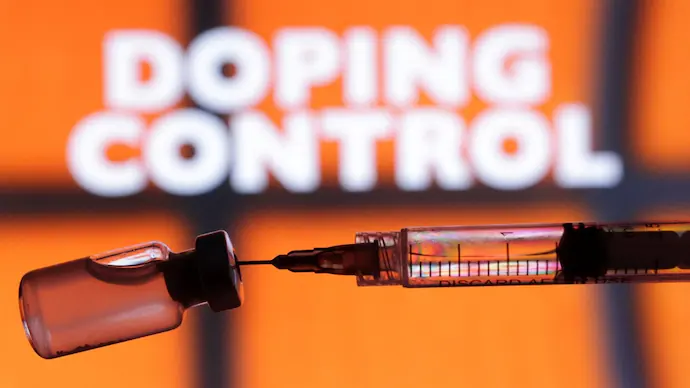
The International Paralympic Committee (IPC) has imposed a three-year doping ban on Indian para-athlete Anmol Vasistha after he tested positive for a prohibited anabolic steroid during the New Delhi World Para Athletics Grand Prix in March 2026. The athlete returned an adverse analytical finding in an in-competition urine sample collected during the men’s javelin throw F55 event.
According to the IPC, Vasistha tested positive for a metabolite of dehydrochloromethyl-testosterone (DHCMT), a prohibited anabolic androgenic steroid listed under the World Anti-Doping Agency’s (WADA) 2026 Prohibited List. His period of ineligibility began on April 24, 2026, and will remain in effect until April 23, 2029.
Anmol Vasistha Tests Positive at New Delhi Grand Prix
The positive test was recorded during the New Delhi 2026 World Para Athletics Grand Prix, held in March. The IPC confirmed that Vasistha’s in-competition urine sample was collected on March 11 while he was competing in the men’s javelin throw F55 event.
Laboratory analysis detected a metabolite of dehydrochloromethyl-testosterone, commonly known as DHCMT. The substance is classified as an anabolic androgenic steroid and is prohibited under the 2026 World Anti-Doping Agency Prohibited List.
The detection of the prohibited substance resulted in an anti-doping rule violation, prompting the IPC to initiate disciplinary proceedings against the Indian para-athlete.
Three-Year Suspension Runs Until April 2029
Vasistha was provisionally suspended on April 24, 2026, while the anti-doping case was being resolved. The IPC subsequently confirmed that the athlete accepted the anti-doping rule violation and the consequences proposed by the governing body.
As a result, he received a three-year period of ineligibility, effective from April 24, 2026, through April 23, 2029. During this period, Vasistha will be prohibited from participating in competitions and other sporting activities covered by the suspension.
The restrictions include participation in sporting events and activities, with exceptions for authorised anti-doping education or rehabilitation programmes. The ban prevents the athlete from competing during a significant period of his sporting career.
Vasistha’s Results at New Delhi Grand Prix Disqualified
Along with imposing the suspension, the IPC ordered the disqualification of Vasistha’s results from the New Delhi 2026 World Para Athletics Grand Prix.
His performance in the men’s javelin throw F55 event has been automatically disqualified. The decision also applies to all other results he obtained at the competition, meaning he will forfeit any medals, points and prizes associated with those performances.
The IPC outlined the consequences in its official statement:
“The results obtained by the athlete in the men’s javelin throw F55 competition at the New Delhi 2026 World Para Athletics Grand Prix are automatically disqualified, with all resulting consequences, including forfeiture of any medals, points and prizes.”
The governing body further confirmed that the disqualification extends beyond the javelin event to cover every other result Vasistha achieved at the same competition.
“All other results obtained by the athlete in the New Delhi 2026 World Para Athletics Grand Prix are also disqualified, with all of the resulting consequences, including forfeiture of any medals, points and prizes.”
The decision ensures that the consequences of the anti-doping rule violation apply to all of his results at the event, rather than only the discipline in which the positive test occurred.
What Is DHCMT, the Prohibited Substance Found in His Sample?
Dehydrochloromethyl-testosterone, abbreviated as DHCMT, is an anabolic androgenic steroid included on the World Anti-Doping Agency’s 2026 Prohibited List.
Anabolic androgenic steroids are substances associated with effects on muscle growth and androgenic characteristics. Their use is prohibited under anti-doping regulations, and athletes are responsible for ensuring that prohibited substances do not enter their bodies in violation of the applicable rules.
In Vasistha’s case, the IPC reported an adverse analytical finding for a metabolite of DHCMT in the urine sample collected during the March 11 competition.
IPC Reiterates Strict Liability in Anti-Doping Cases
The IPC reiterated that athletes are subject to the principle of strict liability under anti-doping rules. This means athletes are responsible for prohibited substances detected in their samples, regardless of whether the substance was used intentionally or unintentionally.
The governing body also emphasised that the presence of a prohibited substance can constitute an anti-doping rule violation irrespective of whether negligence or fault was involved.
This principle places responsibility on athletes to comply with anti-doping regulations and exercise care regarding substances that may enter their bodies. The IPC’s decision in Vasistha’s case reflects the application of these rules following the positive test and the athlete’s acceptance of the violation and proposed consequences.
IPC Reaffirms Commitment to Clean Sport
As a signatory to the World Anti-Doping Code, the IPC stated that it remained committed to maintaining a doping-free sporting environment for athletes.
The organisation’s anti-doping framework is intended to protect the integrity of competition and promote fair participation. Disciplinary measures, including suspensions and the disqualification of results, are among the consequences applied when athletes are found to have violated anti-doping rules.
The three-year ban on Vasistha and the disqualification of his results from the New Delhi Grand Prix form part of the consequences announced by the IPC in this case.
Conclusion
The IPC has handed Indian para-athlete Anmol Vasistha a three-year doping ban after his in-competition urine sample tested positive for a metabolite of the prohibited anabolic steroid DHCMT at the New Delhi World Para Athletics Grand Prix on March 11, 2026.
Vasistha’s suspension runs from April 24, 2026, to April 23, 2029, following his acceptance of the anti-doping rule violation and the proposed consequences. His results from the competition have also been disqualified, with all associated medals, points and prizes subject to forfeiture.
The case highlights the strict responsibilities athletes face under international anti-doping regulations and the IPC’s stated commitment to protecting clean sport.
For breaking news and live news updates, like us on Facebook or follow us on Twitter and Instagram. Read more on Latest Sports on thefoxdaily.com.






COMMENTS 0